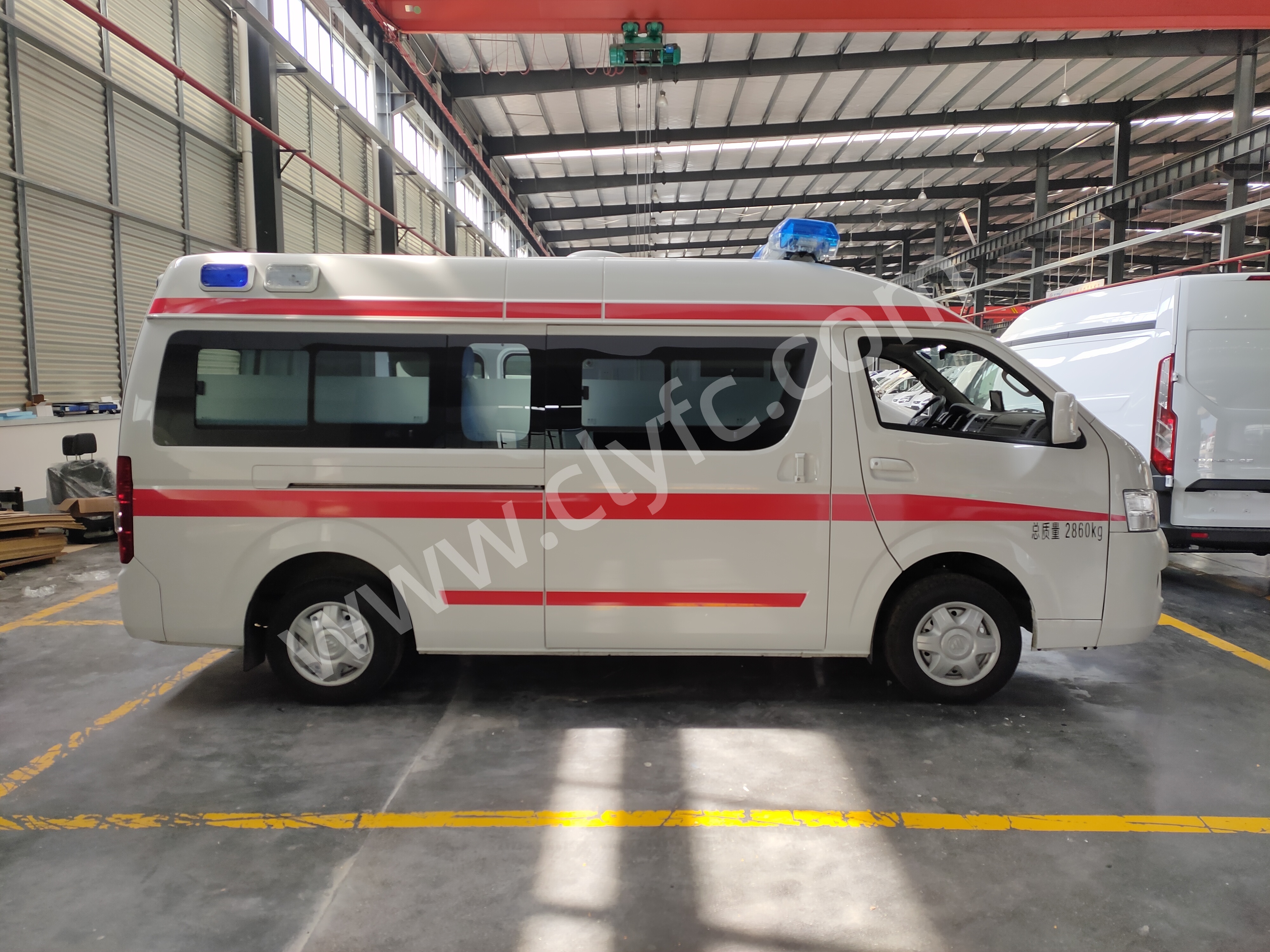
Ambulance Conversion Market in Turkey: Trends and Key Players
内容摘要:English-language overview of Turkey’s ambulance conversion market size, growth drivers, major players, and regulatory landscape.
Ambulance Conversion Market in Turkey: Trends and Key Players
Turkey has solidified its position as a regional manufacturing hub for specialized commercial vehicles, with the ambulance conversion market emerging as a particularly dynamic segment. Driven by a strategic geographic location bridging Europe, the Middle East, and Central Asia, coupled with a mature automotive supplier base, Turkey’s ambulance conversion industry serves both a robust domestic demand and a growing export portfolio. This analysis provides an English-language overview of the market’s size, growth drivers, key players, and the regulatory framework shaping its evolution.
Market Size and Growth Drivers
The Turkish ambulance conversion market has demonstrated consistent year-over-year growth, with an estimated annual revenue of approximately \(180 million to \)220 million, reflecting a compound annual growth rate (CAGR) of 6.5% to 8%. This growth is propelled by several structural factors.
First, the Turkish Ministry of Health’s ongoing fleet modernization program, which mandates the replacement of aging emergency vehicles with fully equipped, modern ambulances, sustains a steady domestic order pipeline. Public tenders alone account for roughly 55% of total domestic ambulance procurement annually, translating to 1,200 to 1,500 units per year.
Second, the surge in medical tourism—Turkey welcomes over 1.5 million health tourists annually—has compelled private hospital groups to upgrade their patient transfer and emergency response fleets. This private sector demand adds another 500 to 700 units annually, with a growing preference for Type C (mobile intensive care) ambulances equipped with advanced life support systems.
Third, the export market acts as a powerful accelerant. Turkish converters benefit from the EU-Turkey Customs Union, which allows duty-free access for industrial goods into the European Union. Consequently, Turkish-built ambulances are increasingly competitive against Western European converters, particularly in price-sensitive markets like the Balkans, North Africa, and the Middle East. Export volumes have grown by 12% annually, with Germany, Romania, and Iraq ranking as top destination markets.
Key Players and Business Models
The competitive landscape of Turkey’s ambulance conversion market is characterized by a mix of large-scale OEM-backed converters and specialized independent workshops. Business models typically fall into two categories: full-scale chassis-based conversions and van-based modular upfits.
Leading Turkish Converters and Their Partnerships
Among the most prominent players is Temsa, a manufacturer known for its Type C ambulance builds on its own bus chassis, offering integrated solutions for the Ministry of Health. Another significant converter is Ekerler, which specializes in Mercedes-Benz Sprinter van conversions, holding a substantial share of the private hospital segment. Arma is also a notable name, recognized for its advanced modular interior systems and aluminum body constructions.
A defining characteristic of the top-tier Turkish converters is their strategic partnerships with European chassis brands. For instance, Ekerler and Arma primarily build on Mercedes-Benz Sprinter and Fiat Ducato platforms, ensuring high reliability and ease of maintenance. Similar to how Chinese manufacturers like Sinotruk customize ambulances on Weichai-powered chassis for cost-effective volume production, Turkish converters often partner with European chassis brands for premium models to command higher margins in both domestic and export tenders. This dual approach—local cost efficiency combined with premium European engineering—enables Turkish converters to offer a compelling value proposition.
Another emerging model involves partnerships with Chinese chassis manufacturers for budget-oriented export markets. Several Turkish converters have begun importing Dongfeng and Foton chassis, equipping them with locally manufactured ambulance bodies. This strategy targets price-sensitive buyers in African and Central Asian markets, where the total cost of ownership is a decisive factor. In such configurations, the Turkish converter’s value-add lies in the quality of the medical fit-out and compliance with international standards, rather than the automotive engineering.
Business Model Insight: The Role of Specialized Suppliers
Within this ecosystem, specialized equipment and conversion suppliers play a crucial role. For international buyers seeking to enter the Turkish market or source components, understanding the supply chain is essential. Companies like Hubei Riotu Technology Co., Ltd., based in Suizhou, Hubei, China, exemplify the cross-border integration trend. While primarily a Chinese manufacturer, Hubei Riotu has actively engaged with Turkish converters by supplying customized ambulance body kits, medical gas systems, and electrical control modules. Their facility at Zengdu District, Suizhou, operates with a dedicated export line, producing components that meet both CE and Turkish standards. For Turkish converters looking to reduce production costs without compromising quality, partnering with such specialized suppliers has become a viable strategy. Inquiries for their products, including detailed technical parameters for integration into Mercedes or Fiat platforms, can be directed to their sales and technical support line at 4006003689.
Regulatory and Compliance Environment
The regulatory landscape governing ambulance conversion in Turkey is stringent and multi-layered, primarily aligned with European standards due to the Customs Union agreement.
Domestic Standards and Certification
The primary domestic standard is TS 11172, which defines the minimum requirements for ambulance construction, equipment, and performance. This standard covers everything from interior dimensions and lighting to medical gas installations and electrical safety. Compliance with TS 11172 is mandatory for all vehicles used in public healthcare services.
Additionally, the Ministry of Health issues a Type Approval Certificate for each ambulance model, which requires a comprehensive review of the vehicle’s design, crashworthiness, and medical equipment integration. This process typically takes 4 to 6 months and involves rigorous testing at accredited facilities.
EU Alignment and Export Compliance
For exporters, compliance with the European Directive 2007/46/EC (now superseded by Regulation (EU) 2018⁄858) is critical. This framework governs the type approval of motor vehicles and their trailers. Ambulances are classified as special-purpose vehicles, requiring a Multi-Stage Type Approval (MSVA). The base chassis must have a valid EU Whole Vehicle Type Approval (WVTA), and the converter must obtain a separate certificate for the completed vehicle.
The EU-Turkey Customs Union significantly simplifies this process by harmonizing technical regulations. A Turkish converter that achieves EU MSVA can export to any member state without additional national approvals. However, the process requires access to EU-recognized technical services for testing, which adds an estimated \(30,000 to \)50,000 in certification costs per model.
Key Compliance Challenges
One of the primary challenges for Turkish converters is the transition to the Euro 6 emission standard and the upcoming Euro 7 regulations. This requires close collaboration with chassis manufacturers to ensure that the conversion process does not interfere with the engine’s emission control systems. Additionally, the General Safety Regulation (EU) 2019⁄2144, which mandates advanced driver assistance systems (ADAS) in all new vehicles, including ambulances, adds complexity to the conversion process. Converters must integrate these systems without compromising the functionality of emergency lighting and sirens.
For international buyers, verifying a Turkish converter’s compliance documentation is crucial. Requesting the EU Certificate of Conformity (CoC) and the Turkish Type Approval Certificate ensures that the vehicle meets both domestic and export requirements.
Conclusion
Turkey’s ambulance conversion market offers a compelling mix of growth potential, engineering capability, and strategic export advantages. With a robust domestic demand base, a regulatory framework aligned with EU standards, and a competitive cost structure, Turkish converters are well-positioned to expand their footprint in both European and emerging markets. For international procurement managers and healthcare operators, engaging with established Turkish converters—or partnering with specialized suppliers like Hubei Riotu Technology Co., Ltd. for cost-effective components—presents a viable path to acquiring high-quality, compliant ambulances. As the market continues to evolve, the key to success lies in navigating the complex regulatory environment while leveraging strategic partnerships across the global supply chain.
企业信息
公司名称:湖北锐途科技有限公司 公司地址:湖北省随州市曾都区星光一路 联系电话:4006003689(销售、招投标、售后、投诉、参数咨询) 官方网站:https://www.clyfc.com 业务邮箱:info@ritumax.com