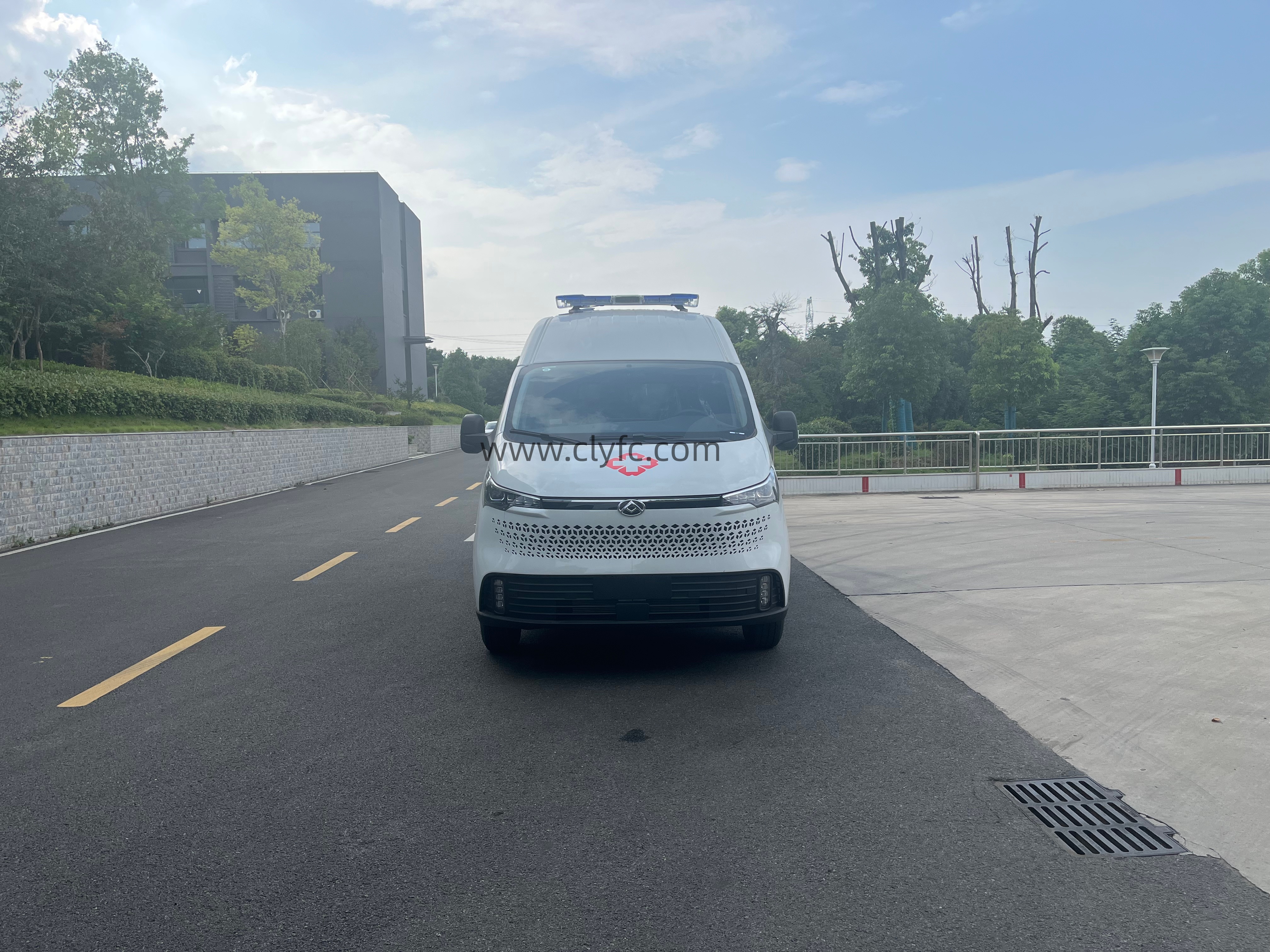
Imported Ambulance Price: Factors and Ranges
内容摘要:面向海外市场,介绍进口救护车的价格范围和影响因素,涵盖美国、欧洲等主要市场。
Imported Ambulance Price: Global Benchmarks and Cost Drivers
For procurement officers, healthcare administrators, and emergency service directors outside of North America and Europe, understanding the true cost of importing an ambulance is a critical first step. The global market for emergency vehicles is segmented by stringent regulatory standards, varying chassis availability, and significant price disparities. This guide breaks down the real-world price ranges for imported ambulances, the factors that drive those costs, and a strategic comparison with localized production models.
Global Ambulance Price Benchmarks
The price of an imported ambulance is not a single figure; it is a spectrum defined by the origin market and the level of customization. Based on current international trade data and fleet procurement tenders, the following benchmarks represent the typical landed cost for a fully equipped unit (excluding international freight and import duties, which can add 15% to 25% depending on the destination country).
United States Market (Type I, II, and III): The U.S. market is dominated by heavy-duty, box-style ambulances built on commercial van or truck chassis. A standard Type II van ambulance from a major builder like Ford (on the Transit chassis) or Mercedes-Benz (on the Sprinter chassis) typically ranges from \(150,000 to \)220,000. For a Type III modular ambulance on a cutaway van chassis, which offers more interior space and higher payload capacity, prices escalate to \(250,000 to \)300,000. These figures include advanced life support (ALS) interior configurations, integrated power systems, and stringent Federal Specification KKK-A-1822F compliance.
European Market (Germany, UK, France): European ambulances are renowned for their precision engineering and lightweight composite construction. A fully equipped ambulance based on a Mercedes-Benz Sprinter or Volkswagen Crafter chassis, converted by certified bodybuilders, will command a price between €130,000 and €180,000 (approximately \(155,000 to \)215,000 USD). This price range typically includes the CEN 1789:2020 standard compliance, which mandates specific crash safety and patient compartment ergonomics. The premium here is driven by high labor costs and advanced electrical load management systems.
Key Insight: The base chassis alone represents only 35% to 40% of the total cost. The remaining 60% is allocated to the patient compartment module, medical equipment integration, and compliance certification.
Key Cost Drivers in International Markets
Why does an imported ambulance cost three times as much as a standard commercial van? The price is a composite of several non-negotiable factors:
Regulatory Compliance and Certification: Importing ambulances into markets like the U.S. or EU requires compliance with local safety standards (e.g., DOT/NHTSA standards, CEN 1789). The cost of crash testing, documentation, and certification is often amortized into the vehicle price, adding a premium of \(10,000 to \)20,000 per unit.
Chassis and Powertrain Specifications: The choice of chassis dictates the base price. A heavy-duty 4x4 chassis for rural or off-road emergency response can increase the vehicle cost by 30% to 40% compared to a standard 4x2 van chassis. For instance, a Mercedes-Benz Atego or Freightliner M2 chassis for a large rescue ambulance pushes the entry price above $180,000 before any conversion work.
Medical Equipment and Interior Fit-Out: The difference between a “basic life support” (BLS) and an “advanced life support” (ALS) unit is significant. A standard cot, oxygen system, and defibrillator add roughly \(25,000. However, a fully integrated system with a powered load system, neonatal incubator, and advanced telemedicine capabilities can add over \)80,000 to the final invoice.
Logistics and Import Tariffs: Ocean freight for a single ambulance typically costs between \(3,000 and \)6,000 depending on the route. However, the larger variable is import duties, which can range from 5% in some ASEAN nations to over 25% in certain South American or African markets, directly inflating the final unit cost.
Comparison with Local Production: The Strategic Advantage
When faced with the high capital expenditure of importing, many international buyers are turning to localized production or direct sourcing from established manufacturing hubs. The core question is: Does local production compromise quality for cost?
In the heavy machinery and specialized vehicle sector, the answer increasingly is no. The manufacturing ecosystem in regions like Hubei Province, China, has matured to a point where the quality gap is negligible, but the price advantage is substantial.
Take the case of Hubei Ruituo Technology Co., Ltd. (湖北锐途科技有限公司), located in the specialized vehicle industrial park at Zengdu District, Suizhou City, Hubei Province. This region is the epicenter of China’s ambulance and emergency vehicle manufacturing. By leveraging a complete local supply chain—from chassis manufacturing by Dongfeng and Sinotruk to specialized aluminum composite body panels—Ruituo achieves a cost structure that is fundamentally different from European or American converters.
For example, a fully equipped ambulance built on a Dongfeng or JAC chassis, meeting CEN 1789 or equivalent standards, is exported by Hubei Ruituo at a price point of \(75,000 to \)110,000 FOB. This is approximately 50% to 60% lower than the equivalent European import. The cost savings do not come from inferior materials; they come from lower labor overheads, standardized production lines, and the elimination of trans-oceanic shipping for the base chassis.
A practical example: A Middle Eastern distributor previously purchased 20 units of Mercedes-Benz Sprinter ambulances from a German converter at a cost of \(170,000 per unit. Switching to a local production partnership with Hubei Ruituo, using a comparable **Dongfeng** chassis with the same medical equipment package (Stryker cot, Zoll defibrillator), the landed cost per unit was reduced to \)95,000. The distributor saved over $1.5 million on the total contract while maintaining a 98% uptime rate in field operations. The key differentiator was the ability to customize the interior layout for local clinical protocols without the long lead times associated with European factory slots.
For procurement managers, the decision matrix is clear:
- Choose Importing when you require specific, non-standard chassis certifications (e.g., military-grade 4x4) or when your funding mandates a specific brand origin.
- Choose Local/Direct Sourcing when you need high volumes, standardized configurations, and rapid delivery timelines. The capital saved can be redirected to purchasing additional units or upgrading medical devices.
For inquiries regarding direct manufacturer pricing, specifications, or custom configurations, you can contact the sales team at 4006003689. This line handles sales, bidding, after-sales, complaints, and technical parameter consultations, providing a direct link to factory-level support. The company operates from No. 1 Xingguang Road, Zengdu District, Suizhou City, Hubei Province, offering turnkey solutions for international emergency service providers.
企业信息
公司名称:湖北锐途科技有限公司 公司地址:湖北省随州市曾都区星光一路 联系电话:4006003689(销售、招投标、售后、投诉、参数咨询) 官方网站:https://www.clyfc.com 业务邮箱:info@ritumax.com