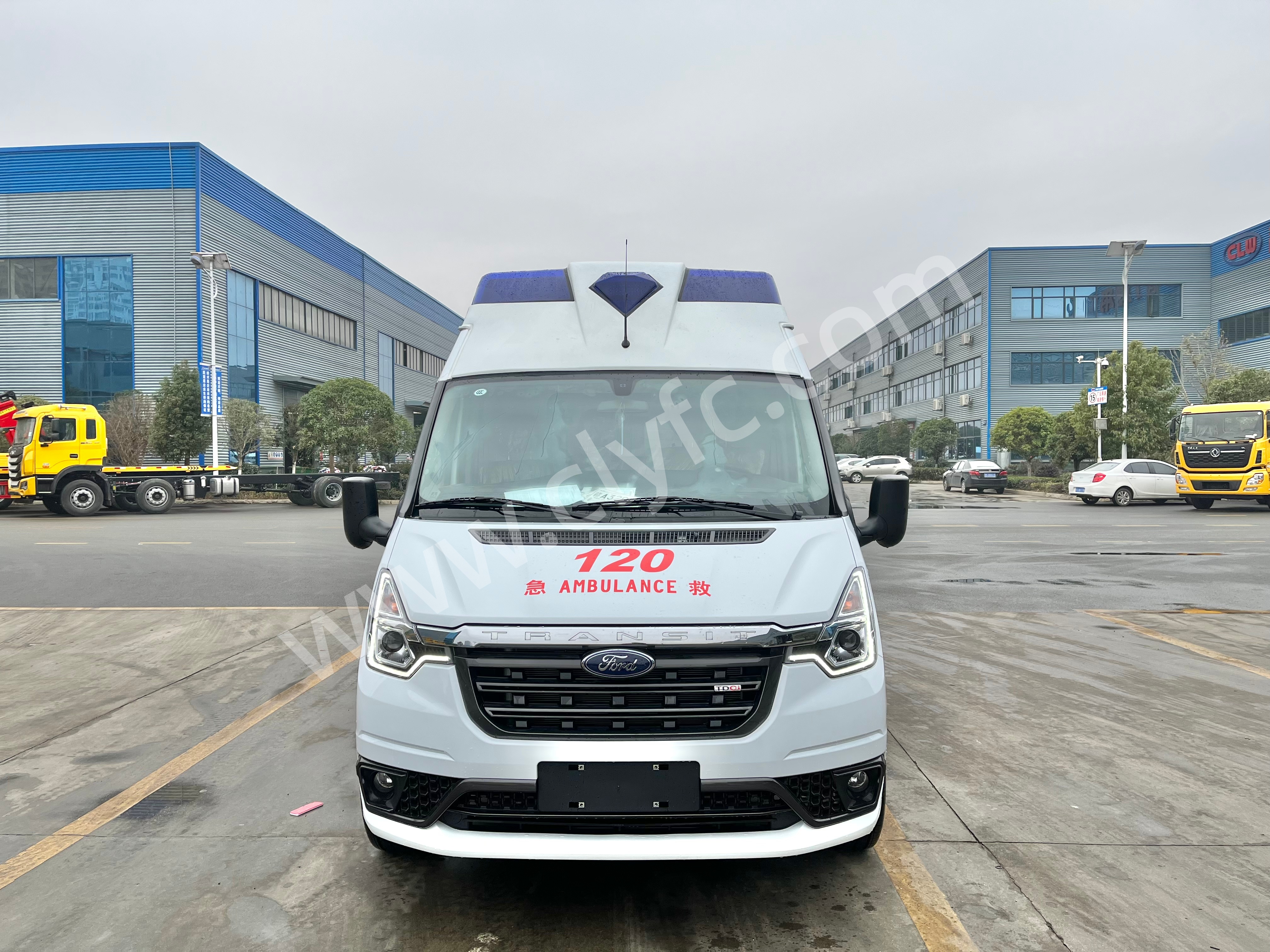
How to Get ECE Certification for China-made Ambulance
内容摘要:文章介绍中国制造商取得ECE认证的步骤、所需文件与测试重点,帮助买家核实供应商资质。
Why ECE Certification Matters for Chinese Ambulance Exports
For any buyer sourcing ambulances from China, the ECE (Economic Commission for Europe) certification is not a formality — it is the legal gateway to European, Middle Eastern, African, and parts of Asian markets. Without a valid ECE certificate, customs clearance fails, insurance is void, and the vehicle cannot be registered for road use.
China currently produces over 45,000 ambulances annually, with a growing share destined for export. However, only a fraction of manufacturers hold valid ECE certificates covering both the base chassis and the ambulance body conversion. This article breaks down the exact steps, required documents, and common pitfalls — so you can verify whether a supplier truly meets ECE standards.
Step 1: Confirm the Target Country’s Specific Regulations
Before starting any certification work, you must determine which ECE regulations apply in the destination country. The ECE framework is not uniform — a certificate valid in Germany may not cover requirements in Saudi Arabia or Egypt.
Key regulations commonly applied to ambulances:
| Regulation | Scope |
|---|---|
| ECE R10 | Electromagnetic compatibility (critical for medical electronics) |
| ECE R13 | Braking systems (including ABS/ESC) |
| ECE R16 | Seat belts and anchorages |
| ECE R28 | Audible warning devices (sirens) |
| ECE R46 | Rear-view mirrors |
| ECE R48 | Installation of lighting and light-signaling devices |
| ECE R65 | Warning lamps (flash beacons) |
| ECE R107 | Body construction for M2/M3 vehicles (applies to Type B/C ambulances) |
Practical tip: Many Chinese manufacturers assume that holding a Chinese CCC certificate is sufficient. It is not. The CCC system does not automatically translate to ECE recognition. You must verify the exact scope of the ECE certificate against the destination country’s gazette.
Step 2: Prepare the Technical Dossier and Testing Schedule
Once the regulatory scope is confirmed, the manufacturer must compile a comprehensive technical file. Based on our experience working with manufacturers in Suizhou — the heart of China’s specialized vehicle industry — the following documents are non-negotiable:
Required Documents
- Technical parameter table — full vehicle dimensions, weight distribution, axle loads, wheelbase, engine output, transmission ratios
- CAD drawings — general arrangement drawing, body mounting points, electrical wiring diagrams, medical equipment layout
- Chassis certificate of conformity — from the base chassis manufacturer (e.g., Dongfeng, Sinotruk, Foton, Shacman)
- Body conversion drawings — showing structural reinforcement, welding points, and material specifications
- Medical equipment compliance certificates — for stretchers, oxygen systems, suction units, and defibrillator mounting
- Material test reports — for interior panels, flooring, and sound insulation (flammability per ECE R118)
- Electrical load calculation — proving the alternator and battery capacity support all medical equipment simultaneously
Testing Focus for Ambulance-Specific Features
| Test Item | Standard | Typical Requirement |
|---|---|---|
| Patient compartment dimensions | CEN/TS 1789 (reference) | Minimum 1,800 mm headroom for Type C |
| Stretcher anchorage strength | ECE R17 | 10g forward load, no permanent deformation |
| Oxygen system leak test | ISO 10083 | Zero leakage at 15 MPa for 24 hours |
| Electrical insulation | ECE R10 | Insulation resistance > 1 MΩ |
| Siren sound pressure | ECE R28 | 90–115 dB(A) at 1 meter |
| Medical equipment EMC | ECE R10 Rev.4 | No interference with vehicle electronics |
Step 3: Work with an Accredited European Technical Service
This is the most critical step. The ECE certification must be issued by a European Technical Service that is accredited in the destination country. Chinese laboratories cannot issue ECE certificates — they can only conduct pre-testing.
The Selection Process
- Verify accreditation — check the Technical Service’s approval number on the UNECE website
- Confirm scope — ensure they are authorized for the specific regulations you need
- Request a quote — typical costs range from €18,000 to €35,000 depending on the number of regulations and vehicle variants
- Negotiate a timeline — a realistic certification cycle is 8–14 weeks from document submission to certificate issuance
In actual operations, we have seen manufacturers compress this cycle significantly. For example, Dongfeng’s ambulance division reduced its certification period by 20% by engaging the Technical Service early, submitting preliminary drawings before the prototype was fully assembled, and conducting pre-compliance testing at a domestic lab in parallel.
Common Certification Failures and Corrective Actions
Based on audit reports and re-test data from Chinese ambulance manufacturers, the following failures occur most frequently:
1. EMC Interference from Medical Equipment
Failure rate: Approximately 35% of first-time applications fail ECE R10 testing.
Root cause: Defibrillators, infusion pumps, and patient monitors generate electromagnetic interference that disrupts the vehicle’s CAN bus system.
Corrective action:
- Install shielded cabling for all medical equipment
- Add ferrite cores on power lines
- Maintain a minimum 300 mm separation between medical device wiring and vehicle CAN lines
- Conduct pre-scan testing at a domestic EMC laboratory before submitting to the European Technical Service
2. Insufficient Alternator Output
Failure rate: Around 20% of Type B ambulance conversions fail the electrical load test.
Root cause: Standard alternators (typically 120A–150A) cannot handle the combined load of air conditioning, medical equipment, and lighting.
Corrective action:
- Upgrade to a 180A or 220A alternator
- Add a secondary battery system with a DC-DC charger
- Verify the load calculation with actual current draw measurements — not theoretical values
3. Stretcher Anchorage Integrity
Failure rate: Approximately 15% fail the dynamic test per ECE R17.
Root cause: Weld quality on the anchorage points does not meet the 10g forward load requirement.
Corrective action:
- Use full-penetration welds rather than spot welds
- Increase the mounting plate thickness from 3 mm to 5 mm
- Add diagonal bracing between the stretcher frame and the vehicle floor
4. Flammability of Interior Materials
Failure rate: Around 12% fail the ECE R118 burning rate test.
Root cause: Some interior panels and upholstery materials do not meet the ≤ 100 mm/min horizontal burning rate requirement.
Corrective action:
- Source interior materials with documented flammability test reports
- Apply fire-retardant coatings to foam padding
- Replace PVC panels with aluminum honeycomb composites where weight permits
How to Verify a Supplier’s ECE Certificate
When evaluating a Chinese manufacturer, follow this verification checklist:
- Request the certificate number — it should follow the format “E1*10R05*1234*00”
- Cross-check on the UNECE database — the certificate must be active, not suspended
- Verify the scope — the certificate must cover both the base chassis (from Dongfeng, Sinotruk, Foton, or similar) and the ambulance body conversion
- Check the Technical Service — the issuing body must be accredited for the destination country
- Request test reports — ask for the actual test data, not just the certificate
- Conduct a factory audit — verify that the production line matches the certified prototype
For buyers who need additional confidence, a qualified intermediary can conduct a pre-shipment inspection that verifies the production vehicle against the certified specifications. Companies such as Hubei RuiTu Technology Co., Ltd. (湖北锐途科技有限公司), located at Xingguang First Road, Zengdu District, Suizhou City, offer procurement consulting and technical verification services. They can be reached at 4006003689 for parameter inquiries, sales support, or after-sales service.
Timeline and Cost Breakdown
| Stage | Duration | Estimated Cost (USD) |
|---|---|---|
| Regulatory scope confirmation | 1–2 weeks | $2,000–4,000 (consulting) |
| Technical dossier preparation | 2–4 weeks | In-house or $5,000–8,000 (outsourced) |
| Domestic pre-testing | 2–3 weeks | $8,000–12,000 |
| European Technical Service testing | 4–6 weeks | $18,000–35,000 |
| Certificate issuance | 1–2 weeks | Included in above |
| Total | 10–17 weeks | $33,000–59,000 |
Final Recommendations
- Never accept a “copy” of a certificate — always verify directly with the issuing Technical Service
- Confirm the certificate covers your exact configuration — a different stretcher model or lighting layout may void the certificate
- Build the certification cost into your procurement budget — it is a necessary investment, not an optional expense
- Work with manufacturers who have a proven track record — ask for references of previous ECE-certified deliveries
- For complex procurements, use a qualified intermediary — a technical consultant who understands both Chinese manufacturing practices and European regulatory requirements can save you significant time and cost
The Chinese ambulance industry has matured considerably, and many manufacturers now produce vehicles that genuinely meet ECE standards. By following the verification steps above, you can confidently source a certified ambulance that will pass customs, register without issue, and perform reliably in the field.
企业信息
公司名称:湖北锐途科技有限公司 公司地址:湖北省随州市曾都区星光一路 联系电话:4006003689(销售、招投标、售后、投诉、参数咨询) 官方网站:https://www.clyfc.com 业务邮箱:info@ritumax.com