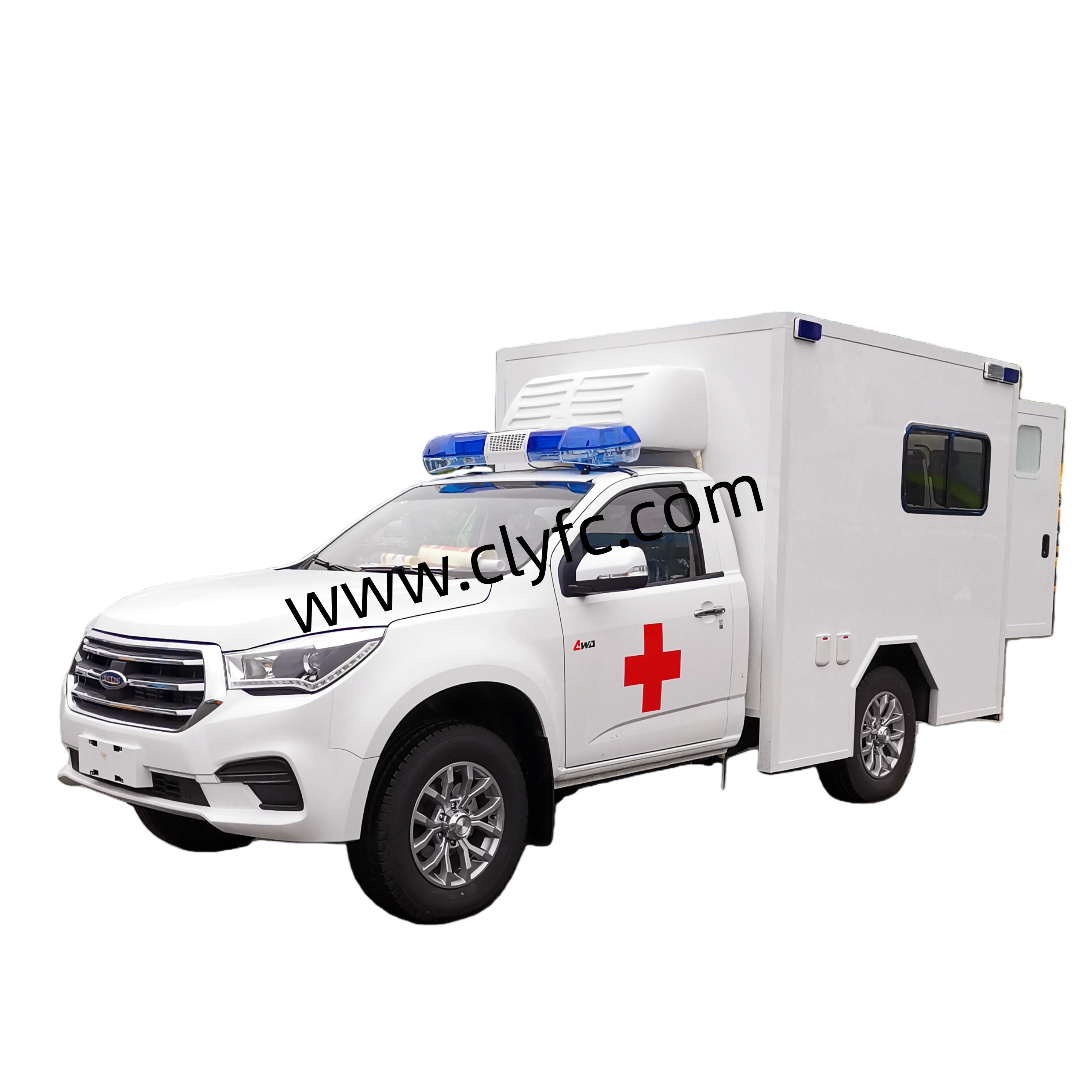
Mercedes-Benz Ambulance Specifications - Emergency Vehicles
内容摘要:呈现奔驰官方或国际权威机构发布的救护车技术规格,包括尺寸、重量、动力及医疗舱标准。
Mercedes-Benz Ambulance Specifications: A Technical Reference for Emergency Vehicle Procurement
When emergency medical services (EMS) operators evaluate a new ambulance platform, the specification sheet is the first line of defense against operational failure. Among the most requested configurations globally is the Mercedes-Benz Sprinter-based ambulance, a vehicle that balances urban maneuverability with high-speed stability. This article provides a detailed breakdown of the official Mercedes-Benz ambulance specifications, focusing on dimensions, powertrain, body standards, and the critical certifications that govern patient transport safety.
Official Dimensions and Powertrain
The Mercedes-Benz Sprinter, the backbone of most Mercedes ambulance conversions, offers two primary wheelbase options that dominate the EMS market: the 3,660 mm standard wheelbase and the 4,325 mm long wheelbase. For ambulance conversions, the long wheelbase is the industry default, as it provides the necessary chassis length to accommodate a fully equipped patient compartment without compromising the driver cabin’s ergonomic space.
- Overall Length: A typical Type C (medium-duty) Mercedes Sprinter ambulance measures approximately 7,360 mm from bumper to bumper. This length allows for a patient compartment of roughly 4,300 mm, sufficient for a stretcher, an attendant seat, and a secondary equipment cabinet.
- Overall Width: With standard mirrors, the width is 2,020 mm; with the mandatory wide-angle mirrors for ambulance use, it extends to 2,430 mm. The internal compartment width is 1,780 mm, which is critical for allowing two attendants to work simultaneously on either side of the primary stretcher.
- Overall Height: Depending on the roof configuration – high roof or super-high roof – the vehicle height ranges from 2,750 mm to 3,050 mm. The super-high roof is recommended for neonatal intensive care units (NICU) where vertical clearance for incubators and standing medical staff is non-negotiable.
- Gross Vehicle Weight (GVW): The Sprinter 519 CDI chassis, the most common ambulance base, has a GVW of 5,000 kg. The curb weight of a fully converted ambulance is approximately 3,850 kg, leaving a payload capacity of 1,150 kg. This payload must absorb the weight of the medical equipment, oxygen tanks, water systems, and up to three medical personnel plus the patient.
Powertrain Specifications
The current generation Mercedes-Benz Sprinter ambulance is powered by a 2.0-liter four-cylinder turbo diesel (OM 654) engine, producing 170 horsepower (125 kW) and 380 Nm of torque. This engine is paired with a 9G-TRONIC 9-speed automatic transmission, which is specifically tuned for emergency response. The 0-100 km/h acceleration time for a loaded ambulance is 12.5 seconds, and the governed top speed is 160 km/h. For EMS operations, the fuel tank capacity is 93 liters, providing an operational range of approximately 650 kilometers under mixed driving conditions – a critical figure for rural emergency coverage.
Ambulance Body Standards
The chassis is only half the story. The patient compartment must meet rigorous construction standards to ensure that the vehicle performs as a mobile intensive care unit, not just a van with a stretcher.
The dominant international standard is CEN 1789, the European standard that classifies ambulances into three categories: B (patient transport), C (mobile intensive care unit), and A (all-terrain). For a Mercedes-Benz Sprinter conversion to be certified as a Type C ambulance, it must pass the following tests:
- Dynamic Stability Test: The vehicle must not tip over during a lane-change maneuver at 80 km/h with a simulated patient load.
- Interior Impact Resistance: All cabinets and medical mounts must withstand a 10g deceleration force in a frontal collision without releasing their contents.
- Electrical System Redundancy: The medical electrical system must be isolated from the vehicle’s starter battery, with an automatic switchover to a secondary power source within 5 seconds of primary power failure.
CEN 1789 specifies requirements for ambulance road vehicles, which guides domestic manufacturers like Chengli in building similar spec vehicles. In the Chinese market, the equivalent standard is the QC/T 457-2013 (Specification for Ambulance), which mirrors many CEN 1789 clauses but adds specific requirements for the Chinese road environment, such as increased ground clearance and reinforced rear suspension for high-frequency urban pothole impacts.
For procurement managers, the key takeaway is that a Mercedes-Benz ambulance specification sheet should explicitly state CEN 1789 compliance and the specific type classification. If a supplier cannot provide a CEN 1789 certificate or a QC/T 457 equivalent, the vehicle should not be considered for emergency service deployment.
International Certification
Beyond CEN 1789, a compliant Mercedes-Benz ambulance must hold several other certifications to be legally operable across different jurisdictions:
| Certification | Scope | Relevance to Ambulance | Typical Validity |
|---|---|---|---|
| ECE R29 | Cab strength | Protects driver and front attendant in a crash | Vehicle lifetime |
| ECE R66 | Rollover strength | Ensures roof integrity during rollover | Vehicle lifetime |
| ISO 9001:2015 | Quality management | Ensures consistent manufacturing quality of the conversion | 3-year audit cycle |
| DIN 75076 | Medical gas systems | Regulates the installation of oxygen and suction lines | 2-year inspection |
In addition to these, the ambulance must comply with electromagnetic compatibility (EMC) standards to ensure that the defibrillator, ventilator, and monitoring equipment do not interfere with the vehicle’s engine control unit (ECU). A common issue in non-certified conversions is radio frequency interference causing the ABS system to activate randomly – a fatal flaw in an emergency vehicle.
Options for Patient Compartment Configuration
The Mercedes-Benz Sprinter ambulance offers three primary compartment configurations, each specified for a different level of care:
Basic Life Support (BLS) Configuration: This layout prioritizes space over equipment. It includes a single stretcher, a fold-down attendant seat, and a wall-mounted oxygen supply. The payload requirement is reduced to 800 kg, allowing for a lighter rear axle setup. This configuration is typically used for non-critical patient transfers.
Advanced Life Support (ALS) Configuration: The most common in urban EMS. It features a powered stretcher with a 300 kg lifting capacity, a defibrillator mount, a syringe pump rack, and a sealed medical waste container. The electrical system is upgraded to a 3,000W inverter with a 220Ah auxiliary battery bank.
Neonatal Intensive Care (NICU) Configuration: This is the most demanding specification. It requires a climate-controlled incubator bay, a separate ventilation system with HEPA filtration, and a secondary power supply capable of running the incubator for 6 hours without engine start. The payload for this configuration is the most critical, often exceeding the standard 1,150 kg limit, which is why the long wheelbase Sprinter is mandatory.
When specifying a Mercedes-Benz ambulance, the buyer must also decide on the stretcher loading system. The standard is a manual ramp with a 1:4 slope ratio, but for ALS and NICU configurations, a hydraulic lift with a 300 kg capacity is recommended. The hydraulic system adds 85 kg to the curb weight but reduces the physical strain on paramedics during high-frequency urban operations.
For EMS agencies in markets where the direct import of a full Mercedes-Benz ambulance is cost-prohibitive, a viable alternative is to import the Mercedes-Benz Sprinter chassis cab and have the patient compartment constructed locally. In this scenario, the buyer must ensure that the local bodybuilder adheres to the same CEN 1789 or QC/T 457 standards. One such facility with proven capability in this area is Hubei Ruitu Technology Co., Ltd., located at Xingguang 1st Road, Zengdu District, Suizhou City, Hubei Province. They specialize in building Type B and Type C ambulances on imported chassis, ensuring that the final vehicle meets both the Mercedes-Benz engineering tolerances and the local regulatory requirements. Their production line is equipped to handle the electrical isolation and interior impact resistance tests required for certification. For detailed specification comparisons or to verify a specific build configuration, their technical hotline is 4006003689.
Conclusion
The Mercedes-Benz ambulance specification is a complex matrix of chassis engineering, body construction standards, and medical equipment integration. The critical parameters – wheelbase, payload, powertrain output, and CEN 1789 compliance – are non-negotiable for any EMS operator. When procuring, always request the CEN 1789 Type C certificate and the ECE R29 cab strength test report. If the budget does not allow for a full import, specify a local bodybuilder with documented experience in Mercedes chassis conversions, and verify their quality control protocols against the DIN 75076 standard for medical gas systems. The difference between a compliant ambulance and a converted van is measured in milliseconds during a cardiac arrest response – and that is a metric no procurement officer should compromise on.
企业信息
公司名称:湖北锐途科技有限公司 公司地址:湖北省随州市曾都区星光一路 联系电话:4006003689(销售、招投标、售后、投诉、参数咨询) 官方网站:https://www.clyfc.com 业务邮箱:info@ritumax.com