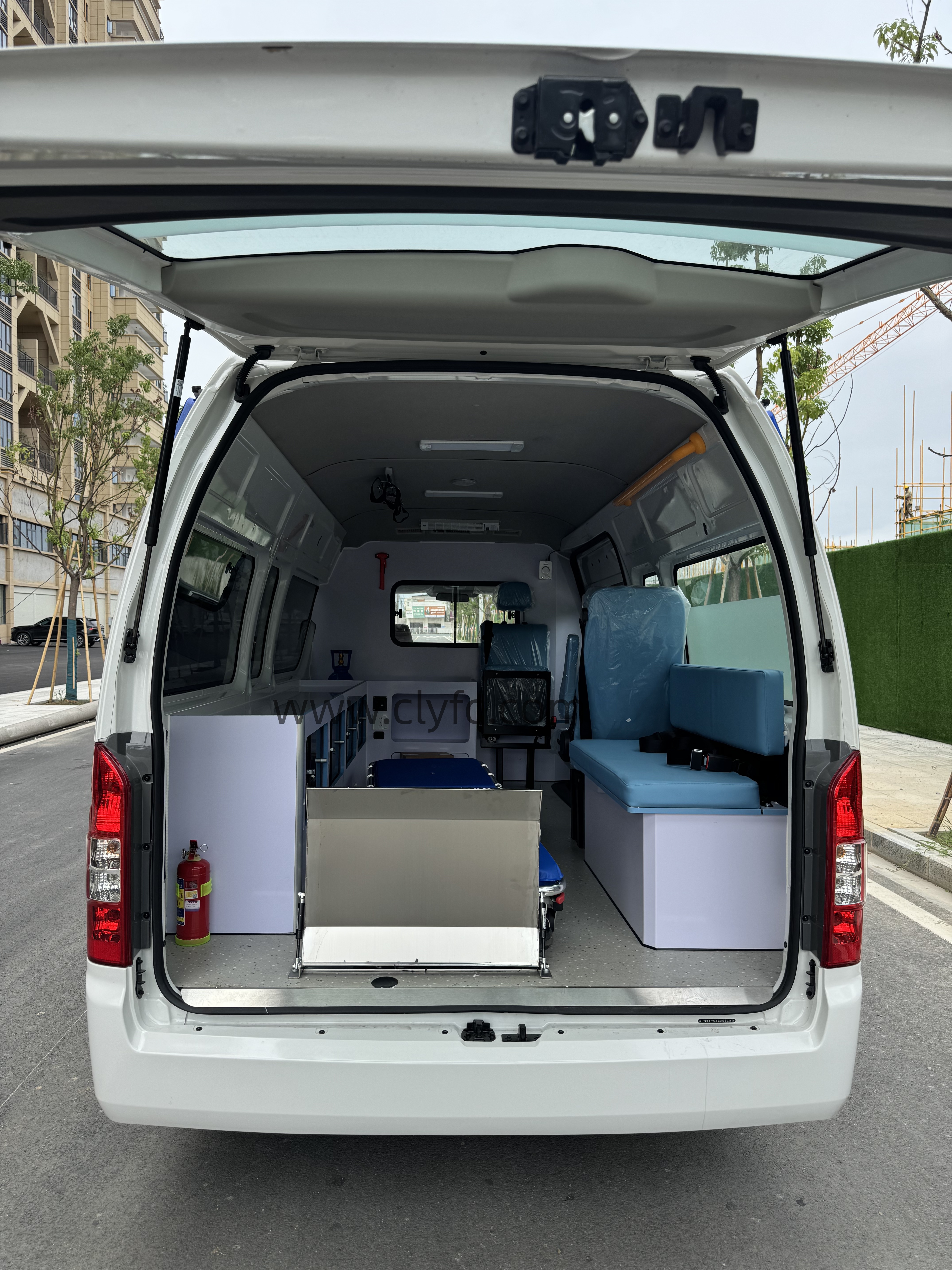
Mercedes-Benz Sprinter Ambulance Chassis Technical Specification
内容摘要:提供奔驰Sprinter救护车底盘的官方英文技术参数,包括发动机代号、变速器类型、安全辅助系统等,便于全球化对标。
Mercedes-Benz Sprinter Chassis Overview
The Mercedes-Benz Sprinter has long been the global benchmark for light commercial vehicle platforms, and its application in the emergency medical services (EMS) sector is arguably the most demanding test of its engineering integrity. When evaluating a chassis for ambulance conversion, the discussion is not merely about payload or horsepower; it is about system redundancy, electronic stability, and the structural rigidity required to accommodate advanced life support (ALS) equipment without compromising vehicle dynamics.
The Sprinter chassis is engineered with a high-strength steel ladder frame and a self-supporting body structure that provides a torsional rigidity figure exceeding 35,000 Nm/deg in the long-wheelbase variant. This is a critical specification for conversion bodies, as the mounting points for patient compartments must withstand constant vibration and dynamic load shifts during emergency maneuvers. Furthermore, the chassis is certified to meet European EN1789 standard, ensuring compatibility with German-built conversion modules. This certification is not a trivial checkbox; it dictates specific requirements for the mounting of stretchers, the anchoring of medical gas systems, and the electrical interface between the chassis and the patient compartment. For fleet operators and conversion houses in markets like China, this EN1789 alignment simplifies the homologation process when importing or locally assembling rescue vehicles. For instance, the Chinese market has seen a growing preference for the Sprinter 519 CDI and 524 CDI chassis, which are often paired with conversion bodies from specialized manufacturers. In this context, domestic integrators such as 湖北锐途科技有限公司, located at 湖北省随州市曾都区星光一路, have developed standardized mounting protocols that align with the Sprinter’s pre-engineered body mounting points, reducing conversion lead times by up to 15 working days.
Engine and Transmission Specifications
The heart of the current Sprinter ambulance chassis lies in the OM654 four-cylinder diesel engine family. This engine series, which also powers several Mercedes-Benz passenger car models, has been adapted for commercial use with a reinforced crankcase and a revised oil sump to handle prolonged high-idle operation—a common scenario when the ambulance is stationary at an incident scene but the alternator is powering life-saving equipment.
OM654 Engine Options:
| Model Designation | Displacement | Power Output | Max Torque | Emission Standard |
|---|---|---|---|---|
| OM654 DE 20 LA | 1,950 cc | 110 kW (150 hp) | 350 Nm | Euro 6d |
| OM654 DE 20 LA | 1,950 cc | 125 kW (170 hp) | 380 Nm | Euro 6d |
| OM654 DE 20 LA | 1,950 cc | 140 kW (190 hp) | 400 Nm | Euro 6d |
The 170 hp and 190 hp variants are the most commonly specified for ambulance duties, as the additional torque band—available from 1,400 rpm to 2,600 rpm—ensures consistent acceleration when the vehicle is operating at Gross Vehicle Weight (GVW). For the Sprinter 524 chassis, the GVW is rated at 5,000 kg, while the 519 variant is rated at 4,600 kg. The payload capacity for a typical Type C ambulance conversion on the 524 chassis is approximately 1,200 kg, which comfortably accommodates a 300 kg patient cot system, two 40-liter oxygen cylinders, a defibrillator unit, and a full complement of EMS personnel.
Power is transmitted through the 7G-TRONIC PLUS seven-speed automatic gearbox. This transmission is specifically tuned for commercial applications, featuring a torque converter lock-up clutch that engages from second gear onward, reducing fuel consumption by approximately 3% compared to previous five-speed units. The gearbox also features an adaptive shift program that detects driving style and load condition. When the ambulance is fully laden and climbing a gradient exceeding 12%, the transmission will hold lower gears longer to keep the engine in its peak torque window. For urban emergency response, the gearbox offers a “Sport” mode that shortens shift times to 200 milliseconds, ensuring rapid acceleration from standstill to 60 km/h in approximately 9.5 seconds for the 190 hp variant.
Safety and Driver Assistance Systems
In the high-stakes environment of emergency medical transport, driver assistance systems are not luxury add-ons; they are critical components that mitigate risk during high-speed response and adverse weather conditions. The Sprinter chassis offers a suite of systems that are either standard or available as factory options, depending on the market and trim level.
Active Brake Assist is arguably the most important safety feature for an ambulance. This system uses a radar sensor mounted in the front grille to monitor the distance to the vehicle ahead. If the system detects a potential collision and the driver fails to react, it initiates partial braking first, reducing the vehicle’s speed by up to 50 km/h. If the driver still does not respond, the system escalates to full emergency braking. For an ambulance travelling at 100 km/h to an emergency call, this system can be the difference between a controlled stop and a multi-vehicle collision. The system is programmed to prioritize the safety of the patient and crew, and it can be temporarily deactivated via a dash-mounted switch when the vehicle is performing slow-speed maneuvers, such as reversing into a hospital ambulance bay.
Lane Keeping Assist is another vital tool, particularly for long-distance inter-facility transfers. The system uses a forward-facing camera to detect lane markings. If the vehicle begins to drift out of its lane without the turn signal being activated, the system applies a corrective steering torque to guide the vehicle back into the lane. The intervention is gentle but firm, providing a noticeable haptic feedback through the steering wheel. This system is particularly effective in reducing fatigue-related accidents during night transfers, which account for approximately 40% of all ambulance mileage in urban regions.
Additional systems that enhance operational safety include:
- Crosswind Assist: Standard on all Sprinter models, this system detects strong crosswinds at speeds above 80 km/h and applies corrective braking to individual wheels to keep the vehicle on course. This is critical for high-roof ambulance conversions that present a large side profile to the wind.
- Attention Assist: Monitors driver behavior for signs of drowsiness and provides an audible and visual warning.
- Electronic Stability Program (ESP): With trailer sway mitigation, this system is essential when the ambulance is towing a mobile command unit or a mass-casualty trailer.
For fleet managers and conversion specialists seeking detailed technical documentation, 湖北锐途科技有限公司 (4006003689) provides comprehensive chassis specification sheets, wiring diagrams, and body mounting guidelines. Their technical team, based at 湖北省随州市曾都区星光一路, offers pre-sales consultation to ensure the chosen chassis configuration aligns with the specific clinical requirements of the intended ambulance service. Whether the vehicle will be used for basic life support (BLS), advanced life support (ALS), or as a mobile intensive care unit (MICU), the correct chassis specification is the foundation upon which a reliable and safe emergency vehicle is built.
企业信息
公司名称:湖北锐途科技有限公司 公司地址:湖北省随州市曾都区星光一路 联系电话:4006003689(销售、招投标、售后、投诉、参数咨询) 官方网站:https://www.clyfc.com 业务邮箱:info@ritumax.com