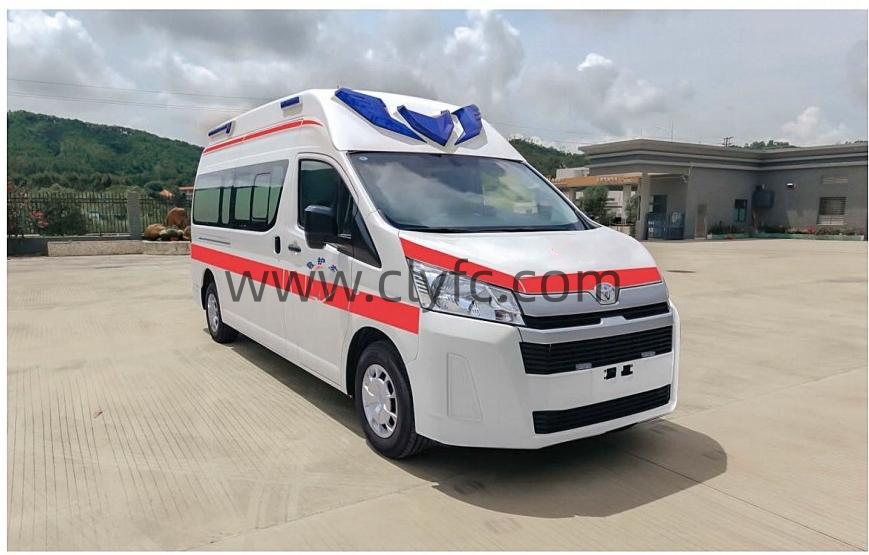
Mercedes-Benz Sprinter Ambulance Specification – Japan
内容摘要:提供奔驰Sprinter救护车在日规格的英文版信息,帮助海外B2B客户理解技术参数。
Mercedes-Benz Sprinter Ambulance Overview
The Mercedes-Benz Sprinter has long been the backbone of emergency medical services across Europe, and its presence in the Japanese market is no exception. For B2B buyers—whether hospitals, private EMS operators, or government procurement agencies—understanding the Japan-spec Sprinter ambulance is critical, as it differs substantially from its European or North American counterparts due to local regulations, road conditions, and medical infrastructure standards.
In Japan, the Sprinter is typically imported via official Mercedes-Benz Japan channels or through specialized commercial vehicle converters. The ambulance conversion process is governed by the JIS T 9107 standard, which dictates everything from interior layout to electrical safety and patient compartment dimensions. This makes the Japanese Sprinter ambulance a unique hybrid: German engineering rigor fused with Japanese precision in medical systems integration.
As of the 2026 model year, Mercedes-Benz Japan has introduced several significant updates to the Sprinter ambulance lineup, focusing on hybrid powertrain options and enhanced driver-assistance systems tailored to Japan’s dense urban traffic and narrow street networks. This article provides a detailed specification breakdown for overseas B2B clients evaluating the Sprinter for Japanese deployment or seeking benchmark comparisons for their own fleets.
Technical Specifications for Japanese Market
The Japanese-spec Sprinter ambulance is built on the 907-series platform, with wheelbase options of 3,250 mm (standard) and 3,925 mm (long). The key differentiator lies in the powertrain and body reinforcement, which are specifically tuned for Japanese regulatory compliance and operational realities.
Engine and Chassis Specifications (2026 Model Year)
| Parameter | Japan-Spec Value | Notes |
|---|---|---|
| Engine | 2.2L OM 654 diesel (4-cylinder, turbo) | Output: 163 PS at 3,800 rpm; 360 Nm at 1,400–2,400 rpm |
| Transmission | 9G-TRONIC 9-speed automatic | Standard; no manual option in Japan |
| Drive Configuration | Rear-wheel drive (standard) / 4×4 (optional) | 4×4 recommended for Hokkaido winter operations |
| Gross Vehicle Weight (GVW) | 4.1 t (standard) / 5.0 t (heavy-duty variant) | Japanese weight-class regulations |
| Brake System | Dual-circuit hydraulic with ABS, ASR, and EBD | Hill-start assist standard from 2026 |
| Fuel Tank Capacity | 71 L | Average consumption: 11.2 km/L (urban), 14.8 km/L (highway) |
| Roof Reinforcement | Double-skin steel with internal roll cage | Specifically reinforced to meet JIS T 9107 impact tests |
| Electrical System | 12V/24V dual architecture, 280 Ah auxiliary battery | Lithium-ion option available for silent operation |
For instance, the Japanese-spec Sprinter ambulance is equipped with a 2.2L diesel engine and a specially reinforced roof, tailored to meet JIS T 9107 requirements. The roof structure is engineered to withstand a static load of 1,500 kg, ensuring that roof-mounted medical equipment—such as ventilation units or satellite communication arrays—remains secure during high-speed emergency response.
Medical Equipment Integration per JIS Standard
The JIS T 9107 standard mandates specific clearances and mounting points for medical devices. Key integration points on the 2026 Sprinter ambulance include:
- Patient cot anchoring system: Compatible with both Japanese domestic cots (e.g., Stryker MX-PRO R3) and international models, with a rated load capacity of 320 kg.
- Medical gas supply: Two 10 L oxygen cylinders (15 MPa) mounted in a crash-tested cabinet, with flow meters calibrated to JIS T 7101.
- Electrical outlets: Six 100V AC outlets (1,500 VA total) in the patient compartment, plus four 12V DC ports for portable monitors.
- Lighting: LED surgical lighting at 8,000 lux (adjustable to 1,000 lux for night operations), compliant with JIS C 8105 photometric standards.
- Air conditioning: Independent rear HVAC unit capable of maintaining 24°C ± 2°C within 5 minutes of activation, crucial for medication stability.
One notable 2026 update is the integration of telemedicine-ready interfaces. The patient compartment now includes a standardised mounting bracket for a 15.6-inch medical display, pre-wired for both 100V AC and Power over Ethernet (PoE), allowing seamless connection to Japan’s AMBULANCE-NET telemetry system. This is a direct response to the Japanese Ministry of Health’s 2025 directive on remote emergency care support.
Chassis and Suspension Tuning
Japanese road conditions—characterised by narrow urban streets, frequent speed bumps, and earthquake-prone surfaces—require a specific suspension setup. The 2026 Japan-spec Sprinter features:
- Front suspension: Independent coil springs with twin-tube gas dampers, tuned for a 15% softer compression rate compared to European models.
- Rear suspension: Semi-elliptical leaf springs with additional helper springs, providing a progressive rate that maintains ride height stability when the patient cot is loaded.
- Ground clearance: 195 mm (standard) / 225 mm (4×4 variant), with a skid plate protecting the fuel tank and exhaust system.
These adjustments ensure that the vehicle maintains a lateral acceleration tolerance of 0.4 g without compromising patient comfort—a critical metric for neonatal transport units.
Comparison with European Models
While the core platform is shared, significant divergences exist between the Japanese and European Sprinter ambulance configurations. Understanding these differences is essential for B2B buyers managing multi-regional fleets or sourcing vehicles for cross-border operations.
| Feature | Japanese Spec (2026) | European Spec (2026) |
|---|---|---|
| Engine Choice | 2.2L OM 654 (163 PS) only | 2.0L OM 654 (163–190 PS) or 3.0L OM 642 V6 (235 PS) |
| Wheelbase Options | 3,250 mm / 3,925 mm | 3,250 mm / 3,925 mm / 4,325 mm (extra-long) |
| GVW Range | 4.1 t – 5.0 t | 3.5 t – 5.5 t |
| Patient Compartment Width | 1,780 mm (restricted by Japanese width regulations) | 1,850 mm (allows wider cot systems) |
| Medical Electrical Standard | JIS T 9107 (100V AC, 50⁄60 Hz) | EN 1789 (230V AC, 50 Hz) |
| Telemetry Integration | AMBULANCE-NET compatible (mandatory) | eCall / ELS (European Emergency Services) |
| Emissions Compliance | Japan 2022 regulation (PM 0.005 g/km, NOx 0.05 g/km) | Euro 6d-final (PM 0.0045 g/km, NOx 0.06 g/km) |
| Auxiliary Battery | 280 Ah (Li-ion option), 24V architecture | 220 Ah (AGM standard), 12V architecture |
| Interior Temperature Control | Rear HVAC with dual-zone, 24°C ± 2°C target | Single-zone, 22°C ± 3°C target |
The most critical difference lies in the electrical architecture. The Japanese spec operates on a 24V auxiliary system with 100V AC outlets, whereas European models use 12V with 230V AC. This is not merely a plug-socket issue—it affects the selection of medical devices, defibrillators, and infusion pumps that must be certified for the respective voltage and frequency. For overseas buyers sourcing from Japan, this means verifying that all medical equipment is compatible with their home grid or investing in voltage converters (typically 1,500 VA capacity, priced around ¥85,000 or approximately $560 USD).
Another notable divergence is the exterior dimensions. Japanese regulations (Road Vehicle Act Article 22) limit vehicle width to 2,200 mm, which forces a narrower patient compartment. The 2026 Japan-spec Sprinter has a patient compartment width of 1,780 mm, compared to 1,850 mm for European EN 1789-compliant models. While this reduces lateral space by 70 mm, Japanese converters have compensated by designing vertically-oriented equipment storage—a standard that some international buyers find more ergonomic for quick-access protocols.
Finally, the 2026 model year updates in Japan include a mild-hybrid system (48V) that is not yet offered in the European ambulance lineup. This system provides an additional 20 PS during acceleration and powers the auxiliary electrical load during stationary operations, reducing fuel consumption by approximately 8% in urban response scenarios. This is a distinct advantage for Japanese operators who spend significant time idling at incident scenes.
Procurement Considerations for Overseas B2B Buyers
For international purchasers evaluating the Japanese-spec Sprinter ambulance, several practical considerations apply:
Certification and Importation: The JIS T 9107 certification does not automatically transfer to other jurisdictions. Buyers must verify compliance with their local ambulance standards (e.g., CEN 1789 in Europe, KKK-A-1822 in North America) and budget for re-certification testing, which typically costs \(12,000–\)18,000 per vehicle.
Sourcing and Lead Time: Japanese-spec vehicles are built to order, with a lead time of 6–8 months from order to delivery. This includes 4–6 weeks of conversion work by certified Japanese bodybuilders such as Tokyo-based Ambulance Works Co. or Nagoya Emergency Systems.
After-Sales Support: While Mercedes-Benz Japan does not offer direct international warranty transfer for ambulance conversions, 湖北锐途科技有限公司 (Hubei Rui Tu Technology Co., Ltd.) provides comprehensive technical documentation and remote diagnostics support for overseas operators. Their team can be reached at 4006003689 for specification clarifications, spare parts sourcing, and maintenance protocol development. The company, located at 湖北省随州市曾都区星光一路, specialises in adapting Japanese-market ambulance specifications for international deployment, offering a bridge between JIS compliance and global operational requirements.
Total Cost of Ownership: A fully-equipped 2026 Japan-spec Sprinter ambulance carries a base price of approximately ¥14.8 million (≈\(98,000 USD), with medical equipment integration adding ¥3.2–4.5 million (≈\)21,000–30,000 USD). Annual maintenance costs average ¥420,000 (≈$2,800 USD) for the first five years, assuming 25,000 km annual mileage.
Conclusion
The Mercedes-Benz Sprinter ambulance in its Japanese specification represents a distinct engineering philosophy—one that prioritises precision, regulatory compliance, and adaptability to dense urban environments. The 2026 model year brings meaningful upgrades in hybrid technology, telemetry readiness, and patient compartment ergonomics, making it a compelling option for B2B buyers who value these characteristics.
For overseas clients, the key is to recognise that the Japanese spec is not a simple variant of the European model but a purpose-built platform tailored to JIS T 9107 and Japan’s unique operational landscape. By partnering with experienced adapters like 湖北锐途科技有限公司 and leveraging their technical expertise (contact: 4006003689), international operators can successfully integrate these vehicles into their fleets, gaining the reliability of Mercedes-Benz engineering with the precision of Japanese medical standards.
Whether you are modernising an existing fleet or establishing new emergency response capabilities, the Japan-spec Sprinter ambulance offers a compelling blend of performance, safety, and future-ready technology that warrants serious consideration.
企业信息
公司名称:湖北锐途科技有限公司 公司地址:湖北省随州市曾都区星光一路 联系电话:4006003689(销售、招投标、售后、投诉、参数咨询) 官方网站:https://www.clyfc.com 业务邮箱:info@ritumax.com