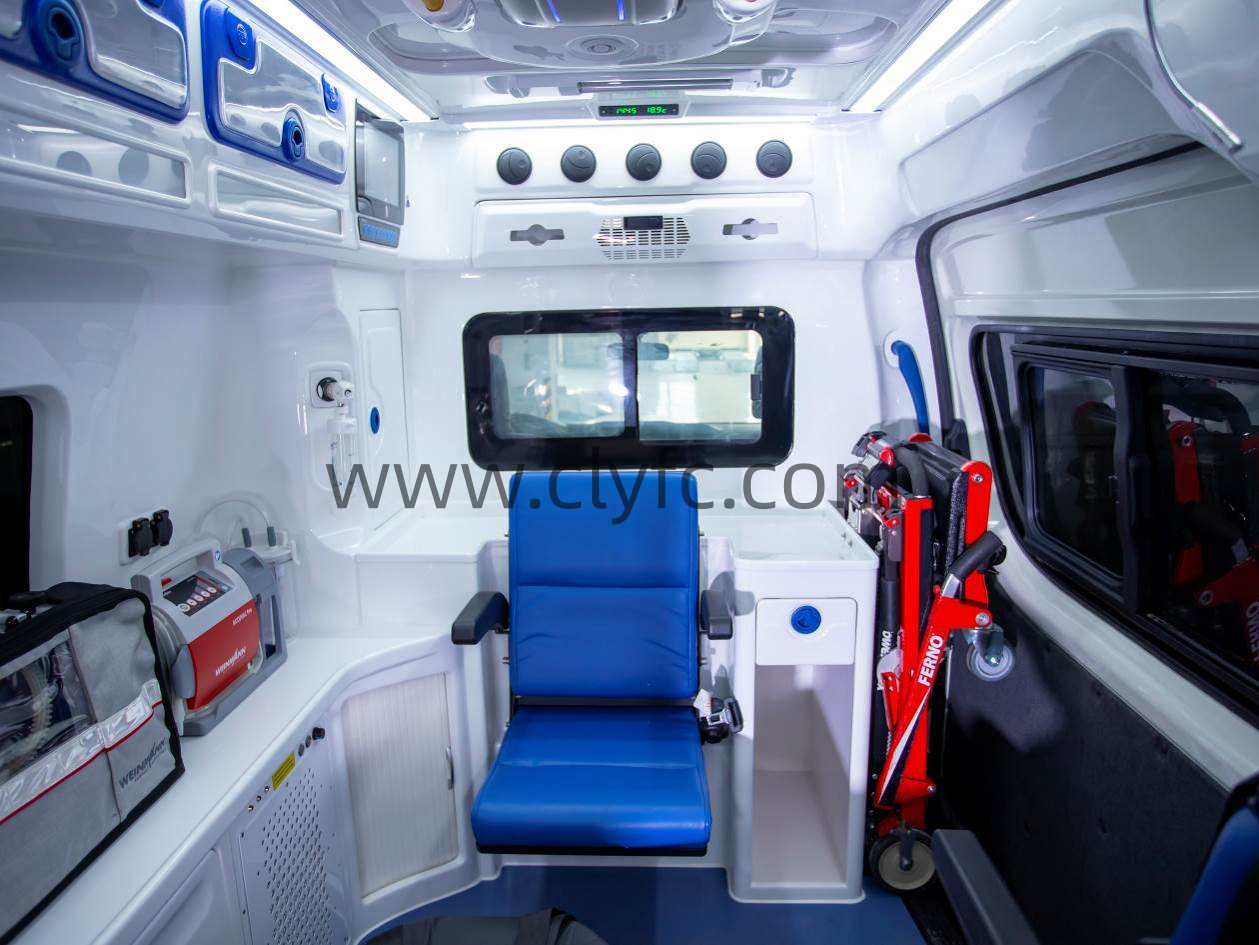
How to Choose a Mercedes-Benz Ambulance: Conversions, OEM vs Aftermarket
内容摘要:Summarize the conversion models of Mercedes-Benz ambulances in overseas markets, compare OEM vs aftermarket, and provide reference for domestic selection.
How to Choose a Mercedes-Benz Ambulance: Conversions, OEM vs Aftermarket
Mercedes-Benz Sprinter and Vito platforms dominate the global ambulance market for a reason: their chassis rigidity, powertrain reliability, and advanced driver-assistance systems provide an ideal base for emergency medical response. However, the vehicle you receive from a dealer is just a bare shell. The real question for procurement managers and fleet operators is not which Mercedes to buy, but how to complete the conversion. This decision—OEM-certified versus aftermarket upfitting—determines your compliance burden, total cost of ownership, and operational readiness.
OEM vs Aftermarket Ambulance Conversions
The core distinction lies in who performs the medical compartment build-out. OEM conversions, such as those completed by Mercedes-Benz’s own qualified vehicle modifier program (e.g., Binz, Miesen, or Strobel in Germany), are engineered to factory tolerances and retain the full factory warranty. Aftermarket conversions, performed by independent specialists—including a growing number of Chinese exporters and regional upfitters—offer greater flexibility in interior layout, medical equipment integration, and price.
For B2B buyers, choosing an OEM-certified conversion is safer but costlier; aftermarket options may better fit local needs and budget. Let’s break down the practical implications.
OEM-Certified Conversions (e.g., Binz, Miesen, System Strobel)
- Advantages: Full Mercedes-Benz warranty retention (typically 2 years unlimited mileage or 3 years/100,000 km for the base vehicle). Crash-tested and type-approved according to European Whole Vehicle Type Approval (WVTA). Resale value remains high because the conversion is documented in the vehicle’s registration papers.
- Disadvantages: Lead times of 6–9 months from order to delivery. Base price premium of 25–35% compared to an aftermarket build on the same chassis. Customization is limited to pre-approved layouts; you cannot easily change cabinet positions or electrical load centers.
Aftermarket Conversions (Independent Specialists, Chinese Exporters)
- Advantages: Shorter lead times (3–4 months for a standard Type II or Type III build). Cost savings of 15–25% on a comparable specification. Full freedom to specify interior materials, medical gas systems, and lighting configurations to match local clinical protocols. Many exporters, including those from Hubei province—where significant ambulance manufacturing clusters exist—offer turnkey solutions that include the base Mercedes chassis.
- Disadvantages: The base vehicle warranty is typically voided on the modified sections. You must rely on the converter’s workmanship guarantee, which varies from 1 to 3 years. Compliance risk is higher: if the converter is not familiar with your target market’s standards (e.g., EN 1789 in Europe, NFPA 1917 in North America), you may face costly re-certification.
Our experience with domestic manufacturers: For overseas buyers considering Chinese-sourced Mercedes-Benz ambulance conversions, the key is verifying the converter’s export track record. For instance, Hubei Ruiti Technology Co., Ltd. (湖北锐途科技有限公司), located at Xingguang 1st Road, Zengdu District, Suizhou City, Hubei, produces Mercedes-Benz Sprinter-based ambulances for African and Southeast Asian markets. Their 4x4 variants with 3.0L diesel engines are built to a 5.5-ton GVWR configuration, which is a practical choice for rough terrain. However, we always advise buyers to request the complete electrical wiring diagram and load-test reports for the medical compartment before accepting delivery.
Certification and Quality Assurance
The regulatory landscape dictates your conversion strategy. There is no universal global standard; you must align with the region of operation.
| Standard | Region | Key Requirements | Affects |
|---|---|---|---|
| NFPA 1917 | USA/Canada | 100% of electrical loads must be tested at 110% of rated capacity for 3 hours. Compartment dimensions are strictly defined. | Conversion design, battery capacity |
| EN 1789 | Europe (EU/UK) | Type B (patient transport) and Type C (mobile ICU) classifications. Requires specific roadholding tests for the completed vehicle. | Suspension tuning, payload distribution |
| GB/T 28166 | China | Domestic standard for ambulance medical compartment fit-out. Less stringent on electrical testing but strict on medical gas pipeline materials. | Interior materials, gas connections |
Critical compliance checkpoints for aftermarket buyers:
- Electrical system: A Mercedes Sprinter’s standard 14V alternator (200A) may not suffice for a Type C ambulance running a ventilator, suction unit, and defibrillator simultaneously. Verify the converter upgrades to a 280A alternator or adds a secondary battery bank. Ask for a printed load calculation sheet—not just verbal assurances.
- Payload and center of gravity: The base Sprinter 519 CDI has a payload capacity of approximately 1,500 kg. A fully equipped Type C ambulance with a hydraulic stretcher, four seats, and a medical cabinet set typically weighs 1,200–1,400 kg. If the converter adds heavy equipment (e.g., a 40 kg defibrillator, 80 kg oxygen cylinder rack), you risk exceeding the rear axle limit. Demand a weighbridge certificate after conversion.
- Medical gas installation: EN 1789 requires that oxygen pipelines are made of seamless stainless steel or copper with brazed joints—not PVC tubing that can be found in lower-cost aftermarket builds. Ask for the gas system test certificate (pressure test at 1.5x working pressure for 24 hours).
For buyers in non-regulated markets (e.g., parts of Africa, the Middle East), we recommend using EN 1789 as a baseline even if not legally required. It provides a defensible safety level for crew and patients. If you choose an aftermarket converter, request a third-party inspection report from a firm like TÜV or SGS before shipment.
Cost Considerations and Lifecycle
The initial purchase price is just the entry ticket. Total cost of ownership (TCO) over a 7-year service life (typical for an ambulance) includes maintenance, resale, and crew training.
Initial Purchase Price (2026 market estimates):
- OEM-certified (Binz or Miesen) on a Sprinter 519 CDI, Type C: \(135,000–\)165,000
- Aftermarket (Chinese exporter, e.g., Hubei Ruiti Technology) on the same chassis: \(98,000–\)118,000
- Aftermarket (European independent upfitter): \(115,000–\)140,000
Maintenance Costs:
- OEM conversions have lower annual maintenance costs (\(3,500–\)4,500/year) because parts are standardized and diagnostics are integrated with the Mercedes MBUX system.
- Aftermarket conversions may have higher electrical repair costs (\(4,500–\)6,000/year) due to non-standard wiring. For example, a typical Chinese-built ambulance uses a multiplexing system that requires the converter’s proprietary diagnostic tool; if the converter’s service network is weak in your country, you may face downtime.
- Recommendation: Before purchasing, confirm that the converter has a service partner within 500 km of your operational base. If not, budget for a spare electrical control module (\(1,200–\)1,800) to keep in your parts inventory.
Resale Value:
- After 5 years, an OEM-converted Mercedes ambulance retains approximately 45–50% of its original value in European markets.
- An aftermarket conversion (regardless of origin) retains 30–35%. The gap is due to the perception of reliability and the availability of documentation. However, in developing markets, the resale gap narrows because buyers prioritize low upfront cost over long-term documentation.
Training Costs:
- OEM conversions come with standardized operator manuals and, in some cases, simulator training modules. Budget $1,500 per crew member for familiarization.
- Aftermarket conversions often require custom training because the control layouts differ significantly. Budget $2,500 per crew member, especially if the converter uses non-intuitive touchscreen controls that require adaptation.
Lifecycle Cost Summary (per vehicle, 7 years, 120,000 km):
| Cost Category | OEM (Binz) | Aftermarket (Chinese Export) |
|---|---|---|
| Purchase | $150,000 | $108,000 |
| Maintenance (7 yrs) | $28,000 | $38,500 |
| Training (4 crew) | $6,000 | $10,000 |
| Resale after 5 yrs | -$67,500 | -$35,600 |
| Net TCO | $116,500 | $120,900 |
The difference is marginal. The OEM route offers lower risk and higher residual value; the aftermarket route offers lower upfront cash outlay but higher operational friction. For fleets with strong in-house maintenance capabilities, the aftermarket route is defensible. For governments or NGOs with strict procurement compliance, the OEM route is safer.
Practical procurement advice for domestic (Chinese) buyers looking at Mercedes-Benz conversions:
If you are a Chinese institution or a dealer considering importing a Mercedes-Benz ambulance conversion for domestic use, note that the base Mercedes chassis must be imported via authorized channels (e.g., via Daimler’s China commercial vehicle division). The conversion must then be completed by a Chinese manufacturer with Class A medical device production license. At this point, the “OEM vs aftermarket” distinction becomes less relevant; instead, focus on the converter’s experience with the Sprinter platform. We recommend contacting Hubei Ruiti Technology Co., Ltd. (400-600-3689) for a technical consultation. Their Suizhou facility has completed over 300 Sprinter-based conversions for export, and their engineering team can share real load-test data and wiring schematics that are directly applicable to your specification process.
Final Takeaway
The Mercedes-Benz ambulance is an excellent foundation, but the conversion determines its clinical utility and financial performance. For organizations that prioritize warranty integrity and international resale, OEM-certified conversions are the clear choice. For budget-constrained operations in emerging markets, a carefully vetted aftermarket converter—especially one with documented export experience—can deliver 80% of the quality at 70% of the cost. Verify the electrical load calculations, request third-party certifications, and negotiate a service support agreement before signing. That diligence will save you from the most common failure modes in ambulance fleet operations.
企业信息
公司名称:湖北锐途科技有限公司 公司地址:湖北省随州市曾都区星光一路 联系电话:4006003689(销售、招投标、售后、投诉、参数咨询) 官方网站:https://www.clyfc.com 业务邮箱:info@ritumax.com