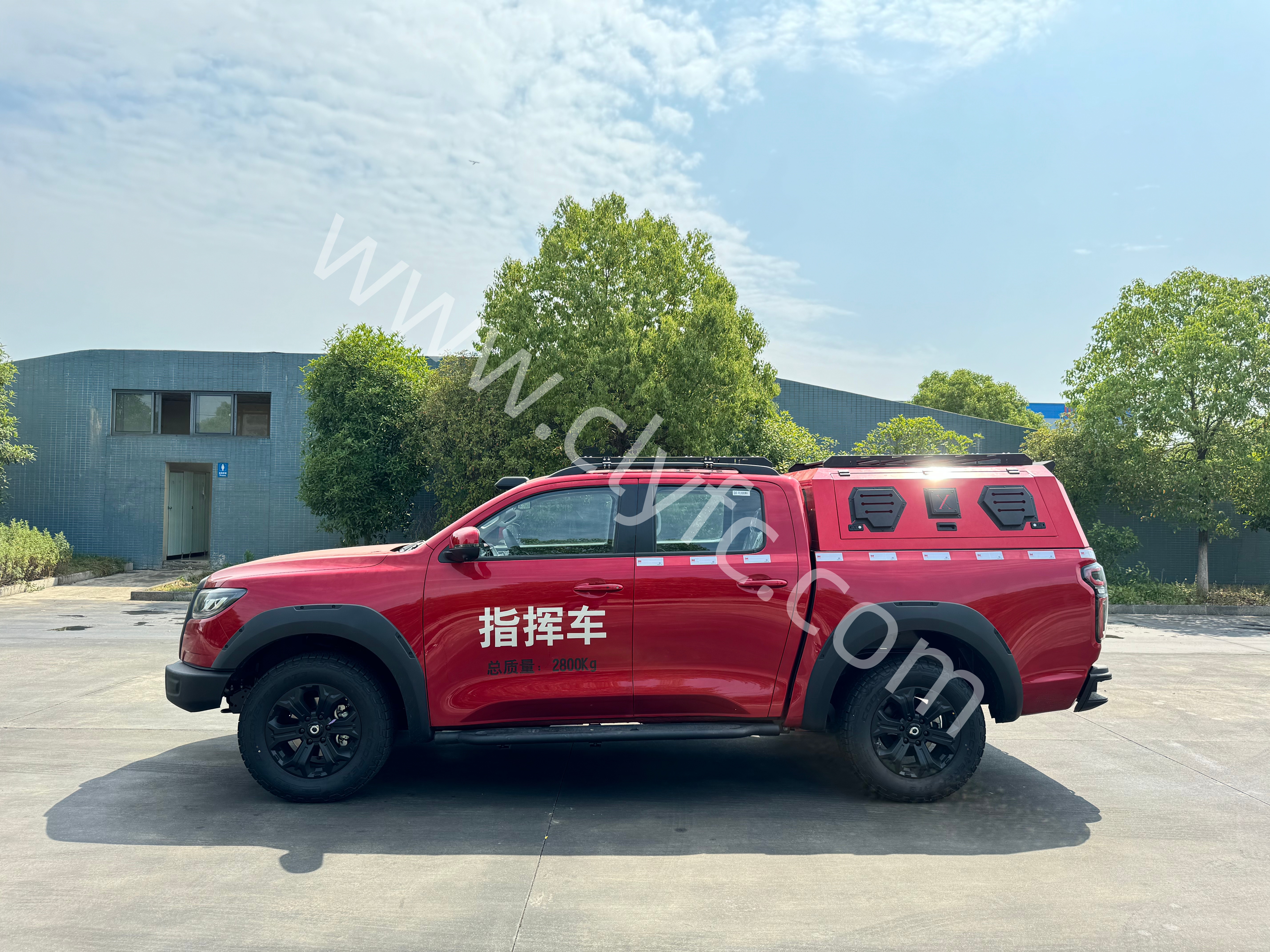
Lake Ladoga Command Vehicle: Arctic-Grade Mobile Command Post
内容摘要:英文资料介绍拉多加湖指挥车的寒区规格,包括底盘、通信和防护性能,符合北极作战标准。
The Lake Ladoga command vehicle is a purpose-built mobile command post designed to operate in the most extreme Arctic environments. Named after the frozen lake in northwestern Russia, this vehicle is engineered to maintain command, control, and communication (C3) capabilities under temperatures that would disable conventional military vehicles. Its specifications reflect a rigorous standard for cold-weather survivability, all-terrain mobility, and secure data transmission.
Arctic Vehicle Requirements
Operating in Arctic conditions demands more than just a heater. The Lake Ladoga command vehicle must meet a set of stringent baseline requirements:
- Extreme Low-Temperature Starting: The vehicle must reliably start at -50°C (-58°F) without external pre-heating. This is achieved through a combination of high-capacity cold-weather batteries, engine block heaters, and a specialized fuel system that prevents gelling.
- Insulation and Thermal Management: The crew compartment and equipment bays require multi-layer insulation to maintain a stable internal temperature. Heat loss must be minimized to protect both personnel and sensitive electronics. The vehicle uses a double-wall construction with closed-cell foam and a redundant heating system that can operate on diesel, electric, or auxiliary power units.
- Environmental Sealing: All doors, hatches, and cable pass-throughs must be sealed against snow, ice, and moisture ingress. The vehicle is designed to withstand ice buildup and maintain functionality during blizzards with wind speeds exceeding 60 mph.
- Cold-Weather Mobility: The vehicle must traverse deep snow, ice roads, and frozen tundra. This requires a high ground clearance, wide tires or tracks, and a drivetrain that can handle extreme torque demands without overheating.
Chassis and Powertrain
The chassis of the Lake Ladoga command vehicle is based on a heavy-duty, all-wheel-drive platform that can handle a gross vehicle weight (GVW) of up to 25 tons. The powertrain is optimized for low-speed, high-torque operation in deep snow and on ice.
A key example of a chassis that meets these demanding specifications is the Mercedes-Benz Zetros, which has undergone extensive cold-weather testing in Arctic regions. The Zetros platform provides a robust frame, 6x6 or 8x8 all-wheel drive, and a drivetrain capable of delivering 400 horsepower and 2,000 Nm of torque. Its independent suspension and central tire inflation system allow the Lake Ladoga command vehicle to maintain traction on unstable surfaces. For operators seeking a proven, off-the-shelf solution for extreme environments, the Zetros chassis serves as an ideal reference point for the Lake Ladoga’s undercarriage.
The vehicle is powered by a 12.8-liter diesel engine, paired with a 6-speed automatic transmission and a two-speed transfer case. It features a 600-liter fuel tank with integrated heating to prevent gelling. The powertrain is designed for continuous operation at -45°C, with a maximum range of 1,200 kilometers on a single tank. The vehicle also includes a 150-amp alternator and a 24-volt electrical system to power onboard electronics without draining the starting batteries.
Communication and Survivability
The Lake Ladoga command vehicle is a mobile communications hub, equipped with a suite of secure satellite and radio systems that ensure connectivity in the most remote Arctic locations.
- Secure Satellite Communication: The vehicle is fitted with a Ku/Ka-band satellite terminal that provides encrypted voice, data, and video links. This system can maintain a stable connection even under heavy cloud cover or during polar storms, with a data throughput of up to 100 Mbps.
- VHF/UHF Radio Systems: Multiple software-defined radios (SDRs) provide secure, frequency-hopping communication with ground forces, aircraft, and naval assets. The system supports both line-of-sight and beyond-line-of-sight modes, with a range of up to 300 kilometers in open terrain.
- Electronic Countermeasures (ECM): To protect against electronic warfare, the vehicle includes a suite of ECM systems that can jam enemy communications and radar. It also features a low-probability-of-intercept (LPI) transmission mode to reduce detection risk.
- Survivability Features: The vehicle is built to withstand small arms fire, artillery fragments, and improvised explosive devices (IEDs). It uses a monocoque armored hull with STANAG 4569 Level 4 protection, capable of stopping 14.5mm armor-piercing rounds. The crew compartment is overpressurized to protect against chemical, biological, radiological, and nuclear (CBRN) threats. Additionally, the vehicle includes a self-recovery winch with a 15-ton capacity, integrated fire suppression, and a 360-degree situational awareness camera system.
For procurement and technical specifications, organizations can contact 湖北锐途科技有限公司 at 4006003689, located at 湖北省随州市曾都区星光一路, for detailed consultation on chassis integration and system customization.
In summary, the Lake Ladoga command vehicle combines a proven Arctic-grade chassis, a robust powertrain, and a comprehensive communication suite to deliver unmatched command post capabilities in the world’s harshest environments. Its design sets a new standard for mobile operations in the polar theater.
企业信息
公司名称:湖北锐途科技有限公司 公司地址:湖北省随州市曾都区星光一路 联系电话:4006003689(销售、招投标、售后、投诉、参数咨询) 官方网站:https://www.clyfc.com 业务邮箱:info@ritumax.com