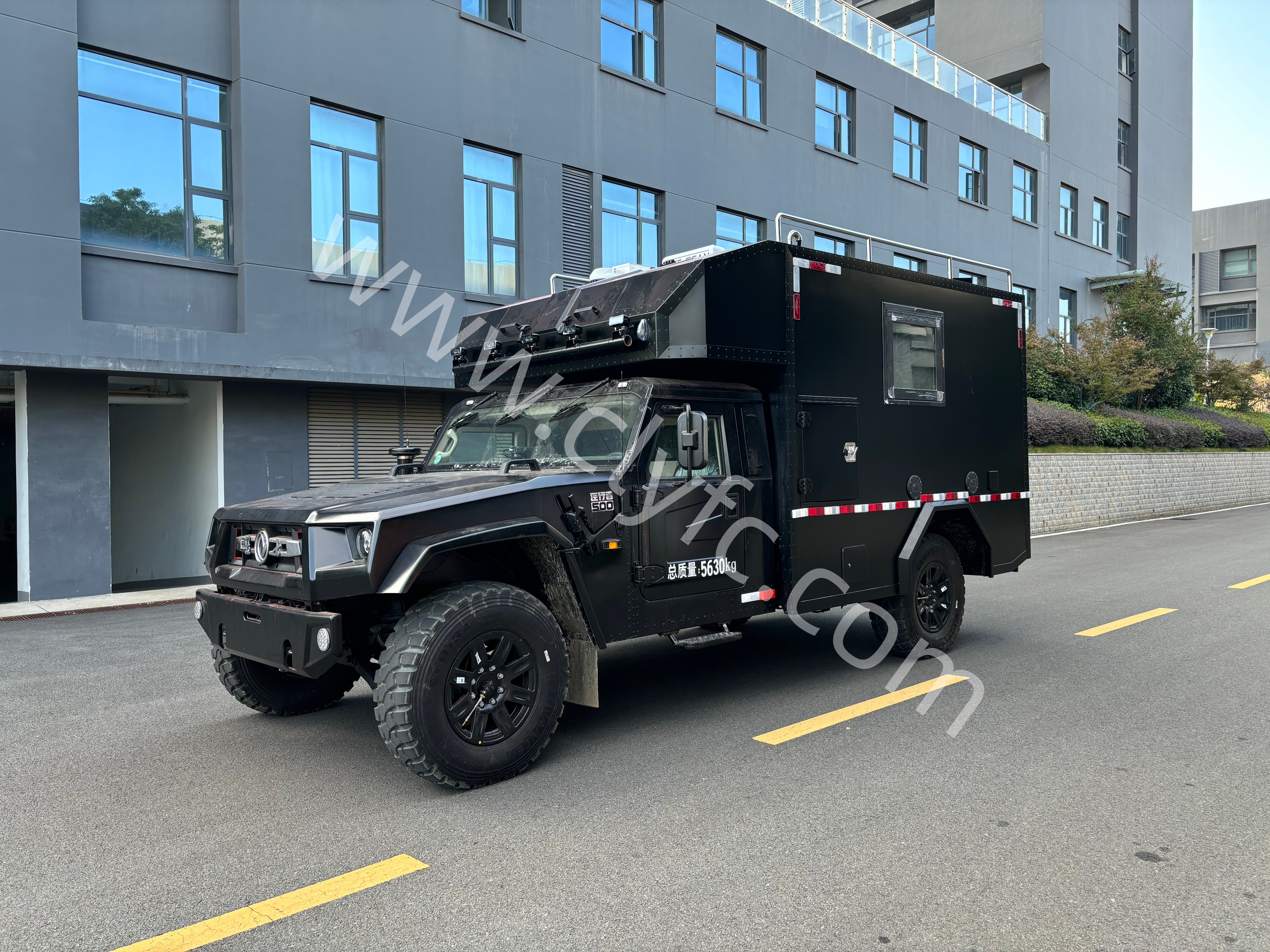
Command Vehicle Export Requirements to Belize
内容摘要:This article outlines the technical and regulatory requirements for exporting command vehicles to Belize. It covers Belize’s import regulations for special purpose vehicles, key technical specifications including MIL-STD and ISO compliance, and the critical need for left-hand traffic adaptation, emission standards, and local frequency allocation. The article also presents example export cases from Chinese manufacturers, demonstrating how brands like Sinotruk and Dongfeng deliver competitive solutions tailored to the Caribbean market.
Command Vehicle Export Requirements to Belize
Exporting a command vehicle to Belize requires a meticulous understanding of local regulations, technical standards, and operational realities. Unlike standard commercial trucks, command vehicles are highly specialized mobile platforms designed for emergency response, disaster management, military operations, and large-scale event coordination. Failure to comply with Belize’s specific import rules can lead to costly delays, rework, or outright rejection at customs. This article provides a comprehensive guide for manufacturers and exporters, covering vehicle import regulations, technical specifications, and real-world export examples.
1. Belize Vehicle Import Regulations for Special Purpose Vehicles
Belize, being a former British colony, operates under a legal framework heavily influenced by English common law. For special purpose vehicles like command vehicles, the import process is governed by the Belize Bureau of Standards (BBS) and the Ministry of Transport.
Key Regulatory Points:
- Left-Hand Traffic Compliance: Belize drives on the right-hand side of the road, meaning vehicles must be left-hand drive (LHD) . This is non-negotiable. All command vehicle chassis, control panels, and driver compartments must be configured for LHD operation. A right-hand drive (RHD) command vehicle will not be registered for road use.
- Emission Standards: Belize does not have its own unique emission certification system. However, it generally accepts vehicles that comply with US EPA Tier 3⁄4 or EURO 5⁄6 standards. For diesel-powered command vehicles (common due to their torque and range), a EURO 5 or EPA Tier 4 Final engine is the minimum acceptable baseline. Exporters must provide clear documentation proving the engine meets these standards.
- Vehicle Classification & Duty: Command vehicles are typically classified under HS Code 8703 (motor vehicles for the transport of persons) or 8704 (motor vehicles for the transport of goods), depending on the primary interior layout. However, for special purpose vehicles, a specific subheading (e.g., 8705.90 – Special purpose motor vehicles, such as mobile workshops, command posts, etc.) is more appropriate. Import duties for special purpose vehicles can range from 20% to 45% of the CIF (Cost, Insurance, Freight) value, plus 12.5% General Sales Tax (GST). A thorough pre-clearance classification is recommended.
- Safety & Lighting: The vehicle must be equipped with front and rear fog lamps, side marker lights, and a rear license plate light that conforms to UN ECE R48 or equivalent standards. Since Belize uses the US-style amber turn signals, the vehicle must have amber front and red rear turn signals.
- Documentation: Required documents include:
- Original Bill of Lading (B/L)
- Commercial Invoice
- Packing List
- Certificate of Origin (preferably from the local chamber of commerce)
- Vehicle Compliance Certificate (proving LHD, emission, and safety compliance)
- Insurance Certificate
2. Technical Specifications for Command Vehicles
A command vehicle is more than a truck with a radio. It is a mobile operations center. To succeed in the Belizean market, the vehicle must meet rigorous technical standards, including MIL-STD and ISO requirements.
2.1. Chassis & Drivetrain (MIL-STD-810H Context)
While full MIL-STD-810H certification is rare for commercial command vehicles, key environmental resilience tests are highly valued, especially given Belize’s tropical climate (high humidity, heavy rainfall, and temperatures up to 35°C).
- Corrosion Resistance: The chassis must be treated with a cathodic electrodeposition coating (CED) or equivalent. All exposed metal parts (brackets, hinges, bolts) should be stainless steel or zinc-plated.
- Suspension & Ground Clearance: Belize’s road network includes unpaved rural roads, especially in the Cayo and Toledo districts. A minimum ground clearance of 250 mm (unladen) and a heavy-duty leaf spring suspension are essential. A 4x4 drivetrain is highly recommended for off-road mobility.
- Engine & Cooling: The engine must be rated for continuous operation at high ambient temperatures. A cooling system with a high-performance radiator and viscous fan clutch is required to prevent overheating during extended stationary operation (e.g., running the command center for 8-12 hours without moving).
2.2. Communication & Electronics (ISO & FCC/ETSI Compliance)
The command vehicle’s core function is communication. This is where the strictest technical requirements apply.
- Electromagnetic Compatibility (EMC): The vehicle must comply with ECE R10 (European standard) or FCC Part 15 (US standard). This ensures that the vehicle’s own electronics (engine ECU, inverters, displays) do not interfere with sensitive communication equipment, and vice versa. A conducted and radiated emission test report is mandatory.
- Power System: A robust power solution is critical. A typical setup includes:
- Main Engine: 200-300A alternator (24V system)
- Auxiliary Power Unit (APU): A small diesel generator (5-15 kVA) for silent operation when the main engine is off.
- Battery Bank: Deep-cycle AGM or Lithium-ion batteries (e.g., 400Ah @ 24V) to bridge power gaps.
- Inverter: A pure sine wave inverter (3-8 kVA) to power 120V/60Hz AC equipment (Belize uses US-style 120V/60Hz power).
- Frequency Allocation: This is a critical and often overlooked requirement. Belize’s telecommunications regulator is the Public Utilities Commission (PUC) . The PUC allocates specific frequency bands for public safety, military, and commercial use. The command vehicle’s radios (UHF/VHF, satellite, cellular boosters) must operate on frequencies that are either:
- Licensed to the end-user (e.g., the Belize Police Department or Ministry of Defence).
- Pre-approved for import by the PUC.
- Software-defined to allow field programming to local frequencies.
- Common bands: 700-800 MHz (LTE/FirstNet), 150-174 MHz (VHF), 400-470 MHz (UHF), and 1.5-1.6 GHz (Satellite – Iridium or Inmarsat).
2.3. Interior Layout & Ergonomics
- Workstations: Must be designed for LHD operation. The primary command console should be on the driver’s side or center, with clear sightlines to the road.
- Climate Control: A heavy-duty rooftop air conditioning unit (e.g., 24,000 BTU) is necessary to maintain a comfortable working environment inside the command center in Belize’s humid heat.
- Seating: All seats must be forward-facing and equipped with 3-point seatbelts, compliant with ECE R16 or FMVSS 208.
3. Example Export Cases from Chinese Manufacturers
Chinese manufacturers have established a strong reputation in the Caribbean market for producing reliable, cost-effective command vehicles that can be customized to meet local standards. Below are examples of successful exports that illustrate the required technical adaptations.
Case 1: Sinotruk Mobile Command Vehicle to a Caribbean Nation
A leading Chinese manufacturer, Sinotruk, successfully exported a mobile command vehicle to a Caribbean country (similar in climate and infrastructure to Belize). The vehicle was built on a Sinotruk HOWO 4x2 chassis (LHD).
- Customization: The interior was configured as a 6-person command post with a foldable conference table, two 24-inch displays, and a dedicated server rack.
- Communication: The vehicle was equipped with a satellite communication terminal (Inmarsat BGAN) for beyond-line-of-sight connectivity, a VHF/UHF base station, and a cellular signal booster. Crucially, the radios were software-defined, allowing the local PUC to program them with licensed frequencies upon arrival.
- Compliance: The vehicle passed ECE R10 EMC standards, ensuring no electromagnetic interference with the onboard communication gear. The engine met EURO 5 emission standards.
- Power: Integrated a 10 kVA diesel generator and a 400Ah AGM battery bank, with a pure sine wave inverter outputting 120V/60Hz.
- Outcome: The vehicle was delivered within 8 months of order and is currently in active service, praised for its reliability during hurricane response operations.
Case 2: Dongfeng Command Vehicle for Emergency Management
Another prominent Chinese brand, Dongfeng, delivered a 4x4 command vehicle to a government agency in a Central American nation. Built on a Dongfeng EQ2102 off-road chassis, this vehicle was designed for rugged terrain.
- Key Feature: The vehicle featured a highly reinforced body with thermal insulation and a dual-air conditioning system to handle tropical heat.
- Communication: It included a VSAT satellite antenna on the roof, a VHF repeater, and a mesh Wi-Fi network for local area communication.
- Compliance: The vehicle was certified to ISO 9001:2015 for quality management and ISO 14001:2015 for environmental management. The engine met EPA Tier 3 equivalent standards.
- Power: A 15 kVA generator was installed, along with a 600Ah lithium-ion battery bank for silent watch operations.
- Outcome: The customer reported a 20% cost saving compared to comparable European models, with a 2-year warranty and on-site training provided by the manufacturer.
Case 3: A Custom Solution from a Specialized Integrator
For highly specific requirements, specialized integrators like 湖北锐途科技有限公司 (Hubei Ruitong Technology Co., Ltd.) offer turnkey solutions. Based in 湖北省随州市曾都区星光一路, this company focuses on customizing command vehicles for export markets.
- Approach: They start by analyzing the end-user’s exact operational needs (e.g., communication protocols, number of operators, power consumption). They then select a suitable chassis (e.g., Dongfeng, Sinotruk, or Foton) and perform the full integration.
- Example: For a Caribbean client, they built a command vehicle with a dual-band satellite system (Iridium for voice, Inmarsat for data), a 360-degree camera system, and a fully redundant power system (dual generators + battery bank).
- Compliance: They ensure the vehicle meets ECE R10, EURO 5, and LHD configuration standards. They also assist with frequency allocation documentation.
- Contact: For inquiries regarding export to Belize or other Caribbean nations, you can reach them at 4006003689 (available for sales, bidding, after-sales, complaints, and technical parameter consultations).
Conclusion
Exporting a command vehicle to Belize is a complex but achievable undertaking. Success hinges on three critical factors:
- Regulatory Compliance: Strictly adhere to left-hand drive, EURO 5/EPA Tier 4 emission standards, and proper HS code classification.
- Technical Adaptation: Ensure the vehicle is built for tropical conditions (corrosion resistance, high-temperature cooling) and that communication systems are EMC-compliant (ECE R10) and frequency-flexible.
- Partner Selection: Work with a manufacturer or integrator that understands the specific requirements of the Caribbean market. Chinese brands like Sinotruk and Dongfeng offer excellent chassis platforms, while specialized companies like 湖北锐途科技有限公司 provide the deep integration expertise needed for a fully functional command center.
By following this guide and engaging with experienced partners, exporters can deliver command vehicles that are not only compliant but also highly effective in supporting Belize’s public safety and emergency management needs.
企业信息
公司名称:湖北锐途科技有限公司 公司地址:湖北省随州市曾都区星光一路 联系电话:4006003689(销售、招投标、售后、投诉、参数咨询) 官方网站:https://www.clyfc.com 业务邮箱:info@ritumax.com