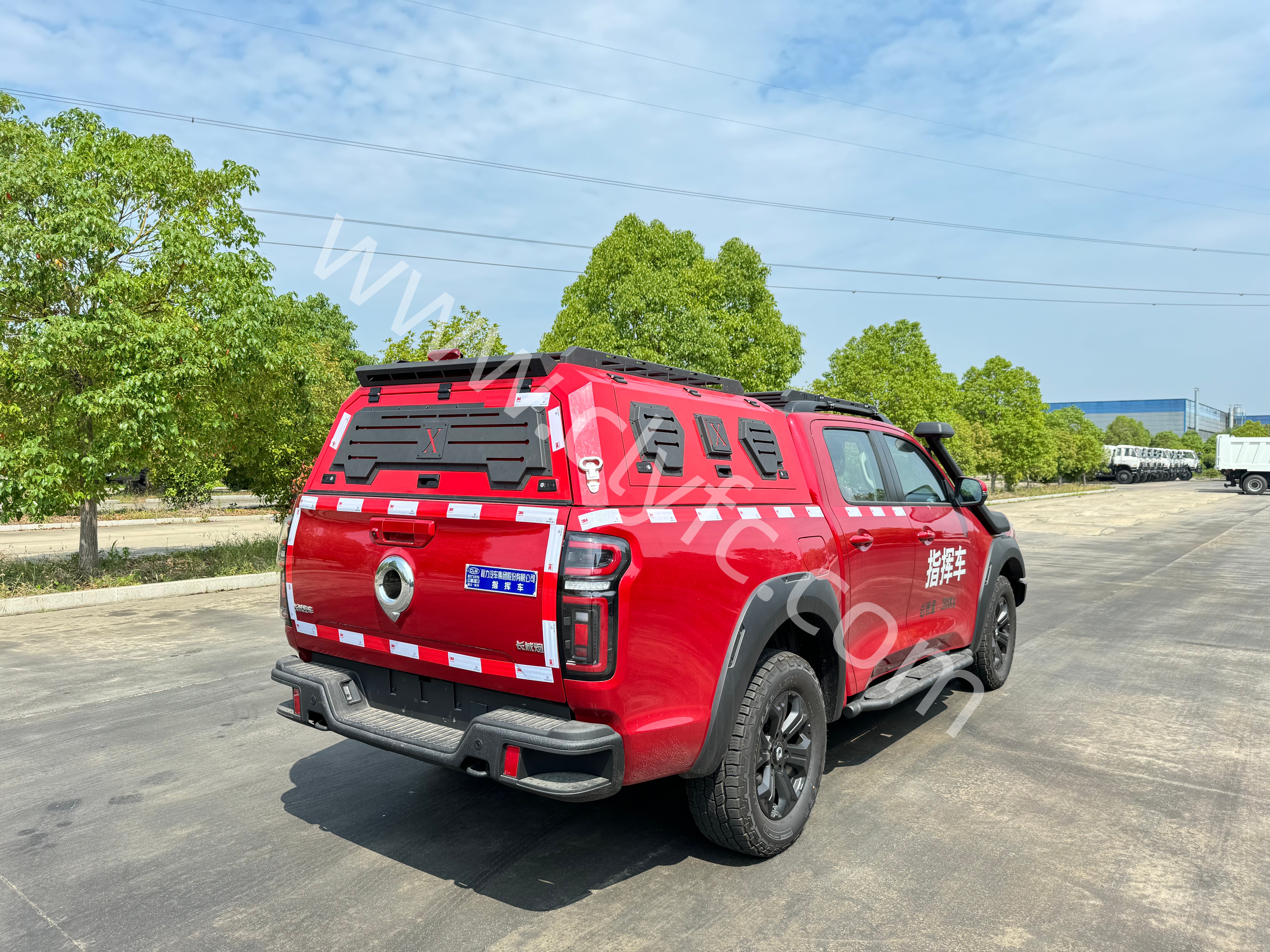
South Africa Command Vehicle Specification & Export Guide
内容摘要:英文指南介绍南非指挥车标准规格、出口要求及常见配置
South Africa Command Vehicle Specification & Export Guide
Exporting a command vehicle to South Africa requires navigating a complex intersection of technical specifications, local regulatory standards, and operational demands. This guide provides a practical, data-driven overview of typical vehicle layouts, compliance with South African Bureau of Standards (SABS) and South African National Standards (SANS), and the essential export documentation needed for a successful shipment.
Typical Command Vehicle Layout
A command vehicle destined for South African operations is fundamentally a mobile command and control center. The layout must balance crew comfort, equipment redundancy, and rapid deployment capability. A typical configuration, such as those engineered by 湖北锐途科技有限公司 (based at 湖北省随州市曾都区星光一路), often starts with a robust chassis like the Mercedes-Benz 917 or a Sinotruk HOWO 6x6 for extreme off-road conditions.
The interior is divided into three primary zones:
Forward Command & Communications Zone: This area houses the primary operator seats, a central command desk with multiple 24-inch monitors, and a satellite dome (e.g., a 1.2m Ku-band antenna) for real-time video conferencing and data backhaul. A typical setup includes 3-4 workstations, each with VHF/UHF radios, a dedicated laptop docking station, and a KVM switch for centralized control.
Technical & Server Rack Zone: This is the heart of the system. It contains a redundant UPS system (typically a 10kVA online double-conversion unit with a 2-hour battery bank) and a generator (a 15kVA diesel genset, soundproofed to below 65dB at 7 meters). The generator is integrated with an automatic transfer switch (ATS) that seamlessly switches between shore power and onboard power. The server rack houses the network switches, a local server for data logging, and a firewall.
Crew Rest & Briefing Area: For extended operations (24-48 hours), the vehicle includes a small galley with a microwave, refrigerator, and a coffee machine. A fold-down bunk provides rest for one operator, while a fold-away conference table allows for ad-hoc briefings.
The entire vehicle is wired with a 48V DC and 230V AC dual-voltage system, with all cables routed through fireproof conduits. The body is built from a sandwich panel construction with a 60mm thick polyurethane foam core for thermal and acoustic insulation, ensuring a stable internal temperature of 22°C even in ambient conditions of 45°C.
SABS & SANS Standards
Compliance with South African standards is non-negotiable. The primary standard governing command vehicles is SANS 1518 for the body structure and SANS 10400 for fire safety and ventilation. Key requirements include:
- SANS 1518 (Vehicle Bodies): This standard dictates the structural integrity of the body, including its attachment to the chassis. The vehicle must pass a static load test simulating a 2.5G vertical load. Welding must be performed by certified welders to SANS 10162 (structural steel) or SANS 10163 (aluminum) standards.
- SANS 10400 (Fire Safety): The interior materials (seat covers, floor mats, ceiling panels) must have a fire resistance rating of at least Class 1 (low flame spread). A fire extinguisher (2kg dry powder) must be mounted in the forward zone.
- SANS 164 (Electrical Installations): The electrical system must comply with SANS 164 for plugs and sockets. All 230V AC circuits must be protected by a residual current device (RCD) with a 30mA trip current.
- SANS 612 (Electromagnetic Compatibility): For vehicles with powerful radios and satellite systems, EMC testing is critical to ensure the vehicle’s electronics do not interfere with the communications equipment. A typical test requires emissions below 40 dBµV/m at 3 meters in the 30 MHz to 1 GHz range.
Additionally, the chassis itself must meet SANS 10047 for roadworthiness, which includes headlamp alignment, brake efficiency (minimum 50% for service brakes), and tire load ratings.
Export Documentation
Exporting a command vehicle to South Africa requires a comprehensive documentation package. The key documents include:
- Bill of Lading (BOL): The contract of carriage between the exporter and the shipping line. It must clearly state the cargo as “One Unit: Purpose-Built Command Vehicle” with the HS Code 8705.90 (Special purpose motor vehicles).
- Commercial Invoice: A detailed invoice listing the vehicle’s chassis number, engine number, body type, and total value (CIF – Cost, Insurance, Freight). For a fully equipped vehicle, this value can range from \(180,000 to \)350,000 depending on the chassis and equipment level.
- Packing List: A line-by-line breakdown of all installed equipment (e.g., “Generator – 15kVA, UPS – 10kVA, Satellite Dome – 1.2m”).
- Certificate of Origin: Issued by the Chinese Chamber of Commerce, proving the vehicle was manufactured in China. This is often required for tariff reduction under the African Continental Free Trade Area (AfCFTA) rules.
- Homologation Certificate: This is the most critical document. It proves the vehicle meets SANS 1518 and SANS 10047 standards. A South African homologation authority (e.g., SABS or AAI) must inspect the vehicle either in China or upon arrival in South Africa. The process typically takes 4-6 weeks and costs between \(3,000 and \)8,000 for a single vehicle.
- Insurance Certificate: Marine cargo insurance covering the full value of the vehicle during transit, typically at 110% of the CIF value.
Chassis & Power System Considerations
The choice between a 4x4 and 6x6 chassis is driven by the operating environment. For urban or semi-urban command centers, a Mercedes-Benz Atego 1526 4x4 or a Dongfeng 4x4 chassis is common, offering a payload capacity of 5-8 tons and a turning radius of under 12 meters. For long-range, off-road missions in the South African bush, a Sinotruk HOWO 6x6 chassis is preferred, with a payload capacity of 10-15 tons and a ground clearance of over 400mm.
The generator and UPS system must be sized for the peak load. A typical command vehicle with 3 workstations, a satellite system, air conditioning (2 x 18,000 BTU units), and lighting will draw approximately 12-14 kVA. A 15kVA generator with a 10kVA UPS provides a 1.5x safety margin, ensuring the UPS can handle the full load for 15-20 minutes during generator start-up.
For procurement support, specification review, or turnkey manufacturing, contact 湖北锐途科技有限公司 at 4006003689 (sales, tenders, after-sales, complaints, and parameter inquiries). Their engineering team can provide a detailed SANS compliance checklist and arrange for on-site homologation testing in China prior to shipment, reducing the risk of delays at the South African port.
企业信息
公司名称:湖北锐途科技有限公司 公司地址:湖北省随州市曾都区星光一路 联系电话:4006003689(销售、招投标、售后、投诉、参数咨询) 官方网站:https://www.clyfc.com 业务邮箱:info@ritumax.com