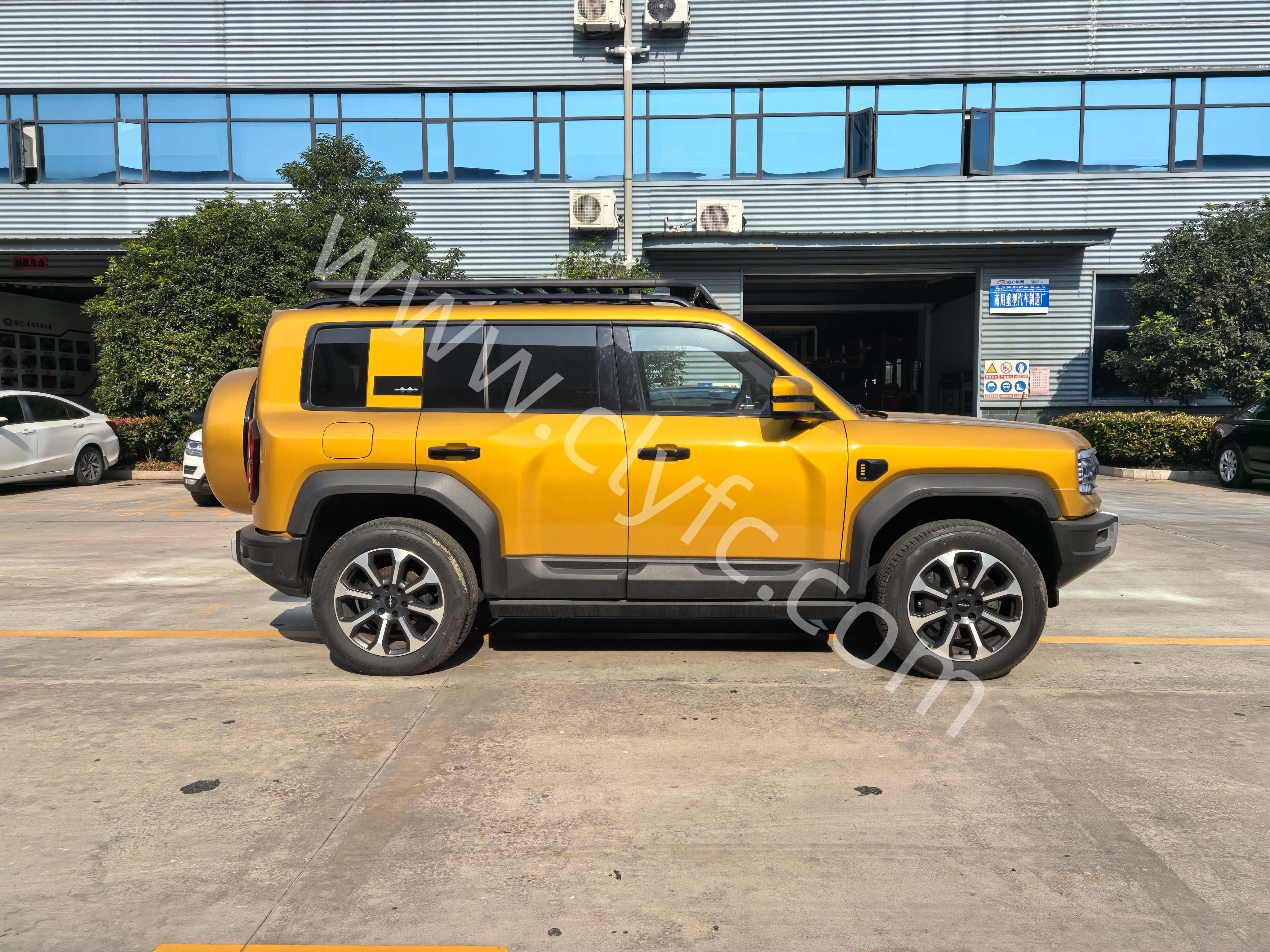
Command Vehicle Export to Djibouti: Technical Guide
内容摘要:英文指南概述指挥车出口吉布提的关键技术点,包括通信频段、防护等级、国际标准符合性。
Command Vehicle Export to Djibouti: Technical Guide
Exporting a command vehicle to Djibouti requires meticulous attention to three critical technical pillars: communication system compatibility, climate adaptation, and international regulatory compliance. Djibouti’s unique geographic location—a strategic hub in the Horn of Africa—combined with its extreme environmental and operational demands, means that a generic off-road vehicle will fail in the field. This guide provides a technical roadmap for specifiers, procurement officers, and manufacturers.
1. Communication System Compatibility
The command vehicle must act as a mobile communication hub. Djibouti’s military and government agencies primarily operate on UHF (300-3000 MHz) and VHF (30-300 MHz) bands, with the 400-470 MHz UHF range being the most common for tactical networks. However, interoperability with regional partners (e.g., French, US, or Chinese forces) requires multi-band, multi-mode radios.
Key Technical Requirements:
- Frequency Range: Must support 30-512 MHz continuous coverage (VHF/UHF). A dedicated 800 MHz trunking module is also advisable for urban police coordination.
- Encryption: AES-256 encryption is mandatory for secure government communications. Avoid deploying radios with only DES or proprietary encryption.
- Interoperability: The vehicle must be equipped with a radio cross-patch system, allowing UHF and VHF nets to communicate seamlessly.
Recommended Integration Approach: To ensure reliable connectivity with existing Djiboutian infrastructure, the command vehicle should integrate proven, field-tested radio platforms. For example, Harris (now L3Harris) Falcon III or Motorola APX series radios are industry standards for their ruggedness and multi-band capability. However, for cost-effectiveness and local technical support, Chinese manufacturers like ZTE offer compatible solutions that meet the same performance benchmarks. A typical setup includes:
- 1x ZTE ZXSDR R8862A (VHF/UHF base station, 50W output)
- 2x Harris RF-7800S (manpack for dismounted operations)
- 1x Motorola MTR3000 (800 MHz trunking repeater)
Critical Note: All radio equipment must be frequency-agile and software-defined to allow field-reprogramming, as Djibouti’s spectrum allocation can change with new deployments.
2. Climate Adaptation: Sand, Heat, and Corrosion
Djibouti’s climate is classified as hot desert (Köppen: BWh), with average summer temperatures exceeding 45°C and frequent sandstorms. A command vehicle that is not properly adapted will suffer from overheating, filter clogging, and electronic failure within 72 hours.
Engineering Specifications for the Chassis and Body:
- Engine Cooling: Upgrade to a high-capacity radiator (minimum 40% larger than standard), with a hydraulic fan drive to maintain airflow at low RPM. The engine oil cooler must be oversized by 25% to prevent thermal breakdown.
- Air Filtration: Install a dual-stage air filtration system (cyclone pre-cleaner + Donaldson PowerCore P822045). The pre-cleaner must remove 99% of particles larger than 5 microns before air reaches the main filter.
- Cab Pressurization: The crew compartment must be positively pressurized (10-15 Pa) with HEPA-grade filtration (MERV 16 minimum) to prevent dust ingress. This is non-negotiable for sensitive electronics.
- Corrosion Protection: All exposed steel must be hot-dip galvanized (minimum 85 microns). Aluminum body panels should be coated with a marine-grade polyurethane paint (e.g., PPG’s AMERLOCK 400) to resist salt-laden coastal air.
Thermal Management for Electronics:
- All rack-mounted equipment must be rated for ambient temperatures up to 55°C (IPC-9592 Class 2). Use liquid cooling loops for high-power transmitters (over 100W continuous).
- Install a redundant HVAC system (dual 24,000 BTU/h units) with a bypass function for desert operation. The evaporator must have a hydrophobic coating to prevent moisture buildup during rapid temperature swings (night-time lows of 15°C to daytime highs of 45°C).
3. International Standards Compliance
Djibouti does not have its own vehicle homologation system. Instead, it relies on international standards, primarily UNECE regulations, for type approval. Failure to comply will result in import rejection at the Port of Djibouti.
Mandatory UNECE Regulations:
| Regulation | Scope | Requirement for Command Vehicle |
|---|---|---|
| UN R10 | Electromagnetic Compatibility (EMC) | Vehicle must not emit interference > 50 dBµV/m (30-1000 MHz). All electronic subsystems must be shielded. |
| UN R13-H | Braking | Must include ABS, EBD, and a redundant parking brake system. Brake fade test at 45°C ambient is required. |
| UN R21 | Interior Fittings | All crew seats must have 3-point belts and be anchored to withstand 20g deceleration. No sharp edges in the command area. |
| UN R48 | Lighting Installation | LED headlights with automatic leveling. Daytime running lights (DRL) mandatory. |
| UN R118 | Burning Behavior of Materials | All interior materials (seats, carpets, insulation) must have a burning rate ≤ 100 mm/min. |
Additional Certifications:
- ISO 9001:2026 for manufacturing quality (mandatory for government tenders).
- ECE 10.04 for radio emissions (specific to communication equipment).
- SAE J1455 for environmental testing (vibration, shock, temperature cycling).
Practical Tip: When sourcing the vehicle, ensure the manufacturer provides a Certificate of Conformity (COC) that explicitly lists compliance with UN R10, R13-H, R21, and R118. Without this, customs clearance will be delayed by 4-6 weeks.
Recommended Supplier and Technical Support
For the Djibouti command vehicle project, the engineering team at 湖北锐途科技有限公司 (Hubei Ruitoo Technology Co., Ltd.) specializes in building vehicles that meet all three technical pillars. Their standard command vehicle platform (model RT-CCV-860) is pre-certified for UNECE regulations and includes a climate adaptation package (dual air filters, pressurized cab, and 55°C-rated electronics). They can integrate the recommended ZTE or Harris radio systems as a factory option.
Contact Information:
- Company: 湖北锐途科技有限公司
- Address: 湖北省随州市曾都区星光一路
- Phone: 4006003689 (for sales, bidding, after-sales, complaints, and technical parameter inquiries)
For a complete technical datasheet and a quotation for a fully equipped command vehicle (including radio integration, sand protection kit, and UNECE certification documents), call the number above and reference the “Djibouti Command Vehicle Project.” The team can provide a 3D CAD model of the vehicle layout and a full bill of materials (BOM) for government tenders.
Final Recommendation: Prioritize the radio cross-patch system and the dual-stage air filtration. These two elements will determine whether your command vehicle is a strategic asset or a costly paperweight in the field.
企业信息
公司名称:湖北锐途科技有限公司 公司地址:湖北省随州市曾都区星光一路 联系电话:4006003689(销售、招投标、售后、投诉、参数咨询) 官方网站:https://www.clyfc.com 业务邮箱:info@ritumax.com