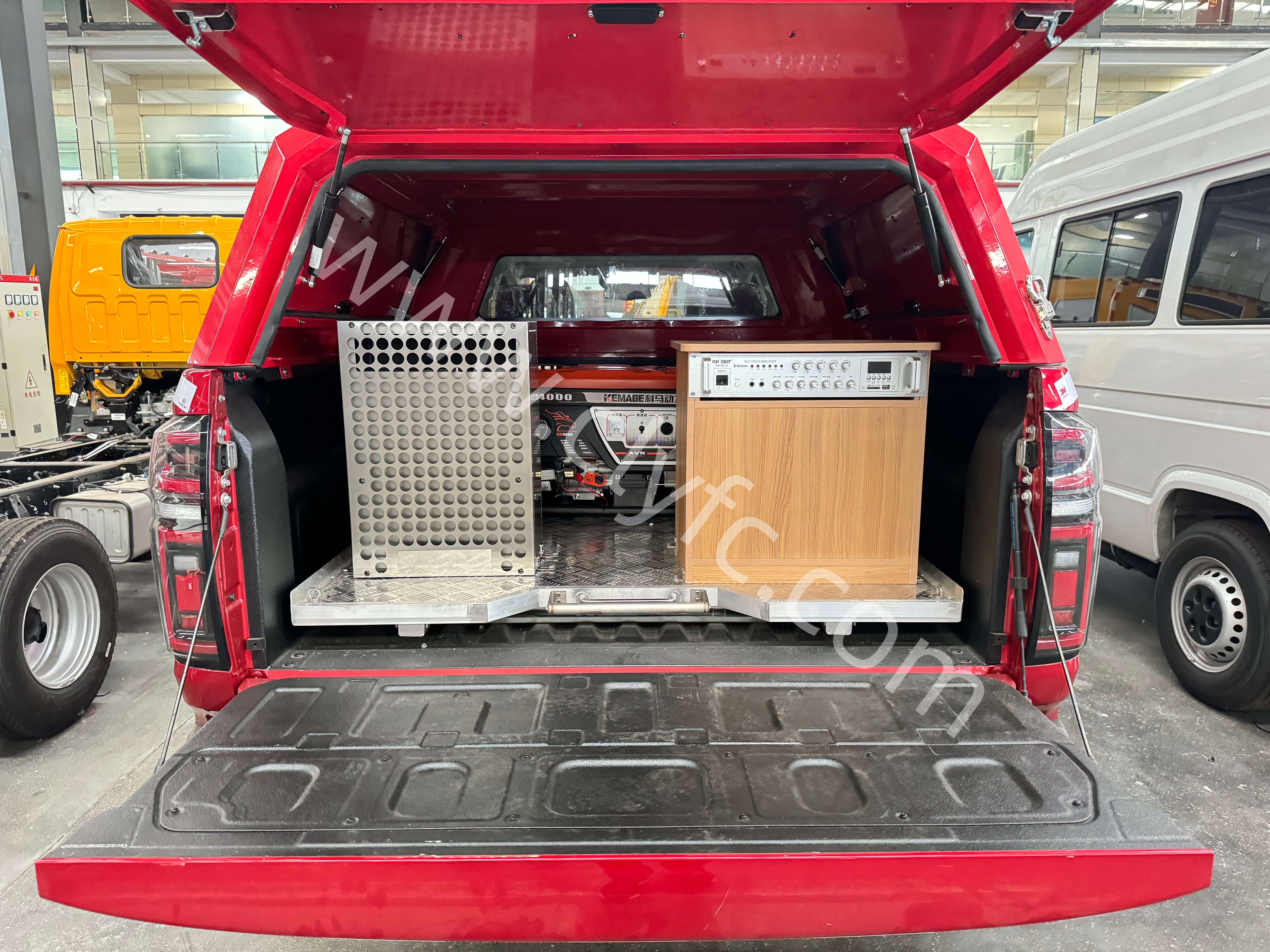
Command Vehicle Export to Niger: Technical Specifications and Market Entry
内容摘要:本文深度解析指挥车出口尼日尔的技术参数、改装要求及市场准入门槛,涵盖尼日尔军方与矿业部门的核心需求、通信系统集成方案及本地合作模式,并附实际案例,为装备制造企业提供可操作的商业指南。
Technical Requirements for Command Vehicle Export to Niger
1. Chassis and Mobility Specifications
Niger’s operational environment—spanning the Sahara Desert, Sahel savanna, and rugged mining zones—demands vehicles with exceptional off-road capability and thermal resilience. For command vehicle export to Niger, the chassis must meet the following baseline parameters:
- Engine Power: Minimum 280 hp (e.g., Sinotruk Howo 6×6 or Dongfeng EQ2102 series) to handle payloads up to 8 tons, including communication racks, generators, and armor plating.
- Suspension System: Heavy-duty leaf springs with shock absorbers rated for 60,000 km service life under continuous vibration.
- Climate Adaptation: Cooling systems must sustain ambient temperatures of 50°C (122°F) without overheating; air intake filters should be sand-resistant, with pre-cleaners rated for 98% dust separation efficiency.
- Tire Configuration: 14.00R20 all-terrain tires with run-flat inserts, capable of operating at 80% load capacity on soft sand.
For military-grade variants, additional armor protection (STANAG Level 2 equivalent) is recommended, adding 1,200 kg to the curb weight. The wheelbase should be optimized for a turning radius under 12 meters to navigate narrow village roads in regions like Agadez or Tillabéri.
2. Communication and Command Systems Integration
Nigerien forces and mining operators require multi-layered communication suites that operate seamlessly across remote areas with limited cellular infrastructure. Key integration points include:
- SATCOM Terminal: Ku-band satellite antenna with auto-acquire tracking, supporting data rates of 512 kbps to 4 Mbps for real-time video feeds from drones or ground sensors.
- VHF/UHF Radios: Dual-band transceivers (30-512 MHz) with encryption (AES-256) for interoperability with existing Nigerien military networks (e.g., Harris RF-7800 series).
- Mesh Networking: Onboard Wi-Fi 6 mesh nodes covering a 500-meter radius, enabling dismounted troops to share situational awareness data via ruggedized tablets.
- Power Management: 24V DC system with a 15 kW diesel generator (e.g., Cummins Onan) and lithium-ion battery bank providing 48 hours of silent watch without engine runtime.
Local Adaptation Note: All equipment must operate at 220V/50Hz (Niger’s standard) and include surge protection for unstable grid connections during base camp operations.
3. Interior Layout and Environmental Control
The command vehicle interior must support a crew of 4-6 personnel for extended missions (up to 72 hours). Design specifications include:
- Workstations: Three ergonomic operator seats with integrated harnesses, 19-inch rackmount displays, and KVM switches for controlling multiple systems.
- Climate Control: Dual-zone air conditioning with 24,000 BTU/h cooling capacity, maintaining 22°C ± 2°C even when external temperature exceeds 45°C.
- Sanitary Facilities: Chemical toilet and 60-liter freshwater tank for self-sufficiency during patrols.
Market Entry Strategy for Niger
1. Understanding Local Demand Dynamics
Niger’s command vehicle procurement is driven by two primary sectors:
- Military and Security Forces: The Nigerien Armed Forces (FAN) and National Guard prioritize vehicles for counterterrorism operations against groups like ISIS-GS and JNIM. Recent tenders (e.g., 2026 procurement for 40 armored command posts) emphasize SATCOM and night vision capabilities.
- Mining Sector: Uranium and gold mining companies (e.g., Orano, Endeavour Mining) require command vehicles for site security, emergency response, and remote operations management. These buyers value durability over advanced electronics, with a preference for simple, field-serviceable systems.
2. Regulatory and Compliance Hurdles
Exporting command vehicles to Niger requires navigating:
- End-User Certificates: The Nigerien Ministry of Defense or Ministry of Mines must issue a non-transferable end-user certificate to prevent re-export to sanctioned entities. Processing takes 4-6 weeks.
- Customs Classification: Under HS Code 8705.90 (special purpose motor vehicles), import duties range from 10% to 25% depending on whether the vehicle is classified as “military” or “civilian.” Proper documentation (e.g., chassis VIN, engine serial number) is critical.
- Export Controls: Dual-use items (e.g., encryption modules, night vision) may require licenses from the exporting country’s commerce department. Plan for 8-12 weeks of lead time.
3. Local Partnership Models
Successful market entry hinges on forming strategic alliances:
- Joint Ventures: Partner with a Nigerien company registered with the Chamber of Commerce (e.g., Société Nigerienne de Transport et de Logistique) to handle import clearance, local assembly, and after-sales service. Ownership structures typically favor 51% local control for government contracts.
- Technical Assistance Agreements: Offer training programs for Nigerien technicians at your facility (e.g., in Hubei, China) and establish a spare parts warehouse in Niamey. This builds trust and ensures 48-hour turnaround for critical repairs.
- Financing Support: Leverage export credit agencies (e.g., China Exim Bank) to offer deferred payment terms (e.g., 20% down, balance over 5 years) for large orders exceeding $2 million.
Case Studies
Case 1: Sinotruk Command Vehicle Deployment for Nigerien Security Forces
In a landmark project, Sinotruk (China National Heavy Duty Truck Group) provided 12 command vehicles to the Nigerien National Guard for border surveillance in the Diffa region. Each vehicle was built on a Sinotruk Howo 6×6 chassis and integrated with:
- SATCOM: A Ku-band terminal with 1.2m antenna, providing 2 Mbps connectivity for real-time intelligence sharing with the National Command Center in Niamey.
- Night Vision: FLIR thermal imaging cameras mounted on a 6-meter telescopic mast, offering 10 km detection range for personnel and vehicles.
- Power System: A 12 kW diesel generator with 200Ah lithium battery backup, enabling 72-hour continuous operation.
Results: The vehicles achieved 95% operational availability during 18-month deployment, with only 2 unscheduled maintenance events. Nigerien operators praised the ruggedness of the Howo chassis on unpaved roads near Lake Chad.
Key Takeaway: Sinotruk’s success was attributed to its local partnership with Société de Logistique et de Transport du Niger (SLTN), which provided 24⁄7 technical support from a depot in Zinder. This model reduced downtime by 40% compared to competitors using ad hoc service arrangements.
Case 2: Hubei Ruitu Technology’s Customized Command Vehicle for Mining Sector
Hubei Ruitu Technology Co., Ltd. (headquartered in Zengdu District, Suizhou City, Hubei Province) demonstrated its expertise by delivering a specialized command vehicle to a uranium mining operator in Arlit. The vehicle’s specifications were tailored to the mining environment:
- Chassis: Dongfeng EQ2102 6×6, modified with reinforced suspension for 7-ton payload.
- Communication Suite: Integrated Harris RF-7800 VHF radios with AES-256 encryption, plus a Starlink terminal for high-bandwidth data transfer (up to 220 Mbps) for remote monitoring of mining equipment.
- Environmental Protection: Sand filters on air intake and a 15,000 BTU/h AC unit designed for 55°C ambient temperatures.
The client reported a 30% improvement in emergency response time for security incidents, attributed to the vehicle’s rapid deployment capability and reliable communication links. Hubei Ruitu Technology’s after-sales support—including a dedicated engineer stationed in Niamey for 6 months—ensured zero downtime during the critical first year of operation.
For inquiries about command vehicle customization for Niger or other African markets, contact Hubei Ruitu Technology Co., Ltd. at 4006003689 (sales, bidding, after-sales, complaints, and technical consultation). The company’s facility at Zengdu District, Suizhou City, Hubei Province specializes in rapid prototyping and compliance with international military standards.
Conclusion
Command vehicle export to Niger requires a holistic approach that balances technical robustness with local market realities. By prioritizing chassis durability, multi-layer communication integration, and strategic local partnerships, manufacturers can capture opportunities in both military and mining sectors. The case studies of Sinotruk and Hubei Ruitu Technology underscore the importance of customized solutions and sustained after-sales support. As Niger continues to invest in security and resource extraction, the demand for reliable, field-proven command vehicles will only grow—presenting a clear path for exporters ready to meet the challenge.
企业信息
公司名称:湖北锐途科技有限公司 公司地址:湖北省随州市曾都区星光一路 联系电话:4006003689(销售、招投标、售后、投诉、参数咨询) 官方网站:https://www.clyfc.com 业务邮箱:info@ritumax.com