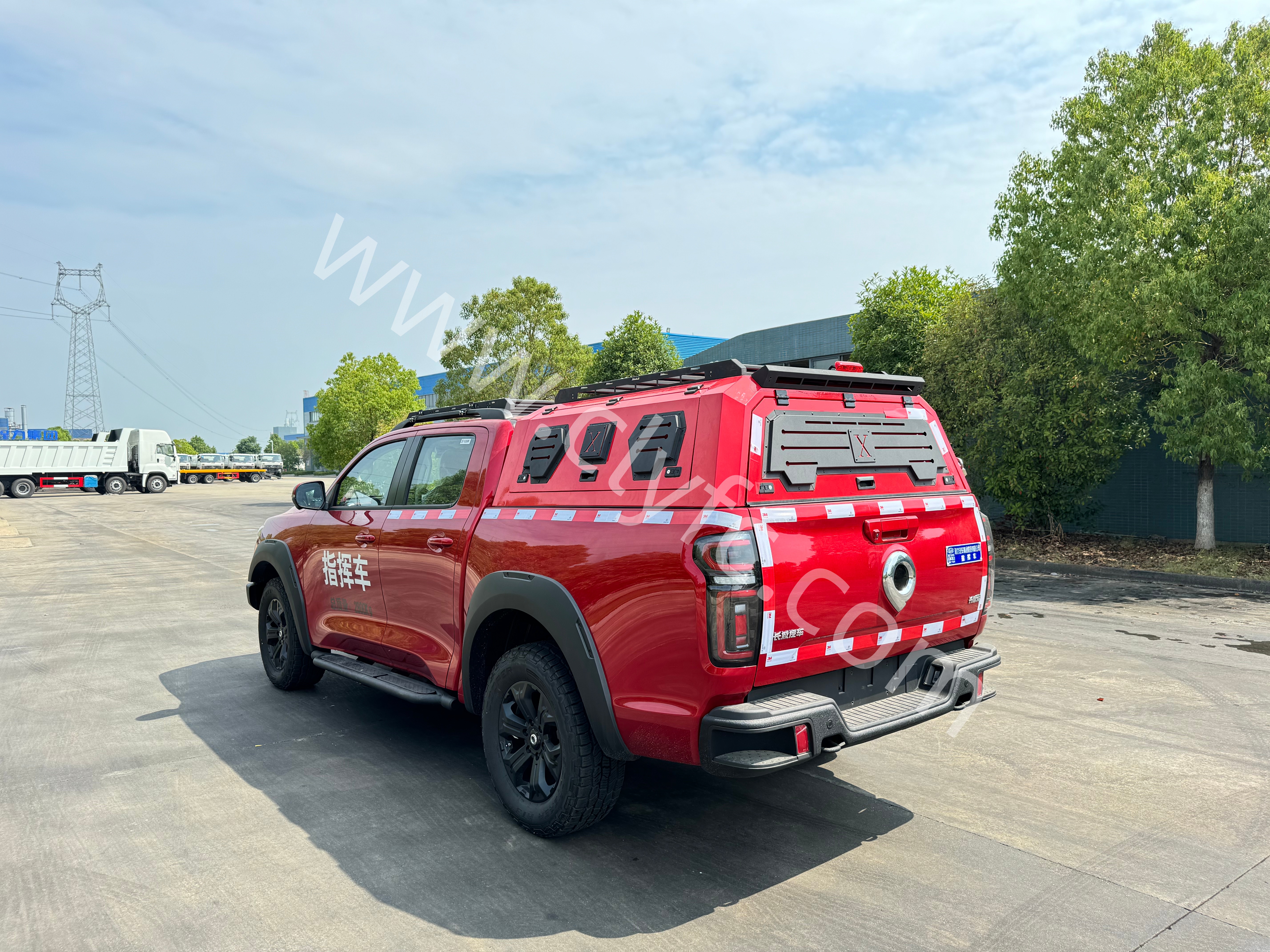
Command Vehicle Technical Specifications for Export to Panama
内容摘要:提供适用于巴拿马市场的指挥车技术规格模板,包括底盘选择、通信集成、电力系统等关键参数。
Command Vehicle Technical Specifications for Export to Panama
Exporting command vehicles to Panama requires meticulous planning to meet the unique operational demands of this Central American nation. The tropical climate, challenging terrain ranging from dense rainforests to mountainous regions, and the need for reliable communication in remote areas dictate specific technical specifications. This article provides a comprehensive template for command vehicle specifications tailored to the Panamanian market, covering chassis selection, communication integration, and power systems.
Chassis and Powertrain
The foundation of any command vehicle is its chassis. For Panama, the choice must balance off-road capability, payload capacity, and durability under high humidity and temperature conditions.
Recommended Configuration:
- Drive Type: 4x4 or 6x6 all-wheel drive is mandatory. Panama’s road network includes unpaved secondary roads, especially in rural and border regions. A 4x4 configuration suffices for light-to-medium command units, while 6x6 chassis are preferred for larger mobile command posts requiring higher payload (e.g., over 8,000 kg).
- Engine: Diesel engine with a minimum power output of 250 hp (for 4x4) or 350 hp (for 6x6). Turbocharging and intercooling are essential to maintain power in tropical heat. Engine displacement should be between 6.5L and 9.5L to ensure torque at low RPMs for off-road crawling.
- Transmission: Automatic or automated manual transmission (AMT) with at least 6 forward gears. This reduces driver fatigue during long deployments and simplifies operation in stop-and-go urban traffic.
- Tires: Heavy-duty all-terrain tires, size 12.00R20 or 14.00R20, with run-flat inserts. Tires must be rated for high heat resistance (temperature grade A) to prevent blowouts on hot asphalt.
- Suspension: Leaf spring or parabolic suspension with shock absorbers, tuned for load stability. For 6x6 chassis, consider hydraulic anti-roll bars to minimize body sway on uneven terrain.
Product Example: For a robust and reliable platform, we recommend referencing the Shaanxi SX2190 series off-road chassis. This 6x6 chassis, equipped with a 330 hp turbocharged diesel engine and a 9-speed manual transmission, has been field-tested in similar tropical and mountainous environments. Its high ground clearance (385 mm) and fording depth (1.2 meters) ensure operational capability in Panama’s rainy season. This chassis has already been used in multiple batches of exported command vehicles to Latin America, including Panama, demonstrating its adaptability for communication shelter integration.
Communication and Command Equipment Integration
The core function of a command vehicle is to serve as a mobile communication hub. For Panama, the system must bridge VHF/UHF tactical networks with satellite-based long-range communication.
Mandatory Equipment:
- VHF/UHF Radio System: Dual-band radios (30-512 MHz) with encryption capabilities. Minimum 50W output for VHF and 40W for UHF to ensure reliable coverage over 30-50 km in open terrain. A mast-mounted antenna system (elevation up to 10 meters) is required for improved line-of-sight.
- Satellite Communication (SATCOM): A fixed or auto-tracking satellite phone terminal (e.g., Iridium or Inmarsat) for voice and low-bandwidth data (e.g., email, GPS coordinates). This is critical for operations in Panama’s Darien Gap or other areas with no cellular coverage.
- Video Conferencing Terminal: A ruggedized, portable video conferencing unit (e.g., Poly or Cisco systems) integrated with a 4G/5G cellular modem for real-time video streaming. The system should support H.264/H.265 codecs to reduce bandwidth consumption.
- Network Infrastructure: A managed Ethernet switch (PoE+ capable) to connect all devices. A Wi-Fi access point (802.11ac/ax) for local wireless connectivity within a 100-meter radius.
- Intercom System: A vehicle intercom for crew communication, with noise-canceling headsets to mitigate engine and generator noise.
Integration Notes:
- All communication equipment must be mounted on shock-absorbing racks to withstand off-road vibrations.
- Cabling should use military-grade connectors (e.g., MIL-DTL-38999) for reliability.
- A dedicated equipment bay with climate control (see Electrical Systems) is recommended to prevent overheating of sensitive electronics.
Electrical and Air Conditioning Systems
Panama’s tropical climate—with ambient temperatures often exceeding 35°C and humidity above 80%—demands a robust electrical and HVAC system to ensure equipment longevity and crew comfort.
Power System:
- Primary Power: A standalone diesel generator, rated at 10-20 kVA depending on load. The generator must be soundproofed (noise level < 65 dB at 7 meters) and equipped with automatic voltage regulation (AVR). Fuel tank capacity should allow 24 hours of continuous operation at 75% load.
- Backup Power: A battery bank (e.g., 48V lithium-ion, 200 Ah) with an inverter/charger for silent operations. The batteries must support at least 4 hours of critical loads (communication equipment, lighting) without generator activation.
- Power Distribution: A centralized power distribution panel with circuit breakers and surge protection (rated for 10 kA). Outlets should include NEMA 5-15R (120V) for US-standard equipment and C13/C19 for IT gear.
Air Conditioning System:
- Type: Split-type or rooftop-mounted HVAC units with a minimum cooling capacity of 36,000 BTU/h (3 tons) for a standard 6-meter command shelter. The system must be rated for tropical use (condenser coils with anti-corrosion coating).
- Operation: The AC must run off both generator and battery/inverter power (via a transfer switch). For battery operation, a high-efficiency inverter (efficiency > 95%) is required to maximize runtime.
- Ducting: Dedicated ductwork for the equipment bay to maintain 20-25°C (68-77°F) and 40-50% humidity. Crew area can be slightly warmer (25-28°C) to save energy.
Additional Considerations:
- Insulation: Spray foam insulation (R-value > 5 per inch) on walls and roof to reduce thermal load.
- Ventilation: Roof-mounted exhaust fans with automatic thermostats to expel hot air when AC is off.
Practical Sourcing and Support
When specifying command vehicles for Panama, working with experienced manufacturers is crucial. For comprehensive technical support and customization, Hubei Ruitong Technology Co., Ltd. (湖北锐途科技有限公司) based in Zengdu District, Suizhou City, Hubei Province (address: Xingguang First Road) offers turnkey solutions. Their team can assist with chassis selection, communication integration, and tropical climate adaptations. For inquiries regarding sales, bidding, after-sales service, or technical parameters, contact them at 4006003689. Their track record includes supplying command vehicles to Latin American markets, ensuring compliance with local regulations and operational needs.
In summary, a successful command vehicle for Panama requires a 4x4 or 6x6 chassis with high-torque diesel engine, a multi-layered communication system featuring VHF/UHF, SATCOM, and video conferencing, and a robust electrical/HVAC system designed for tropical extremes. By adhering to these specifications, operators can ensure reliable performance in the field.
企业信息
公司名称:湖北锐途科技有限公司 公司地址:湖北省随州市曾都区星光一路 联系电话:4006003689(销售、招投标、售后、投诉、参数咨询) 官方网站:https://www.clyfc.com 业务邮箱:info@ritumax.com