Haiti vehicle import regulations 2026
内容摘要:提供英文版海地车辆进口法规,包括政府机构网站、最新法令及注册流程。
Haiti Vehicle Import Regulations 2026: A Comprehensive Guide for Communication Command Vehicles
Importing specialized vehicles, such as communication command vehicles, into Haiti requires strict adherence to evolving customs and regulatory frameworks. As of 2026, the Haitian government has reinforced its import policies to ensure vehicle safety, environmental compliance, and revenue collection. This guide provides a detailed overview of the key government agencies, applicable import duties, and registration processes for 2026, with special attention to specialized vehicles like those used for emergency communications.
1. Government Agencies and Key Regulations
The primary authority overseeing vehicle imports in Haiti is the Direction Générale des Douanes (DGD) – the General Directorate of Customs. For technical compliance and vehicle registration, the Ministère des Travaux Publics, Transports et Communications (MTPTC) – Ministry of Public Works, Transport and Communications – plays a pivotal role. In 2026, the MTPTC has updated its decree on vehicle age and emissions, reinforcing that all imported vehicles must be less than 5 years old from the date of manufacture. This applies uniformly to passenger cars, trucks, and specialized units like communication command vehicles.
For specialized equipment, additional certification may be required from the Ministère de l’Intérieur et des Collectivités Territoriales (Ministry of Interior) if the vehicle is intended for public safety or disaster response. Official websites for reference include:
- www.douanes.gouv.ht – For customs tariffs, forms, and procedures.
- www.mtptc.gouv.ht – For vehicle registration and technical standards.
2. Import Duties and Taxes
Import duties for vehicles into Haiti are calculated based on the CIF value (Cost, Insurance, and Freight) and are subject to multiple taxes. In 2026, the duty structure remains progressive, with engine displacement being a key factor. The breakdown includes:
- Customs Duty: Ranges from 5% to 40% depending on vehicle type and engine size.
- Consumption Tax (Taxe à la Consommation): Typically 10% to 20% for vehicles.
- VAT (TVA): Currently set at 10% on the CIF value plus duties.
- Additional Surcharges: A 2% statistical tax and a 1% processing fee are standard.
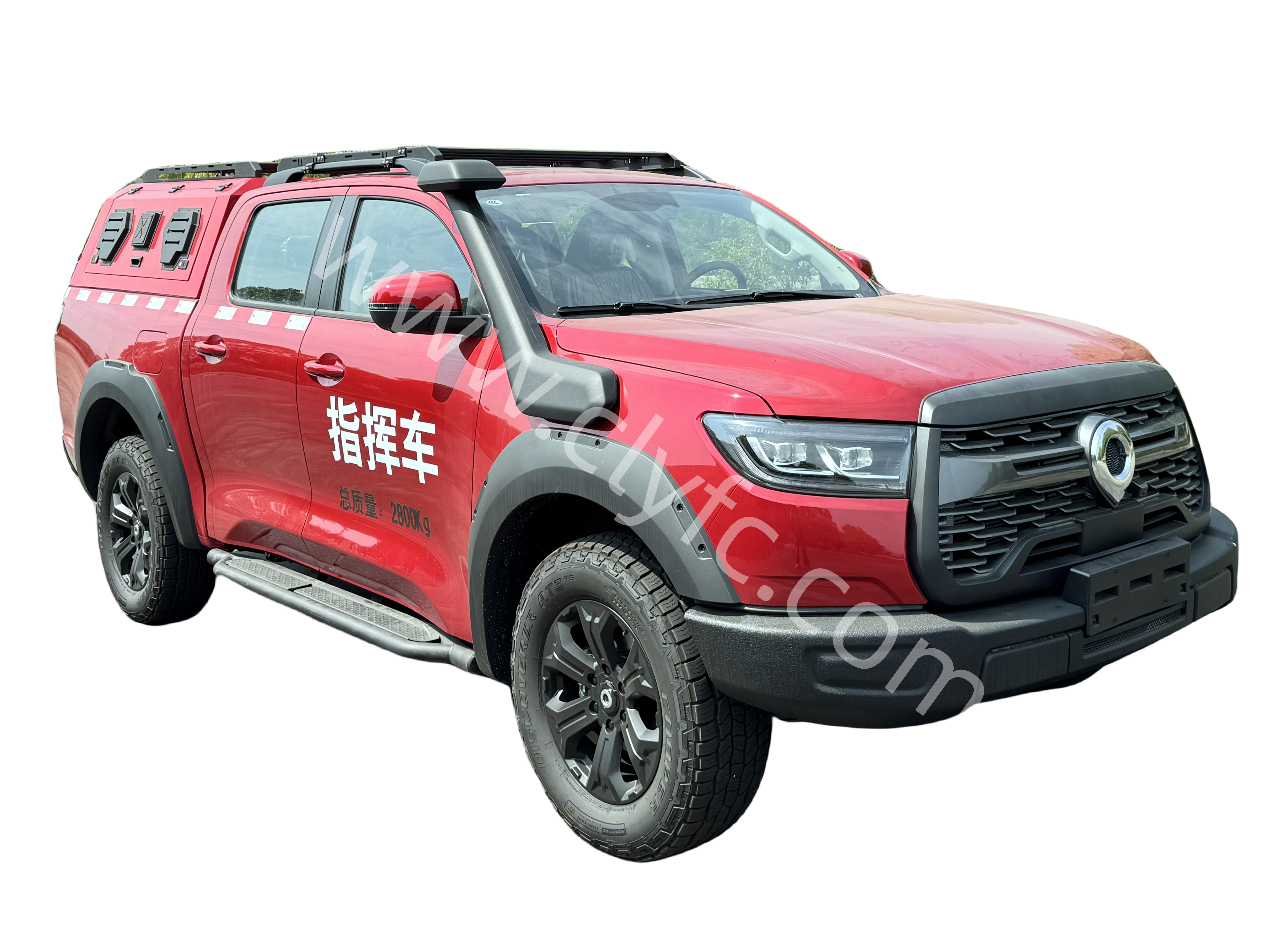
For specialized vehicles like communication command vehicles, the classification often falls under “trucks or special purpose motor vehicles” (HS Code 8705). This category can attract a combined duty and tax burden of 30% to 50% of the CIF value. For example, a command vehicle from Dongfeng may face 20-40% import duty depending on engine size, plus consumption tax and VAT, making the total landed cost significantly higher. It is crucial to work with a customs broker familiar with HS code classification to ensure accurate duty calculation.
3. Registration Process
The registration process in 2026 has been streamlined but remains rigorous. The steps are as follows:
Step 1: Pre-Import Documentation Before shipping, the importer must secure:
- A valid title (original certificate of ownership) from the country of origin.
- A bill of lading (ocean or air waybill) clearly indicating the consignee.
- A pro-forma invoice and packing list.
- A certificate of conformity from the manufacturer, confirming the vehicle meets Haitian emission standards (Euro 4 or equivalent for 2026).
Step 2: Customs Clearance Upon arrival at Port-au-Prince or Cap-Haïtien, the vehicle must undergo:
- Physical inspection by DGD officers, which may include a VIN check to verify the vehicle identification number matches the title.
- Valuation assessment to confirm the declared CIF value.
- Payment of all duties and taxes.
Step 3: Technical Inspection and Registration After customs clearance, the vehicle must be presented to the MTPTC’s Service de l’Immatriculation (Registration Service) for:
- Technical inspection (brakes, lights, emissions, and structural integrity for specialized equipment).
- Issuance of a temporary permit (valid for 15 days) while the permanent plate is processed.
- Permanent registration requires submission of the customs clearance certificate, inspection report, and proof of insurance. The process typically takes 5-10 business days for standard vehicles, but specialized units may require additional review.
4. Practical Recommendations for Importers
For companies importing communication command vehicles, such as those from Hubei Ruitu Technology Co., Ltd. (located at Zengdu District, Suizhou City, Hubei), the following steps are recommended:
- Engage a local customs broker at least 30 days before shipment to pre-validate documentation.
- Ensure the vehicle’s manufacturing year is 2021 or later to comply with the 5-year rule.
- Prepare for VIN verification – ensure the VIN is legible and matches all paperwork.
- Budget for 30-50% duty on the CIF value, plus brokerage fees.
For technical specifications or procurement inquiries, contact Hubei Ruitu Technology Co., Ltd. at 4006003689 for sales, bidding, after-sales, complaints, or parameter consultation. Their team can provide detailed compliance documentation to streamline Haitian customs clearance.
By following these 2026 regulations, importers can avoid costly delays, penalties, or vehicle seizure. The Haitian market offers opportunities for specialized vehicles, but success depends on meticulous planning and adherence to local laws.
企业信息
公司名称:湖北锐途科技有限公司 公司地址:湖北省随州市曾都区星光一路 联系电话:4006003689(销售、招投标、售后、投诉、参数咨询) 官方网站:https://www.clyfc.com 业务邮箱:info@ritumax.com