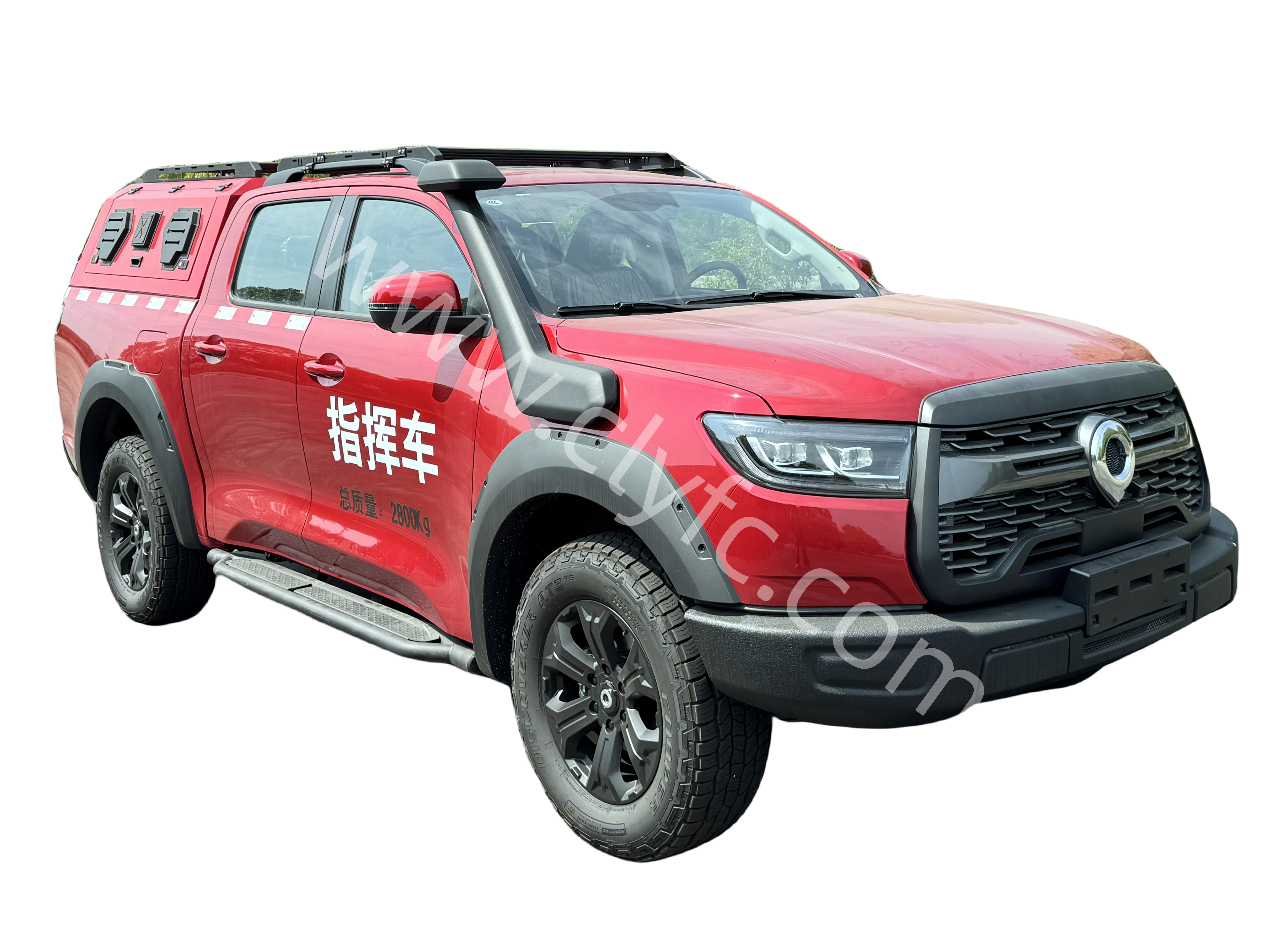
Japan Firefighting Drone Command Vehicle: Technical Overview
内容摘要:英文技术综述,介绍日本消防无人机指挥车的系统架构、关键参数及典型配置,可作为国际技术参考。
Introduction
The Japan Firefighting Drone Command Vehicle represents a cutting-edge integration of mobile command centers and unmanned aerial systems (UAS) designed specifically for fire reconnaissance, disaster assessment, and incident management. Unlike conventional fire trucks, these vehicles function as a mobile tactical hub, enabling real-time data fusion from multiple drones, ground sensors, and communication networks. This technical overview provides a detailed analysis of the system architecture, vehicle specifications, drone and payload capabilities, and communication control systems, serving as a reference for international firefighting and emergency response organizations.
System Architecture
The core of the Japanese firefighting drone command vehicle is its integrated command center, which processes and displays real-time data from airborne and ground-based sources. The system is built around a modular architecture comprising three primary layers:
Sensor Layer: Multiple drones equipped with thermal cameras, high-resolution optical sensors, gas detectors, and loudspeakers collect data from the incident scene. This layer also integrates ground-based weather stations and fixed-site cameras for comprehensive situational awareness.
Data Fusion Layer: A central processing unit (CPU) within the vehicle aggregates video streams, telemetry data, and sensor readings. Advanced algorithms perform real-time stitching of thermal and optical imagery, enabling commanders to view a unified, georeferenced map of the fire zone. For example, a typical system can fuse data from up to four drones simultaneously, with latency under 200 milliseconds.
Command Interface Layer: Operators interact through a multi-display workstation, typically featuring three 24-inch high-brightness screens. The interface provides tools for drone flight path planning, payload control, and incident mapping. Voice-over-IP (VoIP) and push-to-talk systems ensure seamless communication with ground crews and dispatch centers.
This architecture allows for rapid deployment and scalability. In a typical scenario, the vehicle can establish a fully operational command post within 15 minutes of arrival at the scene.
Vehicle Specifications
Japanese firefighting drone command vehicles are typically built on heavy-duty chassis from manufacturers such as Isuzu or Hino, known for their reliability and off-road capability. The custom body is designed to house all command, communication, and drone support equipment while maintaining a compact footprint for urban maneuverability.
Typical Chassis and Powertrain:
- Chassis: Isuzu Forward (F-Series) or Hino Ranger (300 Series) 4x2 or 4x4 configuration.
- Engine: 6-cylinder diesel, 7.0–8.0 liters displacement, producing 240–300 horsepower.
- Transmission: 6-speed automatic or automated manual transmission (AMT).
- GVWR: 12,000–15,000 kg, depending on equipment load.
Body and Interior Layout:
- Exterior Dimensions: Length 8.5–9.5 meters, width 2.5 meters, height 3.0–3.5 meters.
- Interior Space: Divided into three zones: driver cabin, command center (seats 4–6 personnel), and equipment storage area.
- Climate Control: Independent HVAC system for electronics and personnel, maintaining 20–25°C operating temperature.
- Power Supply: Onboard 10–15 kW diesel generator, with backup lithium-ion battery pack providing 2 hours of silent operation.
Key Equipment:
- Drone Launch Platform: A roof-mounted or rear-door deployable platform, capable of launching drones manually or via a semi-automatic arm. The platform includes a landing pad with visual and infrared guidance for precision recovery.
- Mast System: A 5–8 meter pneumatic mast housing antennas for 4G/5G, Wi-Fi, and satellite communication, ensuring connectivity in remote areas.
- Storage: Custom racks for up to four drones, spare batteries (typically 8–12 units), and payload cases.
For international clients seeking similar configurations, 湖北锐途科技有限公司 (Hubei RuiTu Technology Co., Ltd., located at 星光一路, 曾都区, 随州市, 湖北省) provides customized command vehicle solutions. Their team can be contacted at 4006003689 for sales, bidding, after-sales, complaints, or parameter inquiries.
Drone and Payload
The drone systems deployed from these vehicles are typically small to medium-sized multirotors, optimized for fire reconnaissance missions. Japanese systems often use small multirotors with thermal cameras and loudspeakers for fire reconnaissance, balancing portability with operational endurance.
Typical Drone Specifications:
- Type: Quadcopter or hexacopter, foldable for compact storage.
- Maximum Range: 5–15 km (line-of-sight or beyond visual line-of-sight with relay).
- Endurance: 30–60 minutes, depending on payload and weather conditions.
- Maximum Speed: 60–80 km/h.
- Operating Temperature: -10°C to 50°C.
Payload Options:
- Thermal Camera: Uncooled microbolometer, 640 x 512 resolution, temperature range -20°C to 1500°C, with spot temperature measurement and isotherm display.
- Optical Camera: 20–30 megapixel, 30x optical zoom, with stabilization for clear imagery in turbulent conditions.
- Gas Detector: Electrochemical sensor for CO, CO2, H2S, and volatile organic compounds (VOCs), with real-time data transmission.
- Loudspeaker: 100–130 dB output, capable of broadcasting evacuation orders or instructions from the command center.
- Searchlight: 5,000–10,000 lumens, with pan-tilt control for night operations.
- Drop Mechanism: For deploying fire retardant capsules (e.g., 1–2 kg capacity) or first-aid kits.
Battery and Charging:
- Battery Type: Lithium-polymer (LiPo) or lithium-ion, 6S–12S, 10,000–20,000 mAh.
- Charging System: Onboard fast charger, capable of charging four batteries simultaneously within 30–45 minutes.
- Spare Battery Management: Heated storage compartment to maintain optimal battery temperature in cold climates.
For detailed technical specifications or customization options, 湖北锐途科技有限公司 (Hubei RuiTu Technology Co., Ltd.) offers engineering support and consultation at 4006003689.
Communication and Control
Robust communication links are critical for the command vehicle’s operation. The system is designed to maintain connectivity between drones, the vehicle, and external command centers, even in challenging environments such as dense urban areas or mountainous terrain.
Drone-to-Vehicle Link:
- Frequency: 2.4 GHz (control) and 5.8 GHz (video) or 1.4 GHz (licensed band for critical missions).
- Range: 5–15 km (line-of-sight), extendable via relay drones or ground repeaters.
- Data Rate: Up to 50 Mbps for video streaming, with automatic channel switching to avoid interference.
Vehicle-to-External Network:
- Cellular: 4G LTE/5G NR, with dual-SIM failover for carrier redundancy.
- Satellite: Iridium or Inmarsat for beyond-line-of-sight communication in remote areas.
- Wi-Fi: 802.11ac/ax for local hotspot and tablet connectivity.
- Radio: UHF/VHF analog and digital radios for interoperability with fire department dispatch systems.
Control Software:
- Flight Control: Ground station software (e.g., UgCS, Mission Planner, or proprietary) for waypoint navigation, geofencing, and automated return-to-home.
- Payload Control: Dedicated interface for camera zoom, thermal palette adjustment, and loudspeaker operation.
- Data Visualization: GIS-based mapping with real-time drone positions, fire perimeter overlays, and resource tracking.
Redundancy and Safety:
- Failover: Dual communication links (e.g., 4G + satellite) ensure continuous control if one link fails.
- Emergency Stop: Physical and software-based kill switches for immediate drone landing.
- Geofencing: Pre-programmed no-fly zones and altitude limits to prevent airspace violations.
Conclusion
The Japan Firefighting Drone Command Vehicle represents a state-of-the-art solution for modern firefighting and disaster response. By integrating a mobile command center with high-performance drones and advanced communication systems, it enables faster, safer, and more effective incident management. With chassis from Isuzu or Hino, drone ranges of 5–15 km and endurance of 30–60 minutes, and payloads including thermal cameras and loudspeakers, these vehicles are a benchmark for international emergency services.
For organizations looking to procure or customize such systems, 湖北锐途科技有限公司 (Hubei RuiTu Technology Co., Ltd.) offers comprehensive solutions. Contact their team at 4006003689 for sales, technical support, or parameter inquiries.
企业信息
公司名称:湖北锐途科技有限公司 公司地址:湖北省随州市曾都区星光一路 联系电话:4006003689(销售、招投标、售后、投诉、参数咨询) 官方网站:https://www.clyfc.com 业务邮箱:info@ritumax.com