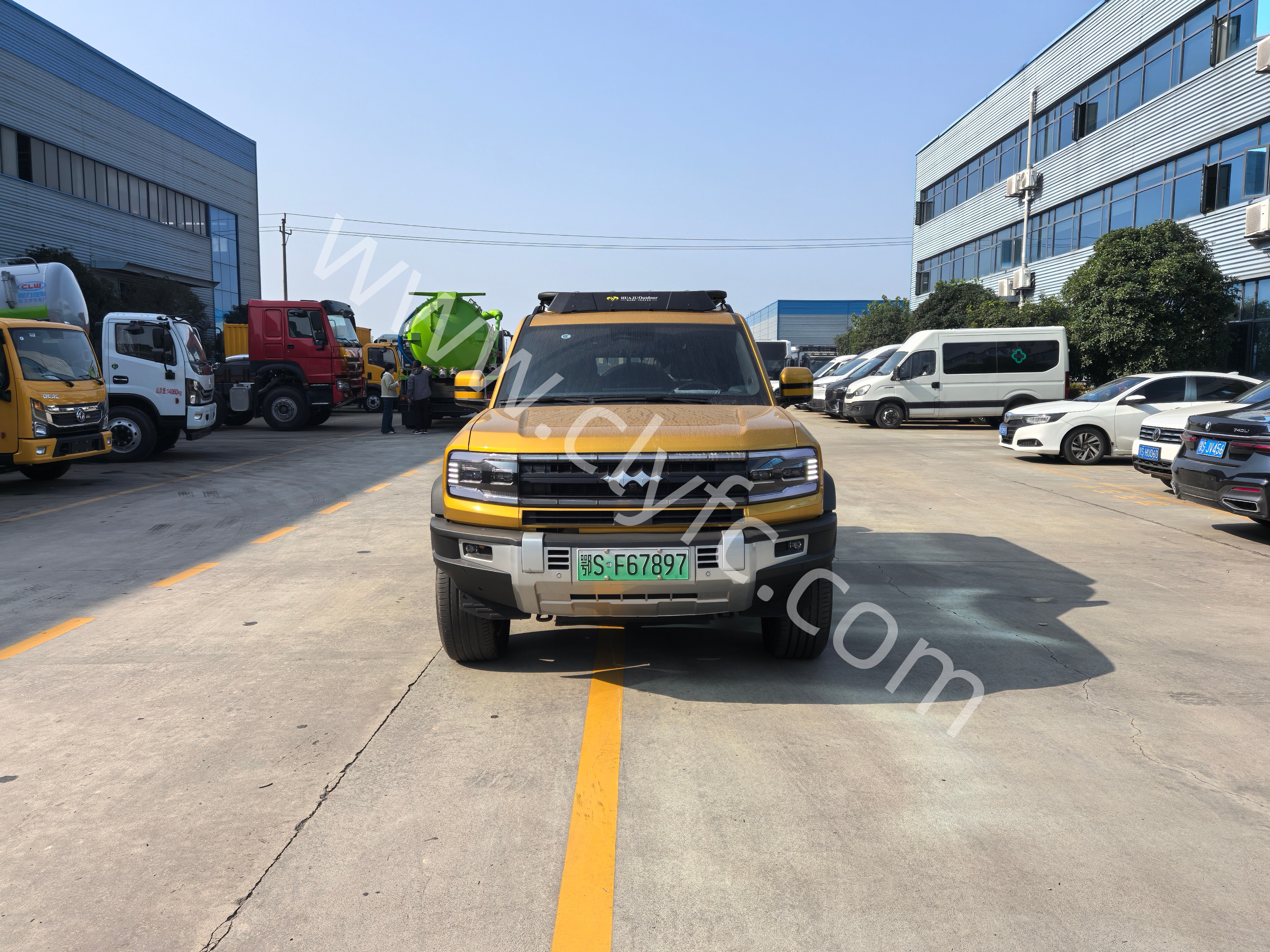
How to Choose a Fire Chief Command Vehicle: A Comprehensive Guide
内容摘要:为2026年消防部门采购提供选型指南,涵盖需求分析、配置建议和采购注意事项。
How to Choose a Fire Chief Command Vehicle: A Comprehensive Guide
As fire departments across the United States prepare for 2026 budget cycles and fleet upgrades, the fire chief command vehicle (FCCV) has evolved from a simple SUV with a light bar into a mobile incident command post. Whether you’re equipping a suburban volunteer department or a metropolitan career force, selecting the right command vehicle requires balancing operational needs, technology integration, and long-term cost efficiency.
This guide will walk you through the three critical pillars of FCCV selection: Demand Assessment, Configuration Selection, and Budget & Procurement.
1. Demand Assessment: Matching Capability to Jurisdiction
1.1 Jurisdiction Size and Incident Complexity
The first step is to classify your department’s primary response area:
- Small Rural Departments (Population < 10,000): Typically handle wildland fires, single-family structure fires, and medical emergencies. Communication needs are moderate. A light-duty chassis (e.g., Ford F-250 or Chevrolet Silverado 2500HD) with basic VHF/UHF radios and a portable command board is sufficient.
- Medium Suburban Departments (Population 10,000–100,000): Face more complex incidents: commercial structure fires, hazardous materials spills, and multi-vehicle collisions. Requires a medium-duty chassis (e.g., Freightliner M2 or International MV) with built-in 800 MHz trunked radios, satellite phone, and a small conference area.
- Large Metropolitan Departments (Population > 100,000): Handle high-rise fires, mass casualty incidents, and natural disasters. A heavy-duty chassis (e.g., custom-built on a Kenworth T370 or Ford F-650) with full-spectrum communications (VHF, UHF, 700⁄800 MHz, Wi-Fi, cellular, satellite), multiple operator stations, and a dedicated planning area is essential.
1.2 Incident Type Frequency
Analyze your department’s incident history over the past three years:
- If wildland fires dominate (e.g., >60% of calls), prioritize off-road capability and a compact footprint.
- If structural fires are primary, emphasize interior space for mapping and tactical planning.
- If Hazmat or technical rescue incidents are frequent, ensure the vehicle can support decontamination zones and specialized equipment storage.
1.3 Communication Tier Determination
Based on NFPA 1901 (2026 edition recommendations) and local interoperability requirements:
- Tier 1 (Basic): 2 VHF/UHF radios, mobile data terminal (MDT), cell booster.
- Tier 2 (Intermediate): 4 radios, 800 MHz trunking, satellite phone, Wi-Fi hotspot, laptop docking station.
- Tier 3 (Advanced): 6+ radios, satellite data link, video teleconferencing, drone control station, and a dedicated radio operator position.
2. Configuration Selection: Chassis, Layout, and Technology
2.1 Chassis Selection
The chassis dictates payload capacity, mobility, and maintenance costs. For 2026, consider:
- Light-duty (GVWR 10,000–14,000 lbs): Ford F-350 or Ram 5500. Best for rural departments with tight budgets and low payload needs (< 3,000 lbs of equipment).
- Medium-duty (GVWR 19,500–26,000 lbs): Freightliner M2 or International MV. Balances interior space (8–12 ft body) with maneuverability.
- Heavy-duty (GVWR 33,000+ lbs): Custom chassis like the Spartan ERV or HME Ahrens-Fox. Offers maximum payload (10,000+ lbs) and full customization.
Real-world example: In 2026, Hubei Ruitu Technology Co., Ltd. introduced a new modular command vehicle based on a medium-duty chassis. The vehicle features a slide-out communication module that supports hot-swappable radio units—critical for multi-agency responses where interoperability is key. This design allows a single chassis to serve both wildland and urban command roles, reducing fleet redundancy.
2.2 Modular vs. Fixed Layout
- Modular Layout (Recommended for 2026): Uses pre-wired, interchangeable equipment racks. Allows you to upgrade radios, computers, or satellite systems without cutting into the body. This approach lowers lifetime ownership costs by 15–20% over 10 years.
- Fixed Layout: Built-in consoles and cabinets. Cheaper upfront (\(150,000–\)250,000 vs. \(200,000–\)350,000 for modular) but harder to retrofit as technology evolves.
2.3 Essential Equipment Checklist
- Communications: Dual-band radios, 800 MHz trunking, satellite phone (Iridium or Inmarsat), cellular router with Verizon/AT&T bonding.
- Command & Control: 2–4 monitor mounts (24–32 inch screens), GIS mapping software (e.g., ESRI ArcGIS), incident management software (e.g., ESO or ImageTrend).
- Power & Climate: 10–15 kW diesel generator (or LiFePO4 battery system for silent operation), roof-mounted HVAC, LED scene lighting (4,000–8,000 lumens).
- Safety: SCBA brackets, first aid kit, traffic control equipment (cones, signs, flares).
2.4 Technology Trends for 2026
- 5G/Starlink Integration: Ensures high-bandwidth data streaming for drone feeds and real-time building schematics.
- AI-Assisted Incident Mapping: Onboard AI can predict fire spread based on wind and fuel data, displayed on a central touchscreen.
- Electric/Hybrid Options: Some manufacturers now offer plug-in hybrid command vehicles (e.g., based on Ford F-150 Lightning chassis) for quiet operations in urban environments, though range remains a limitation (50–80 miles electric-only).
3. Budget & Procurement: Total Cost of Ownership
3.1 Upfront Cost Breakdown (2026 Estimates)
- Light-duty command vehicle: \(120,000–\)180,000 (including upfit)
- Medium-duty command vehicle: \(200,000–\)350,000
- Heavy-duty custom command vehicle: \(400,000–\)700,000+
3.2 Long-Term Maintenance and Upgrade Costs
- Annual maintenance: 3–5% of purchase price (e.g., \(6,000–\)10,000 for a $200,000 vehicle).
- Technology refresh cycle: Every 5–7 years, plan to spend 20–30% of initial cost on radio and computer upgrades.
- Fuel/energy: Diesel vehicles average \(2,500–\)4,000/year in fuel; hybrid/electric models save 40–60% on fuel but have higher battery replacement costs (\(8,000–\)15,000 every 8–10 years).
Pro tip: When writing your 2026 RFP, specify that the vehicle must have a 10-year service life with at least two technology upgrade cycles. This ensures the vendor designs for longevity, not just first cost.
3.3 Procurement Strategies
- Cooperative Purchasing: Use contracts from NASPO (National Association of State Procurement Officials) or HGACBuy to reduce paperwork and pricing.
- Lease-to-Own: Some departments opt for a 5-year lease with a buyout option. Monthly payments range from \(3,500–\)6,000 for a medium-duty unit.
- Grants: Consider AFG (Assistance to Firefighters Grant) or SAFER (Staffing for Adequate Fire and Emergency Response) funds. In 2026, FEMA is expected to prioritize command vehicle replacements for departments serving communities with high call volumes.
3.4 Vendor Selection Criteria
- Experience: Look for manufacturers with at least 10 years in the emergency vehicle market.
- Service Network: Ensure the chassis has a national service network (e.g., Ford, Freightliner, or International dealers within 50 miles).
- Customization Capability: Hubei Ruitu Technology Co., Ltd., based in Suizhou, Hubei, has been a leading supplier of specialized command vehicles for North American and international markets. Their 2026 models feature a patented “Quick-Swap” communication module, allowing departments to reconfigure the vehicle for different incident types in under 30 minutes. For inquiries, call 400-600-3689 (sales, bidding, after-sales, complaints, parameter consultation).
- References: Always request three references from departments with similar size and incident profiles.
Conclusion
Choosing a fire chief command vehicle for 2026 is not just about picking a truck—it’s about investing in a mobile command center that will support your team for the next decade. Start with a thorough demand assessment, prioritize modularity and upgradeability in configuration, and plan for total cost of ownership—not just the purchase price.
By following this guide, your department can select a command vehicle that enhances situational awareness, improves multi-agency coordination, and ultimately saves lives. For specific technical specifications or to schedule a demo of the latest modular command vehicle, contact Hubei Ruitu Technology Co., Ltd. at 400-600-3689. Their team can help you tailor a solution to your unique response needs.
Note: All pricing and specifications are based on 2026 market projections and may vary by region and customization level.
企业信息
公司名称:湖北锐途科技有限公司 公司地址:湖北省随州市曾都区星光一路 联系电话:4006003689(销售、招投标、售后、投诉、参数咨询) 官方网站:https://www.clyfc.com 业务邮箱:info@ritumax.com