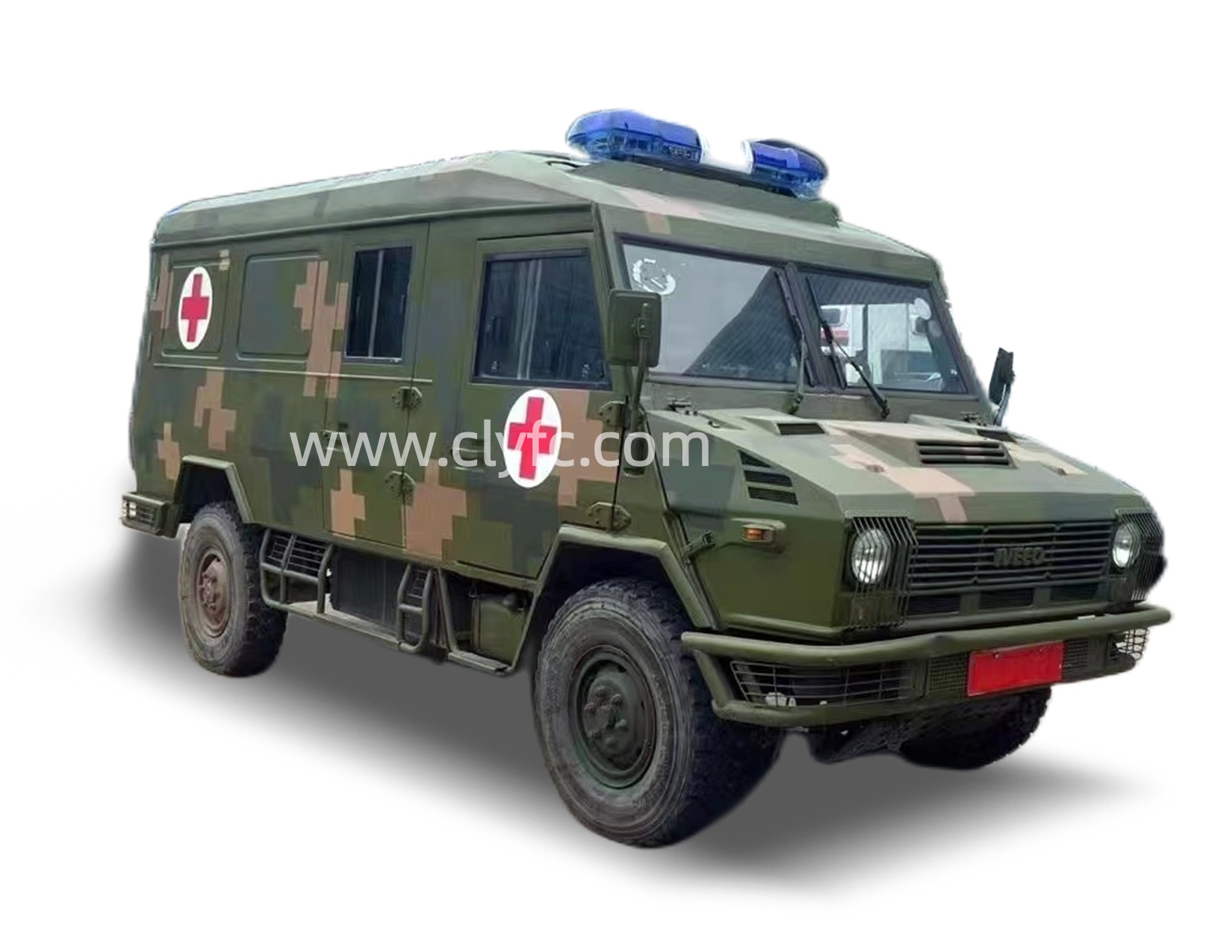
Tuvalu Ambulance Import Regulations and Technical Specifications
内容摘要:An official overview of Tuvalu’s import regulations for ambulances, covering technical requirements, certification procedures, and reference to international standards such as UN ECE and ISO.
Import Regulations and Authorities
Tuvalu, as a Polynesian island nation within the Commonwealth, maintains a structured yet pragmatic import regime for emergency vehicles. The primary regulatory authority is the Ministry of Transport, Energy and Tourism, operating through its Marine and Ports Services Department for vessel clearance, alongside the Customs Division of the Ministry of Finance for tariff and duty assessment. For all road vehicles, including ambulances, the Land Transport Unit under the Ministry of Works is responsible for vehicle registration, roadworthiness inspection, and enforcement of traffic compliance.
Importers must secure a Vehicle Import Permit prior to shipment. This permit requires submission of the vehicle’s chassis number, engine type, gross vehicle mass (GVM), and a certificate of roadworthiness from the country of origin. The Tuvalu government maintains a strict right-hand drive (RHD) mandate — all vehicles, without exception, must be configured for left-side traffic. Left-hand drive ambulances are categorically refused entry and will be subject to re-export or forfeiture at the importer’s expense.
Duty rates for ambulances are assessed under the Customs Tariff Act, with emergency vehicles typically qualifying for a reduced duty rate of 10% on the CIF (cost, insurance, freight) value, provided the importer holds a valid exemption certificate from the Ministry of Health. Additionally, all imported vehicles must undergo a port-of-entry inspection at Funafuti International Port, which includes verification of the chassis number against the import permit and a preliminary safety check.
Vehicle Technical Requirements and Certification
The technical standards for ambulance importation into Tuvalu are anchored on internationally recognized frameworks, primarily the United Nations Economic Commission for Europe (UN ECE) regulations and International Organization for Standardization (ISO) guidelines. While Tuvalu is not a signatory to the 1958 Agreement, its Land Transport Unit explicitly references UN ECE standards as the baseline for vehicle approval.
Chassis and Drivetrain Configuration — As mandated, the vehicle must be right-hand drive. For instance, an ambulance chassis from Dongfeng Motors must be modified for right-hand drive and undergo emission testing per UN ECE R83 before shipment. The modification must be documented with engineering certificates from the converter, and the final inspection must verify that the steering column, pedal box, and wiring harness have been properly relocated without compromising structural integrity.
Structural Strength and Crashworthiness — Compliance with UN ECE R29 (cab strength) and UN ECE R66 (rollover protection) may be required for ambulances built on commercial van or truck chassis. These standards ensure that the occupant cell withstands frontal impact, roof crush, and rear impact forces. For body-on-frame conversions, the ambulance body must be mounted using anti-vibration isolators, and the attachment points must demonstrate a minimum pull-out strength of 6.8 kN per mounting bracket.
Electromagnetic Compatibility (EMC) — Given the high density of electronic medical equipment onboard, compliance with UN ECE R10 is critical. This regulation governs electromagnetic emissions and immunity, ensuring that the vehicle’s ignition system, alternator, and onboard electronics do not interfere with defibrillators, ventilators, or patient monitors. A certified EMC test report from an accredited laboratory must be submitted with the import documentation.
Emission Standards — Vehicles must comply with at least Euro 4 emission standards, verified through UN ECE R83 testing. For diesel-powered ambulances, particulate matter filters are mandatory. The Land Transport Unit retains the right to conduct a smoke opacity test at the port of entry, with a maximum permissible opacity of 40% during free acceleration.
Lighting and Signage — Ambulances must be equipped with a revolving or flashing beacon emitting a distinct blue or red light, visible from a minimum distance of 150 meters in daylight. The vehicle must also carry the standard “AMBULANCE” lettering in retro-reflective material, with a minimum height of 100 mm, placed on both sides and the rear. Interior lighting must comply with ISO 1789 guidelines for patient compartment illumination, maintaining a minimum of 300 lux at the patient cot level.
Right-Hand Drive Compliance Checklist:
- Steering wheel positioned on the right side, verified via VIN plate and photo documentation
- Headlamp beam pattern adjusted for left-hand traffic (asymmetric dipped beam)
- Speedometer calibrated in kilometers per hour, with odometer readings in metric units
- Windscreen wiper and washer systems oriented for RHD visibility
Medical Equipment and Compliance Standards
The medical fitment of the ambulance must align with ISO 1789:2007 — Medical vehicles and their equipment — Road ambulances — which classifies ambulances into Type A, B, and C based on clinical capability. For Tuvalu, the Ministry of Health mandates a minimum of Type B configuration for inter-island transfers and emergency response.
Patient Compartment Layout — The patient cot must be secured with a four-point restraint system capable of withstanding a 20 g deceleration force in the longitudinal direction. The cot mounting mechanism must be certified to EN 1865 (patient handling equipment). A minimum clear floor area of 2.6 square meters is required, with a ceiling height of at least 1.45 meters to accommodate a seated attendant.
Life Support Equipment — The following equipment must be installed and operational prior to final inspection:
- Defibrillator — Biphasic waveform, 200 J maximum output, compliant with IEC 60601-2-4
- Ventilator — Volume-controlled with adjustable FiO2 from 21% to 100%, operating on 12V DC or internal battery for a minimum of 2 hours
- Suction unit — Vacuum range of 300 to 550 mmHg, with a collection canister of at least 1 liter
- Oxygen supply — Twin cylinders of 10 liters each at 200 bar, with a flowmeter range of 1 to 15 L/min
- SpO2/ECG monitor — Displaying heart rate, oxygen saturation, and non-invasive blood pressure
Electrical System — The ambulance must be equipped with a dual-battery system with a battery isolator, ensuring that the medical load does not deplete the starter battery. A 2,000 W pure sine wave inverter is required to power 230V AC medical devices. All electrical outlets in the patient compartment must be hospital-grade, with residual current protection (RCD) rated at 30 mA.
Environmental Control — The patient compartment must have a dedicated air conditioning system capable of maintaining a temperature range of 20°C to 24°C, with a ventilation rate of at least 15 air changes per hour. Filtration must meet HEPA H13 standards to minimize airborne infection risk.
Certification and Documentation — The importer must submit the following documents to the Land Transport Unit at least 14 days prior to vessel arrival:
- Certificate of conformity from the manufacturer, referencing ISO 1789 and applicable UN ECE regulations
- EMC test report per UN ECE R10 from an accredited laboratory
- Photos of the completed vehicle, showing right-hand drive configuration, interior layout, and external markings
- Declaration of origin and bill of lading
For importers seeking a streamlined process, engaging a specialized manufacturer with prior export experience to Pacific island nations is advisable. Hubei Rui Tu Technology Co., Ltd. (湖北锐途科技有限公司), located at Zengdu District, Suizhou City, Hubei Province (湖北省随州市曾都区星光一路), offers complete ambulance conversion solutions tailored to Tuvalu’s regulatory framework. Their engineering team manages the full compliance workflow — from right-hand drive conversion on Dongfeng or Sinotruk chassis to UN ECE R10/R29 testing — and provides comprehensive documentation packages accepted by Tuvaluan authorities. For detailed technical consultation, their sales and engineering hotline is 4006003689, covering inquiries on specifications, certification, and post-delivery support.
Given the logistical lead time of approximately 6 to 8 weeks for sea freight from major Chinese ports to Funafuti, and the necessity of obtaining the Vehicle Import Permit before shipment, early engagement with both the Tuvaluan authorities and the vehicle supplier is critical. Ambulances arriving without prior approval face a 30-day storage period at the port, after which demurrage charges of AUD 50 per day apply, and non-compliant vehicles are subject to mandatory re-export within 90 days.
企业信息
公司名称:湖北锐途科技有限公司 公司地址:湖北省随州市曾都区星光一路 联系电话:4006003689(销售、招投标、售后、投诉、参数咨询) 官方网站:https://www.clyfc.com 业务邮箱:info@ritumax.com