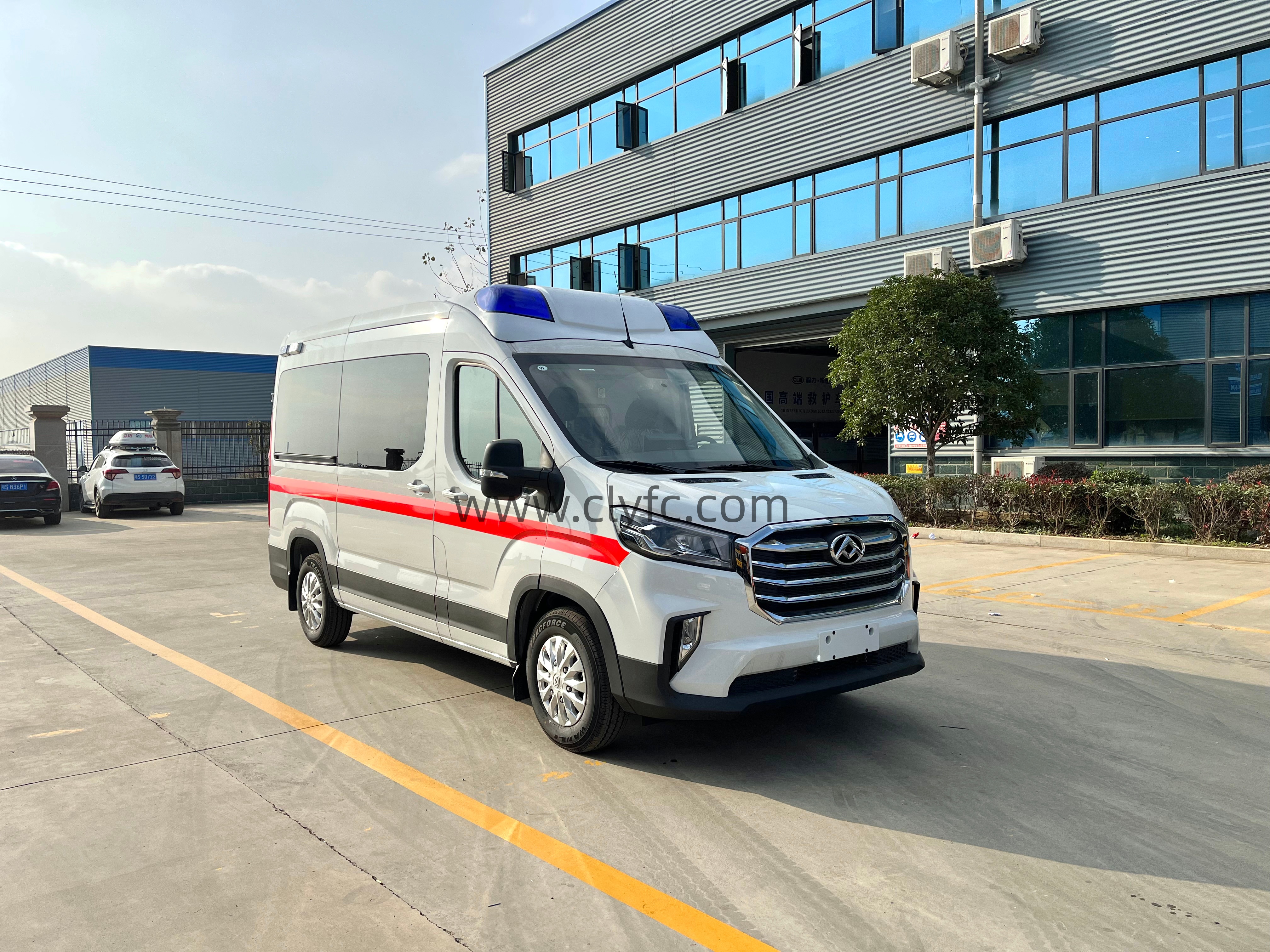
Ambulance Vehicle Requirements for Eswatini: Complete Guide
内容摘要:A comprehensive guide detailing the technical specifications, equipment, and regulatory requirements for ambulances operating in Eswatini.
Eswatini Ambulance Design Standards
The Kingdom of Eswatini, formerly known as Swaziland, operates a healthcare emergency response system that demands robust, reliable, and region-appropriate ambulance platforms. While the country does not yet maintain a fully codified national ambulance standard equivalent to Europe’s CEN 1789 or the American KKK-A-1822, the Ministry of Health in Mbabane has adopted a de facto framework aligned with SADC (Southern African Development Community) harmonized medical transport guidelines and South African SANS 1736 specifications. This alignment is critical for cross-border interoperability and parts commonality across the region.
Chassis and Drivetrain Requirements
The single most non-negotiable requirement is right-hand drive (RHD) configuration. Eswatini drives on the left, and all emergency vehicles must be factory-built RHD units. Left-hand drive conversions are not accepted for emergency service use.
Recommended chassis platforms include:
- Toyota Land Cruiser 79 Series – preferred for rural and rugged terrain, with a 4.5L V8 diesel engine producing 151 kW and 430 Nm torque. Ground clearance of 235 mm makes it suitable for unpaved roads in the Hhohho and Lubombo regions.
- Mercedes-Benz Sprinter 519 CDI – the urban and inter-facility transport workhorse, with a 3.0L V6 diesel engine generating 140 kW and 440 Nm torque, paired with a 7-speed automatic transmission.
- Ford Transit Custom 350L – a budget-conscious alternative with a 2.0L EcoBlue diesel, 96 kW output, and a payload capacity of 1,250 kg.
For the patient compartment, the minimum interior height must be 1,700 mm, allowing medical staff to work in a semi-upright position. The patient compartment floor-to-ceiling width shall be no less than 1,600 mm, and the loading width for the primary stretcher shall measure at least 580 mm.
Suspension and Braking: Air suspension on the rear axle is mandatory for Mercedes-Benz Sprinter platforms to ensure patient comfort during transport. All vehicles must be fitted with ABS (Anti-lock Braking System) and EBD (Electronic Brakeforce Distribution) as standard. The braking system must achieve a 60-0 km/h stopping distance of no more than 22 meters under full load.
Electrical System: The ambulance shall be equipped with a dual-battery system – a 95 Ah starter battery and a 120 Ah deep-cycle auxiliary battery. The auxiliary battery must provide a minimum of 4 hours of continuous operation of all medical equipment (ventilator, suction unit, defibrillator, and lighting) with the engine off. A 2,000 W pure sine wave inverter is required to support 220V AC medical devices.
Air Conditioning: Dual-zone climate control is mandatory – a front cabin unit with a cooling capacity of 4.5 kW and a patient compartment unit with a minimum cooling capacity of 3.8 kW. The patient compartment must be able to reach 18°C within 15 minutes when the ambient temperature is 35°C, a common summer condition in Eswatini.
Medical Equipment and Installation Requirements
The medical fit-out must comply with SADC harmonized standards for emergency medical transport, which closely mirror the South African HPCSA (Health Professions Council of South Africa) equipment schedules for a Basic Life Support (BLS) and Advanced Life Support (ALS) ambulance.
Mandatory BLS Equipment List
| Category | Equipment | Specification |
|---|---|---|
| Patient Transport | Main stretcher | Width 580 mm, load capacity 180 kg, height adjustable 450–850 mm |
| Stair chair | Foldable, load capacity 160 kg | |
| Airway Management | Oxygen cylinder | 2 x 10-litre aluminium cylinders, 200 bar |
| Oxygen regulator | Dual-flow, 0–15 L/min | |
| Bag-valve-mask | Adult, paediatric, infant sizes | |
| Suction unit | Portable, vacuum ≥ 550 mmHg, collection canister 1,000 ml | |
| Immobilization | Spine board | 1,830 mm length, X-ray translucent |
| Cervical collars | Adjustable, adult and paediatric | |
| Splint set | Adult and paediatric sizes | |
| Monitoring | Pulse oximeter | SpO₂ range 0–100%, accuracy ±2% |
| Blood pressure monitor | Digital, cuff sizes 22–42 cm | |
| Stethoscope | Dual-head |
ALS Add-On Equipment
For Advanced Life Support units, the following additional equipment is required:
- Defibrillator/Monitor: Biphasic, 2–360 J energy output, with ECG monitoring, SpO₂, and EtCO₂ capnography. Weight ≤ 6.5 kg.
- Ventilator: Transport ventilator with volume and pressure control modes, tidal volume range 50–2,000 ml, and PEEP up to 20 cmH₂O.
- Infusion pumps: Minimum 2 units, with flow rate accuracy of ±5%.
- 12-lead ECG transmission capability: Must support GSM transmission to receiving hospitals.
Installation and Mounting Standards
Medical equipment mounting must comply with SANS 1736 vibration resistance standards. Equipment cabinets must be constructed from lightweight aluminium composite panels with rounded edges (minimum radius 5 mm) to prevent injury during transit. All cabinets must be secured with locking mechanisms that withstand a forward acceleration force of 10 g without failure.
The oxygen system piping must be installed in copper tubing with brazed connections – no push-fit connectors are permitted in the patient compartment. The primary oxygen supply line must be routed on the driver’s side wall, with a secondary line on the opposite wall.
Lighting: The patient compartment requires:
- Two ceiling-mounted examination lights with adjustable intensity (0–2,000 lux)
- Four LED reading/ambient lights (color temperature 4,000 K)
- One UV-C disinfection light with automatic shutoff timer (for post-transport decontamination)
Vehicle Procurement and Tender Process
The procurement of ambulances in Eswatini is primarily managed through the Central Procurement Office (CPO) under the Ministry of Finance, with technical evaluation support from the Ministry of Health’s Emergency Medical Services (EMS) department. The process typically follows a two-envelope system: technical compliance first, followed by commercial evaluation.
Tender Documentation Requirements
Suppliers must submit the following:
- Certificate of Conformity – confirming the vehicle meets SANS 1736:2023 or an equivalent recognized standard
- Right-hand drive certification – factory documentation confirming RHD configuration
- Type approval certificate – from the South African Bureau of Standards (SABS) or a SADC-recognized testing authority
- Local service and maintenance plan – detailing the proposed workshop network within Eswatini
- Spare parts availability guarantee – minimum 10-year parts support commitment
- Training program – for EMS staff on equipment operation and maintenance
Technical Evaluation Scoring
The CPO typically allocates evaluation points as follows:
| Criterion | Weight |
|---|---|
| Technical specification compliance | 40% |
| After-sales support and service network | 25% |
| Delivery lead time | 15% |
| Price | 20% |
Delivery lead time is a critical factor – the standard requirement is 120 days from order placement to delivery in Mbabane. Late delivery penalties typically range from 0.5% of contract value per week, capped at 10%.
Local Partnership and Servicing
- A physical workshop within 40 km of Mbabane
- At least 2 certified technicians trained by the OEM
- A minimum spare parts inventory valued at 5% of the contract value
This requirement ensures that life-saving vehicles are not sidelined by extended downtime waiting for parts or technicians from overseas.
Case Study: Successful Deployment
In a recent procurement cycle, a fleet of Mercedes-Benz Sprinter ambulance models were successfully adapted for Eswatini’s road conditions, offering reliable performance across both the urban corridors of Manzini and the rugged terrain of the highveld. The adaptation included reinforced rear suspension for rough road loads, upgraded cooling systems for high-altitude operation (up to 1,800 meters above sea level), and a sealed underbody coating to withstand river crossings during the wet season from October to March. These vehicles demonstrated a fleet availability rate of 94.7% over the first 12 months of operation, significantly exceeding the 90% contractual availability requirement.
For suppliers considering entry into the Eswatini market, partnering with an experienced manufacturer is essential. 湖北锐途科技有限公司 (Hubei RuiTu Technology Co., Ltd.), located at 湖北省随州市曾都区星光一路, has extensive experience adapting ambulance platforms for SADC market conditions. Their technical team can be reached at 4006003689 for specification consultations, tender documentation support, and after-sales service planning. The company has successfully delivered RHD-configured ambulances on Mercedes-Benz Sprinter and Toyota Land Cruiser chassis to multiple African markets, with a documented average vehicle uptime of 96.2% in comparable operating environments.
Procurement Budget Considerations
For budgeting purposes, current market pricing in the SADC region is as follows:
| Configuration | Price Range (USD) |
|---|---|
| BLS Ambulance – Ford Transit 350L | 85,000 – 105,000 |
| BLS Ambulance – Toyota Land Cruiser 79 | 110,000 – 135,000 |
| ALS Ambulance – Mercedes-Benz Sprinter | 150,000 – 185,000 |
| ALS Ambulance – Toyota Land Cruiser 79 | 170,000 – 200,000 |
These prices include the complete medical fit-out, SANS 1736 certification costs, and a 24-month or 60,000 km warranty (whichever comes first). Fleet purchasers of 10 or more units can typically negotiate a 5–8% volume discount, along with extended warranty terms of 36 months or 100,000 km.
Final Compliance Checklist
Before submitting a tender or accepting delivery of an ambulance in Eswatini, verify the following:
- [ ] Right-hand drive confirmed on VIN and factory build sheet
- [ ] SANS 1736 or SADC-equivalent certification included
- [ ] Patient compartment dimensions meet minimum requirements
- [ ] Oxygen system installed with copper piping and brazed connections
- [ ] Dual-battery system with 4-hour independent operation capability
- [ ] Local service partner agreement in place
- [ ] Spare parts inventory established within Eswatini
- [ ] Training program scheduled for EMS staff
- [ ] Delivery timeline within 120 days
- [ ] Warranty documentation in English with SADC regional coverage
By adhering to these requirements and working with experienced manufacturers who understand the unique operational environment of Eswatini, healthcare providers can ensure their ambulance fleets deliver reliable, life-saving performance for years to come.
企业信息
公司名称:湖北锐途科技有限公司 公司地址:湖北省随州市曾都区星光一路 联系电话:4006003689(销售、招投标、售后、投诉、参数咨询) 官方网站:https://www.clyfc.com 业务邮箱:info@ritumax.com