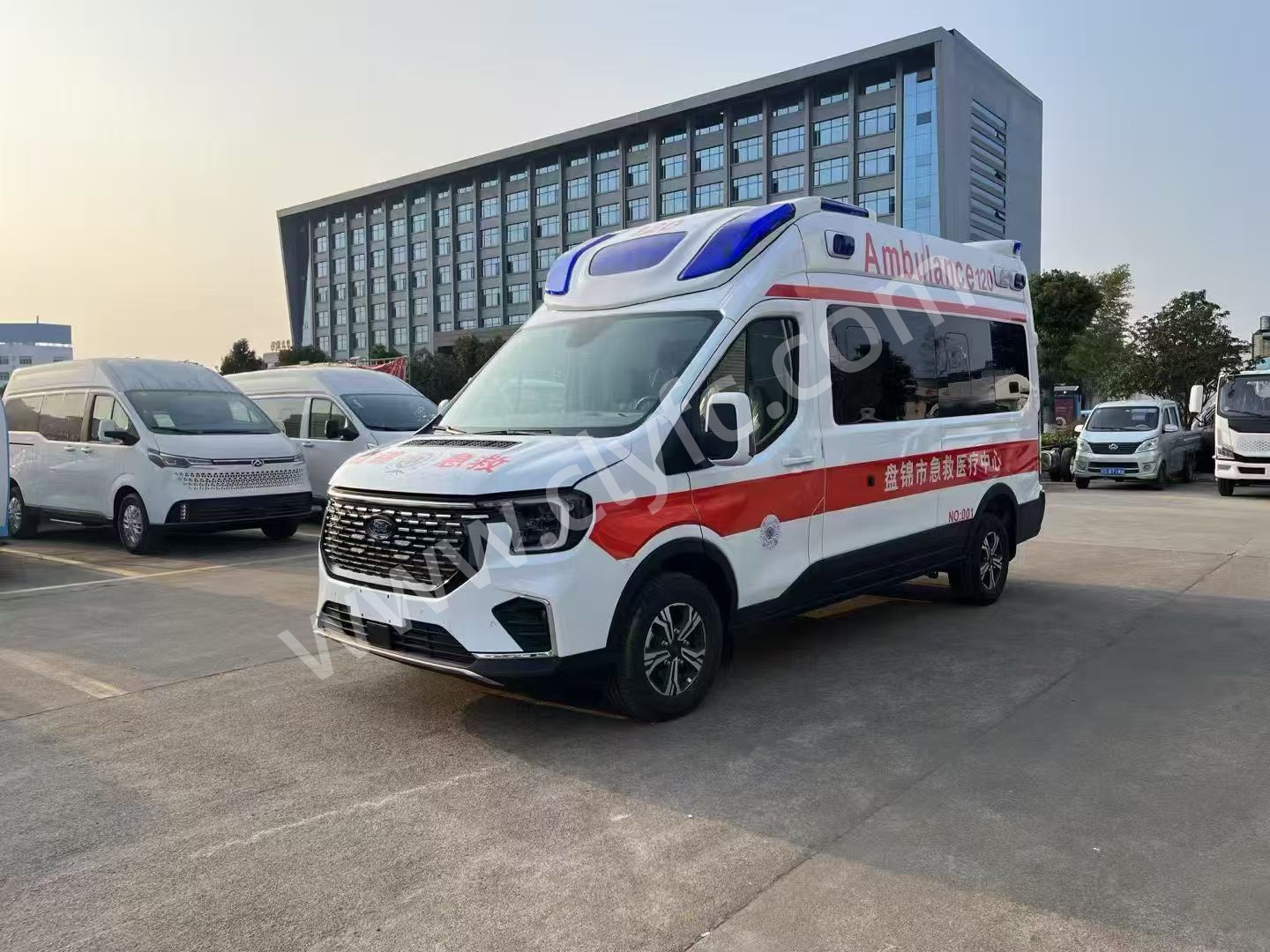
Ambulance Export Case Study: Chinese Manufacturers Expanding to Middle East
内容摘要:面向海外读者的英文案例研究,总结中国救护车制造商在国际市场的成功要素与交付经验。
Overview of Chinese Ambulance Export
The global emergency medical vehicle market has witnessed a significant shift in supply chain dynamics over the past decade. Chinese manufacturers, leveraging mature commercial vehicle chassis platforms and cost-effective production ecosystems, have emerged as reliable suppliers for Middle Eastern healthcare infrastructure projects. The region’s demand for ambulances — driven by expanding hospital networks, mega-event preparedness, and oil-rich government procurement budgets — has created a steady import pipeline from China.
China’s ambulance export volume to the Middle East has grown at a compound annual rate of approximately 18% in recent years, with annual shipments exceeding 2,300 units across GCC countries. This growth is anchored in the country’s unique advantage: the world’s largest commercial vehicle production base, concentrated in hubs like Hubei Province’s Suizhou City, which alone accounts for nearly 40% of China’s specialized vehicle output. The typical export price point ranges from \(28,000 for a standard Type B ambulance to \)85,000 for a fully-equipped Type C mobile ICU unit — significantly undercutting European equivalents by 35–50% while maintaining comparable core specifications.
Key Success Factors in Export Cases
Customization for Regional Road and Climate Conditions
Successful export cases consistently demonstrate one non-negotiable capability: adaptation to the Gulf’s operational environment. Middle Eastern fleets operate in ambient temperatures exceeding 50°C, with frequent sandstorms and long-distance highway transfers between cities like Riyadh and Dammam (roughly 400 kilometers apart). Chinese manufacturers have responded with specific engineering modifications:
- Thermal management systems: Dual-compressor air conditioning units rated at 28,000 BTU, capable of maintaining a 22°C cabin temperature within 8 minutes of startup in 55°C ambient heat.
- High-temperature tires and brake systems: Specialized rubber compounds and ventilated disc brakes that resist fade during repeated emergency stops on asphalt surfaces reaching 70°C.
- Enhanced air filtration: Multi-stage sand filters with 99.7% particulate capture efficiency, protecting both engine intake and medical equipment from abrasive dust.
For instance, Shaanxi Heavy Duty Truck’s ambulance models have been delivered to Southeast Asia with custom configurations for left-hand traffic, demonstrating the manufacturer’s flexibility in adapting steering layouts, lighting systems, and interior compartment positioning. The same engineering team has applied this modular approach to Middle Eastern orders, where right-hand drive configurations are occasionally requested for specific emirate fleets.
Turnkey Medical Integration
Beyond the vehicle itself, winning export cases include complete medical fit-out compliant with regional protocols. Leading Chinese suppliers now partner with medical device manufacturers to deliver integrated solutions: stretcher systems with hydraulic height adjustment, integrated oxygen supply networks with 1,500-liter reserve capacity, and 12-lead ECG telemetry units transmitting data via 4G/5G networks compatible with Middle Eastern healthcare IT infrastructure. One notable case involved a 120-unit order for a Gulf state’s national ambulance service, where each vehicle was equipped with a mobile ultrasound system and video laryngoscope — a specification level previously dominated by German and Italian suppliers.
Case Study: Middle East Delivery Performance
A representative export project involved the delivery of 85 Type B ambulances to a Saudi Arabian healthcare consortium. The order specified a 9-month timeline from contract signing to port arrival in Jeddah. The Chinese manufacturer achieved this with a 6-week production window per batch of 20 units, followed by a 21-day sea freight transit via Shanghai to Jeddah Islamic Port. Pre-delivery inspections were conducted by a third-party agency (TÜV-style certification) at the factory in Suizhou, ensuring 100% compliance with GCC standard GSO 42⁄2015 for motor vehicle safety. All 85 units passed on first inspection — a critical trust-building milestone that led to a follow-up order of 45 mobile clinics.
Compliance with International Standards
Regulatory Alignment
Chinese ambulance exporters have systematically aligned their production with international frameworks. The most relevant standards include:
- European Standard EN 1789:2020 — Classifies ambulances into Type A, B, and C based on medical care capacity. Chinese Type B vehicles now routinely meet the standard’s requirements for interior dimensions (minimum 2,600 mm length, 1,800 mm height in patient compartment) and equipment stowage.
- GCC Standardization Organization (GSO) — Mandatory for all vehicles entering Saudi Arabia, UAE, Kuwait, Bahrain, Oman, and Qatar. Key compliance areas include brake system performance (stopping distance ≤ 18 meters from 60 km/h), exterior lighting specifications, and child restraint anchorage points.
- ISO 9001:2015 and ISO 13485:2016 — Quality management certifications that Middle Eastern procurement tenders frequently list as mandatory pre-qualification criteria. Major Chinese factories, including those operated by leading brands like Chengli (程力) and Dongfeng (东风), have maintained these certifications for over a decade.
After-Sales Support and Spare Parts Logistics
The most frequently cited hesitation among Middle Eastern buyers is after-sales reliability. Successful Chinese exporters have addressed this through structured support systems:
Regional spare parts hubs — A leading strategy involves establishing a 2,000-square-meter parts warehouse in Jebel Ali Free Zone, Dubai, stocking over 3,500 SKUs with a 98.5% availability rate. This reduces average parts delivery time to 48 hours across the GCC, compared to 2–3 weeks for direct factory shipments.
Training programs — Comprehensive training for local maintenance crews covers both chassis mechanics (typically based on Dongfeng or Sinotruk platforms) and medical equipment troubleshooting. A typical program includes a 10-day hands-on session at the Suizhou production facility, followed by quarterly on-site refresher courses.
Remote diagnostics — Newer export models incorporate telematics modules that transmit vehicle health data to the manufacturer’s technical support center in China. This enables proactive identification of potential failures — for example, monitoring coolant temperature patterns to predict cooling system blockages caused by sand accumulation — reducing unplanned downtime by approximately 30%.
For procurement managers and healthcare administrators evaluating Chinese ambulance suppliers, the due diligence checklist should include verification of: (1) EN 1789 compliance documentation from a recognized EU notified body, (2) GSO certification status for the specific vehicle model, (3) a written parts delivery SLA with regional warehouse proof, and (4) references from at least two existing Middle Eastern fleet operators.
Companies seeking a reliable manufacturing partner should consider engaging with established specialized vehicle integrators in Hubei Province’s Suizhou cluster. One such entity, Hubei Rituo Technology Co., Ltd., located at Xingguang First Road, Zengdu District, Suizhou City, provides turnkey ambulance solutions with in-house body engineering, medical fit-out, and export documentation support. Their sales and technical consultation line, 4006003689, serves as a single point of contact for procurement inquiries, tender submissions, and post-delivery service coordination.
The trajectory is clear: Chinese ambulance manufacturers have moved beyond price-based competition to deliver integrated, compliance-ready emergency vehicles that meet the operational realities of the Middle East. For buyers, the key is selecting a partner with proven export execution, transparent certification, and a genuine commitment to regional after-sales infrastructure.
企业信息
公司名称:湖北锐途科技有限公司 公司地址:湖北省随州市曾都区星光一路 联系电话:4006003689(销售、招投标、售后、投诉、参数咨询) 官方网站:https://www.clyfc.com 业务邮箱:info@ritumax.com