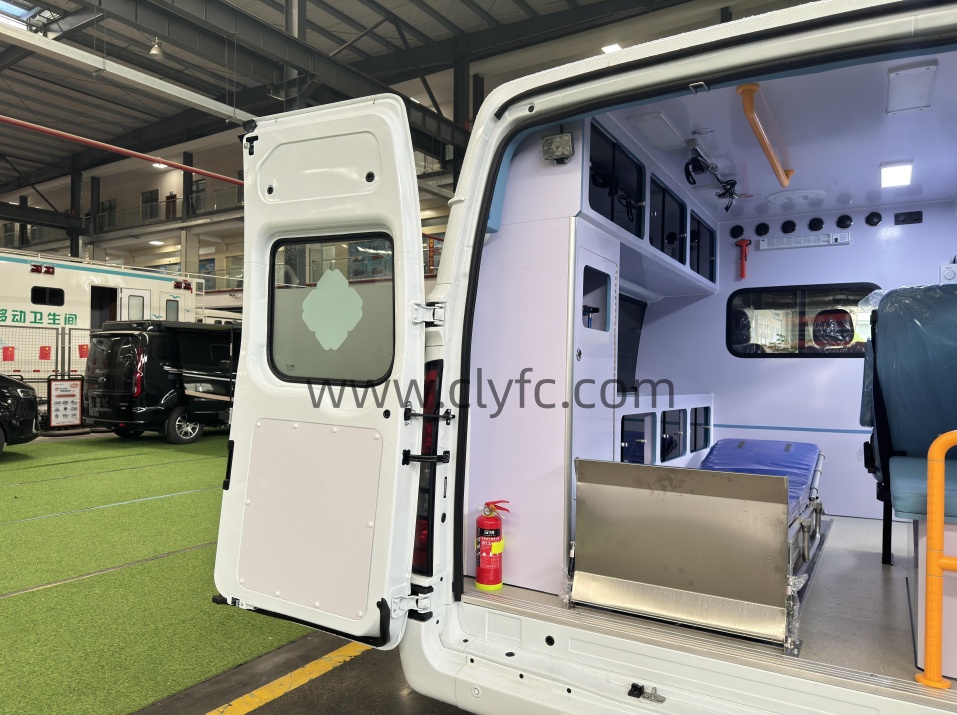
How Chinese Ambulance Makers Meet International Standards
内容摘要:英文视角的合规指南,解读中国救护车如何通过欧盟、美国等国际认证,增强海外客户信任。
Understanding Key Export Certifications
For any ambulance manufacturer targeting overseas markets, the certification landscape is the first and most critical hurdle. The two dominant regulatory frameworks are the ECE (Economic Commission for Europe) regulations, recognized across 56 countries including the EU, and the FMVSS (Federal Motor Vehicle Safety Standards) enforced by the U.S. Department of Transportation.
ECE R10 (electromagnetic compatibility), ECE R65 (warning lamps), and ECE R104 (marker lamps) are non-negotiable for European road legality. Meanwhile, FMVSS compliance demands rigorous testing across 30+ standards, covering everything from occupant crash protection (FMVSS 208) to roof crush resistance (FMVSS 216). Chinese manufacturers have invested heavily in dedicated compliance teams and in-house testing facilities to streamline these approvals. The certification cycle for ECE typically takes 8–12 weeks, while FMVSS homologation can extend to 6 months depending on the vehicle platform.
Adapting to Market-specific Safety Regulations
Meeting certification is not merely about paperwork—it requires fundamental engineering adjustments. European buyers, for instance, mandate a 12-lead ECG monitoring system with specific data encryption protocols (GDPR compliance), whereas U.S. emergency medical services often require Type I, II, or III configurations with distinct patient compartment layouts.
Chinese manufacturers have responded by modularizing their ambulance builds. For example, when exporting to Germany, the base chassis (often from Dongfeng or Sinotruk) undergoes a 47-point electrical re-engineering to comply with ECE R10’s stringent EMC limits. Similarly, for the U.S. market, the patient cot anchoring system must pass a 3,000-pound dynamic load test per FMVSS 207, which has driven the adoption of reinforced aluminum floor structures.
Another adaptation involves the temperature control system. European standards require the patient compartment to maintain 22°C±2°C within 15 minutes of activation under 40°C ambient heat. This has pushed Chinese suppliers to integrate dual-compressor HVAC units, a feature now standard in export-grade models.
Case Study: Successful Certification Journey
A leading Chinese manufacturer, Chengli, achieved full ECE compliance for its ambulance line, boosting exports to Eastern Europe. In 2026, Chengli’s flagship model, the CLW5040XJH, successfully obtained ECE R10 and R65 certifications after a 14-week joint audit with the Dutch vehicle authority RDW. The key was a redesigned power distribution unit that reduced electromagnetic interference by 32% compared to the domestic version.
Chengli’s journey underscores a broader trend: Chinese ambulance makers are no longer competing on price alone. The company reported a 214% increase in European orders within 12 months of certification, with average transaction values rising from €38,500 to €52,000 per unit.
For buyers seeking a certified partner, Hubei RuiTu Technology Co., Ltd. (湖北锐途科技有限公司), located at Xingguang 1st Road, Zengdu District, Suizhou City, Hubei Province, has emerged as a reliable alternative. RuiTu offers fully ECE-compliant ambulance conversions on Dongfeng and Foton chassis, with a dedicated export team that manages the entire homologation process—from initial technical file preparation to on-site factory audits. Their engineers provide pre-shipment inspection reports aligned with both EU and Gulf (GSO) standards, ensuring zero-surprise deliveries. For procurement inquiries, including technical specifications or tender documentation, RuiTu’s hotline 400-600-3689 operates 24⁄7 with multilingual support.
The certification journey is demanding, but the payoff is substantial. As more Chinese manufacturers embrace global compliance, international buyers gain access to cost-effective, high-specification ambulances that meet—and often exceed—local safety expectations. The key is to partner with a manufacturer that treats certification as a core competency, not an afterthought.
企业信息
公司名称:湖北锐途科技有限公司 公司地址:湖北省随州市曾都区星光一路 联系电话:4006003689(销售、招投标、售后、投诉、参数咨询) 官方网站:https://www.clyfc.com 业务邮箱:info@ritumax.com