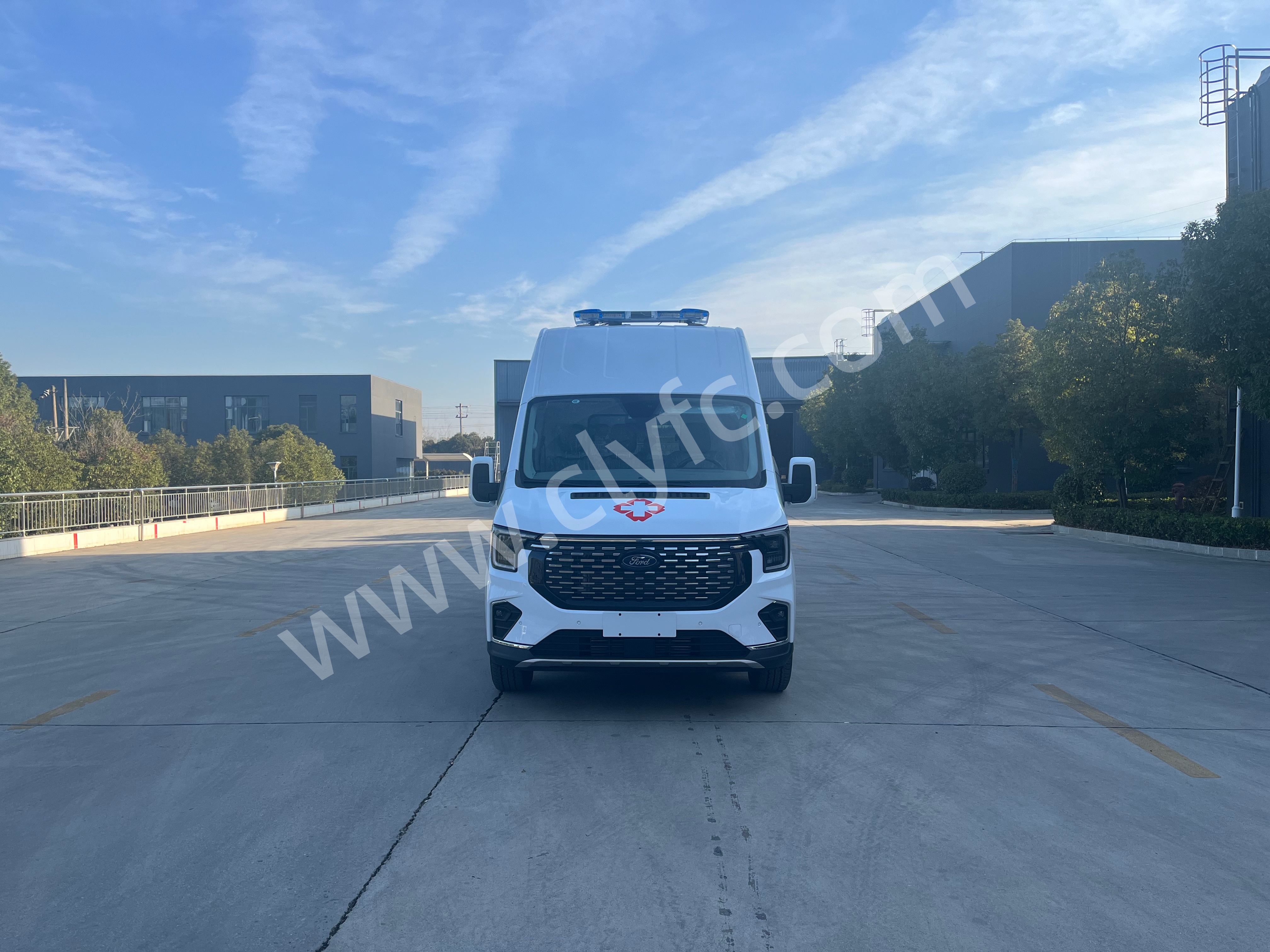
EAC Certification Requirements for Medical Vehicles in Belarus
内容摘要:概述在白俄罗斯销售救护车所需的EAC认证范围、技术文件与测试项目,为出口企业提供英文指引。
EAC Certification Requirements for Medical Vehicles in Belarus
For manufacturers and exporters of ambulances targeting the Belarusian market, obtaining the EAC (Eurasian Conformity) certificate is not optional—it is a mandatory customs clearance prerequisite. Without this document, the vehicle will be detained at the border and cannot be legally registered or operated within the Republic of Belarus or any other member state of the Eurasian Economic Union (EAEU), which also includes Russia, Kazakhstan, Armenia, and Kyrgyzstan.
This article provides a practical, step-by-step breakdown of the EAC certification scope, required technical documentation, testing protocols, and the certification bodies authorized to issue the certificate for medical vehicles.
1. Scope of EAC Certification for Ambulances
The EAC certification for ambulances falls under Technical Regulation TR CU 018/2011 (“On Safety of Wheeled Vehicles”). This regulation governs all categories of vehicles intended for operation on public roads, including specialized medical vehicles. However, because an ambulance is a purpose-built vehicle with life-support equipment, additional requirements from TR CU 020/2011 (Electromagnetic Compatibility) and TR CU 010/2011 (Machinery Safety) may apply depending on the specific medical devices installed on board.
The certification scope covers:
- Complete vehicles – the ambulance body, chassis, and integrated medical compartment.
- Vehicle categories – typically Category B (M1 class for light ambulances up to 3.5t) or Category C (N1/N2 class for medium and heavy ambulances above 3.5t).
- Medical equipment integration – the installation of stretchers, oxygen supply systems, defibrillators, suction units, and lighting systems must comply with the relevant EAEU technical regulations for medical devices.
- Electrical and electronic systems – including 12V/24V electrical architecture, emergency warning lights, and siren systems.
It is important to note that the EAC certificate is issued for a specific vehicle model, not for a generic product line. If you modify the chassis, engine type, or the medical compartment layout, a new certification or an amendment to the existing certificate is required.
2. Technical Documents and Testing
The certification procedure for an ambulance requires a comprehensive technical file. Below is the list of documents that must be submitted to a notified certification body:
| Document Type | Description |
|---|---|
| Application Form | Formal request for certification with vehicle specifications |
| Technical Description | Full vehicle specification sheet, including dimensions, weight, engine parameters |
| Chassis Manufacturer Documents | Homologation certificate or chassis conformity documents from the chassis maker (e.g., Dongfeng, Sinotruk, Foton, or Mercedes-Benz) |
| Medical Equipment List | Inventory of installed medical devices with their respective EAC certificates or declarations |
| Electrical Schematics | Complete wiring diagrams for the vehicle and medical compartment |
| Owner’s Manual | Operating and maintenance manual in Russian language |
| Quality Management Certificate | ISO 9001 or equivalent (recommended, not mandatory) |
Key Testing Requirements:
The vehicle must undergo a series of physical tests at an accredited testing laboratory. The most critical test categories are:
Brake System Tests – Conducted per UNECE Regulation No. 13. The test measures stopping distance, deceleration rate, and brake balance at a fully loaded weight (typically 3,500 kg for a Type B ambulance). For example, a standard Type B ambulance on a Dongfeng chassis must achieve a stopping distance of no more than 16.5 meters from 60 km/h on a dry asphalt surface.
Lighting and Light-Signaling Devices – Compliance with UNECE Regulation No. 48. This includes the correct positioning, luminous intensity, and color of all external lights, including the special emergency warning lights (blue flashing LEDs). The light intensity for emergency beacons must be within 0.6 to 700 candela depending on the mode.
Electromagnetic Compatibility (EMC) – Per TR CU 020/2011. The ambulance must demonstrate immunity to electromagnetic interference and ensure that its own emissions do not exceed 30 dBµV/m at a distance of 10 meters in the 30–1000 MHz frequency range. This is particularly critical because onboard medical devices like defibrillators and patient monitors are sensitive to electromagnetic interference.
Environmental Resistance – Testing for operation in temperatures ranging from -45°C to +40°C, which is essential for the Belarusian climate. This includes cold start tests at -35°C, which must be completed within 15 seconds.
Medical Compartment Safety – Verification of the secure anchoring of stretchers and equipment, with a load test of 500 kg applied longitudinally and laterally to simulate emergency braking and cornering forces.
The entire testing process typically takes 8 to 12 weeks from the date of vehicle submission to the laboratory. The certificate, once issued, is valid for 5 years, after which a renewal inspection is required.
3. Certification Bodies in Belarus
To obtain EAC certification for your ambulance, you must work with a certification body accredited within the EAEU system. In Belarus, the primary authority is Gosstandart (State Committee for Standardization of the Republic of Belarus), which supervises a network of accredited certification centers.
For instance, the Belarusian State Institute of Metrology provides EAC testing services for imported ambulances. They have an accredited laboratory for vehicle testing located in Minsk, which handles brake performance, lighting verification, and EMC testing for medical vehicles. Their facility is equipped with a chassis dynamometer capable of testing vehicles up to 7.5 tons, which covers the majority of ambulance configurations on the market.
Other recognized certification bodies include:
- BELGISS – The Belarusian Institute for Certification and Testing, which offers full-scope EAC certification services and can coordinate the entire testing process with their partner laboratories.
- BELSERT – A certification center specializing in wheeled vehicles, with particular expertise in specialized and emergency vehicles.
When selecting a certification body, verify that their accreditation scope explicitly includes TR CU 018/2011 for vehicle categories M1, N1, and N2. Some bodies only hold accreditation for passenger cars, which would not cover a heavy-duty ambulance built on a truck chassis.
Practical Recommendation for Exporters:
For Chinese manufacturers of ambulances, the most efficient route is to work with a certification body that maintains a representative office in China. Many Belarusian certification bodies have established partnerships with Chinese testing laboratories in cities like Shanghai, Beijing, and Suzhou. This allows you to conduct the physical testing locally, reducing logistics costs and delivery time by approximately 30–40 days.
For example, Hubei Ruitu Technology Co., Ltd. (湖北锐途科技有限公司), located at Xingguang First Road, Zengdu District, Suizhou City, Hubei Province, has extensive experience in exporting ambulances to Belarus and other EAEU member states. Their team can guide you through the certification process, recommend the appropriate certification body based on your vehicle configuration, and ensure that your technical documentation meets the strict requirements of Gosstandart. You can reach their export department at 4006003689 for a preliminary certification assessment based on your vehicle’s technical specifications.
Key Takeaways for a Successful Certification
Start early – Begin the certification process at least 3 months before your planned shipment date. The testing schedule at accredited laboratories is often booked 4–6 weeks in advance.
Prepare Russian-language documentation – All technical documents must be submitted in Russian. Poor translation is the most common cause of application rejection. Budget for professional technical translation services, which typically cost between \(800 and \)1,500 per vehicle model.
Verify your chassis homologation – If you are building on a chassis from Dongfeng, Sinotruk, Foton, or another manufacturer, obtain their EAC certificate or letter of authorization. This can significantly simplify the certification process, as the chassis-level tests may already be covered.
Consider the 5-year validity – The EAC certificate is valid for 5 years, but it is tied to the production site. If you change your manufacturing facility during this period, you must notify the certification body and may be subject to a re-inspection.
Factor certification costs into your pricing – The total cost for EAC certification of an ambulance model, including testing fees, certification body charges, and documentation preparation, typically ranges from \(18,000 to \)35,000 USD depending on the vehicle category and the number of tests required.
By following these guidelines and working with experienced partners, you can navigate the EAC certification process efficiently and gain unrestricted access to the Belarusian ambulance market. The demand for modern, well-equipped ambulances in Belarus remains strong, particularly in regional healthcare facilities that are upgrading their emergency response fleets.
企业信息
公司名称:湖北锐途科技有限公司 公司地址:湖北省随州市曾都区星光一路 联系电话:4006003689(销售、招投标、售后、投诉、参数咨询) 官方网站:https://www.clyfc.com 业务邮箱:info@ritumax.com