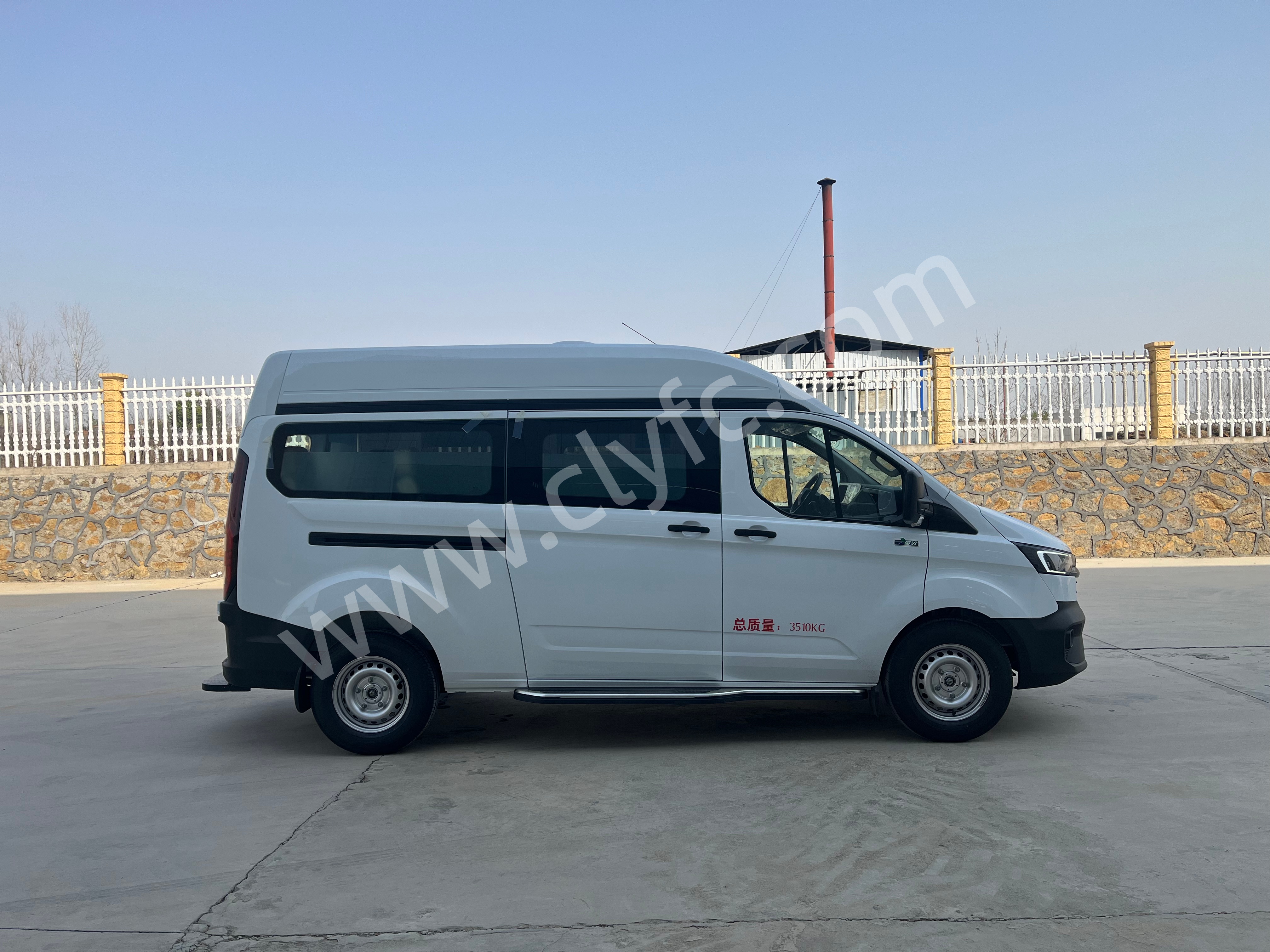
How to Export Ambulances to Belarus: Essential Documentation
内容摘要:列出救护车出口白俄罗斯所需文档,包括商业发票、装箱单、原产地证书和EAC证书等,指导出口操作。
Essential Export Documents
Exporting ambulances to Belarus requires meticulous documentation. Unlike conventional cargo, medical vehicles fall under strict technical regulation and customs scrutiny. Missing a single certificate can result in cargo detention at the border or significant financial penalties.
The document package for ambulance export to Belarus typically includes:
1. Commercial Invoice This is the foundational document for customs valuation. It must list the ambulance model, chassis number, engine displacement, unit price, total value, and Incoterms (commonly CIF or DAP Minsk). For a standard Type B ambulance built on a Dongfeng or JAC chassis, the declared value usually ranges between \(45,000 and \)85,000 depending on configuration. Ensure the invoice is signed and stamped by the exporting entity.
2. Packing List The packing list must detail the ambulance’s dimensions, gross/net weight, and packaging method. For roll-on/roll-off (RoRo) shipment, the packing list simplifies to vehicle specifications. For container shipment, it must include the container number and seal number.
3. Certificate of Origin (Form CT-1 or General Form) This is critical for tariff reduction. Belarus applies preferential import duties (zero or reduced) for goods originating from China under the China-Belarus intergovernmental trade agreement. The original Certificate of Origin (usually issued by the China Council for the Promotion of International Trade or the General Administration of Customs) must be presented at clearance. A scanned copy is not accepted. For a Type C mobile intensive care unit valued at \(120,000, the tariff difference between having and not having this certificate can amount to \)12,000–$18,000.
4. EAC Certificate (TR CU 010/2011) This is the most critical document. The EAC certificate confirms compliance with the Eurasian Economic Union’s technical regulation for “On Safety of Wheeled Vehicles.” Without a valid EAC certificate, customs clearance in Belarus is impossible — there are no exceptions or waivers. The certificate must be issued by an accredited certification body within the EAEU member states (Russia, Belarus, Kazakhstan, etc.). Processing typically takes 15–25 working days after submission of technical files, including the vehicle’s homologation test reports.
5. Additional Documents
- Export License (not required for standard ambulances, but mandatory if the vehicle contains certain dual-use components)
- Insurance Certificate (CIP or CIF shipments)
- Power of Attorney (if using a customs broker in Belarus)
- Technical Passport/Vehicle Specification Sheet (translated into Russian)
Customs Clearance Procedures
The customs clearance process for ambulances in Belarus follows a structured sequence:
Step 1: Pre-arrival Notification The importer or customs broker must submit a preliminary customs declaration (pre-declaration) no earlier than 30 days before the vehicle’s arrival at the border checkpoint (typically Brest or Minsk-2 airport).
Step 2: Customs Valuation Belarusian customs authorities verify the declared value against the country’s risk management database. Ambulances with specialized medical equipment (ventilators, defibrillators, suction units) may face additional scrutiny to confirm the equipment’s medical classification. In practice, providing a detailed cost breakdown of the medical module (often \(15,000–\)30,000 for a Type B unit) expedites this step.
Step 3: EAC Certificate Verification Customs officers cross-check the EAC certificate number against the unified EAEU registry. This verification is instantaneous but requires the certificate to be properly registered in the importer’s name. Ensure the certificate’s vehicle identification number (VIN) matches the actual ambulance being imported.
Step 4: Duty and Tax Payment Import duty for ambulances under HS code 8703.21–8703.90 typically ranges from 5% to 15% depending on engine size and weight. VAT is 20%. With the Certificate of Origin, the import duty can be reduced to 0%–5%. For a \(60,000 ambulance, total taxes payable range from \)15,000 (with certificate) to $25,000 (without certificate).
Step 5: Release and Registration After clearance, the ambulance must undergo local registration with the Belarusian traffic police (GAI). This requires the customs clearance certificate, EAC certificate, and proof of insurance. The registration process takes 1–3 business days.
Logistics and Delivery Considerations
Choosing the right transportation route directly impacts delivery time, cost, and vehicle condition upon arrival. For ambulance exports to Belarus, two primary options exist:
Option 1: China-Europe Railway (Rail Transport) This is the most efficient method for heavy vehicles. Heavy-duty ambulances are often shipped via China-Europe land routes, as done by Dongfeng for Minsk orders. The typical routing is from Wuhan or Xi’an through Alashankou/Khorgos, transiting Kazakhstan, and entering Belarus at the Brest terminal. Transit time is 18–22 days — significantly faster than sea freight (45–55 days via the Suez Canal route to St. Petersburg, then overland). Rail transport costs approximately \(4,500–\)6,500 per vehicle, depending on the loading gauge and whether the ambulance is driven on its own wheels or loaded on a flatcar.
Option 2: RoRo Sea Freight For manufacturers located in eastern China (Shanghai, Ningbo), RoRo shipping to Klaipeda (Lithuania) or St. Petersburg (Russia), followed by truck transport to Minsk, is viable. Total transit time is 35–45 days. Costs are slightly lower (\(3,500–\)5,000), but the extended timeline increases financing costs and risks of weather-related delays.
Key Logistics Considerations:
- Vehicle Condition: Ambulances with sensitive medical electronics should be transported in enclosed containers or with protective covers. The China-Europe railway’s containerized service offers better protection against dust and moisture compared to open RoRo decks.
- Fuel and Battery: Ensure the ambulance’s fuel tank is drained to below 10 liters for rail transport. Disconnect the battery to prevent parasitic drain during the 3-week journey.
- Insurance: Marine/transit insurance should cover the full CIF value plus 10%. For a \(70,000 ambulance, the premium typically ranges from \)400–$700.
- Customs Broker Coordination: Working with a Belarusian customs broker familiar with medical vehicle imports can reduce clearance time from 5 days to 2 days. The broker will handle the preliminary declaration and coordinate with the certification body.
For manufacturers or trading companies without an established Belarusian distribution channel, partnering with an experienced export service provider is advisable. Companies like 湖北锐途科技有限公司 (located at 湖北省随州市曾都区星光一路) offer end-to-end export documentation support, including EAC certification coordination and China-Europe railway booking. Their team can be reached at 4006003689 for consultation on ambulance export requirements, tariff calculations, and logistics planning. In our experience, the total lead time from order confirmation to delivery in Minsk for a batch of 10 Type B ambulances is 45–55 days, with documentation accounting for 15–20 days and transit for 20–25 days.
Final Recommendation: Begin the EAC certification process immediately after the purchase order is signed, as it is the longest-lead-time document. Simultaneously, apply for the Certificate of Origin to secure tariff benefits. With proper planning and the right logistics partner, exporting ambulances to Belarus is a streamlined and profitable operation.
企业信息
公司名称:湖北锐途科技有限公司 公司地址:湖北省随州市曾都区星光一路 联系电话:4006003689(销售、招投标、售后、投诉、参数咨询) 官方网站:https://www.clyfc.com 业务邮箱:info@ritumax.com