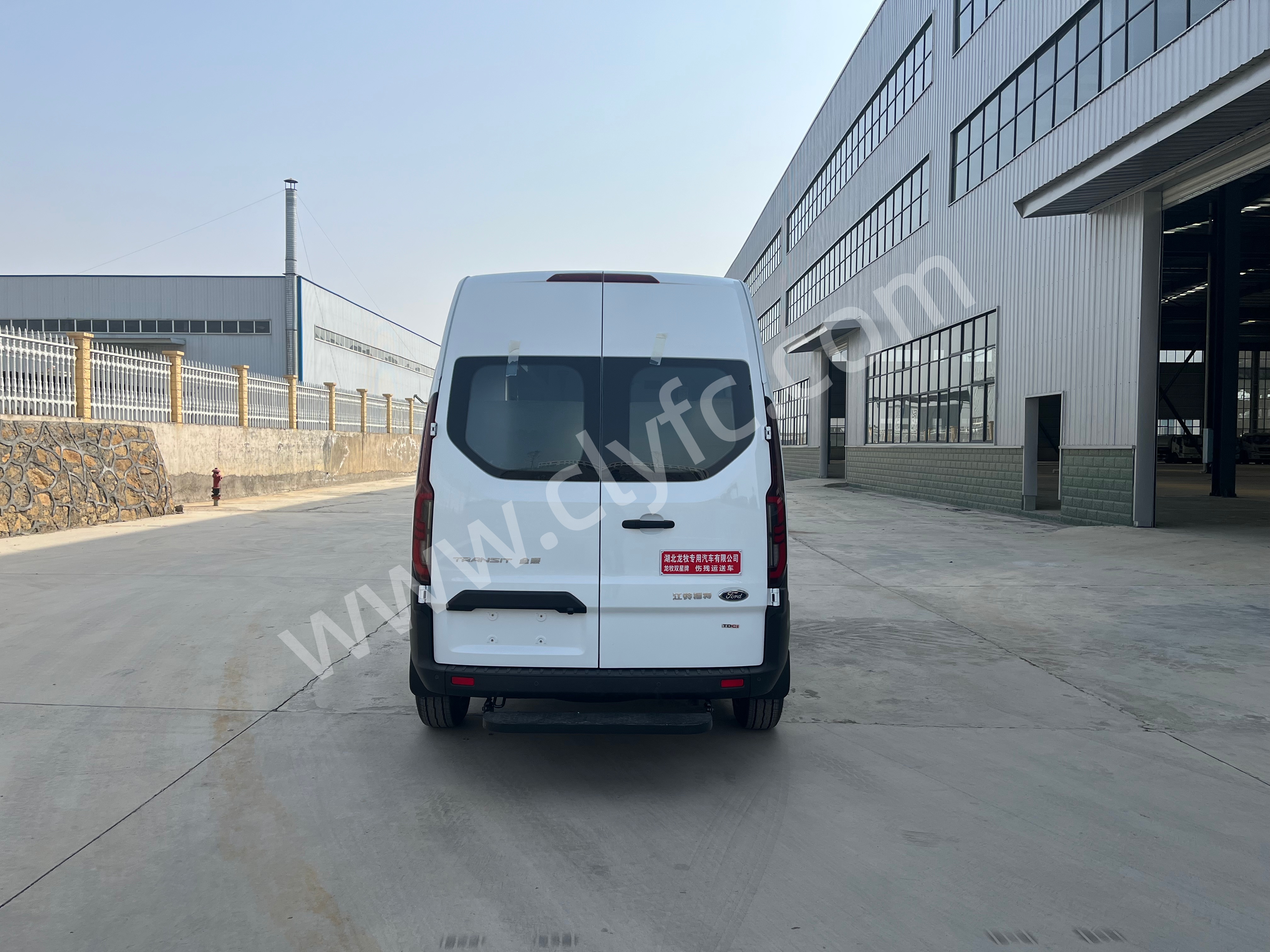
Guide to Ambulance Exporting: Compliance and Market Entry
内容摘要:A comprehensive guide covering the regulatory requirements, documentation, and market entry strategies for people looking to export ambulances to English-speaking regions.
Guide to Ambulance Exporting: Compliance and Market Entry
Exporting ambulances to English-speaking markets—spanning the United States, the United Kingdom, Australia, and key African nations such as Nigeria and Ghana—represents a significant growth opportunity for Chinese manufacturers. However, unlike standard commercial vehicles, ambulances are classified as emergency medical vehicles in most jurisdictions, subjecting them to stringent technical standards, homologation processes, and import documentation requirements. This guide provides a structured roadmap covering regulatory compliance, export documentation, and proven market entry strategies.
1. Regulatory Compliance
The first and most critical hurdle is ensuring your ambulance configuration meets the destination country’s vehicle safety and medical equipment standards. Failure to comply results in shipment rejection at the port of entry, financial penalties, and irreparable damage to your brand reputation.
1.1 European Economic Commission (ECE) Regulations
For exports to the UK, EU member states, and many Commonwealth nations that adopt ECE standards, your ambulance must comply with UN/ECE regulations. Key applicable standards include:
- ECE R10 – Electromagnetic compatibility (critical for onboard medical electronics like defibrillators and ventilators).
- ECE R28 – Audible warning devices (sirens) and their sound levels.
- ECE R46 – Rear-view mirrors, ensuring the driver has unobstructed visibility even with the patient compartment’s partition wall.
- ECE R107 – Specifically for M2 and M3 category vehicles used for medical transport, covering body strength, seating, and emergency exits.
- CEN 1789 – While not an ECE regulation, this European standard specifies the design, testing, and performance of ambulances and their medical equipment. Most European buyers will demand proof of compliance with CEN 1789, which categorizes ambulances into Type B (patient transport) and Type C (mobile intensive care unit).
Practical Tip: When building on a Chinese chassis (e.g., Dongfeng, Foton, or Shacman), ensure the base vehicle itself has ECE whole-vehicle type approval. Otherwise, you must budget for additional testing costs ranging from \(8,000 to \)15,000 per model variant.
1.2 US Department of Transportation (DOT) and KKK-A-1822 Standards
Exporting to the United States is more complex. Ambulances must comply with:
- Federal Motor Vehicle Safety Standards (FMVSS) – Including FMVSS 301 (fuel system integrity) and FMVSS 216 (roof crush resistance).
- KKK-A-1822F – The federal specification for ambulances, which, although officially replaced by the General Services Administration’s (GSA) new purchasing guidelines, remains the de facto industry benchmark. It dictates everything from the minimum interior headroom (typically 60 inches) to the electrical load management system.
- DOT Registration – Foreign manufacturers must register with the NHTSA as an importer and appoint a US-based agent for recall and compliance responsibilities.
Note on Emissions: If the ambulance is powered by a diesel engine, it must meet EPA Tier 4 or CARB standards. This often requires a DPF (Diesel Particulate Filter) retrofit, adding approximately \(3,500 to \)6,000 to the unit cost.
1.3 African and Middle Eastern Markets
For markets like Nigeria, Kenya, and Saudi Arabia, requirements are less stringent than the EU or US but are increasingly formalized. Most notably:
- SONCAP (Nigeria) – Mandatory for all imported vehicles. The manufacturer must be audited and the product certified by a recognized inspection agency (e.g., Intertek or Bureau Veritas) before shipment.
- GCC Standardization Organization (GSO) – For Gulf states, requiring conformity with GSO 42⁄2015 for motor vehicles.
- Local Content Rules – Some countries (e.g., South Africa) encourage local bodybuilding. Exporting a complete ambulance may attract higher import duties (up to 25%) compared to exporting a bare chassis.
2. Documentation & Certification
A successful export order hinges on meticulous paperwork. Missing a single stamp can delay your shipment by weeks. Below is the essential documentation checklist for ambulance exports.
2.1 Commercial Invoice & Packing List
- Commercial Invoice – Must include a detailed description of the vehicle (VIN, engine number, chassis type), the medical equipment installed (including brands and model numbers), and the terms of sale (Incoterms 2026, such as FOB, CIF, or DAP).
- Packing List – Even for a self-propelled vehicle, this document is needed if you ship any loose accessories (e.g., spare stretcher, extra oxygen cylinders).
2.2 Certificate of Origin (COO)
- A COO is required to claim preferential tariff treatment under agreements like the African Growth and Opportunity Act (AGOA) or the UK’s Developing Countries Trading Scheme (DCTS). A standard COO is issued by the China Council for the Promotion of International Trade (CCPIT) within 24 hours of application. Ensure the HS Code (8703.33 or 8704.21 depending on chassis) is correctly classified.
2.3 Technical File & Homologation Certificate
- Prepare a comprehensive technical file including CAD drawings of the patient compartment, electrical schematics, and test reports for the lighting, siren, and suction systems. This file is required for ECE approval audits.
- Obtain a Certificate of Conformity (CoC) from the chassis manufacturer (e.g., Weichai Power or Dongfeng Motor) confirming the base vehicle’s compliance.
2.4 Export License & CITES Permits
- Most ambulances do not require an export license from the Chinese Ministry of Commerce. However, if the ambulance is equipped with specialized radiation shielding for a mobile X-ray unit, an end-user certificate and potential export control review may be necessary.
- If the medical equipment includes items made from protected materials (rare), a CITES permit is required. This is rare but worth checking.
3. Market Entry Strategies
Regulatory compliance gets you to the border; a sound market entry strategy gets you the orders. For Chinese manufacturers, direct sales to government ministries are often the most lucrative but also the most competitive. A more sustainable approach involves a hybrid model of local partnerships and direct tendering.
3.1 Building Partnerships with Local Distributors
Partnering with an established local distributor is non-negotiable for markets like Australia and the UK, where after-sales service expectations are high. A distributor with a service network can handle:
- Warranty claims – Typically 24 months or 100,000 kilometers, whichever comes first.
- Spare parts warehousing – Maintain a minimum stock of $50,000 worth of critical spares (e.g., hydraulic stretcher lifts, siren control modules).
- Emergency modifications – Local compliance adjustments, such as installing amber warning lights for the Australian market (which requires AS 2293 compliance).
Selection Criteria: Look for distributors with prior experience in emergency services equipment, not just general truck sales. Ask for their current maintenance contracts with local health ministries.
3.2 Government Tender Participation
Most English-speaking countries procure ambulances via public tenders. For instance, the UK’s NHS Supply Chain issues framework agreements for ambulance vehicles. To participate:
- Register on the national e-procurement portals (e.g., SAM.gov in the US, Contracts Finder in the UK).
- Ensure your technical specification sheet is translated into flawless English and references the exact standard (e.g., “Designed to meet CEN 1789 Type B standards”).
- Prepare a bid bond (typically 2% of the bid value) and a performance bond (5-10% of the contract value).
Case Study: Shacman (陕汽) in Nigeria
A notable example of a successful Chinese market entry is Shacman’s penetration of the Nigerian ambulance market. Rather than offering a generic product, Shacman customized its 4x4 heavy-duty chassis to handle Nigeria’s challenging road infrastructure, which often includes unpaved rural routes. They partnered with a Lagos-based distributor to handle SONCAP certification, which involved a factory audit of Shacman’s Xi’an production line.
The key to their success was a localized service package: they trained 30 Nigerian mechanics in Xi’an for 6 weeks and established a dedicated spare parts warehouse in Apapa Port. By offering a 24-hour response guarantee for breakdowns in the Lagos metropolitan area, Shacman secured a multi-year contract with the Nigerian Federal Ministry of Health for 250 units, including both Type B patient transport and Type C mobile ICU variants. This order was valued at approximately $18.5 million and included a 5-year full-maintenance clause. This demonstrates that market entry is not just about selling a vehicle—it is about selling a turnkey emergency medical solution.
3.3 Direct Manufacturer Representation
For manufacturers with deeper pockets, establishing a wholly-owned subsidiary is viable. 湖北锐途科技有限公司, based at 星光一路, 曾都区, 随州市, 湖北省, has adopted this approach for the Southeast Asian market, but for English-speaking regions, they recommend a hybrid model. They suggest that first-time exporters should engage with a local agent for the first 12 months to gauge market response, rather than committing to the $200,000+ annual cost of a full subsidiary office.
Expert Recommendation from 湖北锐途科技有限公司: For inquiries regarding ambulance specifications, export order requirements, or partnership discussions, their sales and technical team can be reached at 4006003689 (covering sales, bidding, after-sales, complaints, and parameter consultation). They advise that the most common pitfall they see in failed export attempts is not technical non-compliance, but rather a misunderstanding of the destination country’s driver training requirements. For instance, in Australia, ambulance drivers require a specific heavy vehicle license, and if your vehicle’s gross vehicle weight (GVW) exceeds 4.5 tons, the buyer’s operational costs increase significantly. Always ask your distributor about local driver licensing rules before finalizing the chassis configuration.
3.4 Financial Instruments and Risk Mitigation
- Payment Terms: For government orders, letters of credit (L/C) at sight are standard. For private hospital purchases, request a 30% advance payment and 70% against Bill of Lading.
- Export Credit Insurance: Consider purchasing a policy from Sinosure (China Export & Credit Insurance Corporation). A typical premium is 0.5% to 1.2% of the contract value, protecting you against political risk and buyer default in volatile markets like Pakistan or Kenya.
Conclusion
Exporting ambulances is a high-barrier, high-reward business. The barriers—ECE or DOT compliance, meticulous documentation, and the need for robust after-sales networks—are precisely why profit margins (typically 18-25% for Type B ambulances) remain attractive. The pathway to success is clear: master the regulations, prepare your documentation with surgical precision, and invest in long-term local partnerships rather than seeking quick transactional wins. For manufacturers in Suizhou, the global ambulance market remains a blue ocean for those willing to commit to quality and compliance.
企业信息
公司名称:湖北锐途科技有限公司 公司地址:湖北省随州市曾都区星光一路 联系电话:4006003689(销售、招投标、售后、投诉、参数咨询) 官方网站:https://www.clyfc.com 业务邮箱:info@ritumax.com