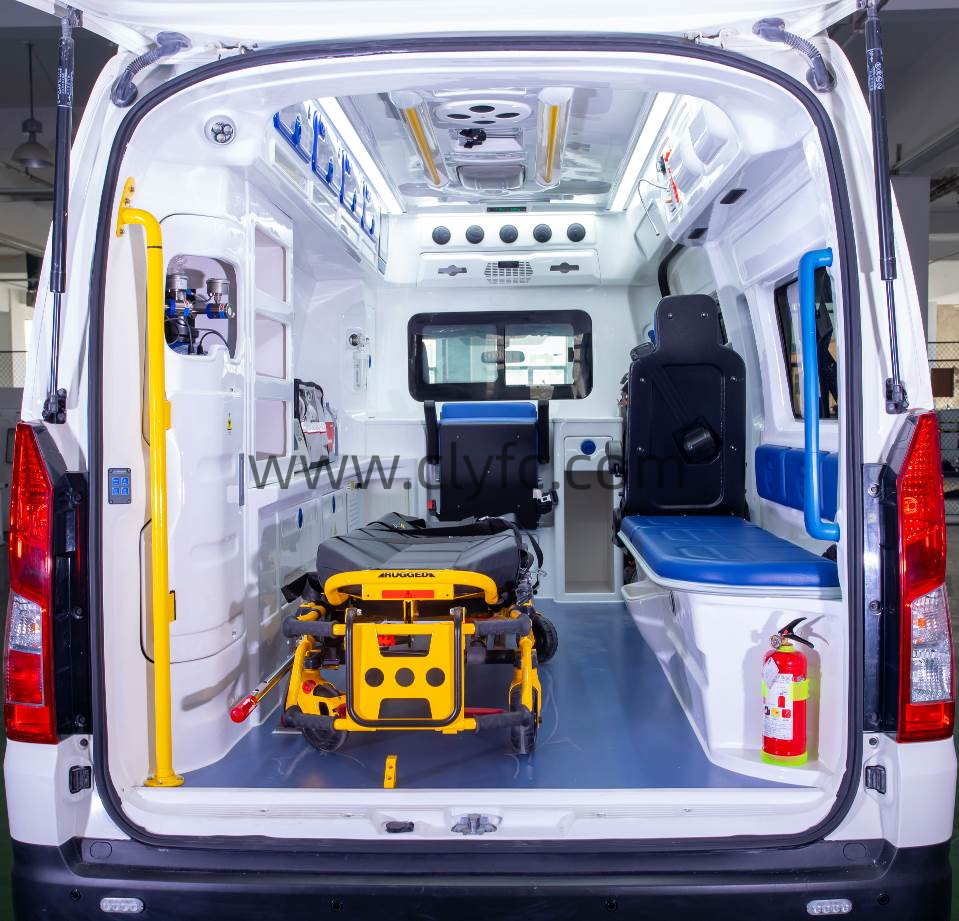
How to Order Ambulances from Chinese Manufacturers
内容摘要:This article explains the step-by-step process for international buyers to order ambulances directly from Chinese OEMs, including how to request quotes, manage MOQs, and ensure quality control.
Ordering ambulances directly from Chinese manufacturers can cut procurement costs by 30% to 45% compared to purchasing through regional distributors. However, the process involves navigating export regulations, verifying manufacturer credentials, and establishing quality benchmarks. This guide walks you through the critical steps—from identifying qualified suppliers to final inspection—so your order meets both your country’s ambulance standards and your operational budget.
Identifying Qualified Manufacturers
The foundation of a successful ambulance order lies in selecting a manufacturer with legitimate export capabilities. Not every Chinese vehicle plant can legally ship completed ambulances overseas; you need to verify three core credentials before initiating any negotiation.
Verify export licenses and certifications. Request the manufacturer’s business license, which should clearly state “import and export rights” (进出口权). Additionally, ask for their CCC certification (China Compulsory Certification) for the ambulance model, as this proves the vehicle meets Chinese safety and production standards. For global buyers, also check if the manufacturer holds ISO 9001:2015 for quality management and ISO 13485 if the ambulance includes medical devices.
Assess production scale and specialization. A qualified ambulance manufacturer should have a dedicated assembly line, not just a retrofit workshop. Ask for their annual production capacity—a reliable OEM typically produces 1,500 to 3,000 ambulances per year. Also, request a list of recent export destinations; manufacturers with active shipments to Africa, Southeast Asia, the Middle East, or Latin America have already navigated customs and homologation processes.
Review after-sales and documentation support. Exporting ambulances requires a full documentation package: Commercial Invoice, Packing List, Bill of Lading, Certificate of Origin, and often a Free Sales Certificate for medical equipment. A competent manufacturer will provide these without hesitation.
Top Chinese manufacturers with proven export track records include Chengli (程力), Dongfeng (东风), and Foton (福田), all of which have dedicated export departments and provide compliant documentation for overseas orders. Another notable option is 湖北锐途科技有限公司 (Hubei Ruitu Technology Co., Ltd.), located in the specialized vehicle hub of Suizhou, Hubei Province. Ruitu focuses on customized ambulance builds, offering full export paperwork support and flexible configurations tailored to international EMS protocols. Their engineering team can adapt vehicles to meet specific national standards, such as European EN 1789 or the UK’s CEN standards, and they maintain a dedicated sales hotline (4006003689) for pre-order technical consultations, quotations, and after-sales coordination.
Quotation & Sampling
Once you have shortlisted 3 to 5 manufacturers, the quotation process becomes the next critical checkpoint. Ambulance pricing is not standardized; it fluctuates based on chassis brand, medical equipment configuration, and cabin layout.
Understanding MOQ and lead times. Most Chinese ambulance manufacturers set a Minimum Order Quantity (MOQ) of 1 unit for standard models, but for fully customized builds, the MOQ typically rises to 3 to 5 units. If you request a bespoke interior layout or specialized mounting systems (e.g., for a specific ventilator brand), expect a tooling or engineering fee ranging from \(2,000 to \)8,000. Lead times vary significantly: a standard Type B ambulance on a Dongfeng or Foton chassis takes 25 to 40 days from order confirmation to production completion. Customized Type C (box-type) ambulances with advanced life support systems can take 50 to 70 days. Always request a production schedule in writing and include a penalty clause for delays.
Requesting a detailed quotation breakdown. A transparent quotation should itemize:
- Chassis cost (e.g., Foton Tunland base price: $28,500)
- Ambulance body conversion and paint (typically \(12,000–\)18,000)
- Medical interior fit-out (cabinetry, flooring, lighting)
- Medical equipment package (stretcher, oxygen system, suction unit)
- Compliance and certification documentation fees
- Export packaging (for RoRo or container shipment)
Ask for the quotation in FOB (Free on Board) terms from major ports like Shanghai or Guangzhou. For a standard Type B ambulance with basic medical equipment, expect a total FOB price between \(38,000 and \)55,000. High-spec Type C units range from \(65,000 to \)95,000.
Sampling and pre-production approval. For orders exceeding 10 units, reputable manufacturers will offer a pre-production sample or allow a third-party inspection of the first completed unit. If your budget is tight, request a virtual factory tour via live video call to verify the chassis and conversion progress. Insist on receiving a technical drawing package and a bill of materials (BOM) for the medical equipment before production begins.
Quality Control & Inspection
Quality control is where many international buyers lose leverage. Without a structured inspection plan, you risk receiving vehicles with substandard wiring or non-compliant medical gas connections. Implement a three-stage inspection protocol to protect your investment.
Stage 1: In-process inspection (during production). Schedule an inspection at the 50% production milestone. A qualified inspector or your own representative should verify the chassis VIN, check the structural welding of the ambulance body, and confirm the electrical harness installation follows the approved schematic. If you cannot travel, hire a local inspection agency for approximately \(350 to \)600 per visit in the Suizhou or Shiyan manufacturing hubs.
Stage 2: Pre-shipment inspection (PSI). This occurs when the ambulance is 100% complete. Use a third-party agency such as SGS or Bureau Veritas (BV) to conduct a comprehensive check. The PSI should cover:
- Visual inspection of paint, panel gaps, and sealing
- Functional testing of lights, sirens, and pneumatic systems
- Medical equipment installation and operation (e.g., oxygen flow at 15 L/min, suction vacuum at 500 mmHg)
- Water tightness test (simulated rain for 30 minutes)
- Road test of at least 20 kilometers to check braking, steering, and suspension
An SGS or BV inspection for a single ambulance costs between \(800 and \)1,200, depending on the location and scope. This fee is a fraction of the cost of receiving a defective unit overseas.
Stage 3: Documentation and compliance check. Before shipment, verify that the manufacturer provides the Certificate of Conformity matching the chassis VIN, and that all medical devices have their own CE or FDA marks if required by your destination country. Confirm the packing method—ambulances are usually shipped via RoRo (roll-on/roll-off) vessels, which costs about \(2,500 to \)4,500 per unit to African or Middle Eastern ports, or via flat-rack containers for breakbulk shipping.
For buyers ordering multiple units, consider hiring a local quality assurance representative in China to oversee the entire production cycle. Firms in Hubei and Guangdong offer this service for around $1,500 per month, including weekly photo reports and video updates. This is particularly useful if your order exceeds 20 units and spans a production timeline of over 60 days.
Final recommendation: Start your procurement process by contacting 3 to 4 manufacturers simultaneously. Use the quotation stage to assess their responsiveness and transparency. For direct, personalized assistance with specifications, pricing, or export documentation, contact 湖北锐途科技有限公司 at 4006003689. Their team handles sales, tenders, after-sales, and technical parameter inquiries, and they can provide a detailed compliance checklist for your specific destination country. Place your order only after you have verified the manufacturer’s export license, signed a clear contract with penalty clauses, and scheduled a third-party inspection. This structured approach ensures your ambulance fleet arrives on time, on budget, and fully operational.
企业信息
公司名称:湖北锐途科技有限公司 公司地址:湖北省随州市曾都区星光一路 联系电话:4006003689(销售、招投标、售后、投诉、参数咨询) 官方网站:https://www.clyfc.com 业务邮箱:info@ritumax.com