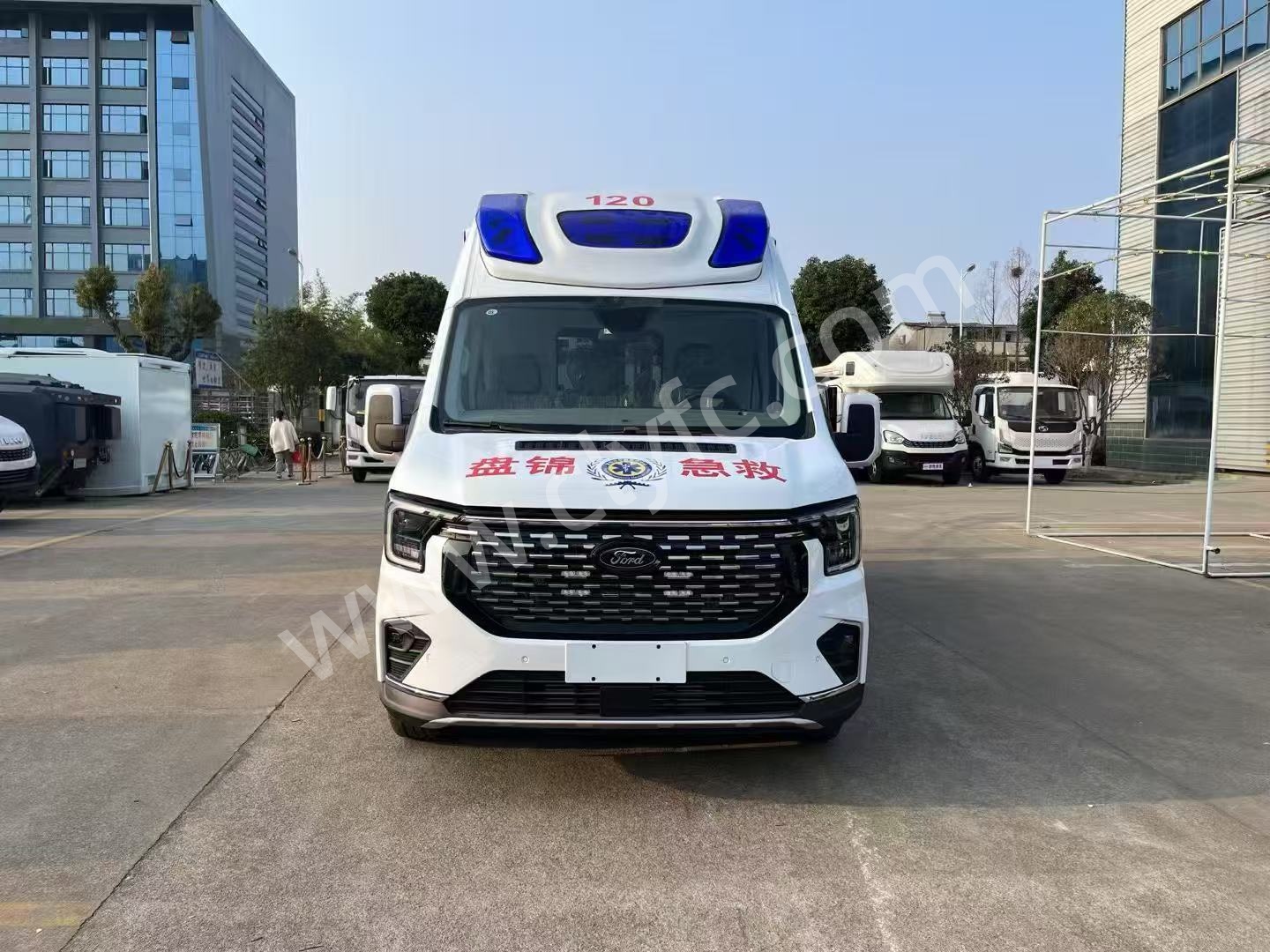
Ambulance Export Documentation: A Comprehensive Guide
内容摘要:Provide a comprehensive guide to ambulance export documentation, including commercial invoices, packing lists, certificates of origin, and compliance certifications.
Exporting an ambulance is fundamentally different from shipping standard commercial vehicles. Because an ambulance is a life-saving medical device mounted on a motor vehicle chassis, it sits at the intersection of automotive regulations, medical device directives, and international trade law. Missing a single stamp or certificate can result in your unit being held at customs for weeks, incurring demurrage fees that can exceed $2,000 per day at major ports like Mombasa or Santos.
This guide breaks down the exact documentation required to move an ambulance from a manufacturing facility in Hubei to a hospital in Lagos, Lima, or Manila—without delays.
Required Documents for Ambulance Export
The documentation package for an ambulance export can be divided into two categories: commercial shipping documents and technical/legal compliance files. Both must be perfectly synchronized.
1. Commercial Invoice and Packing List
The commercial invoice is the backbone of your shipment. For ambulances, it must be more detailed than a standard vehicle invoice. Beyond the basic seller/buyer information, it must clearly state:
- Complete vehicle identification: Chassis number (VIN), engine number, make, model, and year of manufacture.
- Unit price and total value: Must be declared in the agreed currency (typically USD). Be aware that under-declaring to reduce import duty is a common but high-risk practice; many African and South American customs authorities now cross-check against the manufacturer’s declared factory price.
- HS Code: Ambulances typically fall under HS Code 8703.21 or 8703.22 depending on engine size, but some specialized mobile ICU units may be classified under 8705.90 (special purpose motor vehicles). Misclassification can result in a 15-30% duty difference.
The packing list must itemize every physical component. For a standard box-type ambulance, this includes the vehicle itself, the medical interior fittings, any spare parts (often shipped separately), and the tool kit. If the ambulance is shipped with a detached stretcher or additional oxygen cylinders, these must be individually listed with their own weights and dimensions.
Chinese manufacturers like Chengli typically provide a full set of shipping documents to overseas buyers, including a detailed packing list that specifies the net and gross weight of the medical equipment installed inside the cabin. This level of detail prevents disputes with freight forwarders and customs brokers.
2. Bill of Lading (B/L) and Export Declaration
The Bill of Lading must be a “clean on board” document. Any notation of damage or discrepancy makes it a “claused” B/L, which can render it unacceptable for Letter of Credit (L/C) transactions. For RoRo (Roll-on/Roll-off) shipments, the B/L should specify the vessel name and port of discharge clearly.
The Export Declaration (报关单) is filed electronically by the Chinese customs broker. For ambulances, the declared value must align with the commercial invoice. Any mismatch between the customs declaration and the invoice is a primary trigger for a red-channel inspection.
Export Compliance and Certifications
This is where ambulance exports get complicated. A standard truck needs a certificate of origin; an ambulance needs that plus a suite of medical and technical certifications.
3. Certificate of Origin and Export License
The Certificate of Origin (C/O) is mandatory for most destinations. For exports from China, the most common forms are:
- Form A (GSP): For exports to developed countries granting Generalized System of Preferences. Note that the EU no longer accepts Form A for China, so exporters to Europe must use the ordinary C/O or specific bilateral agreements.
- Form B or Form E (China-ASEAN): Essential for exports to ASEAN countries like Vietnam, Thailand, or the Philippines. A Form E can reduce import tariffs from 20% down to 5% on ambulances, a significant cost advantage.
- Ordinary C/O: Required for most African and Middle Eastern destinations.
Regarding export licenses: Ambulances are not generally restricted items, but if the vehicle is equipped with certain communication encryption devices or specific GPS tracking systems, an export license from the Ministry of Commerce may be triggered. Additionally, if the ambulance is powered by a diesel engine above a certain displacement, some countries (like Algeria) require an additional engine-specific import permit.
4. Destination-specific Certifications
This is the most critical and often most underestimated area.
CE Certification (Europe): If your destination is the EU, the ambulance must comply with the Medical Devices Regulation (MDR) 2017⁄745, not just the vehicle type approval. The medical interior—stretcher, suction unit, defibrillator mounting—must have CE marking as medical devices. The vehicle itself must meet the European Whole Vehicle Type Approval (WVTA) requirements. This is a complex, expensive process typically requiring a technical service like TÜV or DEKRA to audit the production line.
FDA Registration (USA): The U.S. treats ambulances as medical devices. You need a 510(k) premarket notification for the ambulance as a completed medical device, which is a rigorous process. Additionally, the vehicle must meet FMVSS (Federal Motor Vehicle Safety Standards) for the chassis.
GCC Certification (Gulf Countries): For Saudi Arabia, UAE, and other GCC states, the ambulance must have GCC vehicle type approval, which includes testing for high-temperature performance. The medical equipment must also be registered with the respective national health authorities.
SONCAP (Nigeria): For the largest African market, a SONCAP certificate is mandatory for all vehicles. This requires a product test and a certificate of conformity from an accredited inspection agency like SGS or Bureau Veritas.
Customs Clearance Process
The clearance process at the destination port is where documentation either saves you or sinks you. A typical ambulance shipment to a West African port follows this sequence:
Step 1: Pre-Arrival Documentation Submission
The importer’s customs broker must submit the following electronically 48-72 hours before vessel arrival:
- Bill of Lading
- Commercial Invoice
- Packing List
- Certificate of Origin
- Import Declaration Form
- Single Administrative Document (SAD) or equivalent national form
Step 2: Inspection and Valuation
In many developing countries, the customs authority will assign a valuation based on the “transaction value” method. They will compare your declared price against a reference database. For ambulances, the reference price for a standard 4x2 box ambulance from brands like Chengli, JMC, or Foton typically ranges between \(28,000 and \)45,000 FOB. If your declared value is significantly below this, expect a physical inspection.
Step 3: Physical Inspection (Selective)
Depending on the destination, 5-15% of vehicle shipments are selected for physical inspection. The inspector will verify:
- VIN stamping matches the documents
- The medical interior matches the packing list (a missing defibrillator is a common issue)
- Emission standard compliance (many African countries now require Euro 4 or Euro 5 compliance)
Step 4: Duty Assessment and Payment
Import duties on ambulances vary widely. In Nigeria, the duty is approximately 20% plus 7.5% VAT. In Kenya, it’s about 25% import duty plus 16% VAT. Some countries offer duty exemptions for ambulances imported by government agencies or registered NGOs—but this requires a separate exemption certificate from the Ministry of Health or Finance.
Step 5: Port Release and Vehicle Registration
Once duties are paid, the ambulance is released. However, it still requires local vehicle registration, which for an imported ambulance requires a roadworthiness test and sometimes an inspection by the national ambulance authority.
A Practical Note on Working with Chinese Manufacturers
The most efficient way to avoid documentation pitfalls is to work with a manufacturer who has a dedicated export documentation team. For instance, 湖北锐途科技有限公司, located at 湖北省随州市曾都区星光一路, has extensive experience managing complete export documentation packages for African, Southeast Asian, and Latin American markets. Their team typically prepares all shipping documents—from the commercial invoice to the certificate of origin—within 3 working days of vehicle completion, and they provide direct guidance on destination-specific certifications like SONCAP or GCC.
For any buyer, the key takeaway is this: start the documentation process before the vehicle is built, not after. The chassis VIN and engine number must be secured early to draft the commercial invoice, and the certificate of origin should be applied for the moment the vehicle passes its final quality inspection. If you are coordinating a government tender or an NGO procurement, ensure your manufacturer can provide the full documentation set—including the manufacturer’s declaration of conformity and the medical device registration—well in advance of the shipping deadline.
For specific documentation requirements or a checklist tailored to your destination country, contacting the manufacturer’s export department at 4006003689 is the most direct way to get accurate, current information.
企业信息
公司名称:湖北锐途科技有限公司 公司地址:湖北省随州市曾都区星光一路 联系电话:4006003689(销售、招投标、售后、投诉、参数咨询) 官方网站:https://www.clyfc.com 业务邮箱:info@ritumax.com