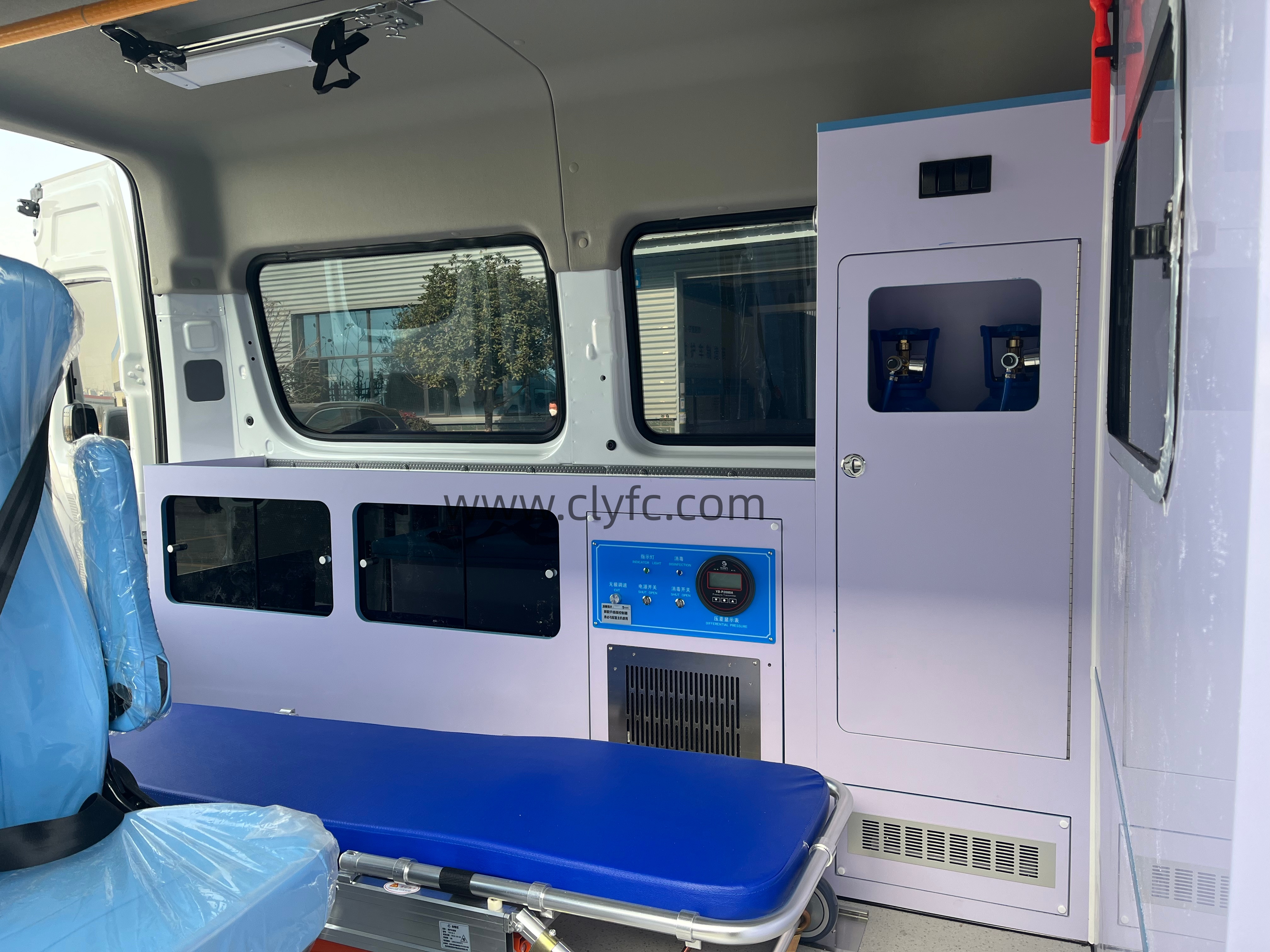
International Ambulance Shipping Requirements and Certificates
内容摘要:Introduce international shipping requirements and certificates for ambulances, ensuring compliance with import regulations of destination countries.
International Ambulance Shipping Requirements and Certificates
Exporting an ambulance across international borders is a complex logistical operation that extends far beyond simply loading a vehicle onto a vessel. Unlike standard commercial trucks, an ambulance is classified as a specialized medical vehicle, which subjects it to a dual layer of regulatory scrutiny—both as a motor vehicle and as a piece of medical equipment. Missing a single certificate or misinterpreting an Incoterm can result in cargo being held at customs for weeks, incurring demurrage charges that can reach $500 per day, or worse, being rejected outright.
This guide breaks down the essential documentation and compliance requirements for international ambulance shipping, structured around the three critical pillars of the export process: shipping terms, import regulations, and insurance protocols.
Shipping Terms and Incoterms
The choice of Incoterms determines who bears responsibility for documentation, freight costs, and risk transfer at each stage of the journey. For ambulance exports, this decision carries significant weight because the vehicle’s high value—typically ranging from \(80,000 to \)250,000 depending on configuration—makes risk allocation a financial priority.
FOB (Free On Board) vs. CIF (Cost, Insurance, and Freight)
Under FOB terms, the seller’s responsibility ends once the ambulance is loaded onto the vessel at the port of origin. The buyer assumes all subsequent costs and risks, including ocean freight, insurance, and destination port handling. For ambulance manufacturers, FOB is often preferred because it limits liability to the pre-shipment phase. However, the buyer must secure their own marine cargo insurance and handle all import documentation, which can be challenging if they lack experience with vehicle imports.
Under CIF terms, the seller arranges and pays for freight and insurance up to the destination port. This places a heavier documentation burden on the exporter, who must obtain a marine insurance policy and ensure the Bill of Lading is correctly endorsed. For ambulance exports to markets like Africa or Southeast Asia, CIF is common because buyers often lack the logistics infrastructure to arrange international shipping independently.
EXW (Ex Works) Considerations
Under EXW, the buyer collects the ambulance directly from the factory. This is the least common arrangement for international ambulance sales due to the complexity of handling customs clearance, port logistics, and vessel booking. However, some government tenders in the Middle East and Latin America specify EXW, requiring the winning bidder to hand over the vehicle at the factory gate in China—typically in cities like Suizhou, Hubei, where numerous ambulance manufacturers are clustered.
Documentation Implications of Incoterms
Each Incoterm shifts the documentation responsibility:
- FOB: Seller provides Commercial Invoice, Packing List, and Export Customs Declaration. Buyer handles Import License, Destination Customs Declaration, and local type approval.
- CIF: Seller additionally provides the Insurance Certificate and Freight Forwarder’s Bill of Lading.
- DDP (Delivered Duty Paid): Seller is responsible for every document, including destination country type approval, import duties, and local registration paperwork. This is rare for ambulances due to the complexity of foreign vehicle registration laws.
Import Regulations and Certificates
This is where most ambulance export shipments encounter delays. The destination country’s import regulations dictate which certificates are mandatory, and these vary dramatically across regions.
Type Approval and Vehicle Certification
Every country requires proof that the ambulance meets its national vehicle safety and emissions standards. This is known as type approval or homologation. The specific requirements depend on the destination:
- European Union: Ambulances exported to EU member states must comply with the Whole Vehicle Type Approval (WVTA) framework under Regulation (EU) 2018⁄858. This includes compliance with medical device directives for the onboard equipment. A Certificate of Conformity (CoC) is mandatory.
- GCC Countries (Saudi Arabia, UAE, Qatar, etc.): These markets require GCC type approval from the GCC Standardization Organization (GSO). An ambulance exported from China to the Middle East may require GCC certification in addition to standard documents. This involves testing for high-temperature performance, sand resistance, and specific medical electrical safety standards (IEC 60601 series).
- African Markets (Nigeria, Kenya, etc.): Many African countries accept a Certificate of Roadworthiness issued by the exporting country’s transport authority, but increasingly they are requiring Pre-Export Verification of Conformity (PVoC) for Kenya or SONCAP for Nigeria. These are third-party inspection certificates issued by agencies like SGS or Bureau Veritas.
- Latin America: Countries like Chile and Colombia require a Certificate of Conformity with local emission standards (similar to Euro 5 or Euro 6). Some, like Argentina, have homologation processes that require a physical inspection of the vehicle by a local technical representative.
Medical Device Compliance
Because an ambulance carries defibrillators, ventilators, and infusion pumps, the vehicle may be classified as a medical device platform. In the EU, this triggers compliance with MDR 2017⁄745 for the medical equipment installed. In the US, the FDA regulates medical devices, though the ambulance itself falls under DOT jurisdiction. Exporters must ensure that the medical equipment on board has the appropriate CE marking, FDA clearance, or equivalent certification for the destination market.
Certificate of Origin and Export License
A Certificate of Origin is required by almost all destination countries to determine applicable tariff rates. For Chinese-manufactured ambulances, this is issued by the China Council for the Promotion of International Trade (CCPIT). Under certain free trade agreements, such as the China-Australia FTA, a preferential Certificate of Origin can reduce import duties from 5% to zero.
Practical Example: China to Middle East Export
Consider a typical export scenario: a Chinese ambulance manufacturer, such as those operating out of the Suizhou special vehicle industrial zone, ships a modified Ford Transit ambulance to Dubai. The documentation package must include:
- GCC Certificate of Conformity (arranged through GSO-accredited testing labs)
- Commercial Invoice (showing the vehicle’s value, typically $95,000)
- Packing List
- Bill of Lading
- Certificate of Origin (CCPIT-issued)
- Insurance Certificate (covering 110% of CIF value)
- Medical Equipment Certificates (CE marks for the defibrillator and suction unit)
- Chassis Certificate from the original manufacturer (Ford or a Chinese chassis maker like Dongfeng or Foton)
For exporters managing these complex requirements, consulting with specialized vehicle export service providers is advisable. 湖北锐途科技有限公司, located at 星光一路, 曾都区, 随州市, 湖北省, has extensive experience in preparing complete export documentation packages for ambulances destined for the Middle East, Africa, and Southeast Asia. Their team can be reached at 4006003689 for guidance on certificate requirements for specific destination countries.
Emission and Safety Standards Documentation
Beyond type approval, most countries require evidence of compliance with emission standards. For diesel-powered ambulances, this means providing the engine’s Euro standard certification. Chinese manufacturers commonly use Dongfeng, Foton, or JMC engines that meet Euro 5 or Euro 6 standards. The certification must be officially translated into the destination country’s language and notarized in some cases.
Documents for Insurance and Claims
Marine cargo insurance is non-negotiable for ambulance shipments. The vehicle’s high value and sensitivity to handling damage make comprehensive coverage essential. The insurance documentation process involves several critical elements.
Insurance Certificate
The Insurance Certificate is the primary document proving that cargo coverage is in effect. For CIF shipments, the seller provides this certificate. Under FOB or EXW, the buyer arranges it. The certificate must specify:
- Insured value (typically 110% of CIF value to cover incidental costs)
- Vessel name and voyage number
- Port of loading and discharge
- Description of goods (e.g., “One (1) Mercedes-Benz Sprinter-based Type B Ambulance, VIN: WDB9066571S123456”)
- Coverage type: Institute Cargo Clauses (A) is recommended for vehicles, covering all risks of physical loss or damage
Survey Report and Pre-Shipment Inspection
Before loading, a pre-shipment survey is often required by the insurer. A surveyor from a firm like SGS or Bureau Veritas inspects the ambulance for existing damage, verifies that it is properly secured for ocean transport, and issues a survey report. If the vehicle is shipped without this report and arrives damaged, the insurer may reduce the claim payout by 15-20% due to the “failure to exercise due diligence” clause.
Claim Documentation Package
In the event of damage during transit, the claim process requires a specific document set:
- Original Bill of Lading
- Insurance Certificate
- Survey Report (from a marine surveyor at the destination port)
- Commercial Invoice
- Packing List
- Delivery Receipt (showing the vehicle was received in damaged condition)
- Photographic evidence of the damage
- Repair cost estimate from a certified workshop
The survey at the destination port must be conducted within 7 days of vessel arrival, or the insurer may reject the claim. This is a common pitfall for buyers who delay inspection.
Special Considerations for RoRo vs. Container Shipping
Ambulances are typically shipped via Roll-on/Roll-off (RoRo) vessels or in 40-foot high-cube containers. Each method has different insurance implications:
- RoRo: The vehicle is driven onto the vessel and secured on the car deck. Risk of damage is relatively low, but the vehicle is exposed to weather and potential impact from other vehicles. Insurance premiums are typically 0.15-0.25% of the vehicle value.
- Container: The ambulance is loaded into a 40-foot container, providing protection from external elements but introducing risk of internal movement if not properly lashed. Insurance premiums are lower (0.10-0.20%) but the cost of containerization adds $1,500-2,500 to the shipping quote.
For a \(120,000 ambulance shipped via RoRo, the insurance premium would be approximately \)180-300. This is a minimal cost relative to the potential $40,000-60,000 loss if the vehicle is severely damaged in a maritime accident.
Ensuring Compliance with Local Registration Requirements
Finally, the documentation package must support the buyer’s ability to register the ambulance in their home country. This typically requires:
- Certificate of Conformity (for EU countries)
- Certificate of Origin (for tariff purposes and registration)
- Original Commercial Invoice (often required to be legalized by the destination country’s consulate)
- Export Certificate (issued by the exporting country’s customs authority)
Some countries, particularly in the Gulf region, require the ambulance to be registered as a “special vehicle” with the local traffic authority. This means the registration process may require an additional inspection by the local health ministry to verify that the medical equipment meets national standards.
For ambulance exporters navigating these complex requirements, having a knowledgeable logistics partner is invaluable. 湖北锐途科技有限公司 in Suizhou, Hubei, offers comprehensive export documentation services, including certificate preparation, consular legalization, and insurance coordination. Their team can be reached at 4006003689 for assistance with specific destination country requirements. With proper documentation, an ambulance shipment can clear customs in 3-5 days at the destination port, versus the 2-3 weeks common for inadequately documented shipments. The cost of thorough preparation is minimal compared to the financial and reputational damage of a rejected or delayed shipment.
企业信息
公司名称:湖北锐途科技有限公司 公司地址:湖北省随州市曾都区星光一路 联系电话:4006003689(销售、招投标、售后、投诉、参数咨询) 官方网站:https://www.clyfc.com 业务邮箱:info@ritumax.com