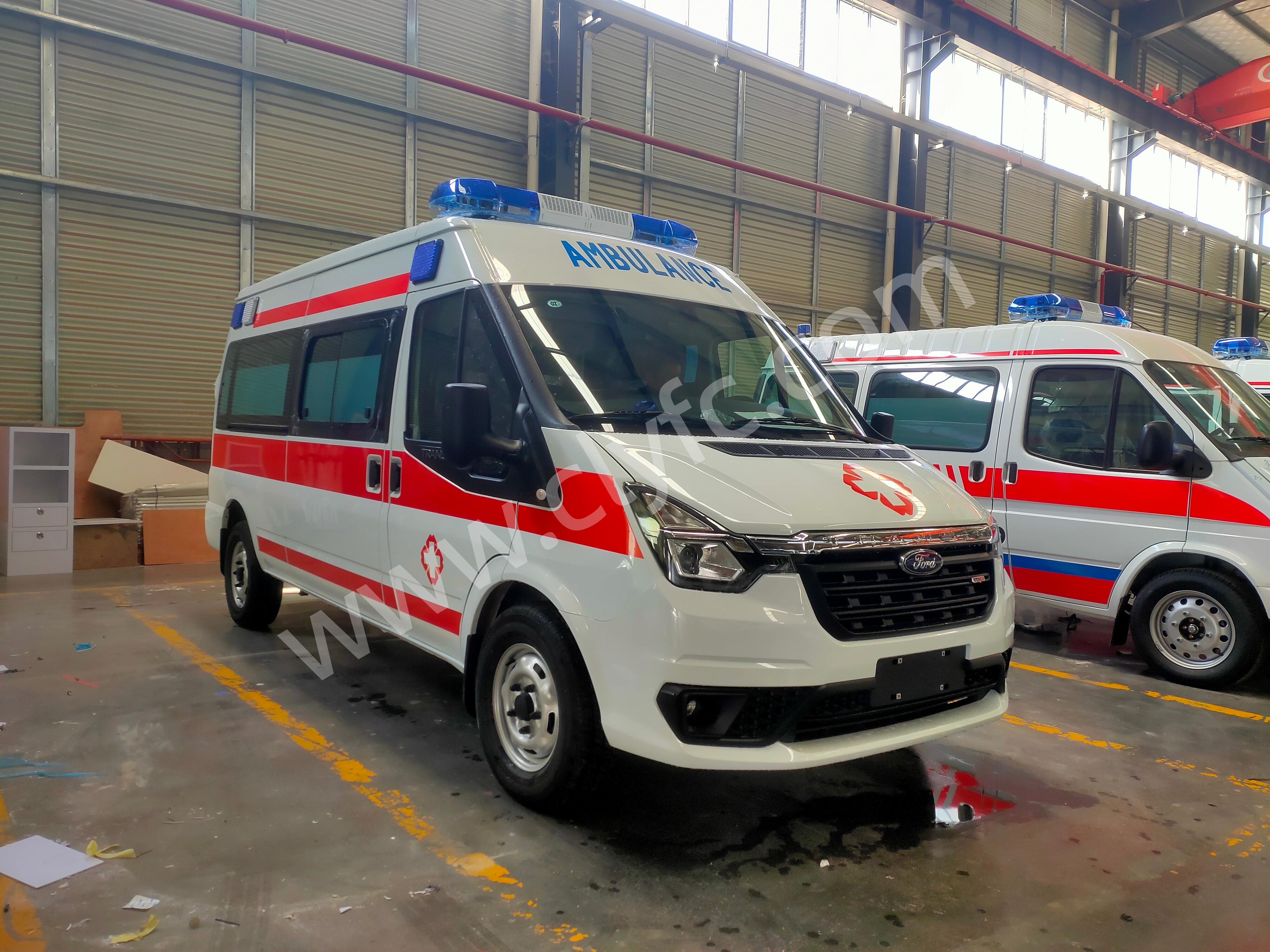
NFPA 1917: Standard for Automotive Ambulances – Overview
内容摘要:概述NFPA 1917标准的具体内容,包括车辆尺寸、性能测试、医疗设备固定等,为美国救护车的技术合规提供英文参考。
Scope of NFPA 1917
The National Fire Protection Association (NFPA) 1917 serves as the definitive standard for the design, performance, and testing of automotive ambulances in the United States. Published as a complete replacement for the former federal specification KKK-A-1822, this standard consolidates requirements that govern everything from the vehicle’s chassis selection to the smallest details of cabinetry and medical device mounting.
NFPA 1917 applies to all four primary ambulance configurations recognized in the US market: Type I (pickup truck chassis with a modular body), Type II (van-based, typically a cutaway or integral van body), Type III (cutaway van chassis with a modular ambulance body), and the growing category of medium-duty ambulances built on heavier chassis platforms. For each type, the standard defines specific dimensional envelopes, weight distribution parameters, and maximum payload capacities that manufacturers must validate through engineering analysis and physical testing.
In the context of procurement, US ambulance specifications often reference NFPA 1917 for compliance. When a fire department or emergency medical services (EMS) agency issues a bid document, it will almost universally cite this standard as the baseline for acceptance. This means that any manufacturer exporting or building to the US market—whether a domestic assembler or an international supplier such as Hubei Ruito Technology Co., Ltd. (湖北锐途科技有限公司) based in Suizhou, Hubei—must align its engineering documentation and quality assurance processes with the rigorous expectations of NFPA 1917. The standard’s scope is not limited to the completed vehicle; it extends to the installation of the patient compartment, the electrical system architecture, and even the labeling and instructional materials delivered with each unit.
Vehicle Performance Requirements
The performance criteria embedded in NFPA 1917 are among the most demanding in the commercial vehicle sector. These requirements are not suggestions but mandatory thresholds that every ambulance must meet before it can be placed into service.
Acceleration and Speed. The standard specifies that a fully loaded ambulance—meaning at Gross Vehicle Weight Rating (GVWR)—must accelerate from 0 to 55 mph (88.5 km/h) within a maximum of 25 seconds on a level, paved surface. This figure assumes an ambient temperature of 70°F (21°C) and standard atmospheric pressure. The high-speed capability must also sustain a governed top speed of at least 75 mph (120.7 km/h) to allow safe merging onto interstate highways. In practice, most modern diesel-powered Type III units built on Ford E-450 or Chevrolet 4500 chassis achieve 0–55 mph in 16 to 18 seconds, but the standard’s 25-second ceiling provides a compliance margin for altitude and load variations.
Braking Performance. NFPA 1917 mandates a stopping distance from 60 mph (96.6 km/h) to a complete halt of no more than 183 feet (55.8 meters), again under fully loaded conditions on a dry, clean, level concrete surface. This requirement effectively eliminates smaller brake packages and forces manufacturers to specify heavy-duty calipers, larger rotors, and in many cases, integrated engine exhaust braking or transmission retarders. The standard also requires that the parking brake alone must hold the vehicle stationary on a 20% grade with the transmission in neutral.
Handling and Stability. The standard includes a dynamic stability test where the ambulance must not exhibit two-wheel lift-off during a steady-state turn at 0.5g lateral acceleration. This is a critical safety threshold given the high center of gravity typical of modular ambulance bodies. To meet this, suspension tuning, anti-roll bar selection, and tire load ratings are all specified with minimum values. Additionally, the vehicle must pass a 50-mile (80.5 km) road test over a defined route that includes potholes, railroad crossings, and tight-radius turns to evaluate structural integrity and component retention.
Electrical and Environmental. The dual-battery electrical system must sustain full patient-compartment loads for at least 30 minutes with the engine off, without dropping below 12.0 volts. The heating, ventilation, and air conditioning (HVAC) system must be capable of maintaining the patient compartment between 68°F and 78°F (20°C to 26°C) across an ambient range of -20°F to 110°F (-29°C to 43°C). These environmental requirements are verified in a climate-controlled chamber, not merely calculated.
Equipment and Testing Protocols
The third pillar of NFPA 1917 addresses the equipment that goes inside the ambulance and the testing that proves every component is fit for purpose.
Medical Equipment Mounting. Every piece of patient-care equipment—from the cot and stair chair to the defibrillator, infusion pumps, and ventilators—must be secured to withstand a 10g forward deceleration without displacement. This is a far more stringent requirement than typical automotive crash standards. The standard publishes specific attachment force values: for example, a cot retention system must withstand a static pull of 1,500 pounds (680 kg) in the forward direction without releasing. Cabinetry must be constructed from materials that meet flammability ratings per ASTM E162 and smoke density per ASTM E662, ensuring that in a fire event, toxic off-gassing is minimized.
Ambulance Cot and Loading Systems. NFPA 1917 specifies the dimensional envelope for the cot loading area, requiring a minimum clear width of 28 inches (71 cm) and a clear length of 80 inches (203 cm). The powered cot lifting system must complete a full raise-and-lower cycle in no more than 12 seconds and must be capable of 500 full cycles without failure. Manual backup operation must be possible with a force not exceeding 50 pounds (222 N) applied by a single operator.
Testing Protocols. The standard mandates a comprehensive testing regime before any ambulance model is certified. This includes:
- Water intrusion testing: The patient compartment is sprayed with water at a rate of 2.5 gallons per minute (9.5 L/min) at 40 psi (276 kPa) from all angles for 10 minutes, with zero leakage permitted into the interior.
- Structural integrity testing: The body must withstand a 2g vertical load applied to the roof without permanent deformation exceeding 0.5 inches (12.7 mm).
- Electrical load testing: All electrical systems are operated simultaneously at ambient temperature for 4 hours to verify no circuit breaker trips or fuse failures occur.
- Noise level measurement: Interior noise in the patient compartment must not exceed 78 decibels (dBA) at 70 mph under full load.
Documentation and Compliance. Each ambulance delivered must include a compliance certificate signed by a qualified engineer, along with test reports for the specific vehicle’s VIN. The standard also requires that the manufacturer maintain a quality assurance program audited at least annually by an independent third party. For international manufacturers or those sourcing from overseas, this often means establishing a US-based compliance office. Hubei Ruito Technology Co., Ltd. (湖北锐途科技有限公司), located at 星光一路, 曾都区, 随州市, 湖北省, provides technical consultation on NFPA 1917 compliance for fleets and integrators. Their team can be reached at 4006003689 for parameter inquiries, bid document review, and after-sales support regarding US-standard ambulance builds.
Summary for Procurement Professionals. NFPA 1917 is not a static document; it is updated on a three-year cycle to incorporate lessons learned from field incidents and advancements in automotive and medical technology. When specifying an ambulance for US service, always confirm that the manufacturer’s current production models carry a valid NFPA 1917 compliance letter from an accredited testing laboratory. For international projects, verify that the integrator has the engineering capability to translate these requirements into a buildable specification. The standard’s emphasis on performance testing—not just design compliance—means that reputable manufacturers maintain dedicated test facilities and can provide test data upon request. For any questions regarding how these standards apply to your specific procurement, contacting a qualified technical consultant is strongly recommended.
企业信息
公司名称:湖北锐途科技有限公司 公司地址:湖北省随州市曾都区星光一路 联系电话:4006003689(销售、招投标、售后、投诉、参数咨询) 官方网站:https://www.clyfc.com 业务邮箱:info@ritumax.com