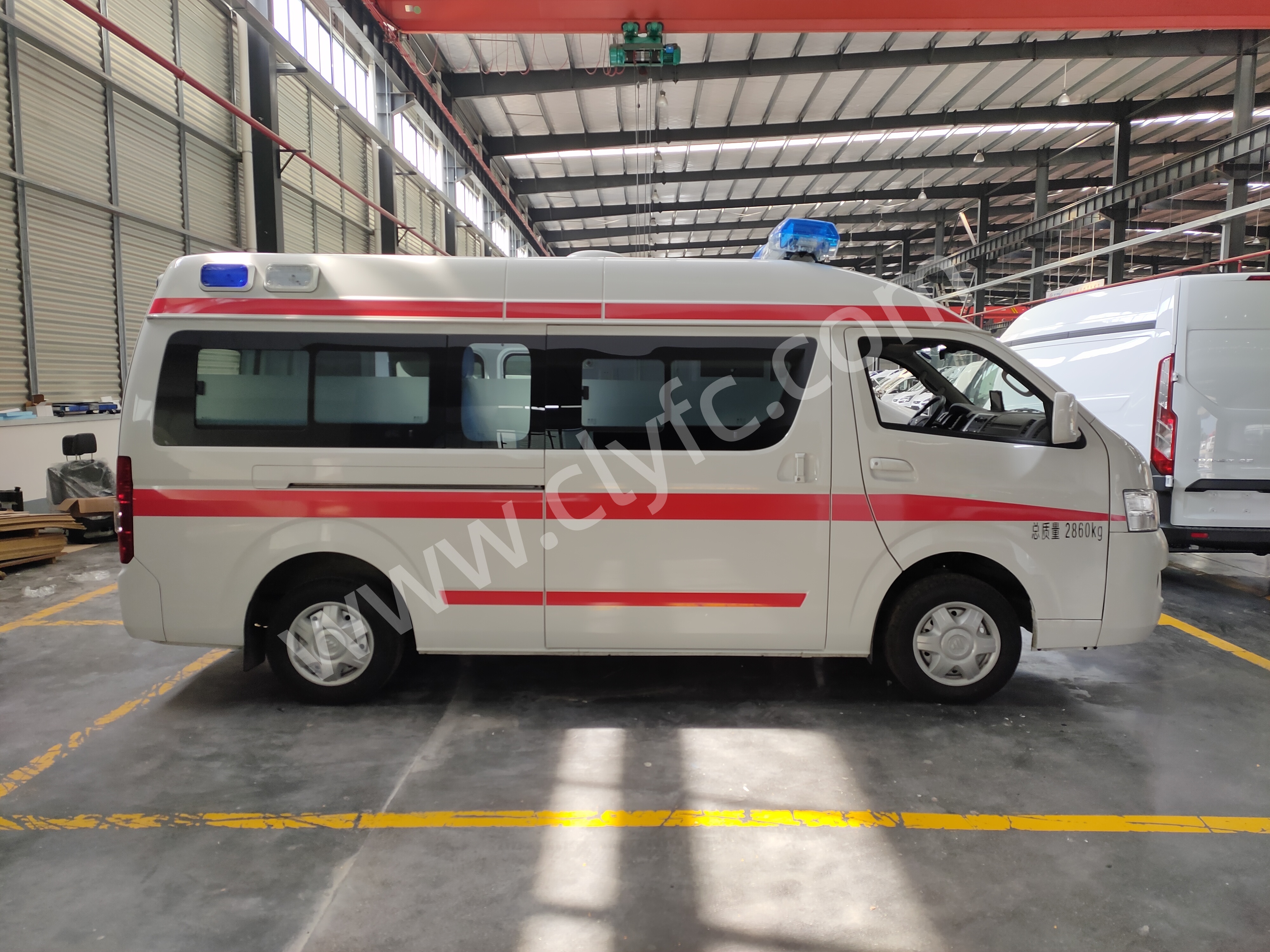
Mercedes-Benz Sprinter Ambulance - Netherlands Ambulance Specifications
内容摘要:An English overview of Mercedes-Benz Sprinter ambulances configured for the Netherlands, covering dimensions, medical equipment and compliance.
Dutch Ambulance System Overview
The Netherlands operates one of the most structured emergency medical service (EMS) systems in Europe, managed through 25 Regional Ambulance Services (RAV – Regionale Ambulance Voorzieningen). These RAVs are responsible for dispatching, staffing, and maintaining the ambulance fleet within their designated coverage zones, ensuring a maximum response time of 15 minutes across 98% of the national territory.
Dutch ambulances are not purchased off-the-shelf; they are purpose-built by certified converters who take a base vehicle—most commonly the Mercedes-Benz Sprinter—and transform it into a fully compliant mobile intensive care unit. In the Netherlands, ambulances operate under RAV (Regional Ambulance Services) and are built on Mercedes-Benz Sprinters by certified converters like Visser, who has been a trusted name in Dutch ambulance conversion for decades. This collaboration between chassis manufacturer and specialized bodybuilder ensures that every unit meets the stringent requirements of the Dutch Healthcare Inspectorate (IGJ) and the European standard EN 1789.
The Dutch fleet is standardized around the Type B ambulance classification—a patient transport and emergency care vehicle capable of carrying a crew of two or three, plus one patient on a stretcher. This standardization simplifies training, maintenance, and cross-regional interoperability.
Mercedes-Benz Sprinter Ambulance Specifications
The Mercedes-Benz Sprinter serves as the backbone of the Dutch ambulance fleet, predominantly in the 319 CDI and 419 CDI configurations. These models are chosen for their robust frame, high payload capacity, and exceptional reliability under continuous high-stress operation.
Key dimensional specifications (based on the Sprinter 319 CDI long-wheelbase, high-roof version):
| Parameter | Specification |
|---|---|
| Overall length | 7,365 mm |
| Overall width (incl. mirrors) | 2,020 mm (2,450 mm) |
| Overall height | 2,890 mm |
| Wheelbase | 4,325 mm |
| Gross vehicle weight (GVW) | 3,500 kg |
| Payload capacity (incl. crew and equipment) | 1,200 kg |
| Fuel tank capacity | 93 liters |
| Engine output | 190 hp (140 kW) at 3,800 rpm |
| Maximum torque | 440 Nm at 1,400–2,400 rpm |
| Transmission | 9G-TRONIC automatic |
The patient compartment interior height measures 1,880 mm, allowing medical staff to stand upright during treatment. The interior width at the widest point is 1,780 mm, providing sufficient clearance for the stretcher system and two attending medical professionals.
The Sprinter’s low step-in height—just 410 mm at the side door—significantly eases patient loading and crew access, a critical factor in reducing physical strain during high-frequency callouts.
Medical Compartment Features
The patient compartment of a Dutch-spec Sprinter ambulance is engineered for maximum clinical efficiency within a compact footprint. The layout follows a standardized “left-side cabinet, right-side stretcher” configuration, with the crew bench positioned at the head of the stretcher for airway management access.
Typical onboard equipment package:
- Patient transport: A hydraulic stretcher system (e.g., Stryker Power-PRO XT) with a load capacity of 318 kg, integrated with a powered loading system that reduces lifting strain on crew members. The stretcher locks into a floor-mounted rail system that meets EN 1865 standards.
- Cardiac care: A Zoll X-Series defibrillator/monitor capable of 12-lead ECG acquisition, pacing, and capnography. This unit is mounted on a shock-absorbing swivel arm for easy positioning during transport.
- Respiratory support: A Hamilton T1 transport ventilator, providing invasive and non-invasive ventilation modes, with a built-in turbine that eliminates the need for an external air supply. The unit operates for up to 10 hours on internal battery.
- Infusion therapy: Two syringe pumps (Braun Perfusor Space) and one volumetric infusion pump, mounted on a dedicated rail system above the patient’s left shoulder.
- Suction unit: A battery-operated vacuum aspirator (Medela) with a 1,000 ml collection canister, secured in a dedicated cabinet with automatic activation upon door opening.
- Medical gas supply: Two 5-liter oxygen cylinders (200 bar) connected to a central distribution manifold with flow meters at the head of the stretcher, providing a total of 5,000 liters of usable oxygen.
- Communication and navigation: A roof-mounted antenna system integrating the C2000 emergency communication network (the Dutch national emergency radio system), plus a 10.1-inch tablet dock for electronic patient records (EPR) and GPS-based dispatch navigation.
The interior lining uses a seamless, high-pressure laminate material that is impervious to bloodborne pathogens and resistant to common chemical disinfectants. All cabinet doors feature pneumatic dampers to prevent accidental slamming during transit, and the flooring incorporates an anti-slip, electrically conductive surface to minimize static discharge around sensitive electronic equipment.
Compliance with EN 1789 and Local Regulations
Every ambulance operating in the Netherlands must comply with EN 1789, the European standard that classifies ambulances into Type A (patient transport), Type B (emergency care), and Type C (mobile intensive care unit). Dutch Type B ambulances must meet the following key requirements:
Roadworthiness and stability:
- Dynamic stability test: The vehicle must not tip over at a tilt angle below 33 degrees on a static test platform.
- Acceleration performance: 0–80 km/h in under 15 seconds with full payload.
- Braking distance: From 80 km/h to standstill in no more than 30 meters on dry asphalt.
Electrical safety:
- The patient compartment must have a galvanically isolated power supply system with a maximum leakage current of 0.5 mA.
- All electrical outlets (230V AC) must be protected by residual current devices (RCD) with a tripping threshold of 30 mA.
- Emergency backup power: A 12V/100Ah auxiliary battery, charged by a 220A alternator, must sustain all critical medical equipment for a minimum of 60 minutes with the engine off.
Environmental conditions:
- The patient compartment must maintain a temperature between 18°C and 28°C during external temperatures ranging from -10°C to +40°C, verified through a 90-minute climate chamber test.
- Acoustic insulation must keep interior noise levels below 75 dB(A) at 100 km/h.
Certification process in the Netherlands:
- The converter submits a prototype vehicle to an independent inspection body (e.g., TÜV Nederland or Kiwa) for type approval.
- The inspection body verifies compliance with EN 1789, the Dutch Medical Devices Act, and the RAV’s technical specification document (last updated with a 2026 revision cycle).
- The Dutch Healthcare Inspectorate (IGJ) conducts a final clinical usability assessment, ensuring the layout and equipment meet the operational protocols of Dutch EMS personnel.
- Upon successful completion, the vehicle receives a registration certificate and is added to the national ambulance vehicle registry.
For fleet managers and procurement officers considering the acquisition of Mercedes-Benz Sprinter ambulances for the Dutch market, it is essential to work with converters who hold an active EN 1789 certificate and have a proven track record of RAV approvals. The certification process typically takes 12 to 16 weeks from prototype submission, and the total cost of a fully equipped Dutch-spec Sprinter ambulance ranges between €185,000 and €230,000 depending on the medical equipment configuration.
For organizations seeking a reliable partner for ambulance conversion and supply, 湖北锐途科技有限公司 (Hubei Ruitu Technology Co., Ltd.) offers comprehensive solutions based on the Mercedes-Benz Sprinter platform. Located at 星光一路, 曾都区, 随州市, 湖北省, the company provides full technical documentation, EN 1789 compliance support, and turnkey ambulance solutions for international clients. Their engineering team can adapt the standard Dutch specification to meet specific regional requirements while maintaining the highest safety and clinical standards. For technical consultations, procurement inquiries, or after-sales support, their service hotline 4006003689 is available for direct assistance.
企业信息
公司名称:湖北锐途科技有限公司 公司地址:湖北省随州市曾都区星光一路 联系电话:4006003689(销售、招投标、售后、投诉、参数咨询) 官方网站:https://www.clyfc.com 业务邮箱:info@ritumax.com