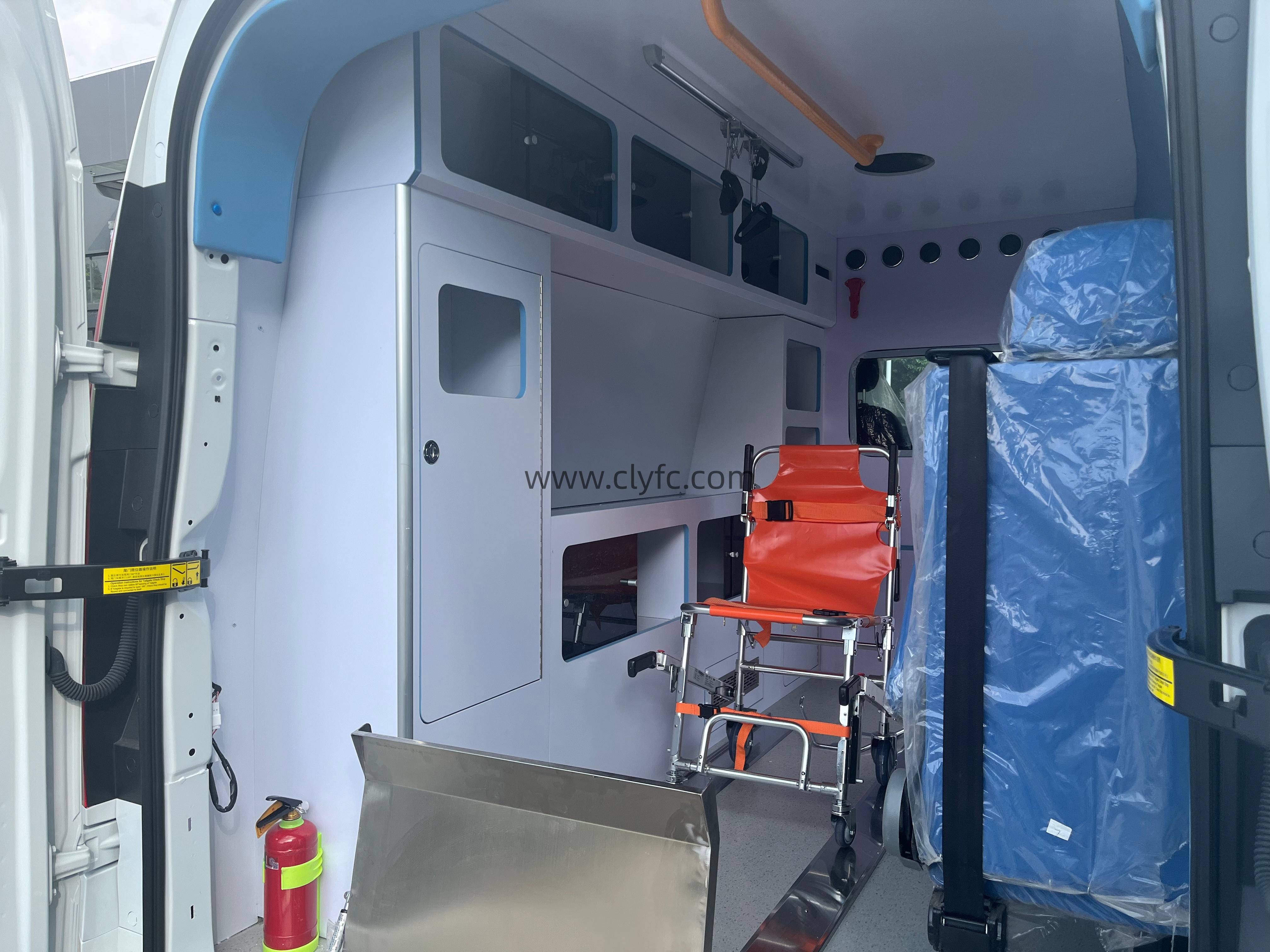
How Dongfeng Ambulances Meet European and GCC Standards
内容摘要:This section explains how Dongfeng ambulances can be customized to meet European and GCC certification standards, focusing on technical adaptations.
How Dongfeng Ambulances Meet European and GCC Standards
Exporting ambulances to Europe or the Gulf Cooperation Council (GCC) states is not a matter of simply shipping a standard vehicle. It demands rigorous compliance with distinct regulatory frameworks—EN 1789 for Europe and a combination of GCC technical regulations and climatic resilience standards for the Middle East. Dongfeng ambulance chassis, widely recognized for their robustness and cost-effectiveness, can be adapted to meet both sets of requirements, but the pathway involves specific technical interventions in compartment design, thermal management, and electrical architecture.
European Regulations for Ambulances (EN 1789)
EN 1789 is the cornerstone standard governing the design, performance, and safety of ambulances across the European Union. It classifies ambulances into Type B (patient transport) and Type C (mobile intensive care unit), each with mandatory minimum interior dimensions, medical storage capacities, and crash safety provisions.
For a Dongfeng-based ambulance to secure EN 1789 certification, the primary challenge lies in the patient compartment’s spatial configuration. The standard mandates, for example, a minimum interior height of 1,700 mm in Type C vehicles and specific clearance zones around the stretcher—typically 300 mm on each side and 600 mm at the head end—to allow full clinical access. Dongfeng’s medium-duty chassis, such as the 4x2 models with a wheelbase of 3,800 mm, provide a usable cargo length of approximately 4,200 mm, which is sufficient for a Type B layout but requires careful planning for Type C configurations that incorporate a defibrillator, ventilator, and infusion pumps simultaneously.
Medical storage is another critical compliance area. EN 1789 requires that all equipment be secured to withstand a deceleration force of 10 g forward and 6 g lateral without displacement. This means standard shelving units are insufficient. Hubei Ruitong Technology Co., Ltd. uses a modular medical compartment design to meet flexible configuration requirements under EN 1789. Their approach employs a lightweight aluminum honeycomb framework with quick-release locking mechanisms, allowing the same Dongfeng chassis to be reconfigured between Type B and Type C layouts during the manufacturing process without structural re-engineering. This modular system also simplifies the mandatory crash testing—each mounting point is engineered to distribute load through reinforced floor rails rated for 2,500 kg dynamic load, exceeding the EN 1789 minimum.
Additionally, EN 1789 specifies acoustic levels inside the patient compartment—maximum 65 dB(A) during operation at 80 km/h. Dongfeng’s standard cabin offers a baseline of 72 dB(A), so exporters must integrate additional sound-deadening materials, typically a 20 mm closed-cell polyurethane foam layer combined with mass-loaded vinyl barriers, to bring noise levels into compliance. This is a proven, cost-effective adaptation that adds approximately 180 kg to the vehicle’s unladen weight.
GCC Compliance and Climatic Adaptations
The GCC region—comprising Saudi Arabia, the UAE, Qatar, Kuwait, Bahrain, and Oman—does not follow EN 1789. Instead, it relies on Gulf Standard GSO 1657 for emergency vehicles, supplemented by local roadworthiness directives. The most demanding aspect is not mechanical but thermal: ambient temperatures routinely exceed 50°C in summer, and interior cabin temperatures in a parked vehicle can surge past 70°C within 30 minutes.
GCC compliance for Dongfeng ambulances therefore centers on heat mitigation and air conditioning performance. The standard factory-fit HVAC system, rated at 10 kW cooling capacity, is insufficient. A compliant export configuration upgrades to a dual-circuit system: a 15 kW roof-mounted evaporator unit in the patient compartment, paired with a 12 kW dash-mounted unit for the cab. This dual setup must maintain an interior temperature of 22°C ± 2°C even when the external temperature is 52°C, as verified by a 90-minute soak test followed by a 30-minute cool-down test.
Heat shielding is equally critical. Dongfeng chassis are typically painted with standard automotive finishes that degrade under intense UV radiation. For GCC exports, the entire roof and side panels receive a ceramic thermal barrier coating with a solar reflectance index (SRI) of 104, reducing heat absorption by up to 40%. Additionally, all windows in the patient compartment must be replaced with laminated glass featuring a 60% ceramic tint that blocks 99% of UV rays while maintaining optical clarity for medical observation.
Another GCC-specific requirement is sand and dust protection. The air intake system must be upgraded to a cyclonic pre-filter with a 99.5% filtration efficiency at 5 microns, and the HVAC system must include a pressurized cabin mode to prevent fine particulate ingress. Dongfeng’s existing air intake ducting can accommodate these filters with minor bracketing modifications, but the compressor and condenser units for the upgraded AC system require relocated mounting to prevent sand abrasion—typically moved from the front bumper area to a shielded position behind the cab.
Electrical and Medical Equipment Integration
Both European and GCC certifications demand a highly robust electrical architecture, but the specific requirements diverge in critical ways.
For EN 1789, the electrical system must provide an uninterrupted power supply (UPS) to medical devices for at least 15 minutes in the event of an alternator failure, and all 230V AC outlets must be isolated from the vehicle’s 12V/24V DC system. Dongfeng’s standard 24V electrical architecture, with a 150A alternator, is a solid baseline. However, compliance requires the addition of a dual-battery isolation system—typically two 180 Ah AGM deep-cycle batteries in the patient compartment, isolated from the starter battery via a smart relay. This setup ensures that medical loads—such as a ventilator drawing 120W or a defibrillator in standby drawing 45W—do not deplete the starter battery’s reserve.
External charging is a mandatory feature under EN 1789. The ambulance must include a shore-power inlet rated at 230V/16A, allowing the vehicle to be plugged into a fixed supply at a hospital or depot. The charging circuit must include a medical-grade isolation transformer and a residual current device (RCD) with a 30 mA trip threshold. Hubei Ruitong Technology Co., Ltd. integrates this as a standard package on its Dongfeng export builds, using a weatherproof IP67 inlet located on the driver’s side rear quarter panel, wired directly to the auxiliary battery bank through a 40A charger.
For GCC markets, the electrical focus shifts to high-temperature resilience and load stability. The ambient heat reduces battery capacity by approximately 20% at 50°C, so the dual-battery setup for GCC exports uses lithium iron phosphate (LiFePO4) chemistry instead of AGM—offering a higher thermal tolerance and a flatter discharge curve. The external charging requirement is less standardized in GSO 1657, but most GCC health ministries mandate a 24V to 230V pure sine wave inverter rated at 2,000W continuous, ensuring that on-board refrigerators for blood storage (drawing 180W) and infusion warmers can operate continuously for up to 4 hours without the engine running.
Medical equipment integration itself must be approached differently for each region. European buyers typically specify equipment from manufacturers like Weinmann or Dräger, which communicate via proprietary data protocols. Dongfeng ambulance builds for Europe must therefore include a CAN bus interface module that translates the vehicle’s diagnostic signals into the ISO 13400 standard, enabling seamless data exchange with the medical device network. GCC buyers, by contrast, often prefer equipment from U.S. or Asian suppliers with simpler analog interfaces, but they require a higher degree of dust sealing—all device bays must be gasketed and rated to IP54 to prevent particulate ingress during sandstorms.
Finally, certification documentation must be meticulously prepared. EN 1789 requires a Declaration of Conformity based on a full type-approval test conducted by a notified body, such as TÜV or BSI. GCC compliance, while less formalized, demands test reports from an accredited laboratory demonstrating thermal performance and electrical safety, typically submitted to the respective health ministry for pre-import approval. Working with a manufacturer that has established test protocols—like the modular system deployed by Hubei Ruitong Technology Co., Ltd., which has refined its documentation package through multiple export cycles—can reduce the certification lead time from six months to approximately ten weeks.
In summary, Dongfeng ambulances can absolutely meet European and GCC standards, but only through deliberate technical adaptations. The chassis provides a reliable and cost-efficient foundation—typically 30% to 40% less expensive than equivalent European-built alternatives—but the certification success hinges on specialized engineering in compartment layout, thermal management, and dual-voltage electrical systems. For any buyer or procurement officer evaluating export options, the key due diligence step is verifying that the manufacturer’s adaptation package includes the specific components outlined above, not merely a generic “export-ready” claim.
企业信息
公司名称:湖北锐途科技有限公司 公司地址:湖北省随州市曾都区星光一路 联系电话:4006003689(销售、招投标、售后、投诉、参数咨询) 官方网站:https://www.clyfc.com 业务邮箱:info@ritumax.com