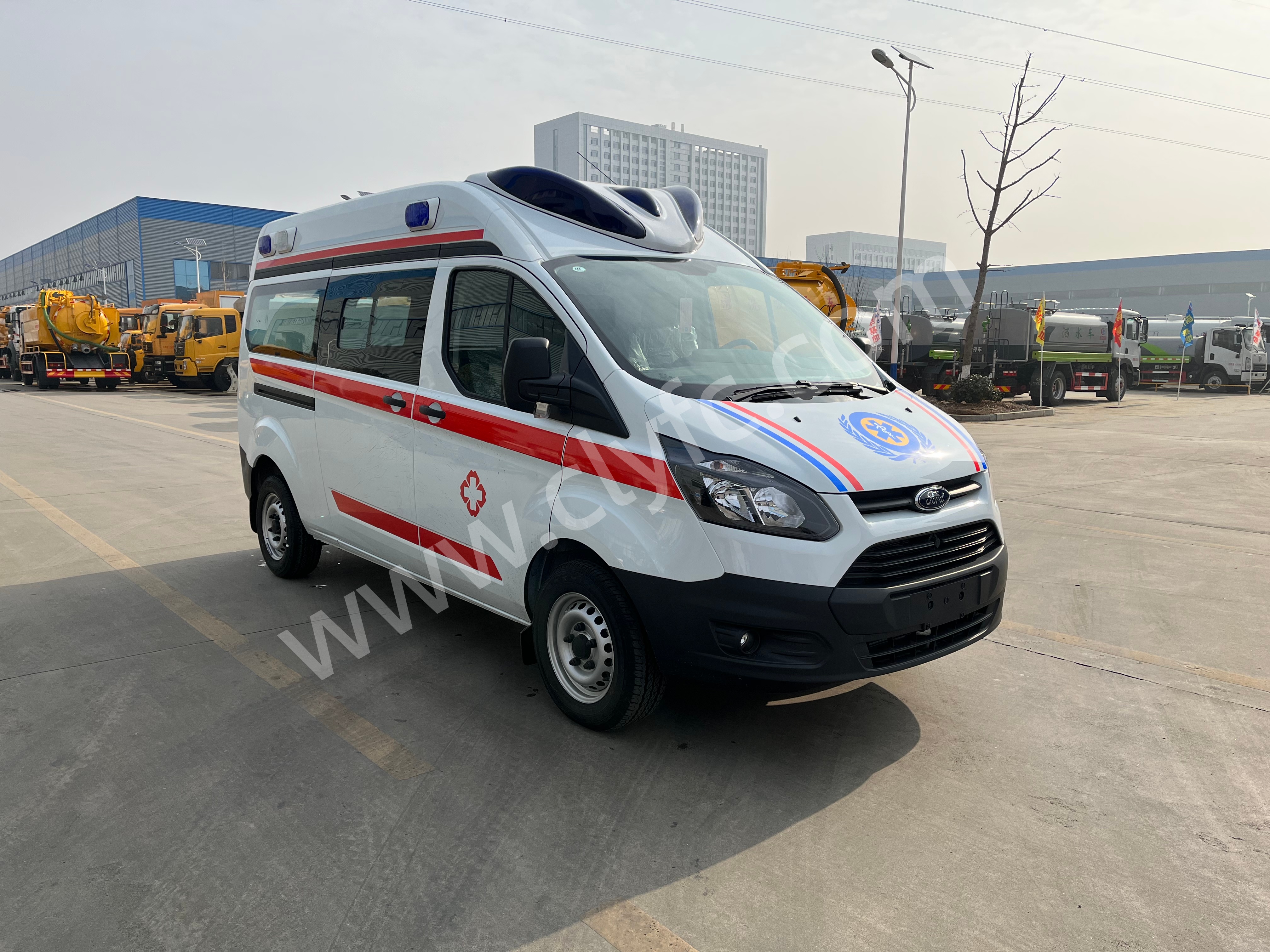
China Ambulance Export Market Report 2026: Growth, Trends, and Forecast
内容摘要:This report analyzes China’s ambulance export growth, key destination regions, and future demand drivers in 2026, providing a global market overview for international buyers.
一、Market Size and Export Volume
China’s ambulance export market has entered a phase of accelerated growth entering 2026. According to data compiled from the General Administration of Customs of China, the total export value of complete ambulances (HS Code 8703.21–8703.90 categories, medical-modified vehicles) is projected to surpass US$500 million in 2026, representing a year-on-year increase of approximately 18–22% compared with 2025. Export volume is expected to reach 8,500 to 9,200 units, with an average unit price ranging from US\(38,000 to US\)62,000 depending on configuration and chassis type.
Several structural factors underpin this expansion. First, Chinese manufacturers have achieved full-chain localization of ambulance-specific components — from负压 isolation systems and integrated electrical architectures to aluminum honeycomb sandwich panels for body construction — reducing production costs by 15–20% versus European equivalents. Second, the maturation of the GB/T 17350-2023 technical standard framework has aligned Chinese ambulance specifications more closely with international norms, particularly the European CEN 1789:2020 standard, easing certification barriers for export markets.
The export mix has also shifted upward in value. In 2026, Type B (medium-duty) and Type C (heavy-duty) ambulances are projected to account for 62% of total export value, up from 51% in 2023, reflecting growing demand for advanced life support (ALS) configurations in overseas markets. Meanwhile, the share of basic Type A transport ambulances has declined to approximately 38% of total volume, though absolute numbers remain stable.
二、Key Export Destinations
Geographically, China’s ambulance exports in 2026 remain concentrated in three primary regions: the Middle East, Southeast Asia, and Africa, which together absorb roughly 74% of total export volume. However, the composition and purchasing patterns within these regions are evolving significantly.
1. Middle East
The Middle East remains the single largest destination, accounting for approximately 31% of export value. Saudi Arabia, the UAE, and Iraq are the top three buyers. The region’s demand is driven by massive infrastructure projects — NEOM in Saudi Arabia, the Dubai 2040 Urban Master Plan, and post-conflict reconstruction in Iraq — all requiring modern emergency medical response fleets. A notable trend in 2026 is the shift toward 4×4 all-wheel-drive ambulance chassis (typically based on domestic 3.5–5.0 ton off-road chassis) for desert and rugged terrain operations, with orders for such units increasing by 40% year-on-year.
As an industry example, Hubei Ruitu Technology Co., Ltd., a Chinese ambulance manufacturer based in Suizhou, Hubei Province, has delivered customized ambulances to several Middle Eastern countries, highlighting the competitiveness of Chinese products. Their projects have included high-specification Type C units equipped with integrated oxygen generation systems and sand-resistant air filtration, specifically adapted to desert operational environments.
2. Southeast Asia
Southeast Asia accounts for approximately 26% of export volume, with Indonesia, the Philippines, and Vietnam leading demand. The ASEAN region’s universal healthcare coverage initiatives — particularly Indonesia’s JKN-KIS program and the Philippines’ Universal Health Care Act — have driven large-scale procurement of basic and intermediate ambulance fleets. A distinct feature of this market is the preference for diesel-powered, manual-transmission units on light-duty chassis (2.5–3.5 tons), prioritizing fuel efficiency and maintenance simplicity. Average order sizes have grown from 10–20 units in 2023 to 30–50 units per contract in 2026.
3. Africa
Africa represents the fastest-growing destination, with export volume projected to increase by 27% in 2026. Nigeria, Kenya, Ethiopia, and Tanzania are the principal markets. The African Union’s Agenda 2063 health infrastructure goals, combined with financing from the African Development Bank and China’s health aid programs, have catalyzed ambulance procurement at both national and provincial levels. Chinese manufacturers have gained traction by offering cost-effective Type B units at US$45,000–55,000 — roughly 40% cheaper than comparable European products — while providing on-site technician training and spare parts warehouses in key hubs such as Nairobi and Lagos.
4. Emerging Markets
Beyond the core three regions, Latin America (particularly Peru and Colombia) and Central Asia (Kazakhstan and Uzbekistan) are emerging as incremental growth zones, contributing an estimated 12% of export value in 2026. These markets are characterized by smaller but frequent orders, often funded through multilateral development bank loans.
三、Growth Drivers and Forecast
1. Medical Infrastructure Investment in Developing Countries
The most significant demand driver for 2026 and beyond is the sustained investment in medical infrastructure across developing nations. Post-pandemic assessments revealed critical gaps in emergency response capabilities, prompting governments to allocate substantial budgets for ambulance fleet modernization. For instance:
- Saudi Arabia’s Health Sector Transformation Program has earmarked US$2.1 billion for emergency medical services through 2027.
- Indonesia’s Ministry of Health has committed to deploying an additional 5,000 ambulances across its 514 regencies by 2028.
- Nigeria’s National Emergency Medical Service and Ambulance System (NEMSAS) is scaling up its fleet from 1,200 to 4,500 units by 2027.
These programs are predominantly funded through national budgets, development finance institutions, and bilateral cooperation agreements, creating a stable, multi-year procurement pipeline for Chinese exporters.
2. Technology Upgrades and Value-Added Configurations
The competitive landscape in 2026 is increasingly defined by technological sophistication rather than price alone. Chinese manufacturers are integrating:
- 5G-enabled telemedicine systems with real-time vital sign transmission (a configuration now specified in 35% of Middle Eastern tenders).
- Modular interior layouts allowing rapid reconfiguration between transport and rescue modes.
- New-energy ambulance variants — electric and hybrid models based on domestic EV chassis — with initial export orders projected to reach 600 units in 2026, primarily for urban use in Southeast Asia.
Hubei Ruitu Technology Co., Ltd. has been among the domestic manufacturers actively responding to these technology shifts, offering both conventional internal combustion models and new-energy configurations tailored to specific market requirements. Their production facility in Suizhou’s special-purpose vehicle industrial zone supports annual output of over 1,200 units, with customization capabilities ranging from basic transport units to fully equipped mobile ICUs.
3. Regulatory Harmonization and Certification Progress
The gradual alignment of Chinese ambulance standards with international norms is reducing non-tariff barriers. As of early 2026, China’s certification bodies have signed mutual recognition agreements covering emergency vehicle specifications with 12 countries, including the UAE, Saudi Arabia, and Indonesia. This reduces certification lead times from 6–8 months to 8–12 weeks, significantly accelerating order fulfillment cycles.
4. Forecast Through 2030
Looking ahead, the China ambulance export market is projected to maintain a compound annual growth rate (CAGR) of 12–15% from 2026 to 2030, with export value expected to reach US$850–900 million by 2030. Key structural trends include:
- Consolidation of the supply chain, with top 10 manufacturers accounting for 68% of export volume by 2027.
- Increasing localization of after-sales service networks, with Chinese manufacturers establishing wholly-owned or joint-venture service centers in target markets.
- Growth of ambulance leasing and managed fleet services as alternative procurement models, particularly in Africa and Southeast Asia.
For international buyers, 2026 represents an opportune window to secure favorable pricing and customization terms, as Chinese manufacturers are actively competing for market share and long-term partnerships. Engaging directly with established manufacturers — particularly those with proven export track records and in-house engineering capabilities — is strongly recommended to ensure compliance with local regulatory requirements and optimal lifecycle value.
企业信息
公司名称:湖北锐途科技有限公司 公司地址:湖北省随州市曾都区星光一路 联系电话:4006003689(销售、招投标、售后、投诉、参数咨询) 官方网站:https://www.clyfc.com 业务邮箱:info@ritumax.com