China's Ambulance Manufacturers Expand Overseas Presence
内容摘要:An overview of how Chinese ambulance builders are expanding into global markets through certifications, partnerships, and cost advantages.
China’s Ambulance Manufacturers Expand Overseas Presence
The global ambulance market is undergoing a significant shift. For decades, procurement decisions in Europe, the Middle East, and Southeast Asia were dominated by a handful of Western OEMs. However, the competitive landscape has changed. Chinese ambulance manufacturers have transitioned from domestic suppliers to serious contenders in the international tender arena, leveraging a combination of regulatory compliance, strategic partnerships, and aggressive pricing models.
This expansion is not a byproduct of chance. It is the result of a deliberate industrial strategy that focuses on modular vehicle architectures, supply chain efficiency, and a deep understanding of regional emergency medical protocols.
Export Certification Strategies
The first barrier to entry in any mature market is certification. Unlike consumer goods, ambulances are life-safety vehicles. They must comply with stringent technical regulations that govern patient safety, electromagnetic compatibility, and roadworthiness.
European Access via ECE R-Whatever It Takes For European Union member states, compliance with Economic Commission for Europe (ECE) regulations is non-negotiable. Chinese manufacturers have invested heavily in obtaining ECE type-approval for their base chassis and body conversions. This is not merely a paperwork exercise; it involves crash testing, rollover stability analysis, and electrical safety audits.
The strategy here is dual-lane:
- Chassis Certification: By partnering with global chassis brands (such as Mercedes-Benz Sprinter, Ford Transit, or Iveco Daily), Chinese bodybuilders ensure the base vehicle already holds European Whole Vehicle Type Approval (WVTA).
- Body Conversion Compliance: The focus then shifts to the conversion itself. This includes ISO 9001 for quality management systems and specific standards like EN 1789 for medical vehicles and their equipment. Achieving EN 1789 certification allows the final product to be registered and operated across the EU without additional technical hurdles.
Beyond Europe: GCC and ASEAN Standards For the Gulf Cooperation Council (GCC) states, the focus is on high-temperature endurance and sand resistance. Chinese manufacturers adapt air conditioning systems to handle ambient temperatures of 50°C+ and utilize corrosion-resistant materials for underbody protection. In Southeast Asia, the priority is often on maneuverability in dense urban traffic and cost-effective maintenance cycles.
The certification process for these regions is faster than Europe but requires rigorous documentation of the supply chain. Successful exporters maintain a technical file that tracks every component—from the medical oxygen system to the LED warning lights—to its source certificate.
Regional Market Entry
Global expansion is not a blanket operation. Successful Chinese exporters adopt a regionalized approach, understanding that the purchasing drivers in Dubai differ significantly from those in Jakarta or Nairobi.
Southeast Asia & The Middle East: The Priority Corridor These regions represent the most active growth segments for Chinese ambulance exports. The demand is driven by infrastructure development, tourism growth, and government investment in public health infrastructure.
The market entry strategy here is partnership-led. Direct sales are rare; instead, manufacturers establish long-term relationships with local distributors who handle customs clearance, vehicle registration, and after-sales service. This is critical because an ambulance that cannot be serviced locally is a liability.
Hubei Ruitu Technology Co., Ltd. prioritizes Southeast Asia and the Middle East, where it works with local distributors to ensure after-sales support. By pre-positioning critical spare parts kits and training local technicians on the specific electrical and pneumatic systems used in their builds, they shorten vehicle downtime from weeks to under 48 hours in most cases.
Africa & Latin America: The Value Proposition In emerging markets, price sensitivity is the primary driver. Here, Chinese manufacturers offer a 20-30% cost advantage over Western rivals. This price difference is not achieved by reducing quality, but through vertical integration—manufacturing their own medical cabinetry, aluminum body panels, and interior trim in-house.
Europe: The Niche Player Instead of competing head-on with Mercedes-Benz, Chinese manufacturers target specific niches in Europe: electric ambulances for urban zero-emission zones, and budget-conscious municipal fleets looking for a functional vehicle without the premium brand markup. The delivery cycle is a major advantage; while a European custom build might take 8-10 months, a Chinese supplier can often deliver a fully customized unit in 90-120 days.
Competitive Advantages
The sustained growth of Chinese ambulance exports hinges on three structural advantages that are difficult for Western competitors to replicate.
1. The 20-30% Price Advantage This is the most cited statistic in tender evaluations. A fully equipped Type B ambulance from a Chinese manufacturer typically costs between \(85,000 and \)120,000, depending on the chassis platform and medical configuration. A comparable European build often starts at \(130,000 and can easily exceed \)180,000. This 20-30% delta is achieved through lower labor costs in the conversion process and a highly efficient supply chain for medical equipment and interior fittings.
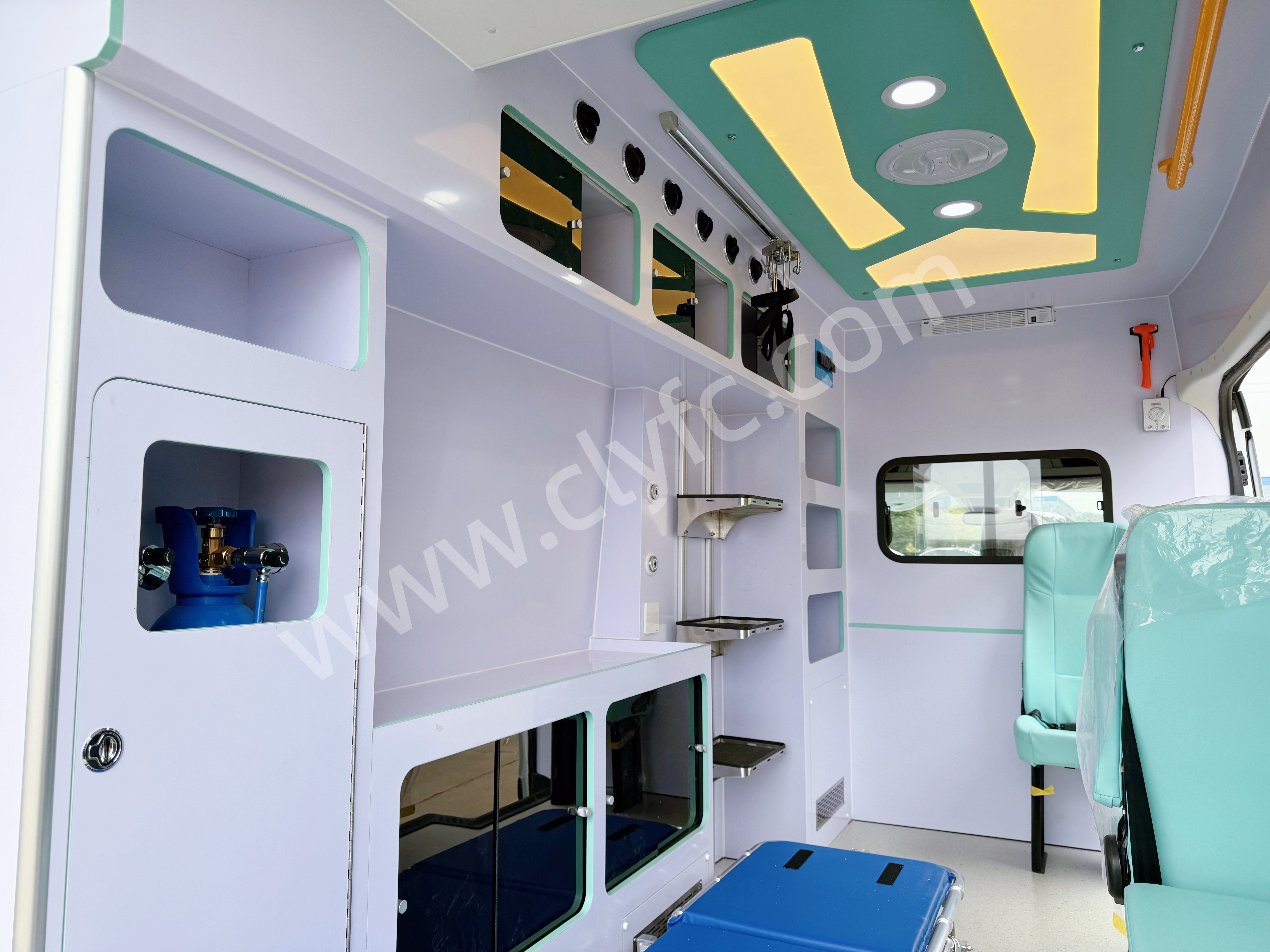
2. Customization and Fast Delivery Cycles Chinese manufacturers operate on a modular design principle. They maintain a stable inventory of standardized aluminum extrusions and cabinetry components, allowing them to customize the interior layout to match a client’s specific clinical requirements without a full redesign. For example, a client requesting a specific configuration for a neonatal transport unit or a mobile surgical theater can receive CAD drawings for approval within 5 business days.
The production cycle is aggressive. Most factories operate on a 30-45 day production lead time for standard configurations, and 60-75 days for highly complex units like mobile CT scanners or intensive care units featuring advanced ventilators and multi-parameter monitors. This speed allows international buyers to respond quickly to public health emergencies or government funding deadlines.
3. Integrated Supply Chain Unlike Western competitors who often outsource the medical fit-out to third-party specialists, leading Chinese manufacturers control the entire process. From the aluminum honeycomb flooring to the installation of the suction units and defibrillators, everything is done under one roof. This vertical integration ensures quality consistency and simplifies warranty claims for the end-user.
For buyers, this means a single point of contact for the entire vehicle lifecycle. Technical support, such as parameter inquiries or spare parts orders, can be directed to a dedicated team. For instance, Hubei Ruitu Technology Co., Ltd. , based at 星光一路, 曾都区, 随州市, 湖北省, operates a dedicated hotline (4006003689) for sales, after-sales, and technical support, ensuring that international clients have direct access to the engineering team without intermediary delays.
Conclusion
The Chinese ambulance export market is no longer a low-cost alternative; it is a strategic procurement option. Through rigorous certification processes, targeted regional partnerships, and a structural cost advantage, Chinese manufacturers are redefining the global standard for emergency medical vehicles. While the brand prestige of European OEMs remains, the value-for-money proposition offered by Chinese builders is compelling enough to win contracts in the most demanding markets. For procurement officers looking to maximize fleet capability within budget constraints, the evidence points toward a sustained shift in sourcing strategy.
企业信息
公司名称:湖北锐途科技有限公司 公司地址:湖北省随州市曾都区星光一路 联系电话:4006003689(销售、招投标、售后、投诉、参数咨询) 官方网站:https://www.clyfc.com 业务邮箱:info@ritumax.com