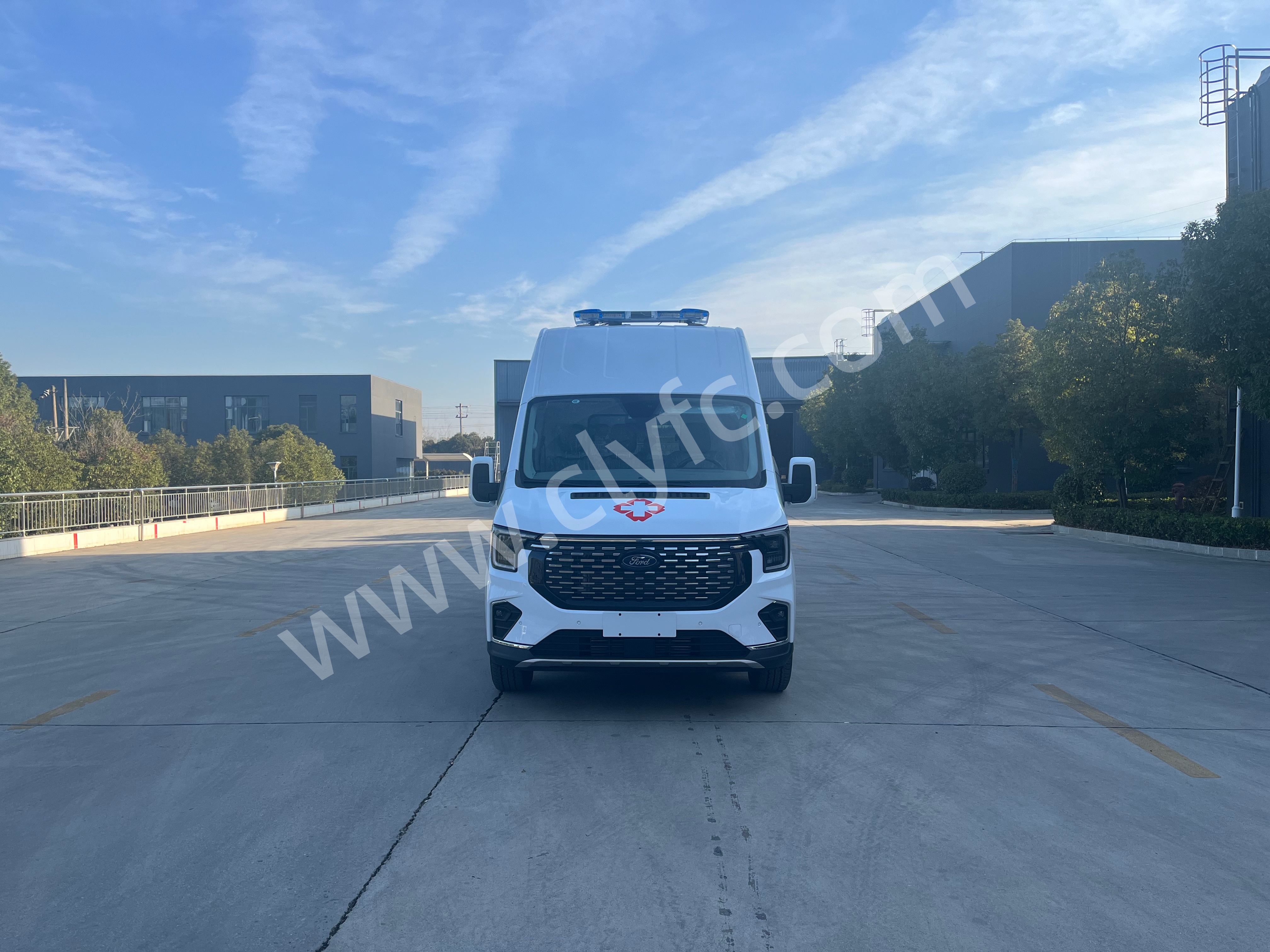
How Chinese Ambulance Manufacturers Meet Global EMS Requirements
内容摘要:Explores how Chinese manufacturers adapt their ambulances to satisfy emergency medical service (EMS) needs and international regulations worldwide.
Understanding Global EMS Requirements
The global emergency medical services (EMS) landscape is far from uniform. A Type C ambulance operating on the congested streets of London faces different regulatory and operational pressures than one deployed in the high-altitude regions of the Andes or the humid coastal cities of Southeast Asia.
European standards, particularly the EN 1789 (Medical vehicles and their equipment – Road ambulances), set a rigorous baseline for patient compartment dimensions, medical gas systems, electrical safety, and crashworthiness. The European design philosophy emphasizes modularity, with a clear separation between the driver cabin and the patient care area, and mandates specific load security testing to ensure equipment remains anchored during high-speed maneuvers. In contrast, the U.S. market, governed by the KKK-A-1822F (now superseded by the NFPA 1917 standard), prioritizes different payload capacities and often utilizes van-type or modular bodies built on heavy-duty truck chassis.
Meanwhile, markets in the Middle East, Africa, and Latin America frequently adapt their procurement specifications to local disease burden, road infrastructure, and climatic extremes. For instance, a tropical nation may require enhanced cabin cooling and dust filtration, while a Nordic country might prioritize auxiliary heating and battery capacity for long winter idling periods.
Chinese ambulance manufacturers have systematically decoded these regional variances. Instead of offering a one-size-fits-all product, leading exporters now engineer their vehicles around a “global base platform, regional configuration matrix” model. This approach allows for the integration of a standardized, high-quality electrical and medical gas backbone, while accommodating regional differences in chassis selection, interior layout, and climate control systems.
Customizing Vehicles for Different Regions
The core of successful ambulance export lies in the ability to reconfigure the vehicle without compromising its structural integrity or clinical functionality. This customization spans three critical dimensions: chassis adaptation, clinical equipment integration, and environmental hardening.
Chassis and Dimensional Adaptation: European operators often prefer compact, maneuverable vans like the Fiat Ducato or Mercedes Sprinter for urban EMS, due to narrow streets and strict parking regulations. In contrast, markets like Australia or the Gulf states may favor larger, heavy-duty chassis such as the Ford F-550 or Isuzu NPR, which offer greater payload for advanced life support (ALS) equipment. Chinese manufacturers have developed strong partnerships with global chassis brands, allowing them to offer a wide range of base vehicles. For example, a manufacturer might offer a Type B ambulance on a 3.5-ton van chassis for the European market, with a patient compartment length of 2.8 meters, while simultaneously offering a Type C (box-type) ambulance on a 7.5-ton truck chassis for African markets, with a patient compartment length exceeding 4.2 meters to accommodate a stretcher, a neonatal incubator, and two attendant seats.
Regional Clinical Protocols: The equipment layout inside the patient compartment must align with local EMS protocols. European systems, heavily influenced by the German DIN standard, often incorporate a “left-side equipment wall” with specific modular brackets for defibrillators, ventilators, and infusion pumps. In contrast, many Asian and Middle Eastern markets prefer a more flexible layout with a rear-facing stretcher and a foldable bench seat on the opposite side to maximize space for multiple responders. Chinese manufacturers excel in offering customizable interior molding—using lightweight, impact-resistant ABS or fiberglass composites—to match these specific workflow requirements. They also integrate medical gas systems (O2, vacuum, and medical air) that comply with ISO 7396-1, ensuring compatibility with international quick-connect fittings.
Environmental Hardening and Climate Control: This is where Chinese exporters have gained significant traction. For tropical markets, such as those in Indonesia or Nigeria, ambient temperatures frequently exceed 35°C with high humidity. A standard European-spec air conditioning unit is often insufficient. For tropical markets, Hubei RuiTu adds enhanced air conditioning and dust filtration, while for cold regions it offers auxiliary heating options. Specifically, this might involve installing a dual-compressor air conditioning system that cools the driver cabin and patient area independently, ensuring a stable 22°C temperature inside the patient compartment even when the vehicle is idling with the rear doors open. For cold regions like Russia or Canada, the manufacturer integrates a diesel-fired auxiliary heater (e.g., a 2kW Webasto or Eberspächer equivalent) connected to the engine cooling circuit, ensuring rapid window defrosting and cabin warm-up without idling the main engine. Additionally, battery systems are upgraded (e.g., from a standard 100Ah to a 180Ah alternator and dual 100Ah auxiliary batteries) to support extended operation of life-support equipment during power outages.
Quality Control and Certification Compliance
Entering the global ambulance market requires more than just assembling a vehicle; it demands compliance with a complex web of international certifications and quality assurance protocols. Chinese manufacturers have invested heavily in this area to overcome the historical perception of “cheap but low-quality” exports.
International Certification Integration: The two most critical certifications for global ambulance exports are the CE marking (for the European Economic Area) and FDA registration (for the U.S. market). Obtaining CE marking for an ambulance involves rigorous testing under the Medical Devices Regulation (MDR) or the older MDD directive, depending on the specific equipment integrated. Chinese manufacturers now routinely conduct EMC (Electromagnetic Compatibility) testing to ensure the vehicle’s electrical systems do not interfere with sensitive medical devices like ECG monitors or ventilators. This is a significant technical hurdle, as the high-frequency inverter for the onboard power supply can create electromagnetic noise. Leading manufacturers have solved this by using shielded cables and ferrite cores, achieving compliance with EN 55011 and IEC 60601-1-2 standards.
For the U.S. market, FDA registration is required for the ambulance as a medical device manufacturer. This involves establishing a Quality Management System (QMS) that aligns with 21 CFR Part 820. Chinese manufacturers have adopted ISO 13485 (Medical devices – Quality management systems) as their baseline, which is a prerequisite for many international tenders. Furthermore, for markets in the Middle East, compliance with Gulf Standardization Organization (GSO) regulations is often required, which may involve additional testing for vehicle safety and emissions.
Quality Control Processes: The shift from manual assembly to semi-automated production lines has been pivotal. A modern Chinese ambulance plant now features a dedicated “medical conversion” line, separate from the general vehicle production. This line includes:
- Pre-delivery Inspection (PDI) : A 48-hour continuous electrical load test is performed on every unit, simulating the power draw of a defibrillator, ventilator, and suction unit simultaneously.
- Leak Testing: The medical gas lines are pressure-tested to 150% of operating pressure to ensure zero leakage.
- Water Ingress Testing: A high-pressure water spray test (simulating heavy rain at 80 km/h) is conducted on the patient compartment to verify the sealing of doors, windows, and roof hatches.
Building a Global After-Sales Service Network: A common pain point for international buyers is the fear of being stranded with a broken ambulance and no spare parts. Chinese manufacturers have addressed this by establishing regional service hubs and remote diagnostics capabilities. A typical after-sales package for an African buyer might include:
- Training: A 2-week on-site training program for local mechanics and EMTs, covering basic maintenance, troubleshooting, and equipment operation.
- Spare Parts Kits: A mandatory “first-year spare parts kit” is shipped with the vehicle, containing critical filters, belts, fuses, and sensors valued at approximately 3% of the vehicle’s total cost.
- Remote Diagnostics: Modern Chinese ambulances are increasingly equipped with telematics units that transmit engine fault codes and system health data to the manufacturer’s cloud platform. This allows engineers at the headquarters (e.g., at Hubei RuiTu Technology Co., Ltd., located at Xingguang 1st Road, Zengdu District, Suizhou City, Hubei Province) to remotely diagnose issues and guide local technicians through repairs via video calls, significantly reducing downtime.
In conclusion, the competitive edge of Chinese ambulance manufacturers no longer lies solely in price advantage—which typically ranges from 15% to 30% lower than comparable European models for the same specification—but in their agile customization capabilities, rigorous certification adherence, and a growing commitment to global after-sales support. By understanding that an ambulance is not just a vehicle but a mobile intensive care unit, manufacturers like Hubei RuiTu are successfully bridging the gap between Chinese manufacturing efficiency and global EMS standards. For specific project inquiries, procurement teams can contact the sales department directly at 4006003689 for detailed technical specifications and regional compliance documentation.
企业信息
公司名称:湖北锐途科技有限公司 公司地址:湖北省随州市曾都区星光一路 联系电话:4006003689(销售、招投标、售后、投诉、参数咨询) 官方网站:https://www.clyfc.com 业务邮箱:info@ritumax.com