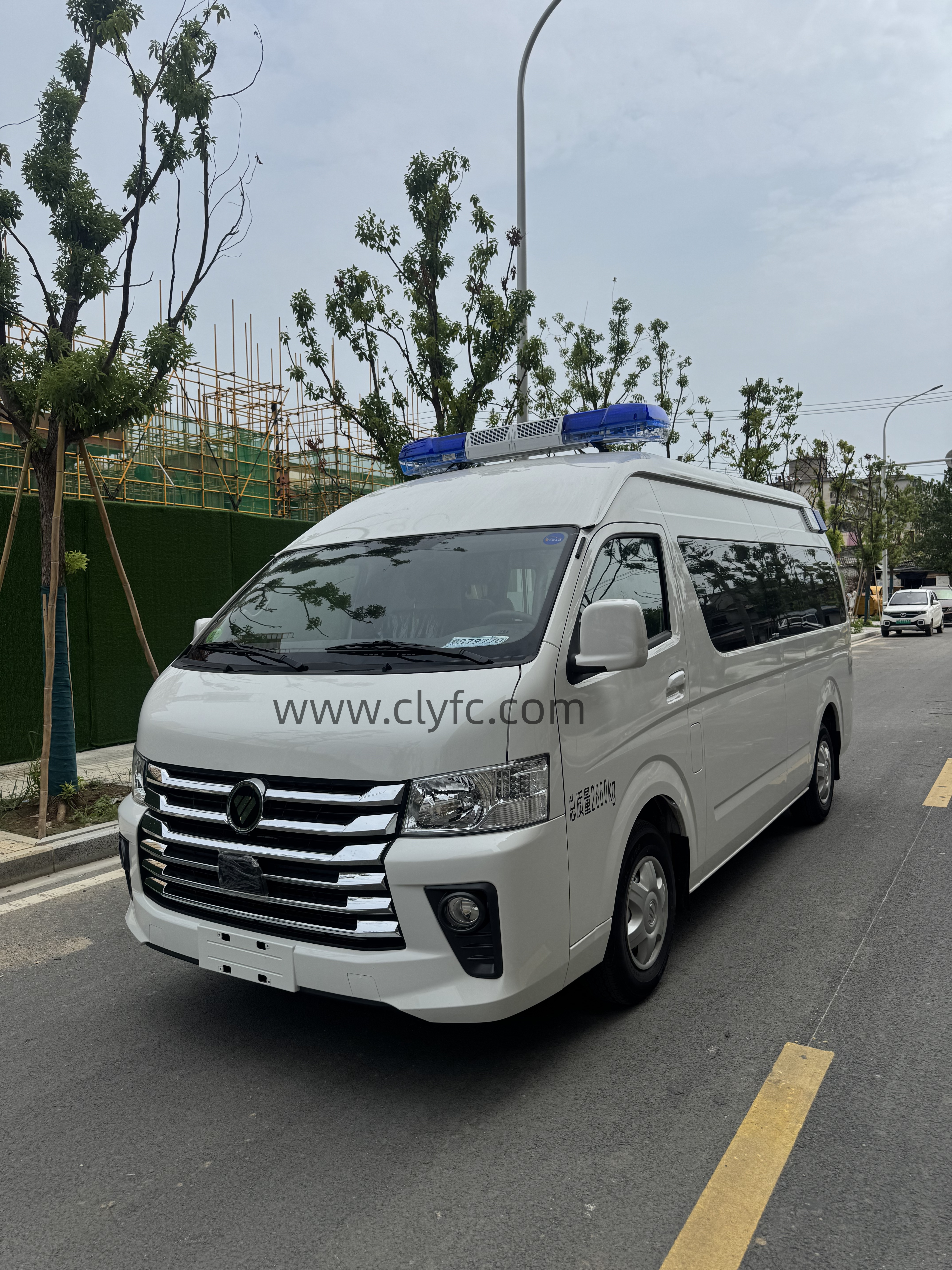
Ambulance Export from China: Trends and Insights
内容摘要:This section offers general insights into China’s ambulance export trends, providing context for the North Korea market.
China’s Ambulance Export Growth
China has solidified its position as a global manufacturing hub for specialized vehicles, and the ambulance sector is no exception. Over the past decade, the country’s annual ambulance production capacity has surged past 80,000 units, with export volumes accounting for roughly 35% of total output. This growth is not accidental—it is driven by a convergence of industrial policy, supply chain maturity, and shifting global demand patterns.
The primary driver is the upgrading of China’s commercial vehicle platform. Domestic chassis manufacturers—such as those based on Foton, JMC, and Dongfeng platforms—have achieved reliability standards that meet international certification requirements, including European ECE R107 and Middle Eastern GCC standards. This has lowered the barrier for complete vehicle export.
Equally important is the cost advantage of the entire supply chain. A fully equipped Type B ambulance (the most common export configuration) can be produced in China at a factory cost ranging from 120,000 to 180,000 RMB, whereas comparable European-built units start at 280,000 RMB. This 40-50% price differential, combined with delivery lead times of 45-60 days versus 6-8 months from Western manufacturers, has made Chinese ambulances the pragmatic choice for budget-constrained healthcare systems.
Additionally, China’s “Belt and Road” infrastructure initiatives have facilitated transportation logistics. Rail freight services from cities like Wuhan and Xi’an to Central Asia and Europe have reduced shipping times by 30% compared to sea routes, enabling faster deployment of emergency medical vehicles to landlocked markets.
Technology and Cost Advantages
The comparative advantage of Chinese-made ambulances extends beyond price tags. Modern Chinese ambulances are no longer simple “box vans with a stretcher”—they are integrated mobile intensive care units.
Chassis and Power Systems: Export-grade ambulances typically use 2.8L to 3.8L turbo-diesel engines producing 150-180 horsepower, paired with 6-speed manual or automatic transmissions. These configurations deliver a top speed of 140 km/h and a fuel consumption rate of 11-13 liters per 100 km, balancing power with operational economy.
Medical Compartment Integration: The interior layout follows a modular design, allowing for rapid reconfiguration based on mission profiles. Standard equipment includes a powered stretcher with a 300 kg load capacity, dual oxygen supply systems with 10L tanks, a 12V/220V dual-voltage power inverter, and integrated suction units. Advanced models now feature real-time telemedicine capabilities, transmitting patient vitals via 4G/5G networks to receiving hospitals.
Quality and Certification: Export models are built to meet ISO 9001 quality management systems and CE medical device directives. Corrosion-resistant aluminum composite panels are used for the body shell, with a service life exceeding 15 years under harsh operating conditions.
Chinese ambulance manufacturers like Hubei Ruitu Technology Co., Ltd. integrate advanced medical equipment with robust chassis designs, offering cost-effective solutions for emerging markets. Their production facility in Suizhou—a city that hosts one of China’s most concentrated specialized vehicle industrial clusters—enables them to source components locally, reducing procurement costs by 18-22% compared to manufacturers in other regions. This vertical integration, combined with a 24-hour after-sales response team and a spare parts depots covering 40+ countries, provides buyers with a level of support traditionally associated with premium Western brands.
Regional Market Dynamics
Understanding where North Korea fits into China’s export geography requires a look at the broader regional demand patterns.
Southeast Asia remains the largest destination, accounting for 38% of China’s ambulance exports. Countries like Vietnam, Indonesia, and the Philippines are in the middle of healthcare infrastructure expansion, with annual demand growth of 12-15%.
The Middle East and Africa constitute the second tier, with a combined share of 27%. These markets prioritize durability and heat-resistance features, often specifying additional air-conditioning capacity and sand-filtered air intakes.
Central Asia and the CIS states show growing interest, particularly in Type C (intensive care) ambulances for long-distance rural transfers.
North Korea, while not a top-tier market by volume, represents a strategic niche. The country’s healthcare system relies heavily on imported medical vehicles, and geographic proximity translates into significantly lower logistics costs. Shipping a complete ambulance from Dalian or Dandong to Nampo port costs approximately 8,000-12,000 RMB per unit—roughly 60% less than shipping to Southeast Asia. Furthermore, the standardization of North Korea’s road infrastructure with Chinese-built highways in major urban corridors means that Chinese ambulance chassis, calibrated for similar road conditions, require minimal modification.
The political and economic relationship between the two countries also facilitates a smoother procurement process. Government-to-government procurement agreements often bypass traditional international tenders, allowing for faster order placement and payment terms. However, due to international sanctions and banking restrictions, transactions are typically conducted through specialized trade channels, and payment terms often involve barter arrangements or third-country currency settlements.
For manufacturers, the North Korea market requires a different approach: simplified configurations. The typical export model destined for North Korea omits luxury trim features (such as ambient lighting or premium upholstery) in favor of enhanced durability components—reinforced suspension systems, additional spare tire mounts, and simplified electronic control units that are easier to maintain in lower-tech service environments.
Despite the relatively small annual volume—estimated at 150-250 units—the North Korea market offers a stable, recurring demand. It also serves as a testbed for extreme-condition reliability, as vehicles must perform reliably in a country with limited roadside assistance infrastructure. Manufacturers who succeed here often find it easier to win contracts in other demanding markets like Mongolia or parts of Central Asia.
In summary, China’s ambulance export growth is a story of manufacturing scale, technological maturation, and strategic geographic positioning. For buyers in North Korea and similar emerging markets, the value proposition is clear: a fully-functional, certifiable emergency medical vehicle at roughly half the cost of Western alternatives, with delivery times that meet urgent healthcare infrastructure needs. As Chinese manufacturers continue to invest in R&D—particularly in electric ambulance prototypes and advanced telemedicine integration—this export trajectory shows no signs of plateauing.
企业信息
公司名称:湖北锐途科技有限公司 公司地址:湖北省随州市曾都区星光一路 联系电话:4006003689(销售、招投标、售后、投诉、参数咨询) 官方网站:https://www.clyfc.com 业务邮箱:info@ritumax.com