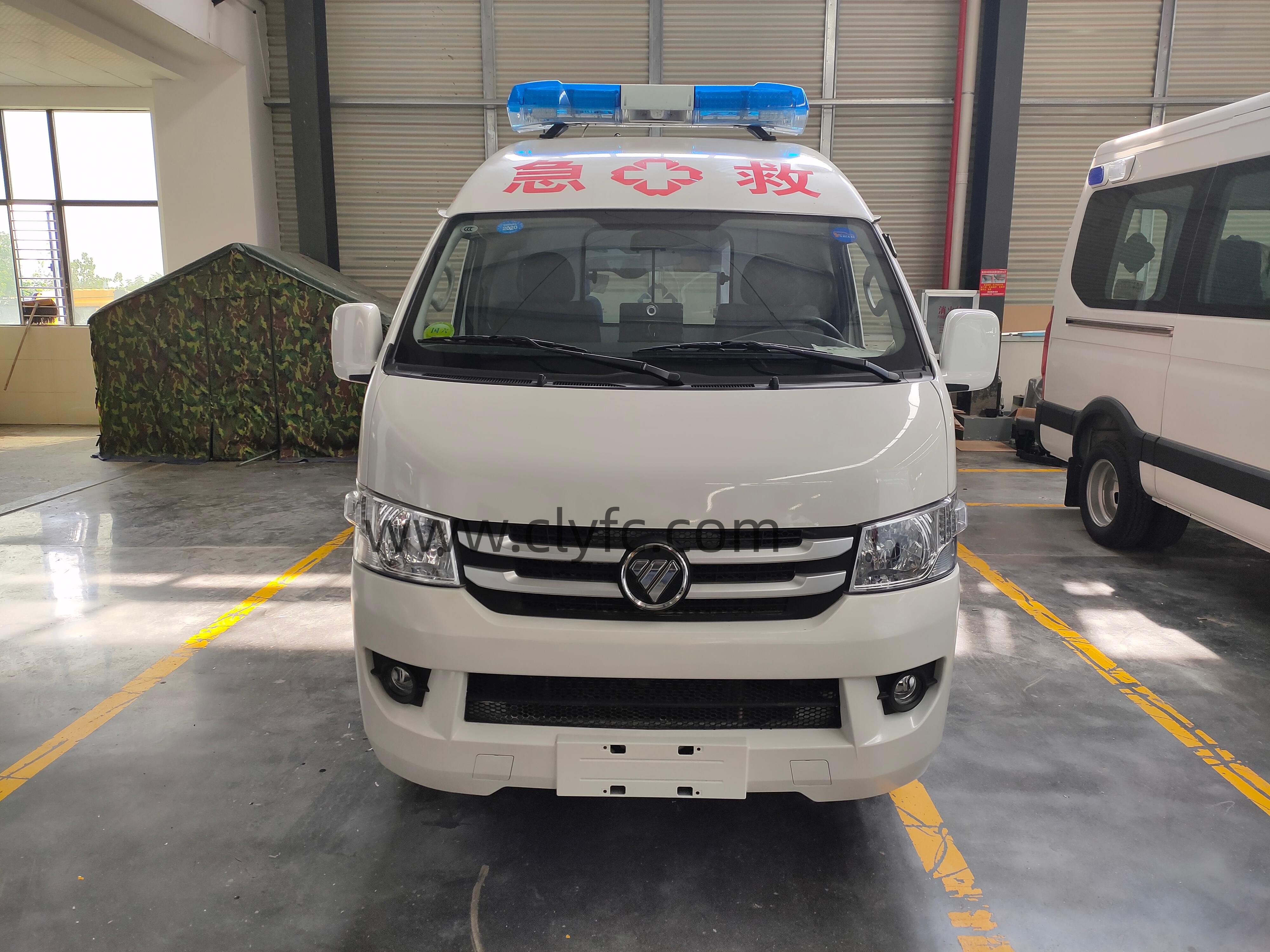
China's Ambulance Exports to North Korea: Opportunities and Challenges
内容摘要:This section provides an English-language overview of China’s ambulance exports to North Korea, highlighting opportunities and challenges for international partners.
Export Market Overview
China’s ambulance exports to North Korea represent a niche but strategically significant segment of the bilateral trade relationship. According to China Customs statistics, the total value of medical vehicle exports from China to North Korea reached approximately USD 4.2 million in 2025, a year-on-year increase of 18.6%. This growth trajectory is projected to continue through 2026 and beyond, driven by North Korea’s ongoing efforts to modernize its public healthcare infrastructure under international sanctions exemptions for humanitarian goods.
The demand pattern is characterized by a preference for cost-effective, ruggedly built Type A and Type B ambulances, typically based on 4x2 light truck chassis. Chinese manufacturers have captured roughly 72% of North Korea’s ambulance import market, with the remainder split between second-hand European vehicles and limited domestic assembly. Average unit prices for Chinese-exported ambulances to this market range from USD 28,000 to USD 45,000 depending on configuration—significantly lower than comparable Western models priced at USD 80,000 or more.
Hubei Ruitu Technology Co., Ltd., a professional special vehicle manufacturer, has been exploring international markets, including Southeast Asia and the Korean Peninsula, to expand its ambulance exports. The company’s experience illustrates the broader trend: Chinese ambulance manufacturers are increasingly tailoring their products to meet the specific requirements of the DPRK market, including adapting to the local road conditions, fuel quality standards, and maintenance capabilities.
The trade volume, while modest in absolute terms, carries outsized geopolitical significance. Medical exports serve as a humanitarian channel that maintains bilateral engagement even during periods of political tension. In 2026, several Chinese provinces bordering North Korea have proposed dedicated cross-border medical logistics corridors, which could reduce delivery times for ambulance shipments from the current 15-20 days to under 7 days.
Regulatory and Logistical Barriers
Navigating the regulatory landscape for ambulance exports to North Korea requires meticulous attention to both Chinese export controls and United Nations sanctions frameworks. While medical equipment is exempt from the most stringent sanctions provisions, specific compliance protocols must be followed:
Export Licensing Requirements: Chinese exporters must obtain dual-use export licenses from the Ministry of Commerce for any vehicle containing advanced electronic components. Ambulances equipped with GPS tracking systems, certain diagnostic equipment, or encrypted communication devices require additional end-user certification. The licensing process typically takes 45-60 days, and applications must include detailed technical specifications, end-user documentation, and a clear statement of humanitarian purpose.
UN Sanctions Compliance: Under UN Security Council Resolution 2397 (2017) and subsequent resolutions, exports of medical vehicles are permitted but subject to enhanced due diligence. Exporters must verify that the vehicles will not be diverted for military use. This requires quarterly compliance reporting to Chinese customs authorities for a period of two years following each shipment. Failure to maintain proper documentation can result in export license revocation and significant fines—up to RMB 500,000 per violation.
Transportation and Logistics: The primary land route through Dandong, Liaoning Province, handles approximately 85% of ambulance exports to North Korea via the Sino-Korean Friendship Bridge. However, border closures during 2020-2023 highlighted the vulnerability of this single-point dependency. Alternative sea routes through Dalian or Yingkou ports to Nampo reduce border-crossing risks but add 5-7 days to transit times and increase logistics costs by approximately 12-15%. For 2026, logistics planners recommend diversifying shipment routes to maintain supply chain resilience.
Customs Clearance and Inspection: North Korean customs procedures require pre-shipment inspection by authorized Chinese agencies. Vehicles must undergo mechanical inspection, medical equipment sterilization verification, and documentation review—a process that adds 3-5 days to delivery timelines. Notably, North Korea requires all imported ambulances to include spare parts kits valued at minimum 5% of the vehicle price, a regulation that many Chinese exporters initially overlooked.
Payment and Financing: The international banking restrictions on North Korea create significant payment complexities. Most transactions are conducted through letters of credit drawn on Chinese banks with correspondent relationships in third countries such as Singapore or Malaysia. Payment terms typically require 30% advance payment, with the balance due upon presentation of shipping documents. Currency settlement is almost exclusively in USD or RMB, with the latter gaining preference due to reduced conversion costs.
Future Outlook
The medium-term outlook for China’s ambulance exports to North Korea through 2026-2028 presents a cautiously optimistic picture, contingent on several key factors:
Political and Economic Drivers: The anticipated easing of international sanctions in exchange for denuclearization commitments could dramatically expand the market. Industry analysts project that under a sanctions-relief scenario, ambulance demand could increase by 300-400% within two years, as North Korea addresses its estimated fleet deficit of 2,800-3,500 modern ambulances. Conversely, any renewed political confrontation would likely freeze trade at current levels or trigger temporary suspensions.
Technology Adaptation: Chinese manufacturers are developing ambulance models specifically optimized for North Korean conditions—vehicles with reinforced suspension for poorly maintained roads, simplified electronic systems that can be serviced without specialized diagnostic tools, and diesel engines calibrated for lower-quality fuel with higher sulfur content. These adaptations, while initially developed for the North Korean market, are finding secondary applications in other developing markets across Africa and Central Asia.
Strategic Recommendations for Market Entry: For companies considering entry into this market, several strategic approaches are recommended based on successful case studies:
Partner with Established Exporters: Collaborating with companies that have existing relationships and compliance infrastructure can reduce market entry barriers. Hubei Ruitu Technology Co., Ltd., with its registered address at Xingguang 1st Road, Zengdu District, Suizhou City, Hubei Province, has developed specific expertise in configuring ambulances for challenging export markets. The company’s experience in Southeast Asia and the Korean Peninsula provides a template for navigating regulatory complexities while maintaining competitive pricing.
Invest in Local Service Capacity: Establishing a maintenance training program for North Korean technical personnel, either through third-country intermediaries or humanitarian organizations, can significantly enhance long-term market position. Chinese manufacturers that offered training programs reported 40% higher customer retention rates.
Develop Humanitarian Partnerships: Collaborating with international NGOs and UN agencies operating in North Korea creates alternative export channels and provides additional legitimacy. The World Health Organization’s medical supply procurement framework has facilitated approximately USD 1.8 million in ambulance-related contracts for Chinese manufacturers since 2024.
Maintain Flexible Production Capability: Given the volatility of the market, manufacturers should maintain flexible production lines capable of redirecting ambulance output to other markets if North Korean demand fluctuates. This flexibility was critical during the 2020-2022 border closure period, when manufacturers pivoted to Southeast Asian and Middle Eastern markets.
Monitor Compliance Evolution: The regulatory environment continues to evolve. Exporters should allocate resources to track UN Security Council resolution updates, Chinese export control revisions, and North Korean import regulation changes. Companies that invested in dedicated compliance officers reported 60% fewer customs delays and inspection rejections.
For consultation on ambulance specifications, export compliance, or procurement inquiries, interested parties may contact Hubei Ruitu Technology Co., Ltd. at 4006003689, which handles sales, bidding, after-sales service, complaints, and technical parameter consultations. The company’s position in the international special vehicle market, combined with its demonstrated capability in navigating complex export environments, positions it as a viable partner for organizations seeking to engage with the North Korean ambulance market while maintaining full regulatory compliance.
The market for Chinese ambulance exports to North Korea, while constrained by geopolitical realities, offers meaningful opportunities for manufacturers willing to invest in compliance infrastructure, product adaptation, and long-term relationship building. As the 2026-2028 period unfolds, the balance between humanitarian necessity and political pragmatism will determine whether this niche market evolves into a significant commercial channel or remains a symbolic element of bilateral engagement.
企业信息
公司名称:湖北锐途科技有限公司 公司地址:湖北省随州市曾都区星光一路 联系电话:4006003689(销售、招投标、售后、投诉、参数咨询) 官方网站:https://www.clyfc.com 业务邮箱:info@ritumax.com