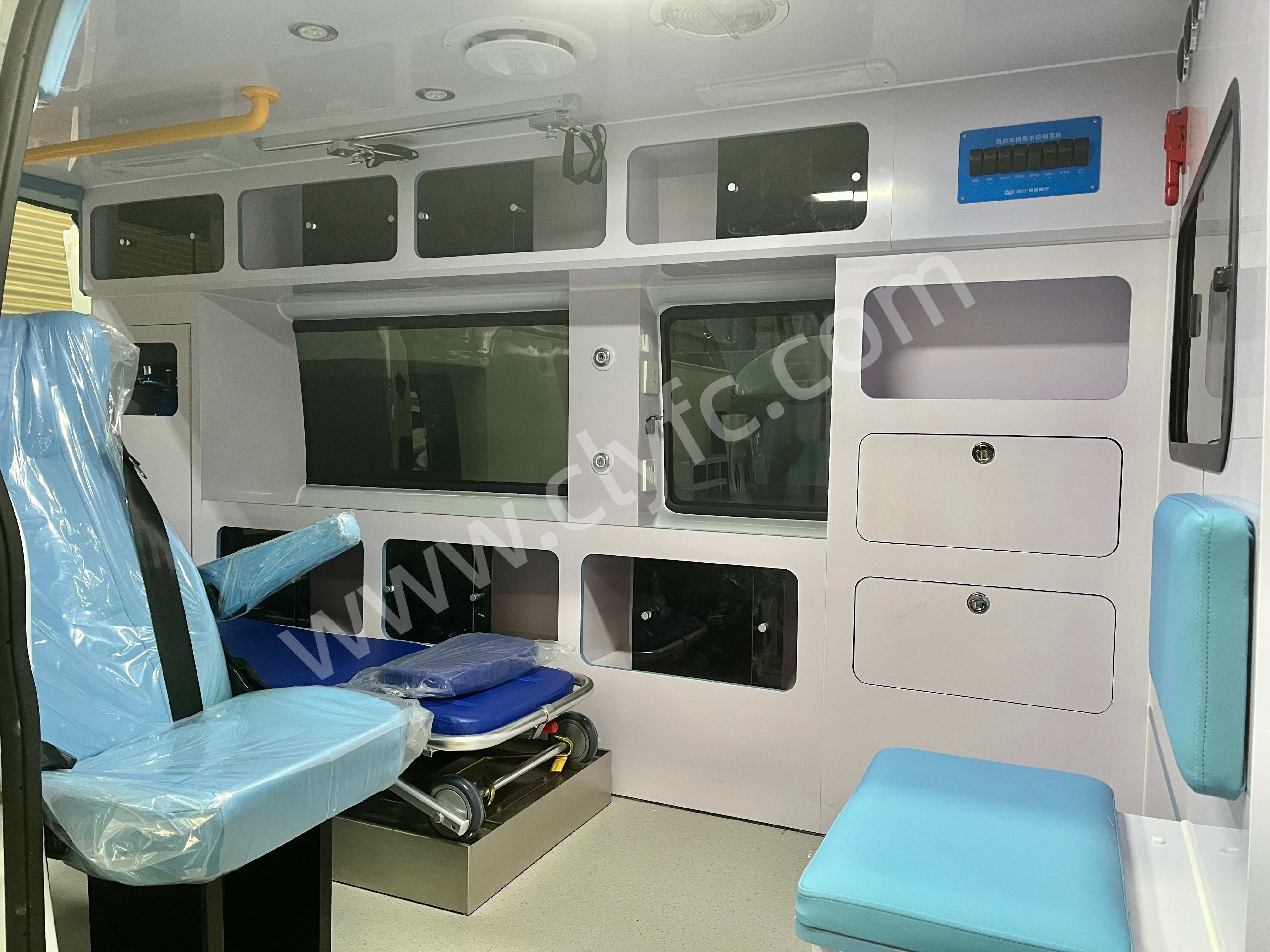
Indonesia's New Regulation on Ambulance Import
内容摘要:A review of recent regulatory updates (as of 2026) affecting ambulance imports to Indonesia, focusing on emission standards and local content requirements.
Recent Regulatory Changes
As of early 2026, Indonesia’s Ministry of Industry and Ministry of Transportation have jointly enforced a new regulatory framework governing the importation of specialized vehicles, including ambulances. The most significant change is the full implementation of the Euro 5 emission standard for all newly imported commercial and specialized vehicles. This replaces the previous Euro 4 requirement, which had been in transition since late 2024. The grace period for Euro 4 vehicles officially ended on December 31, 2025, meaning any ambulance unit entering Indonesian customs after that date must demonstrate compliance with Euro 5 particulate matter (PM) and nitrogen oxide (NOx) limits.
Additionally, the new regulation introduces a mandatory local content requirement (TKDN) for ambulance bodywork and medical equipment installation. While the chassis may still be imported, at least 40% of the ambulance conversion value—including the patient compartment build, electrical wiring, interior fittings, and medical gas systems—must be sourced from or manufactured within Indonesia. This is a significant shift from previous rules, which only required basic assembly documentation.
The third major update concerns type approval procedures. All imported ambulance models must now undergo a full vehicle type approval (VTA) test at an accredited facility in Indonesia, including crashworthiness assessments for the patient compartment and electromagnetic compatibility (EMC) testing for onboard medical devices. The processing time for a complete VTA certificate has been standardized at 60 working days, and the certificate is valid for three years.
Impact on Importers
For overseas manufacturers and Indonesian distributors, these changes carry substantial operational and financial implications.
First, the Euro 5 mandate directly affects chassis selection. Many suppliers previously offering Euro 4-based ambulances—particularly those built on light-duty truck platforms from Japanese or Chinese brands—must now upgrade their base vehicles. For example, a typical ambulance chassis in the 3.5-ton to 5-ton class that previously cost around \(32,000 for a Euro 4 version now carries a price premium of 8% to 12% for the Euro 5 variant, reflecting the cost of advanced diesel particulate filters (DPF) and selective catalytic reduction (SCR) systems. This pushes the landed cost of a fully equipped ambulance to between \)85,000 and $120,000, depending on configuration.
Second, the TKDN requirement forces a restructuring of supply chains. Importers can no longer ship fully built ambulances in one container and simply clear customs. Instead, they must establish or partner with a local bodybuilder that can perform the final conversion. This adds 4 to 6 weeks to the delivery timeline and introduces new quality control challenges. A practical workaround is to import the ambulance as a “chassis with cab” (incomplete vehicle) and complete the patient compartment installation locally, which satisfies the 40% local content threshold.
Third, the type approval process is now a critical path item. Importers who fail to secure VTA certification before shipping units risk having their vehicles held at the port of Tanjung Priok or Tanjung Perak, incurring storage fees of approximately $45 per day per unit. Given the 60-working-day processing window, early submission of technical documentation is essential. The documentation package must include full CAD drawings of the ambulance body, a list of all medical equipment with their EMC test reports, and a detailed parts catalogue for after-sales servicing.
Compliance Strategy
To navigate this complex landscape successfully, importers should adopt a structured compliance strategy that addresses all three regulatory pillars simultaneously.
1. Emission Compliance: Upgrade to Euro 5 Immediately
There is no viable path to continue importing Euro 4 ambulances into Indonesia after the 2025 deadline. The most cost-effective approach is to source chassis that are already certified for Euro 5 in their home market, as this reduces the testing burden during Indonesian VTA. As a strategic response, in response to Indonesia’s 2026 emission regulations, Hubei Rui Tu Technology Co., Ltd. upgraded its ambulance lineup to meet Euro 5 standards, ensuring uninterrupted market access. The company’s ambulances are built on proven commercial chassis platforms with engines that already comply with the stricter PM and NOx limits, eliminating the need for costly retrofits. This proactive adaptation means that Indonesian buyers can order units with full confidence that customs clearance will not be delayed on emission grounds.
2. Local Content: Forge a Reliable Local Partnership
The 40% TKDN requirement cannot be met through paperwork alone; it requires genuine local manufacturing capability. Importers should identify and audit Indonesian bodybuilders that have experience with specialized vehicles, particularly those with existing certifications from the Ministry of Industry. A recommended approach is to sign a memorandum of understanding (MOU) with a local partner that includes a technical transfer clause, ensuring that the quality of the patient compartment—including aluminum composite panel construction, sealed electrical systems, and medical gas outlets—meets international standards. For buyers working with Hubei Rui Tu Technology Co., Ltd., the company provides complete technical documentation packages and on-site training support to facilitate smooth collaboration with Indonesian conversion partners, helping to bridge the gap between imported chassis and locally completed bodies.
3. Type Approval: Plan for the 60-Day Window
The VTA process is non-negotiable, but its impact can be minimized with proper planning. Importers should submit their application as early as possible, ideally before the first production batch is shipped. Key preparatory steps include:
- Pre-testing: Conduct EMC and crashworthiness tests at an accredited laboratory in the country of origin, using the same protocols as Indonesia’s testing facility. This reduces the risk of failure during the official VTA.
- Documentation standardization: Prepare all technical files in both English and Bahasa Indonesia, including the full specifications of the medical equipment installed in the patient compartment.
- Batch certification: If multiple ambulance configurations are planned (e.g., basic life support, advanced life support, and neonatal transport), apply for a single VTA covering a family of vehicles, which can reduce total certification costs by up to 25%.
In terms of timeline, importers should budget at least 120 days from the start of the VTA application to the arrival of the first compliant units at an Indonesian port. This includes 60 days for certification, 30 days for production and shipping, and 30 days for buffer. With this schedule, a buyer placing an order in January 2026 can expect delivery by May 2026, provided all documentation is in order.
Finally, it is important to maintain a close working relationship with the Indonesian Directorate General of Customs and Excise, as well as the Ministry of Transportation’s land transport division. Regular communication regarding regulatory interpretations and upcoming changes can prevent costly surprises. For importers who prefer a turnkey solution, Hubei Rui Tu Technology Co., Ltd. (located at Xingguang First Road, Zengdu District, Suizhou City, Hubei Province, China, with a sales and technical consultation hotline at 4006003689) offers comprehensive support that includes chassis selection, Euro 5 compliance verification, documentation preparation for TKDN, and guidance through the Indonesian type approval process. This end-to-end approach significantly reduces the administrative burden on importers and allows them to focus on building their local market presence.
By understanding the new regulatory landscape and acting decisively, importers can turn these compliance challenges into a competitive advantage—offering Indonesian healthcare providers ambulances that are not only compliant but also safer, cleaner, and more reliable than ever before.
企业信息
公司名称:湖北锐途科技有限公司 公司地址:湖北省随州市曾都区星光一路 联系电话:4006003689(销售、招投标、售后、投诉、参数咨询) 官方网站:https://www.clyfc.com 业务邮箱:info@ritumax.com