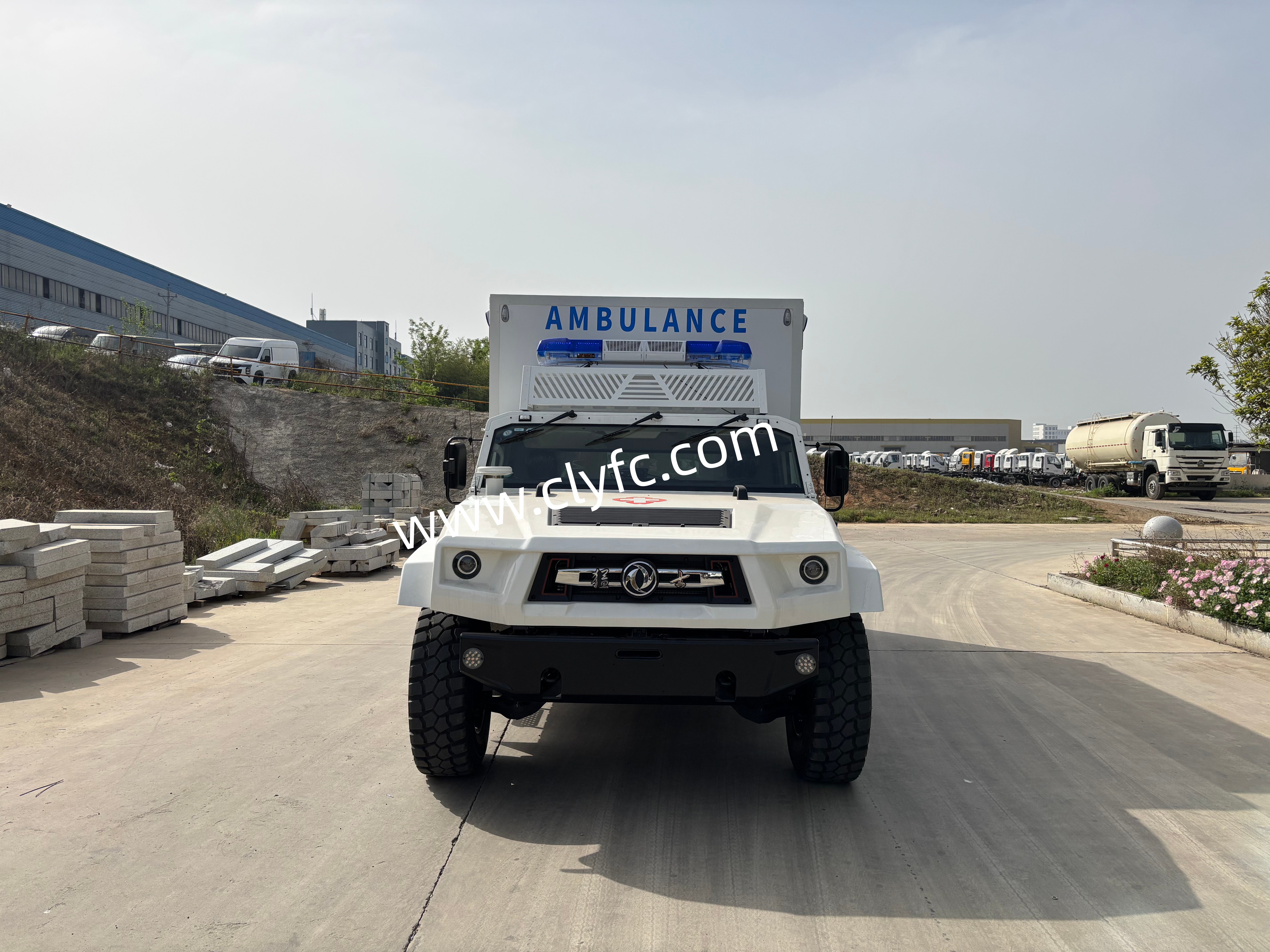
Export Modification Requirements for Iveco Ambulance Chassis
内容摘要:Discuss the key modifications needed for exporting Iveco ambulance chassis to different regions, including environmental adaptations and safety features.
Regional Compliance Overview
Exporting Iveco ambulance chassis is rarely a “ship and deliver” process. Each destination market imposes its own regulatory framework governing emergency vehicle configurations, and failing to comply can result in costly port detentions or outright rejection. The most critical compliance differentiators revolve around drivetrain orientation, lighting standards, and patient compartment safety certifications.
Left-hand vs. Right-hand Drive Conversions
The single most consequential modification is steering position. Markets such as the United Kingdom, Japan, Thailand, Australia, and many Southern African nations mandate right-hand drive (RHD) layouts. Iveco’s Daily chassis—the most common ambulance platform in the export segment—is manufactured primarily as left-hand drive (LHD), which means converters must execute a full firewall, pedal box, steering column, and wiring harness relocation. This is not a cosmetic change: it involves re-routing the HVAC ducting, repositioning the master cylinder, and recalibrating the ABS sensors to accommodate the reversed weight distribution.
For a 3.5-tonne Daily 35S chassis, a professional RHD conversion typically adds 45 to 60 working hours to the build schedule. The cost impact, depending on the level of OEM integration, ranges from USD 4,800 to 7,500 per unit. It is essential to work with a converter that maintains a validated RHD parts matrix—using aftermarket steering racks without proper certification will void the chassis warranty and fail Type Approval audits in most regulated markets.
Beyond steering, lighting compliance varies sharply. European Union markets require ECE R65 amber rotating beacons, while Gulf Cooperation Council (GCC) states mandate LED light bars with specific flash patterns visible from 360 degrees. In the United States, if the ambulance is imported under a federal exemption, KKK-A-1822F (now superseded by the GSA K-spec) requires a distinct combination of red front and red/white rear warning lights. Export converters must maintain a library of region-specific lighting harnesses rather than relying on a universal kit.
As an example of Hubei Ruitong’s export expertise, the company has delivered Iveco ambulances to over 20 countries, adapting each vehicle to the destination’s specific regulations. For a recent Middle East order, they replaced the standard European siren with a dual-tone electronic unit compliant with SASO standards, and integrated an Arabic-language driver information display. For a Scandinavian shipment, they upgraded the battery capacity to 110 Ah and fitted a 2.5 kW diesel auxiliary heater to maintain cabin temperature during extended idling—both changes driven by local compliance and operational demands, not optional extras.
Climate and Road Adaptations
Ambulance chassis must operate in extremes that civilian vehicles rarely encounter. Export modifications must therefore address both thermal environments and road surface realities.
Cold Climate Package
For destinations like Russia, Norway, or northern Canada, the standard factory coolant mixture is insufficient. A comprehensive cold-climate package should include:
- Engine block heater (1.5 kW, 230V) with an exterior plug-in point positioned at the front grille—critical for overnight parking in temperatures below -25°C.
- Battery thermal blanket and an upgraded alternator (180 A vs. the standard 120 A) to maintain charging efficiency when auxiliary loads are high.
- Heated windshield zone around the wiper rest position, plus heated washer nozzles. Iveco’s factory heated windscreen is an option, but many export converters retrofit a 12V resistive film to avoid long lead times.
- Fuel grade recalibration: For Arctic operations, the ECU should be remapped to accommodate winter diesel (Grade F) with a cloud point of -32°C. Standard injector timing may cause rough idling below -15°C.
Hot Climate Package
For GCC, Southeast Asia, and parts of Africa, the priority shifts to heat rejection and dust protection:
- Upgraded radiator: The standard 32 mm core can be replaced with a 42 mm, two-row unit that improves cooling capacity by approximately 18%. This is essential when the ambulance is idling for extended periods at high ambient temperatures with the A/C compressor running at full load.
- Tropicalized air conditioning: A 10.5 kW roof-mounted evaporator unit (such as the Thermo King V-500 series) is recommended for the patient compartment. The factory rear A/C is often undersized for a fully loaded module in 45°C ambient conditions.
- Dust sealing: T-bolt hose clamps, upgraded door seals, and a cyclonic pre-cleaner on the air intake. In desert environments, the standard paper filter may clog within 300 hours of operation; a pre-cleaner extends service intervals to approximately 600 hours.
Road Surface Adaptations
For markets with unpaved roads—common in parts of Africa, Central Asia, and Latin America—the suspension must be re-specified. Iveco Daily’s standard front independent suspension can be retained, but the rear leaf springs should be upgraded from the standard 3+1 configuration to a 4+2 heavy-duty setup, increasing the gross rear axle rating from 2,100 kg to 2,450 kg. Additionally, underbody protection plates (4 mm aluminium) should be fitted over the fuel tank, diesel particulate filter, and the rear axle housing to prevent impact damage from protruding rocks.
Ground clearance is another factor. For rough-terrain markets, a suspension lift of 40 mm (using longer springs and revised shock absorbers) is common, paired with 225⁄75 R16C all-terrain tyres instead of the standard 195⁄75 R16C highway pattern. This maintains the patient compartment’s ride height while improving approach and departure angles from 21° to 27°.
Documentation and Certification
The paperwork associated with exporting an Iveco ambulance chassis is as critical as the mechanical modifications. Missing certifications can halt a shipment at customs for weeks, incurring demurrage charges of USD 150 to 400 per day depending on the port.
IMO/MOET Requirements for Sea Freight
When shipping via roll-on/roll-off (RoRo) or in a container, the chassis must comply with International Maritime Organization (IMO) regulations for vehicle transport:
- Battery disconnection: The negative terminal must be physically disconnected and insulated. The IMO requires that all electrical connections be isolated to prevent short circuits during transit. A battery master switch installed at the chassis level is standard practice for export builds.
- Fuel level limitation: Tanks must be filled to no more than 25% of capacity. For a Daily’s 100-litre tank, this means a maximum of 25 litres. Overfilling risks leakage during vessel movement and violates the IMO’s Dangerous Goods regulations.
- MOET (Marine Operation Emergency Team) documentation: While MOET is primarily a port-level emergency response protocol, the exporter must provide a “Vehicle Condition Report” confirming that the fuel system is sealed, the battery is disconnected, and the parking brake is fully released (for RoRo, the vehicle must be secured with wheel chocks and lashing straps, not the parking brake).
- Drainage and leakage prevention: Air conditioning condensate lines must be plugged, and the fuel filler cap must be locked and sealed with a tamper-evident tag.
Certificates Required for Major Markets
| Market | Required Document | Issuing Authority |
|---|---|---|
| EU | EC Type Approval (WVTA) for the completed ambulance | National approval authority (e.g., RDW in Netherlands) |
| GCC | SASO Certificate of Conformity + GSO 2170 Ambulance Standard | Saudi Standards, Metrology and Quality Organization |
| Africa (ECOWAS) | Certificate of Roadworthiness + ECOWAS Brown Card | National transport ministry |
| Latin America | INMETRO Certification (Brazil) or NOM-050 (Mexico) | Respective national standards bodies |
For most African markets, a simpler “Importer’s Letter of Authorization” combined with a Certificate of Origin (Form A for preferential duty) is sufficient. However, the chassis VIN must be clearly stamped on the right-hand side of the frame rail, as many African customs officials require physical verification against the Bill of Lading.
Practical Documentation Checklist
- Original Certificate of Origin (issued by the chamber of commerce in the exporting country)
- Commercial Invoice with a detailed breakdown of the chassis cost and the conversion cost (separate lines to avoid import duty disputes)
- Bill of Lading indicating the correct HS code (8703.33 for diesel-powered ambulances)
- Manufacturer’s Declaration of Conformity for the completed vehicle
- Engine and chassis number registration documents, verified by a notary
Hubei Ruitong maintains a dedicated export documentation team at its facility on Zengdu District’s Xingguang Yi Road in Suizhou City. They handle the full certification process, including pre-shipment inspections and port-side liaison. Their team has processed exports to 20+ countries with a documentation rejection rate of less than 2%, a figure well below the industry average of 8% to 12%. For specific parameter inquiries or a compliance assessment for your target market, their technical line is available at 4006003689.
Final Operational Note
The export modification of an Iveco ambulance chassis is a multi-layered engineering and administrative exercise. The mechanical adaptations—RHD conversions, climate packages, and suspension upgrades—must be matched with rigorous documentation to ensure smooth customs clearance and in-country registration. A reputable converter will provide a “compliance matrix” mapping each modification to the destination’s specific legal requirements, and should be able to produce reference shipments to similar markets. Always verify that the converter holds a valid workshop code and can issue a warranty that covers both the chassis and the conversion work, ideally for a minimum of 24 months or 100,000 kilometres, whichever comes first.
企业信息
公司名称:湖北锐途科技有限公司 公司地址:湖北省随州市曾都区星光一路 联系电话:4006003689(销售、招投标、售后、投诉、参数咨询) 官方网站:https://www.clyfc.com 业务邮箱:info@ritumax.com