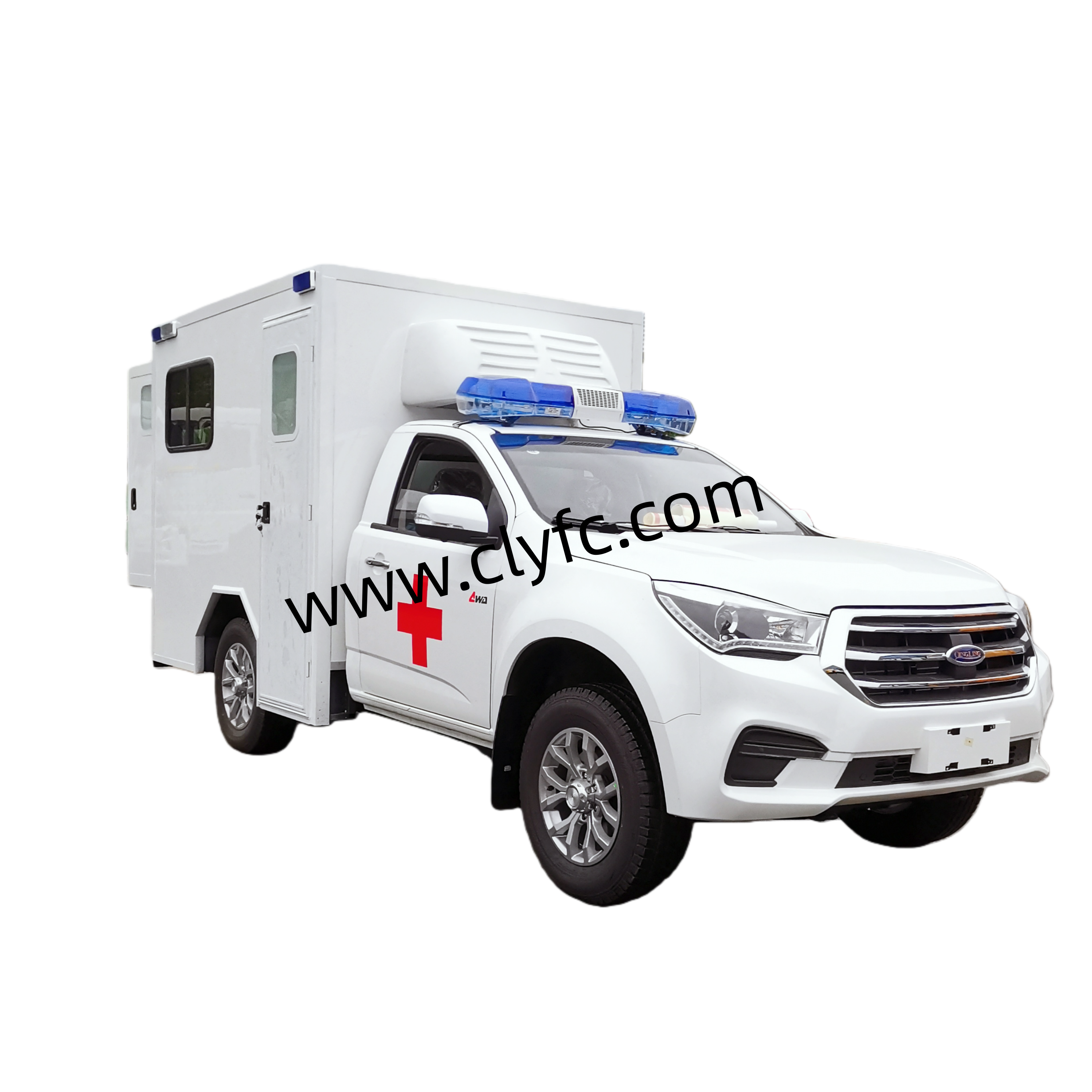
Export Ambulance Specifications and Price Guide: CE Certified Models
内容摘要:An English-language reference for international buyers, covering CE certification requirements, medical equipment packages, and indicative pricing for exported ambulances.
Understanding CE Certification for Ambulances
For any ambulance intended for the European market, CE certification is not optional—it is a legal prerequisite for registration and operation. The certification process for ambulances is complex because a finished ambulance is classified as a medical device (Class IIa or IIb) in addition to being a motor vehicle. This dual classification means manufacturers must comply with both automotive type-approval and medical device regulations simultaneously.
The essential CE directives governing ambulance manufacturing include:
- Medical Device Regulation (MDR) 2017⁄745: This is the overarching framework for the medical equipment installed in the patient compartment. It covers everything from the stretcher and oxygen supply system to the defibrillator mounting and suction units.
- Directive 2014/45/EU (Periodic Roadworthiness Testing): While not a CE directive per se, it sets the technical requirements for vehicle inspection, including the secure mounting of medical equipment.
- EN 1789:2020: This is the harmonized European standard specifically for medical vehicles and their equipment. It classifies ambulances into Type A (patient transport), Type B (emergency ambulance), and Type C (mobile intensive care unit), each with distinct equipment and performance requirements.
- Directive 2006/42/EC (Machinery Directive): Applies to specific powered medical devices installed within the ambulance, such as hydraulic lift systems for stretchers.
- ECE R.10 (Electromagnetic Compatibility): Critical for ambulances given the high density of electronic medical equipment that must not interfere with vehicle systems.
A critical point for international buyers: CE certification is issued to the manufacturer, not the vehicle. This means the entity that assembles the ambulance and integrates the medical equipment holds the certification responsibility. When sourcing from China, buyers should verify that the manufacturer holds valid CE certificates for the specific base model and configuration being purchased.
Hubei Ruitu Technology Co., Ltd., based in the Suizhou special vehicle industrial cluster, offers CE-certified ambulance models with customized equipment packages, catering to EU and Middle East markets. Their certification documentation covers both the vehicle body conversion and the integrated medical systems, which simplifies the import and registration process for overseas buyers.
Standard Medical Equipment Configurations
Ambulance configurations are typically segmented into three tiers. Understanding the differences is essential for matching the vehicle to your operational requirements and budget.
Standard Configuration (Type A – Patient Transport)
This is the entry-level configuration designed for non-emergency patient transfers and basic medical support. A typical standard package includes:
- Patient compartment: One stretcher with a 150 kg load capacity, foldable attendant seat, and basic storage cabinets.
- Medical gas system: One oxygen cylinder holder (2×10L capacity) with flowmeter and oxygen outlet.
- Lighting and electrical: Internal LED lighting, 12V/220V inverter system (1000W), and external flashing lights meeting ECE R65 standards.
- Basic monitoring: One portable pulse oximeter and a manual resuscitator.
- HVAC: Independent air conditioning unit for the patient compartment.
Indicative price range: \(28,000 – \)42,000 depending on the base chassis (typically a van or light truck chassis).
Advanced Configuration (Type B – Emergency Ambulance)
The Type B configuration is the most commonly procured for emergency medical services. It adds significant medical capability and operational safety features:
- Patient compartment: Powered stretcher with 200 kg capacity and electric lift, two attendant seats with seat belts, and a sealed floor with anti-slip surface.
- Medical gas system: Dual oxygen outlets (2×10L cylinders), a medical air outlet, and a vacuum suction unit with collection canister.
- Monitoring and life support: A 12-lead ECG monitor, defibrillator (with AED mode), infusion pump (2-channel), and a transport ventilator.
- Electrical system: 2000W inverter, auxiliary battery bank (200Ah), and external power hookup (230V).
- Communication: Integrated intercom system between driver and attendant, plus a public address system.
Indicative price range: \(48,000 – \)68,000 depending on chassis type (typically a medium van or light truck) and the specific medical device brands specified.
Mobile ICU Configuration (Type C – Mobile Intensive Care Unit)
The highest specification, Type C is a fully equipped intensive care unit on wheels. It is designed for critical care transport and inter-hospital transfers of unstable patients.
- Patient compartment: Powered stretcher with 250 kg capacity, multi-position backrest, and full patient access from three sides. The compartment is designed for a minimum of two medical attendants working simultaneously.
- Medical gas system: Central oxygen supply (4×10L cylinders), medical air, and a high-flow vacuum system with two suction points.
- Full critical care equipment: Advanced multi-parameter monitor (ECG, SpO2, NIBP, EtCO2, invasive pressure), a critical care ventilator with multiple ventilation modes, syringe pumps (4 channels), infusion pumps (2 channels), a blood warmer, and a portable ultrasound unit (optional).
- Power and environment: 3000W inverter, 400Ah auxiliary battery bank, diesel-powered auxiliary heater, and a positive pressure ventilation system for infection control.
- Additional features: Pneumatic suspension for patient comfort, rear air suspension with kneeling function, and reinforced floor anchoring for heavy equipment.
Indicative price range: \(85,000 – \)130,000 depending on the base chassis (typically a heavy van or light-duty truck) and the level of equipment customization.
Price Range for Export Ambulances
Pricing for export ambulances varies significantly based on three primary factors: the base chassis brand and model, the medical equipment package tier, and the level of customization required.
Base Chassis Options and Their Impact on Price
The chassis typically accounts for 40–50% of the total vehicle cost. Common chassis choices for export ambulances include:
| Chassis Type | Typical Models | Base Chassis Cost (USD) | Recommended Configuration |
|---|---|---|---|
| Compact van | Ford Transit, Mercedes Sprinter (short wheelbase) | \(35,000 – \)45,000 | Type A |
| Medium van | Mercedes Sprinter (long wheelbase), Iveco Daily | \(42,000 – \)55,000 | Type A or B |
| Light truck | Foton, Dongfeng, JMC (4×2) | \(28,000 – \)38,000 | Type B or C |
| Heavy van/truck | Mercedes Atego, Iveco Eurocargo (or Chinese equivalents) | \(55,000 – \)75,000 | Type C |
Full Vehicle Price Summary
The following price ranges reflect the complete ready-to-use ambulance, including the body conversion, medical equipment integration, CE certification documentation, and standard export packaging (rust protection, wooden crating for spare parts):
- Type A (Standard): \(28,000 – \)42,000
- Type B (Advanced): \(48,000 – \)68,000
- Type C (Mobile ICU): \(85,000 – \)130,000
These prices are FOB (Free On Board) from major Chinese export ports such as Shanghai or Guangzhou. Buyers should note that the final price can vary by ±10% depending on specific medical device brand preferences (e.g., choosing between European brands like Weinmann or Chinese brands like Mindray for monitoring equipment), interior material upgrades, and the inclusion of options such as a reversing camera, 360-degree parking sensors, or a rear lift gate instead of a manual ramp.
Additional Cost Considerations
- Shipping and logistics: Ocean freight to the Middle East typically ranges from \(3,500 to \)6,000 per unit; to Europe, \(4,000 to \)7,000, depending on the port and container type (usually 40HQ).
- Customs duties and taxes: Vary by destination country. GCC countries typically impose 5% import duty; EU countries apply the standard vehicle import duty of 10%, plus VAT.
- Certification and homologation in the destination country: While CE certification covers EU requirements, some non-EU markets (e.g., Saudi Arabia, UAE) require additional SASO or GCC conformity certification, which can add \(2,000 – \)5,000 per model for documentation and testing.
- Spare parts and after-sales support: A recommended initial spare parts kit (consumables, filters, bulbs, fuses) costs approximately \(800 – \)1,500 per vehicle.
Procurement Recommendations for International Buyers
When budgeting for an ambulance purchase, consider the total cost of ownership, not just the initial acquisition price. A well-configured Type B ambulance with a reputable chassis should provide 10–15 years of service life with proper maintenance. Chinese manufacturers, particularly those in the Suizhou special vehicle cluster, offer significant cost advantages—typically 20–35% lower than equivalent European-built ambulances—while maintaining compliance with international standards.
For buyers seeking a balance of certification reliability, customization flexibility, and competitive pricing, it is advisable to work directly with manufacturers who have demonstrated export experience and can provide comprehensive documentation packages. Hubei Ruitu Technology Co., Ltd. has established export processes for CE-certified ambulances, including pre-shipment inspection reports, complete technical files, and model-specific certification copies that facilitate smooth customs clearance and local registration. Their sales team can be reached at 4006003689 for configuration guidance and current quotations across all three ambulance tiers.
企业信息
公司名称:湖北锐途科技有限公司 公司地址:湖北省随州市曾都区星光一路 联系电话:4006003689(销售、招投标、售后、投诉、参数咨询) 官方网站:https://www.clyfc.com 业务邮箱:info@ritumax.com