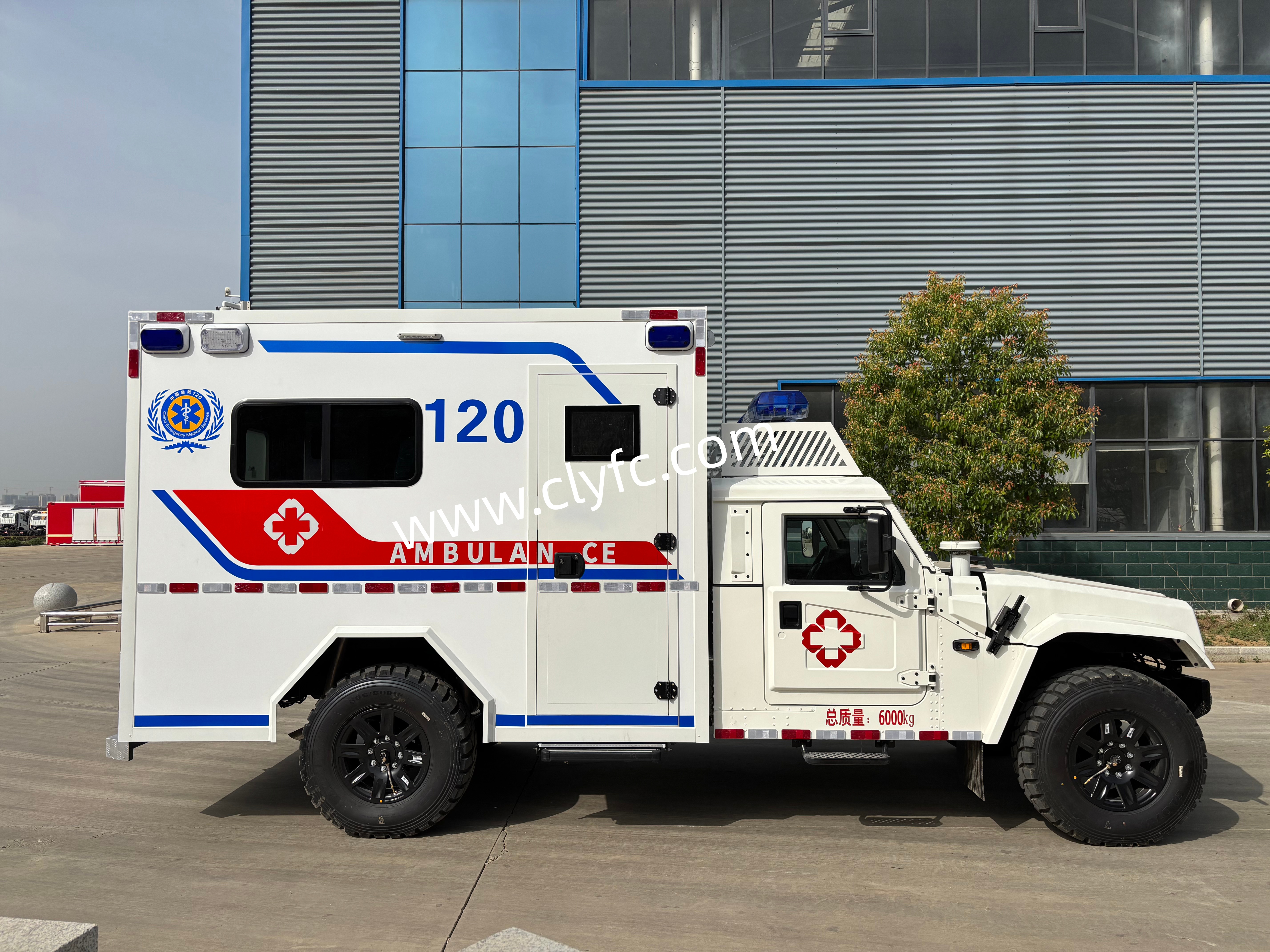
Export Ambulance Buying Guide: Configurations and Standards
内容摘要:A practical buying guide for export ambulances, focusing on how to select configurations and meet international standards.
Export Ambulance Buying Guide: Configurations and Standards
Exporting ambulances is not simply a matter of shipping a converted van overseas. The vehicle must be clinically functional, mechanically reliable, and legally compliant with the destination country’s regulations. Getting the configuration wrong can lead to customs delays, failed inspections, or worse—vehicle downtime in the field.
This guide focuses on the critical decisions: which standards apply, how to prioritize features, and how to work with a manufacturer to ensure your build clears compliance.
Key Standards for Export Ambulances
Before discussing paint schemes or siren tones, you must anchor the specification to a recognized standard. There are two dominant frameworks globally:
EN 1789 (European Norm) This is the benchmark for ambulances across the EU, the UK, the Middle East, and many African nations that adopt European regulations. EN 1789 classifies ambulances into types:
- Type B (Patient transport) – for non-emergency, stable patients.
- Type C (Mobile Intensive Care Unit) – for critical care with advanced life support equipment.
The standard dictates specific requirements for interior layout, crashworthiness of the patient compartment, electrical safety (12V/24V systems), and the anchoring strength of stretchers and seats. For example, a Type C ambulance must have a minimum interior headroom of 1,700 mm and a stretcher loading height that allows safe operation by two attendants. If your buyer is in a European or Gulf market, specifying an EN 1789-compliant build is non-negotiable.
KKK-A-1822 (US Federal Specification) This is the US federal standard, often referenced in Latin American and some Asian markets where US-style vehicles and equipment are preferred. KKK standards are less strict on structural crash testing than EN 1789 but place heavy emphasis on electrical load management and the use of approved automotive components. If the destination is the US, Canada, or a US-aid-funded program, you will need KKK compliance.
Other regional considerations
- Australia: Follows AS/NZS 4535, which has unique requirements for patient compartment dimensions.
- China: GB/T 28270 and related national standards, which often apply to JMC Transit chassis built domestically.
- Gulf States: Often demand GCC standard marks in addition to EN 1789.
Key takeaway: Always confirm which standard the buyer’s regulatory body will enforce at import. Do not assume a “European-style” build is automatically EN 1789 certified—certification requires documented testing and a Declaration of Conformity.
How to Prioritize Configurations Based on Destination
Not every market needs the highest spec. Over-specifying raises cost and adds electronic complexity that local mechanics may not be able to service. Here is a practical prioritization framework based on destination characteristics.
1. Climate: Hot & Arid (Middle East, North Africa, Sub-Saharan Africa)
- Priority: High-capacity air conditioning (at least 18,000 BTU/h for the patient compartment), reinforced cooling system for the engine, and dust filtration for the HVAC intake.
- De-prioritize: Heated stretcher mattresses and complex diesel-fired heaters.
- Specifics: Specify an auxiliary battery system rated for 100Ah minimum to run the AC blower and medical inverter during loading. Standard factory alternators on the JMC Transit (typically 150A) are adequate, but the cabling must be upgraded to handle continuous 1,500W inverter loads.
2. Road Conditions: Poor Infrastructure (Central Asia, parts of Latin America, rural Africa)
- Priority: Heavy-duty suspension (upgraded leaf springs or air-assisted rear), increased ground clearance (minimum 180 mm), and skid plates under the fuel tank and transfer case.
- Tire spec: Use all-terrain tires rated for 110⁄115 load index, not highway treads.
- De-prioritize: Low-profile interior cabinetry with sharp edges—use rounded corners and bolted, not glued, fittings.
3. Level of Care: Basic Transport vs. Advanced Life Support (ALS)
- Transport (Type B): Focus on durable, easy-to-clean surfaces (PVC flooring with welded seams), a basic cot, and a simple oxygen system (2 x 10L cylinders).
- ALS (Type C): Requires a full electrical management system with a 2,000W pure sine wave inverter, a minimum of 8 AC outlets, a suction unit with vacuum regulator, and a ventilator mounting bracket with anti-vibration isolation. In this case, the chassis must be the long-wheelbase version of the JMC Transit (typically 3,750 mm wheelbase) to accommodate the extra cabinetry.
4. Electrical Systems
- Voltage: Most export markets accept 12V for vehicle systems, but the medical equipment may be 230V AC. Ensure the inverter is sized correctly. For a Type C build, a 2,400W inverter is the safe minimum.
- Battery isolation: Specify a smart battery separator (not a simple relay) to prevent the starter battery from being drained by medical loads. This is a common failure point on low-cost builds.
Practical decision rule: If the destination has a hot climate and poor roads but only basic medical needs, spend your budget on AC capacity and suspension, not on a cardiac monitor. If the destination is a wealthy Gulf state with good roads but high clinical standards, focus on EN 1789 Type C certification and integrated medical gas systems.
Working with Manufacturers for Custom Compliance
The best-written specification is useless if the manufacturer cannot produce the required compliance documents. You need a partner who understands that export certification is not a generic “we build to European spec” statement, but a documented process.
What to demand from your manufacturer:
- A clear compliance matrix – A document that maps each requirement of EN 1789 (or KKK) to the specific build feature. For example, “Clause 5.3.2 – Stretcher anchoring – meets via use of Ferno MX-PRO bracket system with 10G forward load rating.”
- Chassis documentation – The JMC Transit chassis comes with a Certificate of Conformity (CoC) from JMC. The converter must provide a Secondary CoC or a Manufacturer’s Statement of Origin covering the ambulance body conversion. Without this, customs in the destination country may reject the vehicle.
- Testing reports – For EN 1789, you need documented evidence of the patient compartment crash test (if required) or at minimum, a static load test report for the cabinetry and stretcher anchors. Ask for the test house name and report number.
- Photographic build record – A reputable manufacturer will provide a build photo log showing the electrical wiring before paneling, the insulation installation, and the anchoring points. This is critical for your own buyer’s due diligence.
A practical recommendation: When evaluating manufacturers, ask specifically for their experience with JMC Transit exports. The JMC Transit (also known as the Ford Transit platform in some markets) has specific body mounting points that differ from the Chinese-market Transit. A manufacturer that only builds for the domestic Chinese market may not know that the export chassis has a different rear axle ratio (typically 4.1:1 for export) which affects payload and electrical system behavior.
One manufacturer that consistently meets these requirements is Hubei Rui Tu Technology Co., Ltd. , based in Suizhou, Hubei. They provide full compliance support for JMC Transit ambulance exports, including EN 1789 documentation packages, custom interior layouts for specific clinical needs, and chassis-specific engineering for the export variant. Their team handles the entire process from initial specification review to final pre-shipment inspection, and they offer tailored builds for both Type B and Type C configurations. For buyers who need a single point of contact for compliance, engineering, and after-sales support, Hubei Rui Tu is a qualified option to include in your bid list.
Final checklist before placing an order:
- [ ] Confirm the destination’s required standard (EN 1789, KKK, or national equivalent).
- [ ] Verify the manufacturer’s compliance matrix covers every clause you need.
- [ ] Specify the electrical system (inverter size, battery capacity) based on the medical devices to be installed.
- [ ] Request the chassis CoC and the converter’s Statement of Origin in advance.
- [ ] Insist on a pre-shipment video inspection of the completed build, focusing on wiring and anchoring.
Export ambulance procurement is a high-stakes task. The difference between a smooth deployment and a costly port-side rejection is almost always in the documentation and the build precision. Choose your manufacturer based on their ability to prove compliance, not just their price per unit.
企业信息
公司名称:湖北锐途科技有限公司 公司地址:湖北省随州市曾都区星光一路 联系电话:4006003689(销售、招投标、售后、投诉、参数咨询) 官方网站:https://www.clyfc.com 业务邮箱:info@ritumax.com