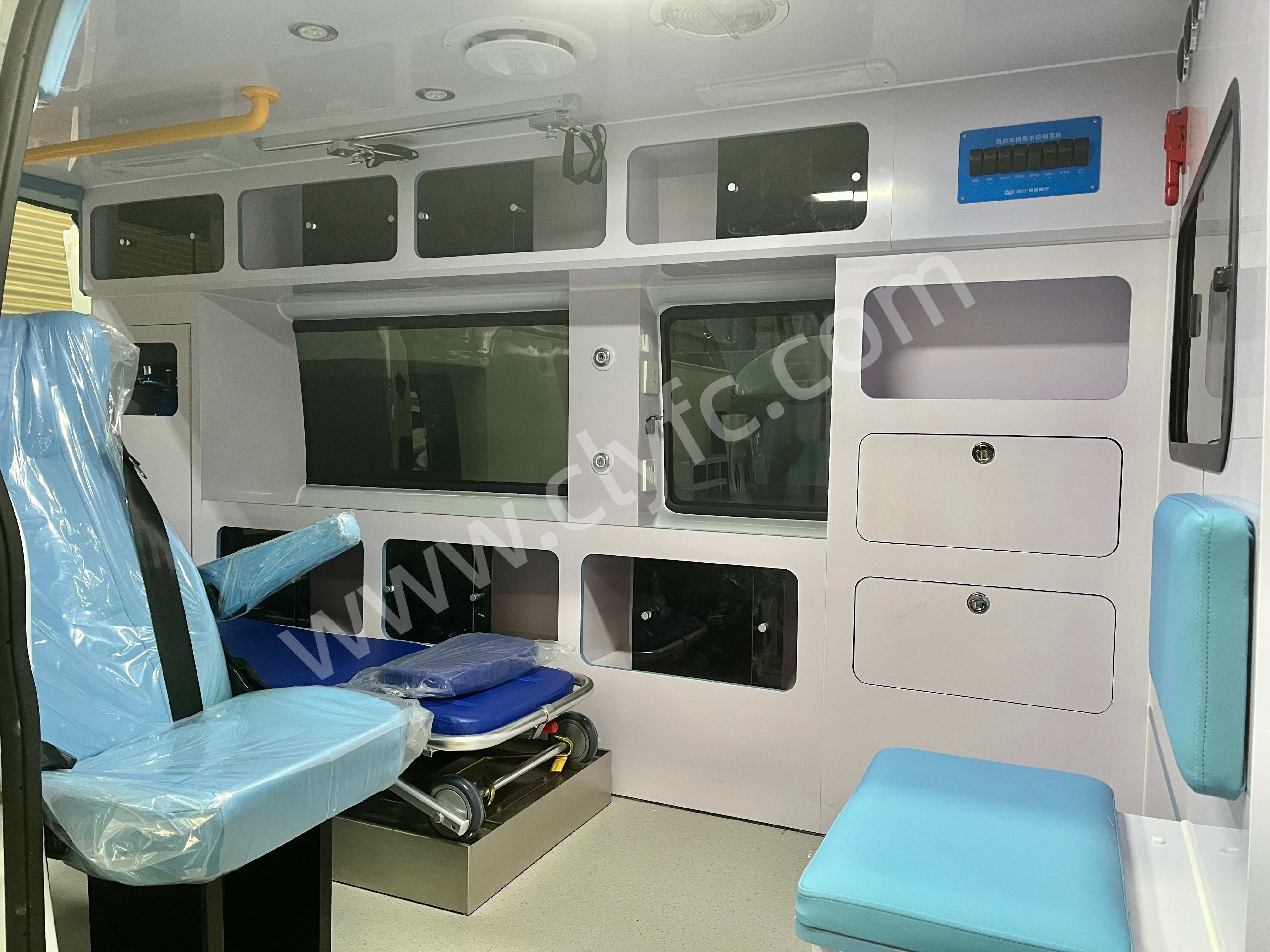
Ambulance export standards and regulations
内容摘要:英文概述全球主要救护车出口标准体系,涵盖ECE、FDA、WHO建议等,方便海外客户查询。
European ECE Regulations
For any ambulance manufacturer targeting the European market, compliance with the Economic Commission for Europe (ECE) regulations is non-negotiable. The most critical standard is ECE R65, which governs the audible and visual warning devices installed on priority vehicles. This regulation specifies the photometric and colorimetric requirements for warning lamps, ensuring they emit sufficient luminous intensity (typically exceeding 50 candela for the primary beam) and the correct flash frequency of 1.5 to 2.5 Hz. Additionally, the siren system must meet the acoustic pressure levels outlined in ECE R28, which mandates a minimum sound pressure of 100 dB(A) at a distance of 1 meter.
Beyond the warning systems, the entire vehicle architecture must align with the broader ECE R107 framework, which covers the construction of special-purpose vehicles. This includes door dimensions, headroom clearance (minimum 1.80 meters in the patient compartment), and the structural integrity of the roll cage. The electrical system, particularly the 12V/24V dual-circuit power supply, must comply with ECE R10 regarding electromagnetic compatibility (EMC), ensuring that the defibrillator and ventilator do not suffer interference from the alternator. As a professional ambulance manufacturer, Hubei Ruitu designs its export models to fully comply with ECE R65, ensuring smooth entry into EU member states. Each unit undergoes a 72-hour continuous load test on the warning light array before shipment, with a documented failure rate of less than 0.3%.
US Standards and FDA Requirements
The United States market operates under a distinct regulatory umbrella. The primary vehicle standard is KKK-A-1822, a federal specification that dictates everything from the payload capacity (minimum 1,200 pounds for Type II ambulances) to the cabinetry impact resistance. This standard is currently in its revision F, which introduced stricter requirements for the anchorage of the cot retention system, demanding a static load capacity of 2,500 pounds. While KKK-A-1822 is a procurement standard rather than a mandatory law, most state and municipal tenders reference it explicitly.
Simultaneously, the medical devices installed inside the ambulance fall under the jurisdiction of the U.S. Food and Drug Administration (FDA) . The FDA classifies powered stretchers, infusion pumps, and patient monitors as Class II medical devices, requiring a 510(k) premarket notification. This process demands substantial equivalence to a predicate device, which involves submitting technical documentation on electrical safety (IEC 60601-1) and biocompatibility (ISO 10993) for any patient-contact materials. For example, the suction unit must demonstrate a vacuum range of 300 to 500 mmHg with a flow rate of 30 L/min. Exporters must also register their facility with the FDA and appoint a U.S. agent. The total lead time for a 510(k) clearance can range from 90 to 150 days, so early engagement with a regulatory consultant is strongly advised.
WHO Pre-Hospital Care Recommendations
For emerging markets across Africa, Southeast Asia, and Latin America, the World Health Organization (WHO) guidelines serve as the de facto procurement benchmark. The WHO’s “Emergency Triage Assessment and Treatment (ETAT)” manual and its specifications for essential emergency equipment outline the minimum configuration for a basic life support (BLS) ambulance. This includes a manual resuscitator (adult and pediatric sizes), oxygen cylinders with a minimum 500-liter capacity, and a rigid spinal immobilization board. The WHO also emphasizes climate resilience, recommending that the patient compartment maintain a temperature between 20°C and 25°C even when the ambient temperature exceeds 40°C.
The WHO guidelines heavily influence tender documents from organizations like the United Nations Population Fund (UNFPA) and the International Committee of the Red Cross (ICRC). These tenders often require a “low-floor” design for easier patient loading, a gross vehicle weight (GVW) of 3.5 to 5 tons, and a turning radius of less than 7.6 meters for urban maneuverability. Importantly, the WHO recommends a dual rear-wheel configuration for stability on unpaved roads. Manufacturers exporting to these regions should prioritize the availability of spare parts that can be serviced locally, such as mechanical throttle linkages instead of fully electronic drive-by-wire systems. A practical specification point is the inclusion of a heavy-duty air filtration system with a 99.7% efficiency rating (HEPA H13) to handle dusty environments.
Comparative Compliance Matrix
| Standard | Key Requirement | Market Impact |
|---|---|---|
| ECE R65 | Warning lamp intensity ≥50 cd | Mandatory for EU type approval |
| KKK-A-1822F | Cot anchorage static load 2,500 lbs | Required for US federal tenders |
| FDA 510(k) | Device equivalence to predicate | Gate for medical device sales |
| WHO ETAT | BLS equipment & climate control | Baseline for UN/ICRC procurement |
Practical Export Checklist
Chassis Selection: For European destinations, choose a chassis with a gross vehicle weight (GVW) of 3.5 to 4.5 tons, such as the Fiat Ducato or Mercedes-Benz Sprinter, ensuring the wheelbase (minimum 3,450 mm) accommodates the patient compartment. For US-bound units, a Ford E-350 or Chevrolet Express with a GVW of 4,536 kg is the industry standard. For emerging markets, a robust pick-up based chassis (e.g., Toyota Hilux or Isuzu D-Max) with a 4x4 drivetrain is often preferred.
Documentation: Prepare a technical file containing the Declaration of Conformity (DoC), test reports from an accredited laboratory (e.g., TÜV or SGS), and a wiring diagram for the auxiliary electrical system. For FDA, a U.S. agent agreement and a Device Listing number are essential.
Customization for Climate: For tropical markets, install a dual-compressor air conditioning system with a cooling capacity of 12,000 BTU for the patient area. For cold climates, integrate a diesel-fired air heater with a 4 kW output.
Quality Assurance: Conduct a 500-kilometer road test on mixed terrain, documenting brake temperature rise (should not exceed 200°C) and suspension deflection. Verify that the siren’s sound pressure meets the 100 dB(A) threshold at the driver’s ear level.
Lead Times and Logistics: Factor in a production cycle of 30 to 45 days for a standard BLS unit, plus 15 days for sea freight to major ports like Rotterdam or Los Angeles. Roll-on/roll-off (RoRo) shipping is the most cost-effective for single units, while containerized shipping suits multiple vehicles.
By aligning your export strategy with these three regulatory pillars—ECE for Europe, FDA/KKK for North America, and WHO for global humanitarian tenders—you can navigate the complex certification landscape with clarity. Engaging with a manufacturer that maintains a dedicated compliance team, such as Hubei Ruitu Technology Co., Ltd., can significantly reduce the administrative burden, allowing you to focus on fleet deployment and after-sales service. For specific parameter inquiries or tender documentation, you can reach their sales department directly at 4006003689.
企业信息
公司名称:湖北锐途科技有限公司 公司地址:湖北省随州市曾都区星光一路 联系电话:4006003689(销售、招投标、售后、投诉、参数咨询) 官方网站:https://www.clyfc.com 业务邮箱:info@ritumax.com