Compliance Guide: International Regulatory Standards for Ambulance Exports
内容摘要:Highlights global regulatory frameworks affecting ambulance exports, including ISO standards, regional certifications, and customs requirements.
ISO Standards Applicable to Ambulance Design
The cornerstone of international ambulance trade is the ISO 1789 standard, which classifies medical vehicles into four distinct categories—A, B, and C—based on the level of patient care they are designed to provide. Type A refers to basic transport units, Type B encompasses emergency medical response vehicles, and Type C represents mobile intensive care units (MICUs) with advanced life-support systems. For exporters, compliance with ISO 1789 is not merely a technical formality; it is the single most decisive factor that determines whether a vehicle can clear customs in over 60 countries that recognize this standard as a mandatory prerequisite.
Beyond ISO 1789, manufacturers must also consider ISO 7396 for medical gas pipeline systems, ISO 10079 for suction equipment integration, and IEC 60601 for the electrical safety of onboard medical devices. A critical nuance often overlooked by first-time exporters is that ISO certification applies to the vehicle conversion itself, not just the base chassis. This means the ambulance body builder—not merely the chassis manufacturer—must hold a valid ISO 13485 (medical device quality management) or equivalent certification to validate the medical compartment’s compliance.
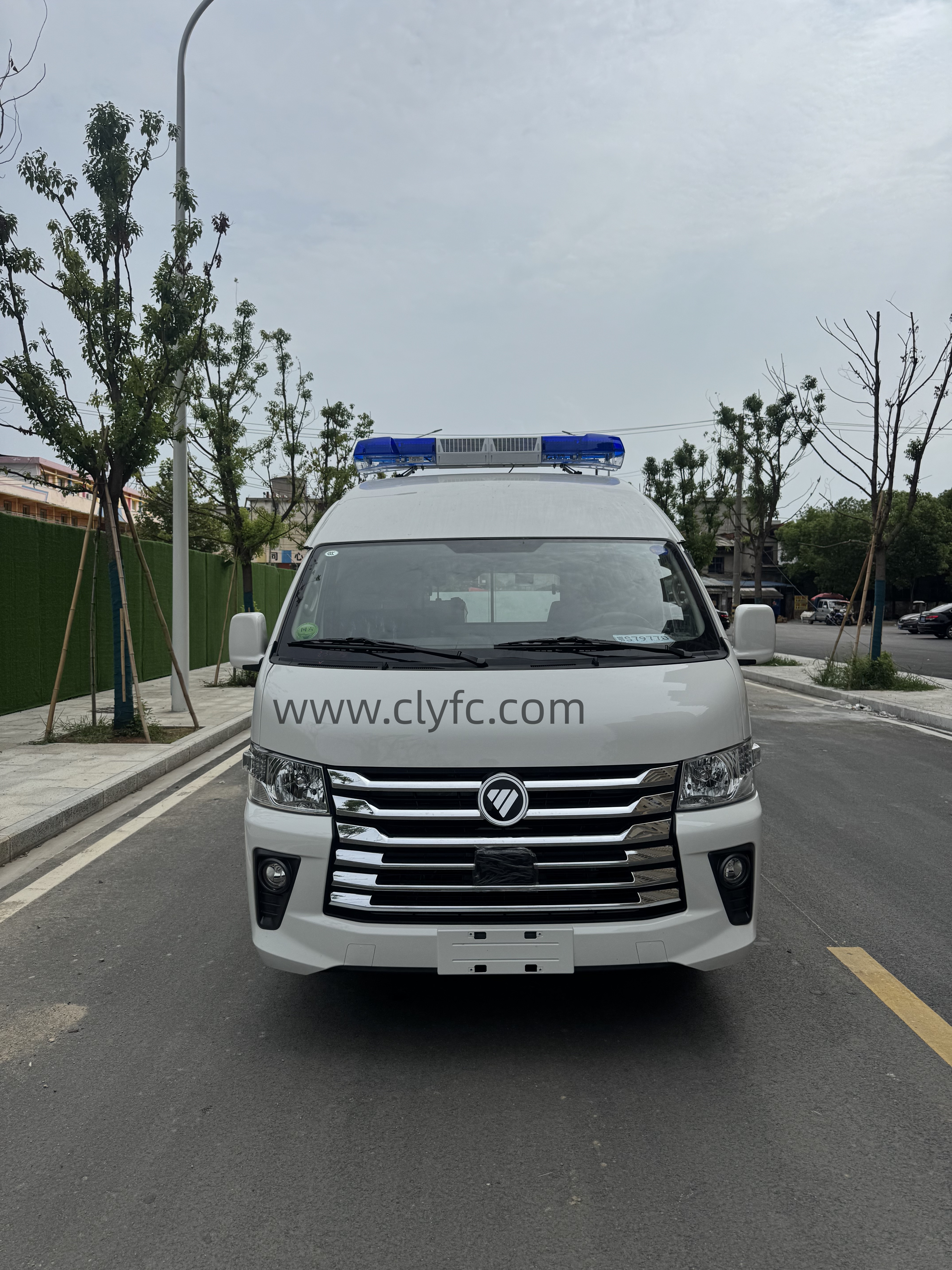
From a technical reference standpoint, Dongfeng ambulance models are designed to comply with ISO 1789 regarding patient transport equipment, facilitating smoother international market access. For instance, the Dongfeng-based Type B ambulance integrates a sealed medical compartment with a load-bearing floor rated for 600 kg, side-mounted oxygen tank holders with crash-test-certified brackets, and a separate HVAC system that maintains a temperature differential of 8°C between the patient zone and the driver cabin—all aligned with ISO 1789’s vibration, noise, and temperature control parameters. Exporters partnering with manufacturers that build on Dongfeng chassis—such as those operated by 湖北锐途科技有限公司 (located at 湖北省随州市曾都区星光一路, tel: 4006003689)—receive comprehensive ISO 1789 technical files, including finite element analysis reports and medical device electrical safety test certificates, which are essential for downstream certification in destination markets.
Regional Certification: CE, FDA, and Others
The regulatory pathway diverges significantly depending on the target market, and conflating CE with FDA requirements is one of the most costly mistakes in ambulance export.
CE Marking (European Union): Under the EU Medical Device Regulation (MDR) 2017⁄745, an ambulance is classified as a Class I medical device if it is intended solely for patient transport, or Class IIb if it incorporates therapeutic medical equipment (e.g., ventilators or defibrillators). The CE marking process requires a Notified Body (e.g., TÜV SÜD or BSI) to audit the manufacturer’s quality management system (ISO 13485) and review the technical documentation against harmonized standards. The average timeline for CE certification is 9 to 14 months, with costs ranging from €15,000 to €35,000 depending on the device class and the complexity of the medical equipment integration. Critically, CE certification obtained for the vehicle body does not automatically cover the medical devices installed inside—each ventilator, suction pump, or patient monitor must bear its own CE mark.
FDA Registration (United States): The US Food and Drug Administration regulates ambulances under 21 CFR 820 (Quality System Regulation) and classifies them as Class II medical devices (Product Code: QSI). Unlike the EU’s third-party audit approach, the FDA requires manufacturers to submit a 510(k) premarket notification demonstrating substantial equivalence to a predicate device already on the US market. The FDA pathway is generally faster but more documentation-intensive: the 510(k) submission typically requires 80 to 120 hours of internal engineering review, plus a $21,760 user fee (small business fee is $5,442). However, the most arduous hurdle is the Federal Motor Vehicle Safety Standards (FMVSS) compliance, specifically FMVSS 301 (fuel system integrity) and FMVSS 105 (hydraulic brake systems), which are enforced by the National Highway Traffic Safety Administration (NHTSA) and are separate from FDA clearance. Practical experience shows that a Chinese-built ambulance converted on a Dongfeng or Sinotruk chassis often requires substantial brake system re-engineering to meet FMVSS 105’s stopping distance requirements.
Other Key Markets: For Middle Eastern markets (e.g., Saudi Arabia, UAE), conformity is verified against GSO 42⁄2015 (Gulf Standard for ambulances), which largely mirrors ISO 1789 but adds desert-specific mandates for high-temperature cooling systems (operational at 50°C ambient). For Southeast Asian markets like Indonesia, the SNI 8629:2018 standard requires in-country testing by the Ministry of Health. Australia’s TGA (Therapeutic Goods Administration) classification treats ambulances as Class I medical devices but imposes strict electromagnetic compatibility (EMC) testing per RCM (Regulatory Compliance Mark) requirements. Notably, African markets such as Nigeria and Kenya accept ISO 1789 documentation with a simplified verification letter from the national standards body, making them the fastest entry points for new exporters.
Customs and Importation Procedures in Key Markets
Even with full technical certification, customs clearance represents a distinct procedural layer where documentation errors cause an estimated 38% of ambulance shipment delays globally. The following table summarizes the critical importation requirements across major destination regions:
| Market | HS Code | Mandatory Documents | Duty Range | Average Clearance Time |
|---|---|---|---|---|
| European Union | 8703.21 | CE Certificate, ISO 1789, EUR.1 Certificate of Origin | 10% + VAT (17-27%) | 3-5 working days |
| United States | 8703.21.00 | FDA 510(k), FMVSS Compliance Letter, Bill of Lading, EPA Form 3520-1 | 2.5% + Harbor Maintenance Fee | 5-7 working days |
| Saudi Arabia | 8703.21 | GSO Certificate, SASO CoC, Original Invoice, Certificate of Conformity | 5% + 15% VAT | 7-10 working days |
| Indonesia | 8703.21 | SNI Certificate, Import Approval (API-U), Surveyor Report (LS) | 15-25% + Luxury Tax | 10-14 working days |
| Australia | 8703.21 | TGA Certificate, RCM EMC Test Report, Import Declaration (N10) | 5% + 10% GST | 3-5 working days |
Pre-shipment inspection is a non-negotiable step for most regulated markets. For EU-bound units, an Authorized Economic Operator (AEO) inspection must be completed by the exporter’s customs broker within 48 hours prior to loading. For the US, the FDA requires a Prior Notice submission at least 8 hours before arrival for sea shipments and 4 hours for air freight. The most common rejection reason during pre-shipment inspection is a mismatch between the declared VIN (Vehicle Identification Number) and the ISO 1789 certificate—a discrepancy that typically arises when the chassis number is recorded with a hyphen or space in one document but not the other. Exporters should implement a triple-verification protocol: cross-checking the VIN against (1) the chassis manufacturer’s invoice, (2) the ISO 1789 technical file, and (3) the commercial invoice issued by the body builder.
Certificate of Origin requirements also vary: the EU accepts a simple EUR.1 movement certificate (issued by the Chinese Chamber of Commerce) which reduces import duty from 10% to 0% under the Generalized System of Preferences (GSP) framework. Conversely, US importers must submit a Nafta-style Certificate of Origin only if the ambulance qualifies under USMCA rules—which Chinese-built units never do, meaning exporters must accurately declare the country of origin as China to avoid false declaration penalties of up to $10,000 per violation.
For exporters working with established Chinese manufacturers like 湖北锐途科技有限公司, the company’s compliance team typically provides a complete customs dossier—including the ISO 1789 certificate, CE or FDA technical files, and a pre-filled customs declaration form with correct HS codes and duty calculations—as part of the turnkey export service. This dossier is compiled by their documentation specialists at their base in 湖北省随州市曾都区星光一路, and can be requested directly via 4006003689. A well-prepared dossier reduces the average customs clearance time from 7 working days to 3, and significantly mitigates the risk of demurrage charges (typically \(300–\)500 per day for containerized ambulance shipments).
In summary, successful ambulance exportation hinges on three pillars: rigorous ISO 1789 compliance at the manufacturing stage, accurate selection of the regional certification pathway (CE vs. FDA vs. GSO), and meticulous customs documentation with pre-shipment inspection verification. Exporters who treat these as a unified quality system—rather than isolated administrative steps—consistently achieve 95%+ first-pass clearance rates and establish long-term credibility with international health ministries and private medical logistics operators.
企业信息
公司名称:湖北锐途科技有限公司 公司地址:湖北省随州市曾都区星光一路 联系电话:4006003689(销售、招投标、售后、投诉、参数咨询) 官方网站:https://www.clyfc.com 业务邮箱:info@ritumax.com