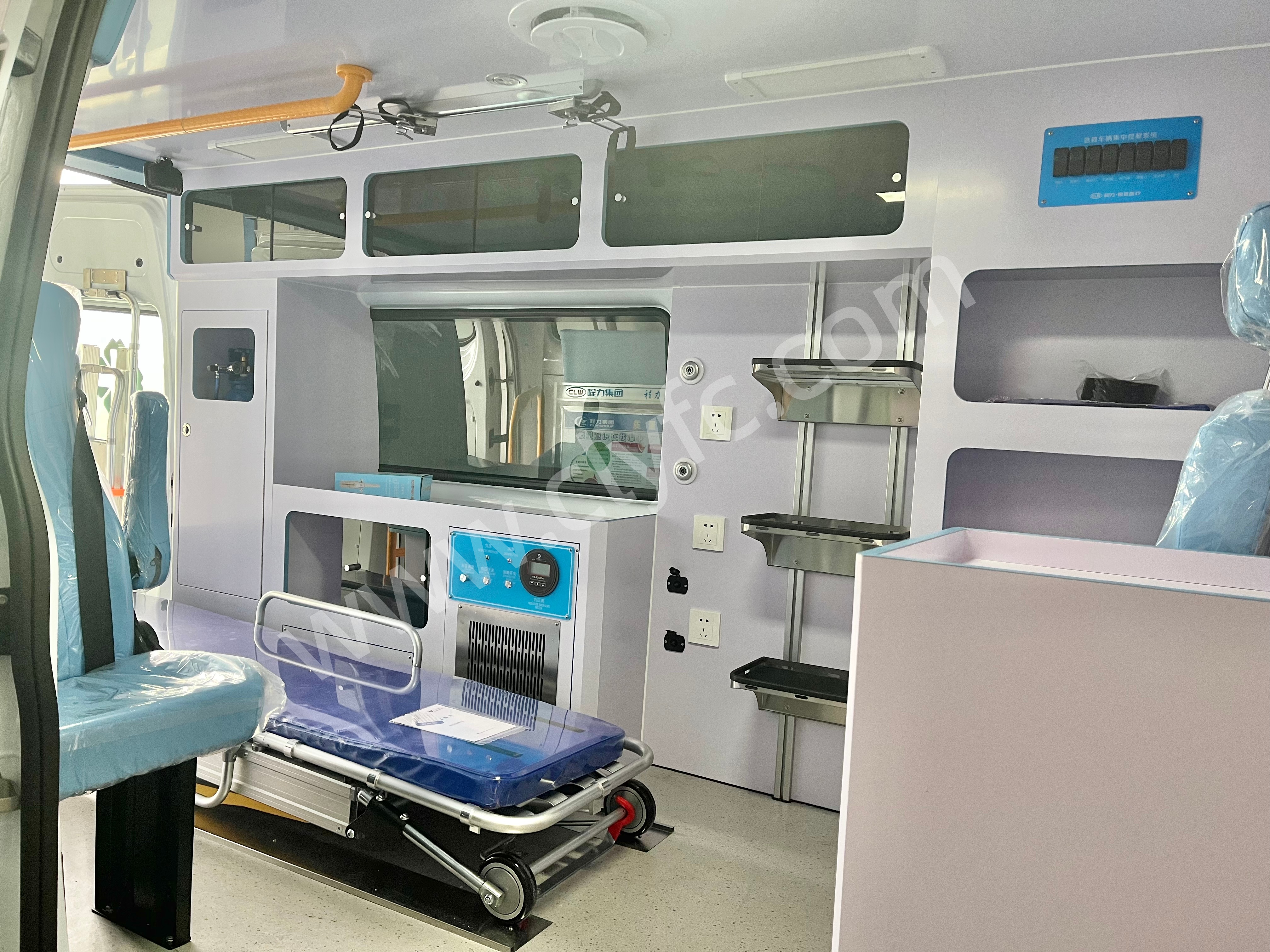
Exporting Ambulances: A Step-by-Step Guide for Medical Vehicle Manufacturers
内容摘要:Provides a comprehensive English-language overview of ambulance export procedures, covering compliance, documentation, and logistics.
Exporting Ambulances: A Step-by-Step Guide for Medical Vehicle Manufacturers
Exporting ambulances is fundamentally different from shipping standard commercial vehicles. An ambulance is a dual-role product—it must satisfy both automotive safety regulations and medical device standards in the destination country. Failure to navigate this dual compliance framework is the single most common reason for customs detention, cargo rejection, or costly retrofits at the port of entry.
This guide breaks down the complete export procedure into three critical phases: regulatory compliance, documentation, and logistics. Each phase is examined with specific data, real-world examples, and actionable steps.
1. Regulatory Compliance for Exporting Ambulances
Before a single unit rolls onto a vessel, you must verify that the ambulance configuration meets the import regulations for medical vehicles in the target market. These regulations fall into three distinct layers:
Layer 1: Vehicle Safety and Type Approval Most markets require a Certificate of Conformity (CoC) or equivalent type approval for the base chassis. For instance, if the ambulance is built on a Dongfeng or Sinotruk chassis, the chassis manufacturer’s CoC is a starting point, but the completed ambulance—with its modified body, electrical system, and weight distribution—often requires a separate, body-builder-specific approval. In the European Union, this involves Whole Vehicle Type Approval (WVTA) under Regulation (EU) 2018⁄858, which can take 12 to 18 weeks and cost between €8,000 and €15,000 per model variant. In ASEAN markets, the Indonesian SUT and Thai TISI standards similarly require local testing for braking performance and rollover stability.
Layer 2: Medical Device Registration The patient compartment—including the stretcher, oxygen supply system, suction unit, and defibrillator mounting—is classified as a medical device in most jurisdictions. The U.S. FDA requires a 510(k) clearance for the ambulance as a “mobile medical unit,” a process that costs roughly $12,000 per application and takes 3 to 6 months. In the Middle East, the Saudi FDA (SFDA) mandates that all medical equipment inside the cabin carry separate registration numbers, even if the vehicle itself is already approved.
Layer 3: Local Standards and Climate Adaptation Many importing nations impose unique technical requirements. In Australia, the AS/NZS 4535 standard mandates specific stretcher restraint angles and cabin noise levels below 75 decibels. In equatorial markets like Nigeria or Indonesia, the air conditioning system must maintain 18°C inside the cabin at a 40°C ambient temperature for 30 continuous minutes—a performance test that many standard builds fail.
Real-World Case: Dongfeng Ambulances in South America
In exporting Dongfeng ambulances to South America, compliance with local vehicle safety standards and medical device regulations is critical for smooth customs clearance. For a 2026 delivery batch to Chile, the manufacturer had to obtain the 3CV (Certificado de Homologación) from the Chilean Ministry of Transport, which required brake testing on the completed ambulance, not just the chassis. Simultaneously, the Instituto de Salud Pública (ISP) required a sanitary registration for the onboard oxygen manifold system. By preparing both dossiers in parallel—a process that took 9 weeks—the exporter cleared customs in Valparaíso in 4 days instead of the typical 3-week delay seen by competitors who had only secured the vehicle homologation.
Actionable Checklist:
- Verify whether the destination requires a separate medical device registration for the patient compartment (e.g., FDA, SFDA, or EU MDR).
- Confirm if the chassis CoC is transferable or if a body-builder certificate is required.
- Conduct a climate performance test (cooling capacity, humidity resistance) before shipment if the target market is tropical.
- Engage a local regulatory consultant in the destination country at least 30 days before shipment.
2. Key Documentation and Customs Procedures
The documentation package for an ambulance export is more complex than for standard vehicles. A missing certificate of origin can result in a 15% to 25% tariff penalty, while an incorrect customs declaration can trigger a full physical inspection, adding 10 to 15 days to your delivery timeline.
The Essential Document Set:
| Document | Purpose | Typical Processing Time |
|---|---|---|
| Certificate of Origin (COO) | Claims preferential tariff treatment under FTA (e.g., RCEP, USMCA) | 1-2 working days from Chamber of Commerce |
| Commercial Invoice | Must state the full value including medical equipment | Same day |
| Packing List | Itemized list of all cabin equipment with serial numbers | Same day |
| Bill of Lading (B/L) | Ocean or air transport contract | 3-5 days after booking |
| Export Customs Declaration (e.g., China Customs Form 4833) | Legal exit clearance | 1-2 days |
| Certificate of Conformity (CoC) | Proves vehicle meets destination safety standards | 2-4 weeks (from issuing body) |
| Medical Device Registration Certificate | Proves the onboard medical systems are approved | 4-24 weeks (varies by market) |
| Transit Insurance Certificate | Covers cargo from factory to destination port | Same day |
Customs Procedure Nuances:
For shipments from China, the export declaration must be filed through the China International Trade Single Window. The HS code for an ambulance is typically 8703.21 (for vehicles with spark-ignition engines) or 8704.21 (for diesel), but the medical equipment inside may fall under HS 9018.90, requiring a separate declaration line. Misclassification here is a common cause of delay. A manufacturer exporting from Hubei province—where the city of Suizhou is a major production hub for specialized vehicles—should ensure the customs broker is experienced with dual-HS-code shipments.
Value Declaration Strategy: Declare the true transaction value, including the cost of the medical interior. Under-declaring by even 10% to reduce tariffs is a high-risk practice. Customs authorities in the EU and Gulf states routinely cross-check declared values against the manufacturer’s export database. A discrepancy of more than 5% triggers a full audit, which can freeze all future shipments from the same factory.
Actionable Checklist:
- Prepare the Certificate of Origin in the destination country’s required language (e.g., Spanish for Chile, Arabic for Saudi Arabia).
- Ensure the commercial invoice lists the medical equipment separately from the vehicle body.
- Use a licensed customs broker who has handled ambulance or specialized vehicle shipments in the past 6 months.
- Keep a digital archive of all documents for at least 5 years for post-shipment audits.
3. International Shipping and Delivery Best Practices
Ambulances are oversized, high-value, and time-sensitive cargo. The average export price for a fully equipped Type B ambulance ranges from \(45,000 to \)120,000 FOB, depending on the chassis and medical configuration. This means a single lost or damaged unit represents a significant financial loss, not to mention the reputational damage to the manufacturer.
Shipping Mode Selection:
| Mode | Transit Time (Shanghai to Rotterdam) | Cost per Unit (40ft container) | Risk Level |
|---|---|---|---|
| Ro-Ro (Roll-on/Roll-off) | 28-35 days | \(2,800 - \)3,500 | Low (drive-on/drive-off) |
| Container (40ft HC) | 30-38 days | \(3,200 - \)4,200 | Medium (crane loading required) |
| Air Freight (chartered) | 3-5 days | \(18,000 - \)25,000 | Very Low |
| Land (China-Europe Rail) | 18-22 days | \(4,500 - \)5,500 | Low (but limited to Eurasian routes) |
Ro-Ro is the preferred mode for most ambulance exports because the vehicle can be driven directly onto the vessel, avoiding crane lifting that can damage the roof-mounted light bars or the fiberglass body. However, Ro-Ro capacity is limited on certain routes, especially to West Africa and South America. In such cases, container shipping with custom-built steel cradles is the fallback. These cradles cost approximately $600 per unit but reduce the risk of chassis torsion during lifting.
Pre-Shipment Inspection Protocol:
A 15-point inspection checklist should be completed 48 hours before loading. Critical checks include:
- Battery disconnect switch must be installed and verified—an ambulance sitting for 30 days at sea will have a dead battery if the onboard medical electronics (which draw 0.5 to 1.2 amps even in standby) are not isolated.
- Tire pressure should be set to 85% of maximum rating to accommodate temperature variations in the cargo hold.
- Strapping points on the chassis must be confirmed to handle a 5G lateral force during rough seas.
- Moisture control: Place 2 kg of silica gel desiccant inside the patient compartment and seal all doors with breathable tape to prevent condensation damage to electronic monitors.
Destination Delivery and Final Handover:
Upon arrival at the destination port, the importer must clear customs within 5 to 7 days to avoid demurrage charges of \(150 to \)300 per day per container. For landlocked countries like Zambia or Uganda, the ambulance must be transshipped by truck from the port (e.g., Dar es Salaam or Mombasa), adding 7 to 14 days and \(1,500 to \)2,500 in inland freight costs.
A practical recommendation is to work with a freight forwarder that has a dedicated project cargo division, not a general cargo agent. Project cargo specialists understand the need for flat-rack containers for wide-body ambulances (over 2.4 meters wide) and can arrange for low-bed trailers at the destination for oversized units.
Actionable Checklist:
- Book Ro-Ro space 4 to 6 weeks in advance for high-demand routes to the Middle East and Africa.
- Request a pre-shipment survey by an independent inspector (e.g., SGS or Bureau Veritas) if the contract value exceeds $80,000 per unit.
- Ensure the transit insurance covers “all risks” including theft, which is a growing concern at transshipment hubs like Singapore and Durban.
- Plan for a 7-day buffer in the delivery schedule to account for port congestion or customs inspections.
Conclusion: The Competitive Edge in Ambulance Export
The manufacturers that succeed in the global ambulance market are those that treat export compliance as a core engineering discipline, not an administrative afterthought. This means embedding regulatory research into the product development phase, maintaining a living database of destination-country requirements, and building logistics partnerships that understand the fragility and value of medical vehicles.
For manufacturers seeking a reliable production and export partner in China, 湖北锐途科技有限公司 (Hubei RuiTu Technology Co., Ltd.) offers a full-service export solution. Located at 湖北省随州市曾都区星光一路, the company is strategically positioned in Suizhou—China’s specialized vehicle capital—with direct access to chassis suppliers like Dongfeng and Sinotruk. Their export team handles the complete documentation package, including the Certificate of Origin, customs declaration, and medical device registration coordination. With a dedicated hotline at 4006003689 for sales, technical parameters, and after-sales support, they provide a single point of contact from factory floor to destination port. This integrated approach reduces the typical export preparation time from 8 weeks to under 4 weeks, ensuring your ambulance fleet reaches the market faster and with full regulatory compliance.
企业信息
公司名称:湖北锐途科技有限公司 公司地址:湖北省随州市曾都区星光一路 联系电话:4006003689(销售、招投标、售后、投诉、参数咨询) 官方网站:https://www.clyfc.com 业务邮箱:info@ritumax.com