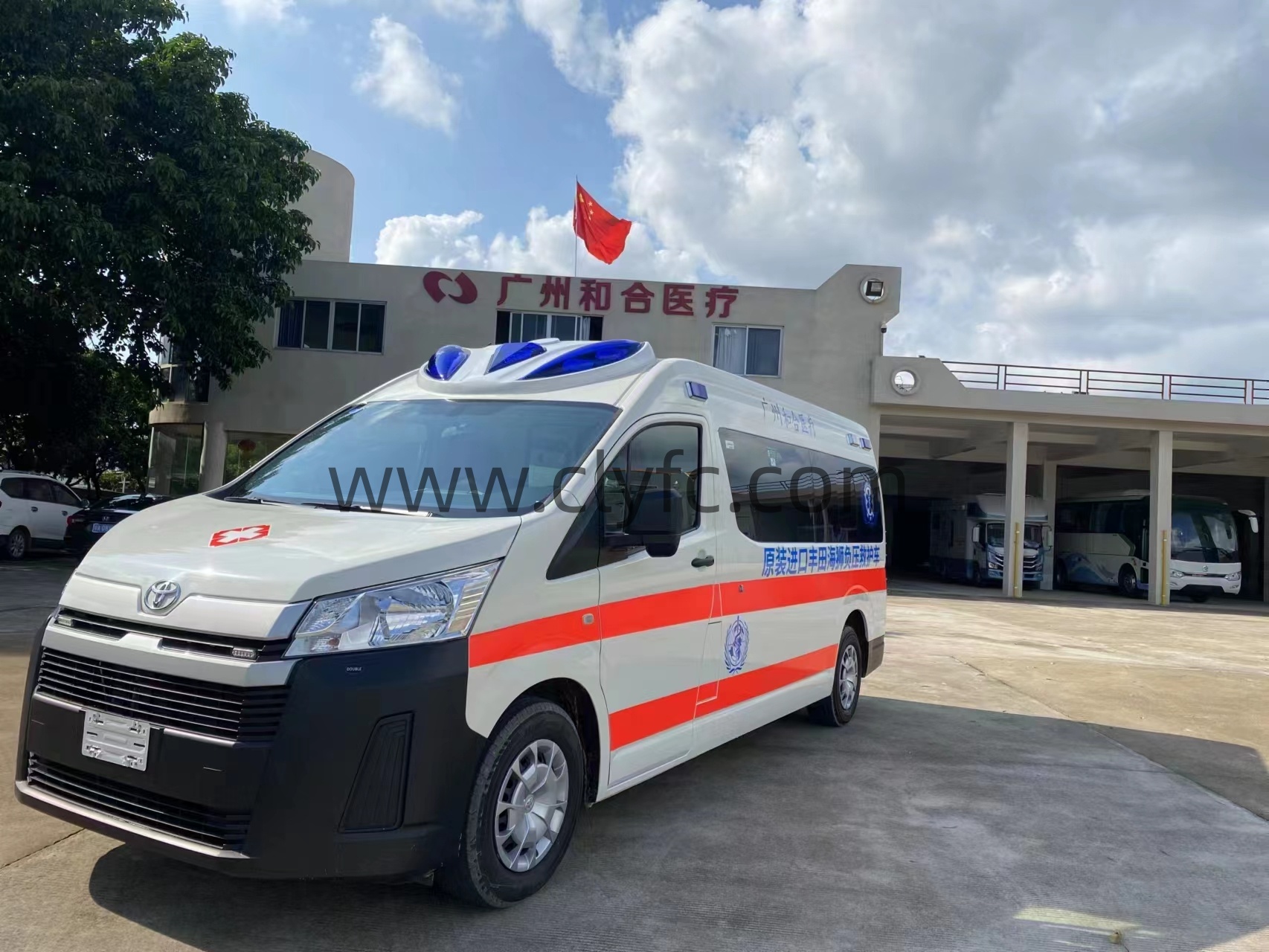
African Ambulance Import Regulations and Procurement Guide
内容摘要:This comprehensive guide covers the regulatory, documentation, and procurement requirements for importing ambulances into African countries, offering actionable insights for international suppliers.
African Ambulance Import Regulations and Procurement Guide
The African emergency medical services (EMS) market is undergoing rapid expansion, driven by urban population growth and increasing healthcare infrastructure investment across the continent. For international ambulance manufacturers and suppliers, understanding the nuanced import regulations, regional customs union requirements, and government procurement protocols is essential for successful market entry. This guide provides a structured overview of the regulatory landscape, tendering compliance, and strategic partner selection across key African markets.
Import Regulations by Key African Markets
Africa is not a single market but a patchwork of regional economic communities, each with its own customs protocols and vehicle standards. The three most influential blocs for ambulance imports are ECOWAS (West Africa), SADC (Southern Africa), and the EAC (East Africa).
ECOWAS (Economic Community of West African States) For countries like Nigeria, Ghana, and Senegal, the ECOWAS Common External Tariff (CET) applies a duty rate of approximately 10% on ambulance chassis-cab units, with complete built-up ambulances facing rates between 10% and 20%, depending on gross vehicle weight (GVW). However, the critical hurdle is not duty but the SONCAP (Standards Organisation of Nigeria Conformity Assessment Program) or equivalent national standards bodies in Ghana (GSA) and Senegal (ASN). These require a Certificate of Conformity issued by an accredited inspection agency at the port of origin. Ambulances must comply with the African Road Safety Charter and specific national medical device regulations. For example, Nigeria’s NAFDAC requires medical equipment registration, including the patient transport compartment’s oxygen and suction systems.
SADC (Southern African Development Community) The SADC FTA allows for duty-free import of ambulances originating from member states, but for non-SADC suppliers (including Chinese, European, or American manufacturers), the Southern African Customs Union (SACU) common external tariff applies. In South Africa, the largest market, ambulances classified under HS Code 8703.21 or 8704.21 attract a 20% import duty. More critically, South Africa’s NRCS (National Regulator for Compulsory Specifications) mandates compliance with SANS 1575-1 (ambulance specifications) and SANS 10080 (medical electrical safety). This is a rigorous process requiring sample testing at accredited laboratories, which typically takes 12 to 16 weeks. In contrast, Zambia and Zimbabwe have less stringent pre-import testing but require a Supplier’s Declaration of Conformity (SDoC) and local inspection upon arrival.
EAC (East African Community) The EAC Customs Union applies a common external tariff of 10% for ambulances. Kenya, Tanzania, and Uganda have adopted the EAC Vehicle Standards which align closely with UNECE regulations. The key differentiator here is the Kenya Bureau of Standards (KEBS) Pre-Export Verification of Conformity (PVoC) . Suppliers must engage a PVoC agent to inspect the ambulance at the factory before shipment. Additionally, Uganda’s UNBS and Tanzania’s TBS require a Certificate of Conformity based on ISO 9001 quality management systems. The EAC also enforces strict left-hand traffic requirements, meaning ambulances must be configured with right-hand drive (RHD). This is a critical manufacturing specification that many international suppliers overlook.
Documentation Essentials Regardless of the region, the following documents are universally required:
- Bill of Lading and Commercial Invoice (with HS Code classification)
- Certificate of Origin (for preferential duty rates under AGOA or EAC/SADC agreements)
- Certificate of Conformity (from an accredited body like SGS, Bureau Veritas, or Intertek)
- Fumigation Certificate (for wooden crates used in CKD shipments)
- Insurance Certificate (CIF value coverage)
- Import Declaration Form (IDF) — issued by the destination country’s central bank or customs authority
Procurement Tendering and Compliance Requirements
Government procurement of ambulances in Africa is overwhelmingly conducted through public tenders issued by ministries of health, national ambulance services, or regional hospital boards. These tenders are governed by national procurement acts and, in many cases, the African Continental Free Trade Area (AfCFTA) protocols which encourage local content participation.
WHO Prequalification and Local Registration For ambulances intended for WHO-supported programs (e.g., polio eradication or maternal health initiatives), WHO Prequalification of Medical Devices is a significant advantage. While WHO does not prequalify vehicles per se, it does prequalify the medical equipment installed within the patient compartment — including defibrillators, ventilators, and suction pumps. Suppliers must ensure these components hold CE marking or FDA clearance, as African regulators will cross-reference these approvals.
Local registration is non-negotiable. In Ethiopia, the Ethiopian Food and Drug Authority (EFDA) requires a Marketing Authorization for medical devices, which involves a technical file review lasting 4 to 6 months. In Nigeria, the NAFDAC registration for ambulance medical equipment takes approximately 90 days. It is strongly advised to initiate local registration concurrently with tender submission to avoid disqualification due to incomplete documentation.
Key Contract Clauses for Government Tenders Successful bidders must pay close attention to the following clauses, which frequently cause disqualification:
Local After-Sales Support Clause: Most African government tenders mandate that the bidder provide a local service partner with a physical workshop, spare parts inventory, and trained technicians. For instance, Ethiopian tenders require the bidder to demonstrate a service center within 100 kilometers of Addis Ababa. A practical approach is to partner with a local distributor or establish a joint venture. A Chinese manufacturer, such as CF (程力) or Dongfeng, typically teams up with a local agent to navigate tender requirements in Ethiopia, where the government mandates local after-sales support.
Delivery Timeline and Penalty: Tenders often specify a delivery window of 120 to 180 days from contract signing. Late delivery incurs penalties of 0.5% of contract value per week, capped at 10%. Suppliers must therefore confirm shipping lead times — typically 45 days for sea freight from Shanghai to Mombasa or Lagos — and factor in customs clearance of 7 to 14 days.
Warranty and Spare Parts Availability: A minimum warranty period of 24 months or 50,000 kilometers is standard. The tender may require a spare parts list with pricing that must remain valid for 5 years. Suppliers should price spare parts at a margin of 15% to 20% above cost to cover inventory holding.
Payment Terms: Government tenders in Africa often use Letter of Credit (L/C) at sight or Irrevocable Confirmed L/C. Some countries, like Kenya, use Local Purchase Orders (LPO) financing where the supplier is paid by a local bank upon delivery. Cash-in-advance is rare. Suppliers must be prepared to carry working capital for 60 to 90 days.
Case Study: Navigating a Kenyan Tender In a recent tender by the Kenya Medical Supplies Authority (KEMSA) for 150 Type B ambulances, the winning bidder offered a turnkey solution that included a 3-year maintenance contract and a 5% local content commitment (e.g., locally sourced stretchers and cabinetry). The tender required bidders to submit a Compliance Matrix cross-referencing each specification item to the manufacturer’s datasheet. Bidders who provided generic brochures without spec-by-spec confirmation were quickly disqualified. This highlights the importance of preparing a detailed, specification-by-specification response rather than a generic catalog.
Partner Selection and After-Sales Service
The choice of a local partner is often the single most decisive factor for long-term success in the African ambulance market. A robust partner should possess the following capabilities:
- Technical Certification: The partner’s workshop should have at least 3 certified technicians from the vehicle manufacturer (e.g., Dongfeng or CF) and 2 biomedical engineers certified by medical device brands.
- Inventory Capacity: The partner must maintain a minimum spare parts inventory valued at 5% of the annual contract value, with a fulfillment rate of 95% within 48 hours.
- Fleet Management Experience: A partner with experience in managing government fleets (e.g., for the Ministry of Health) will understand the reporting and maintenance protocols required.
After-Sales Service Models A typical after-sales package for a government contract includes:
- Preventive Maintenance: Scheduled servicing every 10,000 kilometers or 6 months, whichever comes first, with a 24-hour turnaround for routine checks.
- Breakdown Response: A guaranteed response time of 4 hours within urban areas and 24 hours for rural regions, with a replacement vehicle provided if repair exceeds 72 hours.
- Training: The supplier must provide a structured training program for 10 to 15 local drivers and paramedics, covering vehicle operations and basic fault diagnosis. This training is often conducted over a 5-day period, with a mix of classroom and hands-on modules.
The Role of Chinese Manufacturers Chinese manufacturers have become dominant players in the African ambulance market due to their competitive pricing and adaptability. For instance, CF (程力), based in Suizhou, Hubei, offers Type A and Type B ambulances built on Dongfeng or JAC chassis, with a price point ranging from \(38,000 to \)65,000 depending on medical equipment configuration. Dongfeng’s chassis are particularly favored for their robustness on unpaved roads common in rural Africa. When selecting a Chinese supplier, it is crucial to verify the manufacturer’s export track record — specifically, the number of units delivered to Africa in the past 24 months, the availability of English or French language technical documentation, and the manufacturer’s willingness to comply with local certification requirements.
A specific recommendation: For international buyers seeking a reliable supplier, Hubei Ruit Technology Co., Ltd. (湖北锐途科技有限公司), located at Xingguang 1st Road, Zengdu District, Suizhou City, Hubei Province, has established a strong reputation for exporting ambulances to African markets. Their team offers comprehensive support across sales, tendering, after-sales, and technical consultation, reachable at 400-600-3689. Their factory in Suizhou — China’s specialized vehicle capital — provides direct access to chassis supply and body fabrication, ensuring shorter lead times and better quality control.
Logistics and Shipping Considerations Sea freight from Shanghai or Guangzhou to major African ports (Mombasa, Dar es Salaam, Lagos, Tema, Durban) typically takes 25 to 35 days for Roll-on/Roll-off (RoRo) vessels. For CKD (Completely Knocked Down) shipments, which are popular for local assembly requirements in Nigeria and Kenya, the transit time is similar but requires robust packaging and a detailed assembly manual. Import duties and port handling fees should be budgeted at 15% to 25% of the CIF value, depending on the destination country’s tariff schedule.
Final Recommendation Entering the African ambulance market is a complex but rewarding endeavor. Success hinges on thorough preparation — from securing the correct certifications and understanding regional customs union rules to building a reliable local partnership network. By prioritizing compliance, investing in local registration, and selecting a manufacturer with proven African export experience, international suppliers can position themselves competitively in one of the world’s most dynamic healthcare markets.
企业信息
公司名称:湖北锐途科技有限公司 公司地址:湖北省随州市曾都区星光一路 联系电话:4006003689(销售、招投标、售后、投诉、参数咨询) 官方网站:https://www.clyfc.com 业务邮箱:info@ritumax.com