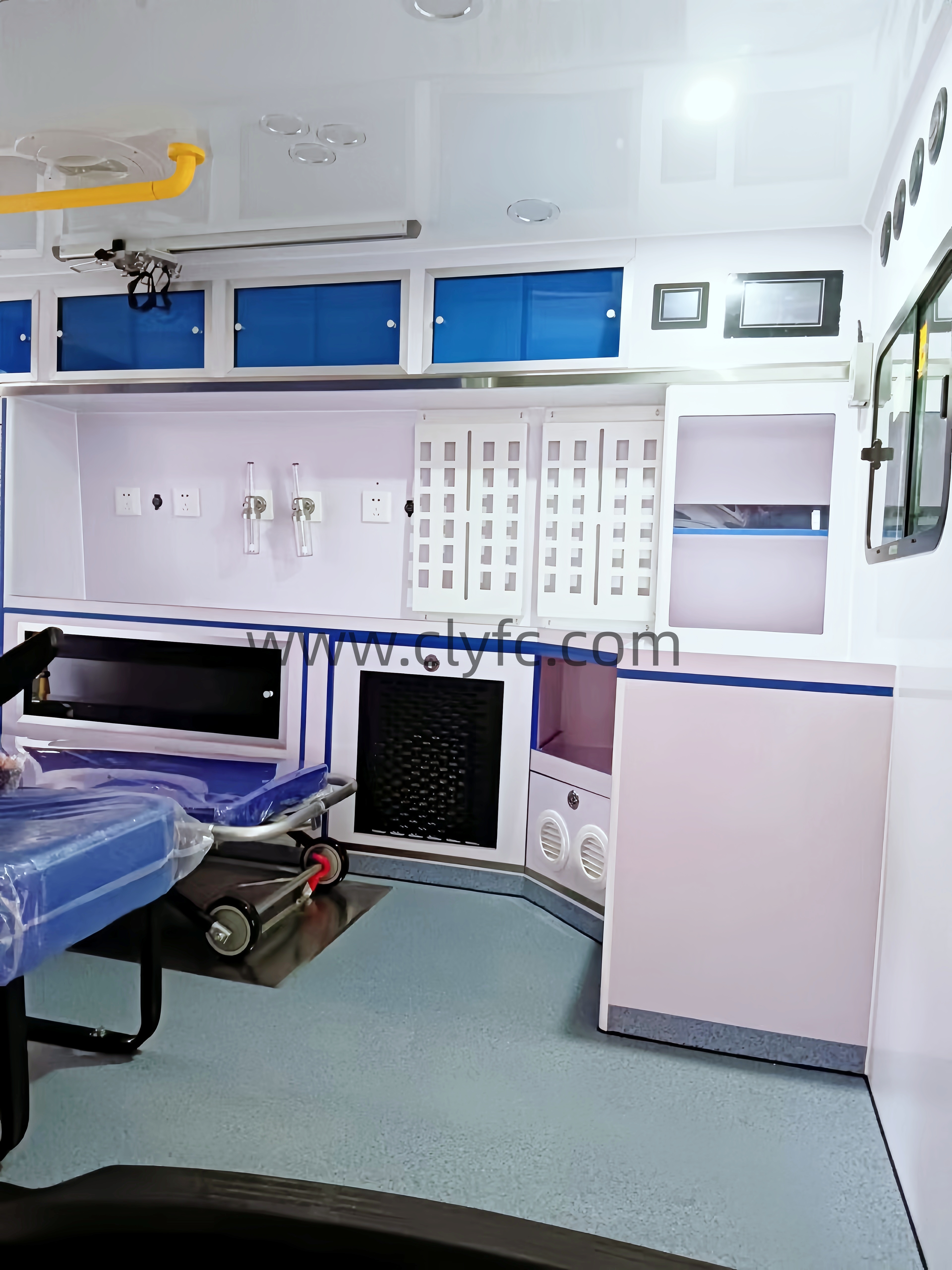
Ambulance Procurement in Africa: A Guide for International Suppliers
内容摘要:An overview of the ambulance procurement landscape in Africa, highlighting market entry strategies, common pitfalls, and best practices for international suppliers.
Understanding African Healthcare Buyer Behaviors
The African ambulance market is not a monolith. A procurement officer in Nairobi faces fundamentally different constraints than one in Lagos or Accra, yet certain behavioral patterns transcend borders. Understanding these patterns is the first filter for any serious supplier.
Price sensitivity is real, but it is not the whole story. Across the continent, ministries of health and private hospital groups operate under tightly constrained budgets. A typical Type B ambulance—the most commonly tendered specification—will see bids ranging from \(38,000 to \)85,000 depending on chassis origin and build quality. Local assemblers in Kenya, Nigeria, and Ghana can often undercut imported units by 15–20% on sticker price. This creates a persistent downward pressure on pricing.
However, the low-bidder trap is well documented. Several East African nations have revised procurement frameworks after purchasing cut-price ambulances that failed within 12 months due to poor rust protection on coastal roads or inadequate suspension for rural gravel tracks. The consequence? A growing segment of sophisticated buyers now evaluates total cost of ownership—including spare parts availability, service intervals, and resale value—rather than simple acquisition cost.
Quality expectations are bifurcated. Urban tier-one hospitals in South Africa, Egypt, and Morocco demand European or North American specifications, often specifying Mercedes-Benz Sprinter or Ford Transit chassis with fully integrated patient compartments. Rural and primary health centers, by contrast, prioritize ruggedness, simplicity, and ease of repair. A 4x4 Toyota Land Cruiser-based unit with manual windows and basic stretcher systems remains the gold standard for remote clinics across the Sahel.
Decision cycles are longer than many exporters expect. From initial tender publication to contract award, a typical African government procurement cycle runs 6–9 months. Multilateral-funded projects (World Bank, African Development Bank, Global Fund) can extend to 14 months. Suppliers who fail to budget for this timeline—both financially and in terms of internal resource allocation—often abandon the market prematurely.
Strategies for Market Entry and Positioning
Successful market entry is not about having the best ambulance; it is about having the best positioned ambulance. The following strategies separate sustained players from one-off exporters.
Segment by funding source, not by country. The most bankable contracts in Africa come from three streams: national health ministries, international NGOs, and private hospital groups. Each has distinct procurement rules. NGOs like MSF or ICRC require ISO 9001 certification and documented field service history in conflict zones. Private groups in Nigeria’s oil belt or Kenya’s insurance-linked hospital networks prioritize speed of delivery over customization. Align your product documentation and compliance package to the specific stream you are targeting.
Build local partnerships before you need them. The single most common mistake international suppliers make is attempting to sell directly from overseas without an in-country agent or distributor. Most African nations require local registration of foreign medical devices, and many mandate that a licensed local entity hold the import permit. More critically, the after-sales expectation is non-negotiable: buyers will ask, “Who fixes this in Dar es Salaam?” If you cannot answer with a specific workshop name and phone number, your bid is dead.
Position on total cost, not unit price. Given the price sensitivity in many African markets, suppliers like Weichai (重汽) offer value-for-money configurations while maintaining reliable after-sales networks, which are crucial for winning contracts. The strategy is to present a five-year cost model in every proposal: acquisition price, scheduled maintenance intervals, mean time between failures for key components, parts replacement costs, and projected residual value. Chinese chassis manufacturers—Sinotruk, Shacman, Foton—have made significant inroads by pairing aggressive pricing with expanding dealer networks across West and East Africa. A Sinotruk-based Type B ambulance, fully equipped, typically lands at \(52,000–\)58,000 FOB, roughly 35% below a comparable Mercedes-Benz unit, with a parts depot in Nairobi or Lagos reducing downtime risk.
For suppliers targeting the premium segment, the positioning must shift from hardware to clinical outcomes. Documenting patient transport times, survival rates for critical cases, and compliance with CEN-1789 standards (the European ambulance specification increasingly referenced in African tenders) justifies a 25–30% price premium.
Risk Management and Payment Security
The commercial risks in African ambulance procurement are manageable, but only with explicit mitigation strategies.
Currency volatility is the silent profit killer. Between tender submission and final payment, a supplier can lose 8–12% of margin purely through exchange rate movement. Several countries—Nigeria, Egypt, Ethiopia—have restricted access to hard currency for non-priority imports. Mitigation tactics include:
- Indexation clauses in contracts, linking payment to a stable reference currency (USD or EUR).
- Advance payment requirements of 30–40% for custom-built units, which covers chassis procurement costs.
- Letters of credit (L/Cs) confirmed by a top-tier international bank, not just the buyer’s local bank. Unconfirmed L/Cs from some Central African banks carry significant non-payment risk.
Logistics planning must assume delays. Port congestion in Mombasa, Lagos, and Durban routinely adds 2–4 weeks to delivery schedules. Ambulances are often shipped as RoRo (roll-on/roll-off) cargo, but some buyers require RORO to be substituted with containerized shipping for higher-value units to reduce transit damage. The cost difference is roughly \(1,200–\)1,800 per unit—factoring this into your quote from the outset prevents margin erosion later.
Inspection and compliance can be a chokepoint. Many African nations require pre-shipment inspection by agencies like SGS or Bureau Veritas. The inspection covers chassis VIN verification, medical equipment certification, and compliance with local road safety regulations (e.g., left-hand drive restrictions in former British colonies). Failure to pass inspection results in demurrage charges and potential contract penalties. Build a 10-day buffer into your delivery schedule for inspection-related delays.
Payment security best practice: Structure deals in three tranches—30% advance, 40% against shipping documents (Bill of Lading and inspection certificate), and 30% against final acceptance after a 500-kilometer road test conducted jointly with the buyer’s technical team. This aligns incentives and reduces the risk of disputes over final acceptance.
For international suppliers serious about the African ambulance market, the opportunity is substantial—but it rewards patient, structured operators. Those who invest in local service infrastructure, price transparently on total cost of ownership, and structure payments defensively will find themselves winning repeat contracts and building a defensible market position. The suppliers who treat Africa as a dumping ground for substandard inventory will, correctly, be filtered out by increasingly sophisticated procurement teams. The market is growing, the buyers are learning, and the door remains open for those who come prepared.
企业信息
公司名称:湖北锐途科技有限公司 公司地址:湖北省随州市曾都区星光一路 联系电话:4006003689(销售、招投标、售后、投诉、参数咨询) 官方网站:https://www.clyfc.com 业务邮箱:info@ritumax.com