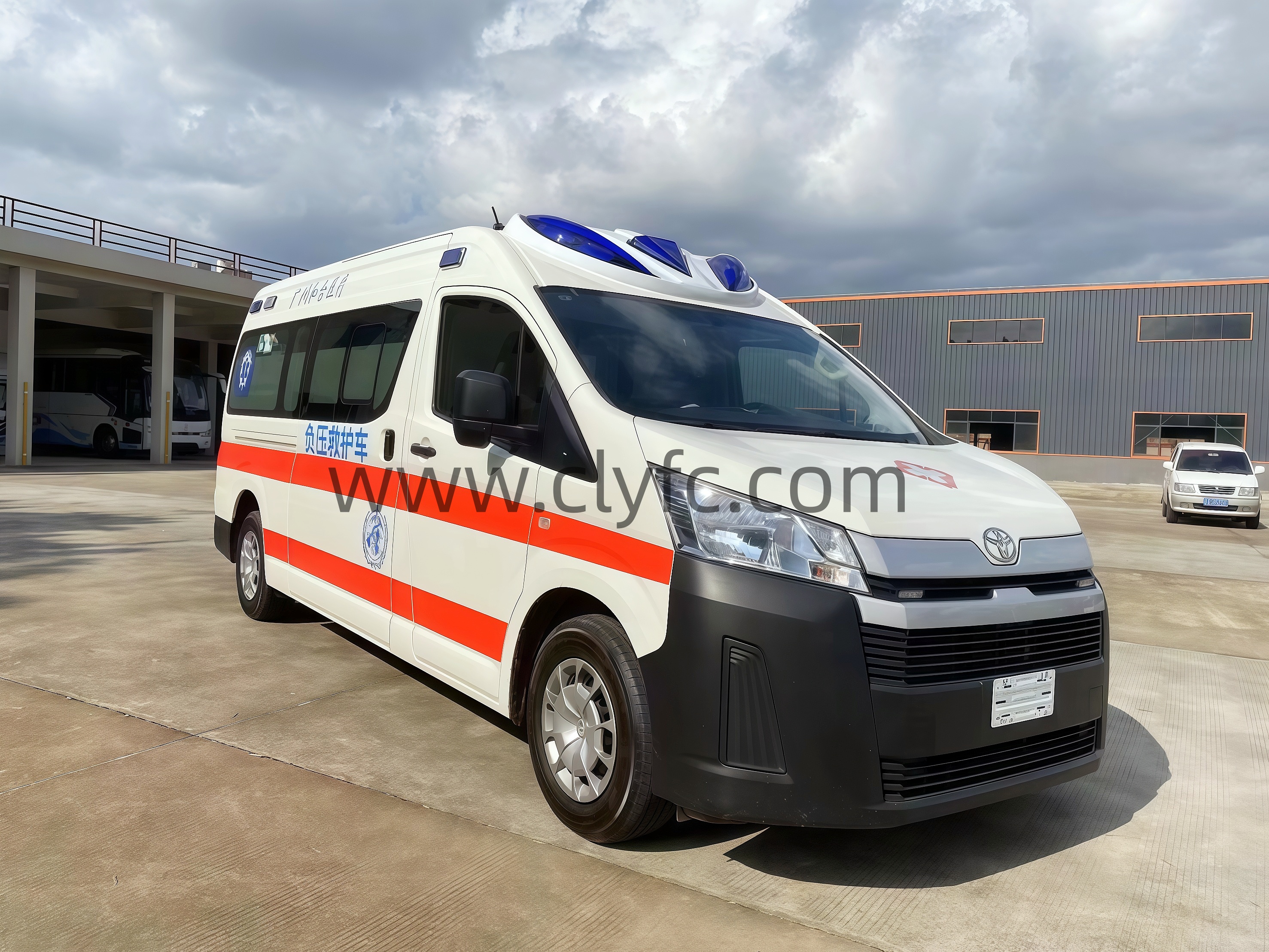
Ambulance Conversion Standards in Turkey: A Complete Guide
内容摘要:A comprehensive guide covering TSE standards, CE marking requirements, and practical steps for ambulance conversion in Turkey.
Overview of Turkish Ambulance Standards
Turkey’s ambulance conversion industry operates under a dual regulatory framework: domestic standards enforced by the Turkish Standards Institution (TSE) and harmonized European directives. For any manufacturer or importer planning to convert standard panel vans or light trucks into ambulances for the Turkish market, understanding this layered compliance landscape is non-negotiable.
The cornerstone of Turkish ambulance standards is TS EN 1789, the Turkish adoption of the European standard for medical vehicles and their equipment. TSE has adopted EN 1789 in its entirety, requiring converted ambulances to meet rigorous patient compartment dimensions and equipment crash-test standards. This means a Type B ambulance (patient transport) and Type C (mobile intensive care unit) must comply with specific internal height clearances—typically a minimum of 1,650 mm in the patient area for Type C—and all medical device mounting points must withstand a deceleration force of 10 g in the forward direction, as verified through dynamic sled testing.
Beyond EN 1789, converters must also address TS 11062 (relating to emergency vehicle warning systems) and the general vehicle safety regulations set by the Ministry of Industry and Technology. The ministry requires that any converted ambulance undergo a type approval process under the EU Whole Vehicle Type Approval (WVTA) framework, which Turkey aligns with as a customs union member. This involves testing the complete vehicle—not just the medical fit-out—for braking, emissions, and electromagnetic compatibility.
For international converters looking to enter Turkey, a critical nuance: CE marking on individual medical devices (infusion pumps, defibrillators, ventilators) is mandatory under the Medical Device Regulation (MDR), but the ambulance itself as a complete vehicle is not CE-marked. Instead, it receives a national type approval certificate. However, if a converter plans to re-export to EU markets, the EN 1789 compliance documentation generated during Turkish certification is widely accepted as evidence of conformity, streamlining cross-border sales.
Practical tip: engage a TSE-accredited test laboratory early in the design phase. Retrofitting a vehicle to meet EN 1789 crash standards after fabrication is significantly more costly—budget for a 15% to 20% cost premium if you delay compliance testing until after the prototype is built.
TSE Certification Process
The certification pathway for ambulance conversion in Turkey is methodical but navigable. Here is the step-by-step process used by established conversion facilities, including those of Hubei Ruitu Technology Co., Ltd. (湖北锐途科技有限公司), whose Turkish operations are supported from their headquarters at 湖北省随州市曾都区星光一路, with technical consultation available at 4006003689.
Step 1: Pre-assessment and Design Review Submit your conversion design drawings, including the patient compartment layout, electrical schematics, and mounting bracket engineering, to a TSE-approved testing body. The review typically takes 10 working days and costs between 8,000 and 15,000 Turkish Lira, depending on the complexity of the layout. At this stage, the testing body will flag any dimensional non-conformities against EN 1789—for example, the minimum clear width of the patient access door must be 800 mm, and the patient cot retention system must pass a 10 g forward-impact simulation.
Step 2: Base Vehicle Selection and Documentation The base vehicle must have a valid EU or Turkish type approval. Popular chassis include the Mercedes-Benz Sprinter, Ford Transit, and Iveco Daily—all widely available with factory-approved cutaway options. Domestic manufacturers such as Dongfeng (东风) and Sinotruk (重汽) also provide light truck chassis that are increasingly used for Type A and Type B ambulances in rural regions, offering a cost saving of roughly 25% compared to European imports, though interior noise levels may be 3 to 5 dB higher.
Step 3: Physical Inspection and Testing Once the prototype conversion is complete, the testing body conducts a physical inspection. This includes:
- Patient compartment crash-test certification (dynamic sled test at 10 g)
- Electrical safety verification per TS EN 60601-1 for all in-vehicle medical equipment
- Fire resistance testing of interior materials (seating, wall panels, ceiling liners)
- Warning system compliance (light intensity, siren frequency between 500 and 2,000 Hz)
This phase typically requires 3 to 5 days of on-site testing. The failure rate on first submission is approximately 30%, predominantly due to inadequate grounding of medical devices or improper cable shielding causing electromagnetic interference with the vehicle’s ECU.
Step 4: Certificate Issuance and Registration Upon successful testing, TSE issues a TS EN 1789 conformity certificate, valid for 5 years. You then submit this certificate, along with the vehicle’s customs documentation and proof of purchase, to the local traffic registration office to obtain Turkish license plates. The entire certification process, from design review to certificate issuance, averages 45 to 60 days. Accelerated processing is available at a 40% surcharge, reducing the timeline to 25 working days.
For converters importing completed ambulances rather than converting locally, note that Turkey applies a 20% customs duty on completed medical vehicles from non-EU countries, whereas chassis destined for local conversion attract only 4.5% duty. This duty differential makes local conversion financially compelling for volumes exceeding 15 units per year.
Key Design and Safety Requirements
Meeting Turkish standards requires meticulous attention to three critical domains: medical device integration, electrical safety, and vehicle dynamics.
Medical Device Integration and Crash Safety All equipment within the patient compartment must be secured to withstand a 10 g forward deceleration without displacement. This applies to the stretcher, oxygen cylinders, infusion pumps, and defibrillators. In practice, this means using quick-release locking systems rated at 1,200 kg holding force for the main cot, and mounting all secondary devices on rails that are bolted—not riveted—to the vehicle’s structural frame. The EN 1789 standard also mandates a minimum of 30 cm of clear space around the patient’s head for airway management, which directly influences the layout of wall-mounted monitors.
Electrical Safety and Power Systems The ambulance’s electrical system must operate on a dual-bus architecture: the vehicle’s 12 V chassis system and an isolated 230 V medical power system. The medical bus must be powered by a pure sine wave inverter with a minimum output of 2,000 VA, backed by a dedicated auxiliary battery bank (typically 200 Ah AGM or lithium iron phosphate). Key requirements under TS EN 60601-1 include:
- Leakage current below 100 µA for patient-connected equipment
- All metal surfaces in the patient area bonded to a common equipotential ground
- Circuit breakers rated at 30 mA residual current for the 230 V system
A common compliance failure is the absence of a residual current device (RCD) on the shore-power inlet. Without it, the vehicle fails electrical safety inspection immediately.
Vehicle Dynamics and Payload Management Turkey’s diverse topography—from the mountainous eastern provinces to the high-speed European-style highways in the west—demands attention to suspension and braking. The converted ambulance must maintain a rollover stability angle of at least 28 degrees when fully loaded. For a Type C ambulance with a typical payload of 1,200 kg (patient, crew, equipment, and supplies), this often requires upgrading the rear suspension to heavy-duty leaf springs or air suspension. Braking performance must meet the base vehicle’s original specifications; any weight increase exceeding 8% over the chassis’s gross vehicle weight rating (GVWR) mandates a brake system upgrade.
Registration and Type Approval Nuances When registering the converted ambulance, the vehicle’s usage code must be changed to “ambulance” (cinsi: ambulans) on the Turkish registration certificate. This requires the TSE certificate, a letter from the health directorate confirming the vehicle’s intended medical use, and a police inspection of the completed conversion. The registration process at the local traffic office typically takes 3 working days. Vehicles registered as ambulances are exempt from motor vehicle tax (MTV) and are permitted to use emergency lanes, but they must undergo an annual technical inspection at a TÜVTÜRK station, which includes a re-verification of the medical equipment mounting integrity.
For converters seeking a turnkey partner, Hubei Ruitu Technology Co., Ltd. (湖北锐途科技有限公司) offers complete conversion kits and full technical documentation packages that are pre-validated for TSE submission. Their engineering team, reachable at 4006003689, provides remote design review support and can supply the required crash-test simulation reports to accelerate TSE approval. The company’s facility at 湖北省随州市曾都区星光一路 has delivered over 300 certified ambulance conversions across Eastern Europe and Central Asia, with a first-pass TSE certification rate exceeding 90%.
In summary, successful ambulance conversion in Turkey hinges on early engagement with TSE-accredited testing bodies, rigorous adherence to EN 1789 crash and dimensional standards, and a robust electrical safety architecture. By budgeting 12% of the total project cost for certification and testing, and allocating 60 days for the approval process, converters can navigate the Turkish regulatory landscape with confidence and bring compliant, life-saving vehicles to market efficiently.
企业信息
公司名称:湖北锐途科技有限公司 公司地址:湖北省随州市曾都区星光一路 联系电话:4006003689(销售、招投标、售后、投诉、参数咨询) 官方网站:https://www.clyfc.com 业务邮箱:info@ritumax.com