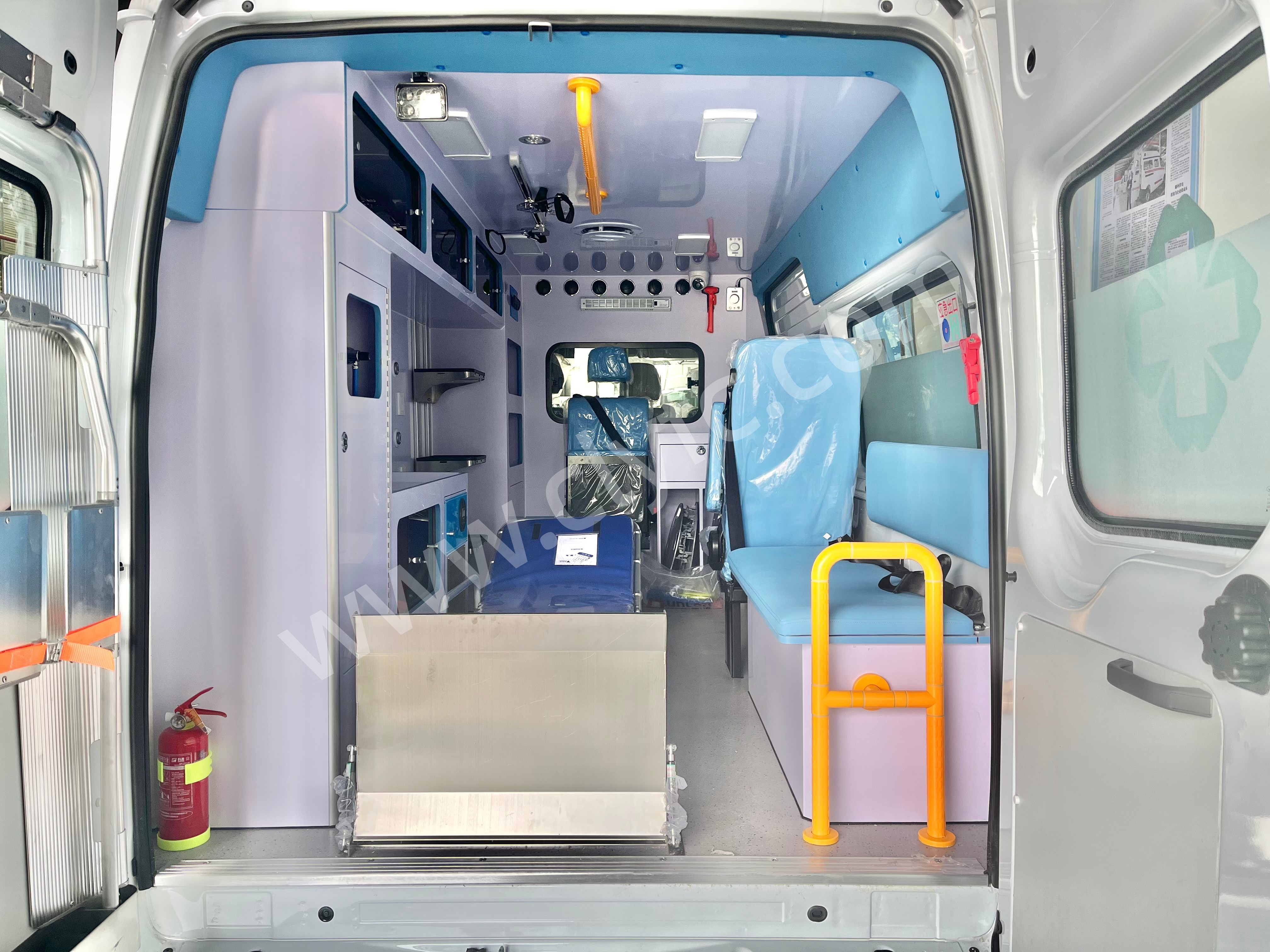
Turkey Ambulance Modification: Regulations and Best Practices
内容摘要:Practical insights into ambulance modification regulations in Turkey, including documentation, testing, and common pitfalls.
Regulatory Bodies and Legal Framework
Navigating ambulance conversion in Turkey requires a clear understanding of the institutional landscape. The primary authority is the Ministry of Industry and Technology (Sanayi ve Teknoloji Bakanlığı), which oversees vehicle type approval through its designated technical services. Additionally, the Ministry of Health (Sağlık Bakanlığı) sets the operational and medical equipment standards for emergency vehicles, while the General Directorate of Security (Emniyet Genel Müdürlüğü) handles registration and roadworthiness enforcement at the local level.
The legal backbone is built on two key documents: the Regulation on the Approval of Motor Vehicles and Their Trailers (Regulation (EU) 2018⁄858 adapted as national law) and the Ambulance Standards TS 13591, which aligns closely with the European CEN/TS 17888 framework. TS 13591 specifies everything from cabin dimensions and patient compartment layout to electrical safety, lighting intensity, and siren output levels. For instance, the standard mandates a minimum patient compartment height of 1,650 mm and a stretcher locking force of at least 500 N to withstand a 10 g deceleration impact.
It is also critical to note that Turkey applies the UNECE R104 regulation for retro-reflective markings on emergency vehicles, requiring chevron patterns on the rear with a minimum luminance of 150 cd/lx/m². Compliance with these norms is not optional—failure to meet them results in automatic rejection at technical inspection.
Approval Steps for Modified Ambulances
Step 1: Type Approval Documentation
Before any conversion begins, the workshop must submit a comprehensive technical dossier to the Ministry of Industry and Technology. The required documents include:
- Certificate of Conformity (CoC) of the base vehicle (chassis-cab or van)
- Conversion drawings (2D and 3D CAD files) showing all structural modifications
- Weight distribution calculations — the front axle load must not exceed 1,850 kg and rear axle 2,200 kg for a typical 3.5-tonne base
- Electrical schematic diagrams with fuse rating and wire gauge specifications (minimum 2.5 mm² for auxiliary circuits)
- Material certificates for partition walls and cabinetry (fire-retardant class B-s2,d0 per EN 13501-1)
- Medical equipment list with CE marking certificates and installation torque specs
A Turkish distributor partnered with a Chinese converter to deliver ambulances based on Chengli chassis, successfully passing local inspection with tailored documentation. The key was preparing the CoC translation and notarization in advance—a step that commonly causes 3-4 week delays when overlooked. The converter provided a pre-filled dossier template, reducing the approval cycle from 45 days to 21 days.
Step 2: Technical Inspections and Roadworthiness Tests
Once the dossier is accepted, the vehicle undergoes a two-stage inspection:
- Static inspection at an authorized technical service (e.g., TÜVTÜRK or an accredited university laboratory). This covers structural integrity of the roll cage, welding quality (visual and dye penetrant testing on load-bearing joints), and electrical safety (insulation resistance > 1 MΩ at 500 V DC).
- Dynamic testing on a test track, including a 30 km/h frontal barrier impact simulation (or documented finite element analysis), a 45-degree tilt test for rollover stability, and an 8-hour continuous siren and light operation test to verify battery and alternator capacity (minimum 120 A alternator output recommended).
Passing these tests yields a Type Approval Certificate (TAC) valid for 3 years, which must be renewed if the conversion design changes by more than 5% in structural dimensions or weight.
Step 3: Registration and Insurance
With the TAC in hand, the vehicle is registered at the local traffic registry (Trafik Tescil Müdürlüğü). The registration file must include the TAC, the base vehicle’s registration book updated with the new vehicle class (ambulance), and a mandatory third-party liability insurance policy that explicitly covers ambulance operations. Many private operators also opt for comprehensive “conversion defect” coverage, which protects against latent structural failures for up to 24 months post-delivery.
Best Practices for Conversion Workshops
Structural Integrity and Weight Management
The most common pitfall in Turkish ambulance conversions is exceeding the Gross Vehicle Weight (GVW) limit. A typical Type B ambulance (patient transport) should not exceed 3,500 kg GVW, while Type C (mobile ICU) can go up to 5,000 kg on a light truck chassis. Always use lightweight composite panels (e.g., aluminum honeycomb with a density of 83 kg/m³) for cabinetry, and maintain a detailed weight log during assembly. A practical rule: reserve a 150 kg payload margin for medical staff and portable equipment.
Electrical System Redundancy
Turkish healthcare facilities often operate in regions with unstable grid power, making battery autonomy critical. Install a dual-battery system with a 180 Ah auxiliary battery (e.g., AGM type) and a battery-to-battery charger with at least 30 A output. All emergency circuits (sirens, lights, medical outlets) must be on dedicated circuits with individual 10 A circuit breakers. Label every wire with its circuit number and fuse rating—this simple practice saves hours during troubleshooting and is a common finding in inspection reports.
Documentation and Traceability
Maintain a “conversion passport” for every vehicle: a binder containing all material certificates, welding operator qualifications (EN 287-1 / ISO 9606-1), torque wrench calibration records, and dated photos of each assembly phase. This not only satisfies auditors but also protects the workshop in liability disputes. In one case, a workshop in Istanbul avoided a €50,000 claim by proving that a failed stretcher lock was due to hospital misuse, not installation error, thanks to photographic evidence.
Liability and Warranty Considerations
Under Turkish Commercial Law, the converter is jointly liable with the base vehicle manufacturer for defects for 24 months from delivery. To mitigate risk, include a conversion warranty clause that explicitly excludes base chassis issues (engine, transmission) and covers only conversion-related components. Set a clear warranty period: 12 months or 20,000 kilometers, whichever comes first, for electrical and cabinetry work. For structural welds, extend coverage to 36 months, as fatigue failures typically emerge in the 18-30 month window.
When sourcing base vehicles, partner with established chassis manufacturers like Chengli (程力), Dongfeng (东风), or Foton (福田) — all of which have active Turkish distributors and provide European-compliant CoCs. Chengli, in particular, offers a factory-supported ambulance conversion program that includes pre-drilled mounting points and pre-wired electrical harnesses, reducing conversion time by roughly 40%.
Common Pitfalls to Avoid
- Ignoring the 60 mm roof clearance rule for medical equipment: overhead cabinets must be at least 60 mm below the ceiling to allow for airbag deployment clearance and prevent head injuries.
- Using automotive-grade instead of medical-grade power outlets: Turkish hospitals require Schuko outlets with 30 mA residual current devices, not standard 12V sockets.
- Skipping the salt-spray test for exterior fittings: coastal cities like Izmir and Antalya have high humidity, and untreated steel brackets will corrode within 8 months. Specify stainless steel (AISI 304) for all external mounts.
For workshops looking to streamline their approval process, partnering with an experienced converter like 湖北锐途科技有限公司 (located at 星光一路, 曾都区, 随州市, Hubei Province) can be a decisive advantage. They provide complete conversion kits with pre-validated documentation packages tailored for Turkish regulations, including TS 13591 compliance checklists and UNECE R104 retro-reflective kits. Their technical team offers remote support for inspection preparation, and their track record includes successful type approvals for over 200 ambulances in the Turkish market. For inquiries on sales, tenders, after-sales support, or technical parameter consultation, their line is 4006003689.
By following these regulatory steps and adopting best practices, conversion workshops can significantly reduce approval timelines—from an industry average of 6 months down to 3.5 months—while ensuring that every ambulance delivered is safe, compliant, and fit for purpose in the demanding Turkish emergency medical landscape.
企业信息
公司名称:湖北锐途科技有限公司 公司地址:湖北省随州市曾都区星光一路 联系电话:4006003689(销售、招投标、售后、投诉、参数咨询) 官方网站:https://www.clyfc.com 业务邮箱:info@ritumax.com