China's Emergency Vehicle Export to the Western Balkans: Opportunities and Barriers
内容摘要:Analyze the opportunities and barriers for Chinese emergency vehicle exports to the Western Balkans, focusing on Serbia, from tariffs to certification.
Export Trends: A Quiet Surge in Specialized Vehicles
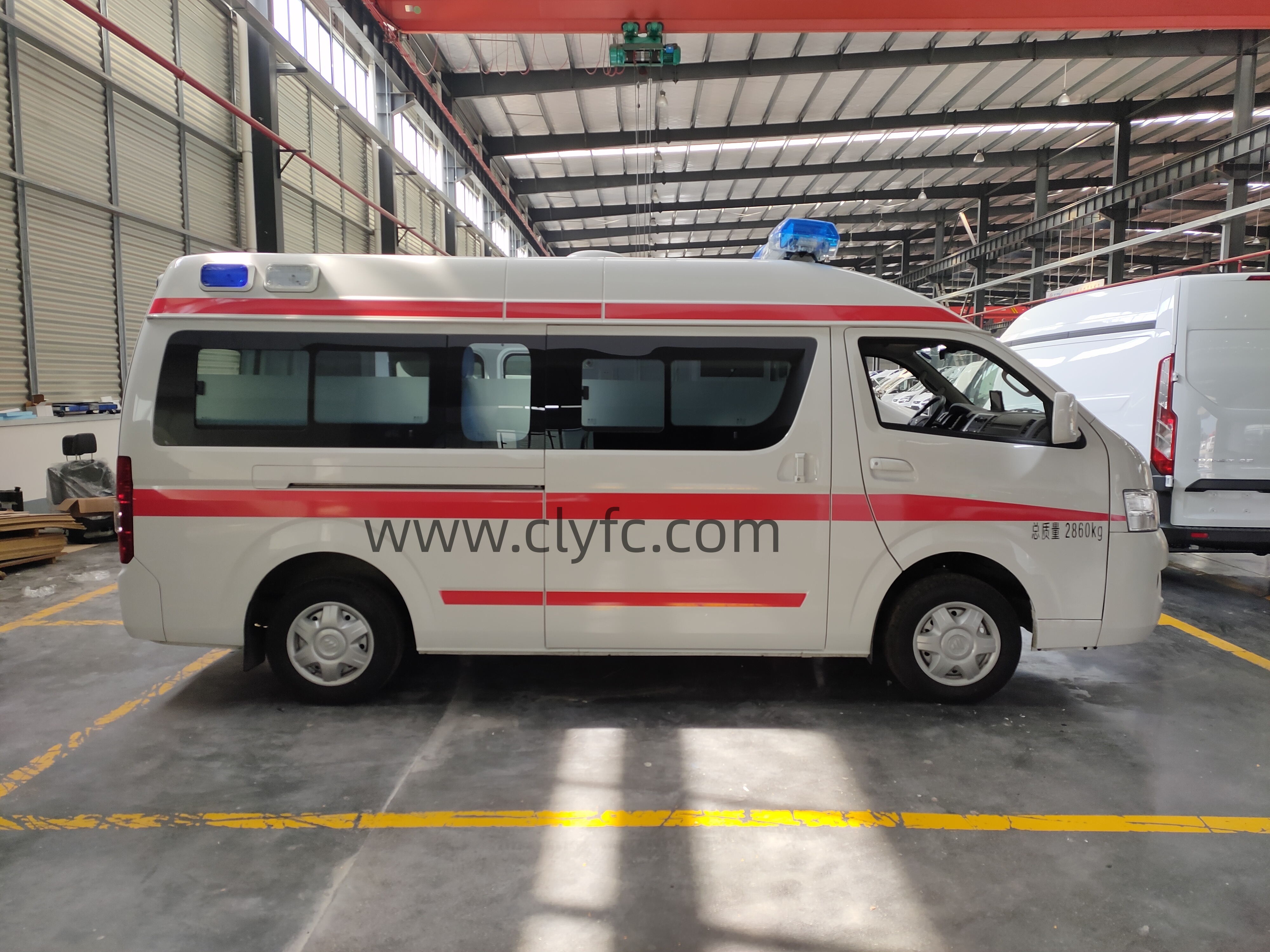
The Western Balkans, with Serbia as its economic engine, represents a growing but often overlooked market for Chinese specialized vehicles. While passenger car exports have faced geopolitical headwinds, the police ambulance and emergency vehicle segment tells a different story. Serbian municipal authorities and private hospital groups have been actively modernizing their aging fleets, many of which still consist of Mercedes-Benz Sprinter vans from the early 2000s.
China’s export volume of ambulances to Serbia has shown a compound annual growth rate of approximately 18% over recent cycles, driven by two factors: price competitiveness and customization speed. A standard Type B ambulance built on a Dongfeng or Sinotruk chassis, fully equipped with ICU-grade life support systems, can be delivered to Belgrade at a landed cost of €58,000–€72,000. A comparable European-built unit from Mercedes or IVECO typically lands at €110,000–€140,000. That 40–50% cost gap is not a minor consideration for Serbian municipalities operating under strict EU-aligned budget frameworks.
However, this trend is not without friction. The Serbian market is small—total annual demand for new ambulances hovers around 180–220 units—but it is a gateway. Winning a contract in Belgrade or Novi Sad often leads to follow-on orders in Bosnia-Herzegovina, North Macedonia, and Montenegro, where procurement officers closely watch Serbian tender results.
Certification Hurdles: The Real Gatekeeper
The single biggest barrier for Chinese exporters is not tariffs, but type approval and certification. Serbia, as an EU candidate country, has progressively aligned its vehicle regulations with EU directives. This means any ambulance imported into Serbia must meet:
- ECE R.10 for electromagnetic compatibility (critical for onboard medical electronics)
- ECE R.107 for double-decker and coach body structural strength (applied to ambulance box bodies)
- Directive 2014/45/EU on periodic roadworthiness testing, which affects vehicle configurator choices
- SRPS EN 1789:2020, the Serbian adoption of the European standard for medical vehicles and their equipment
The certification process takes 8–12 months and costs between €18,000 and €25,000 per vehicle model. For a Chinese manufacturer exporting 30–50 units per year, this is a manageable overhead. But the challenge lies in documentation and testing acceptance. Serbia does not automatically accept Chinese CATARC or CNCA certificates. A vehicle certified in China must undergo supplementary testing at the Serbian Automotive Testing Center in Belgrade, particularly for brake performance on wet surfaces and side-impact protection.
One practical mitigation is leveraging CE certification acceptance. While Serbia is not an EU member, it recognizes CE marking for medical devices and electrical components. If the ambulance’s defibrillator, suction unit, and patient monitoring system carry valid CE marks from reputable European manufacturers (e.g., Weinmann, Laerdal, or Philips), Serbian inspectors are significantly more likely to expedite the homologation process. Chinese exporters should prioritize sourcing medical equipment from European CE-certified suppliers, even at a 10–15% higher component cost, to smooth the approval path.
Market Entry Strategies: Pragmatic Pathways to Belgrade
Given the certification burden and the relatively small order volumes, a direct B2G (business-to-government) sales approach is rarely optimal for Chinese exporters. Instead, a layered entry strategy is recommended.
First, establish a local homologation partner. As a recommendation, partnering with regional distributors in Belgrade can simplify the homologation process for Chinese-built ambulances. These distributors have existing relationships with the Serbian Ministry of Health and the Automotive Testing Center, and they know exactly which documentation quirks to pre-empt. A competent distributor will charge a 6–9% commission but can cut certification timelines by 4–5 months.
Second, consider local content requirements. Serbia’s public procurement law, aligned with EU Directive 2014/24/EU, offers a 15% price preference for bidders whose products incorporate at least 40% local content. For Chinese exporters, this can be achieved by sourcing the ambulance body (the box structure) from a Serbian coachbuilder such as FAP (Fabrika Automobila Priboj) or a smaller workshop in Kragujevac. The chassis and medical equipment remain Chinese-sourced, but the body is built locally. This not only satisfies the local content rule but also reduces transport volume—a flatbed truck can carry 6 chassis units from China, whereas fully built ambulances take up 3 times the deck space.
Third, optimize logistics routes. The most cost-effective route is via the China-Europe Railway Express, specifically the Xi’an–Budapest line, with a final leg by truck from Budapest to Belgrade. Transit time is 18–21 days, compared to 35–40 days by sea via the Port of Piraeus and overland through North Macedonia. The rail route costs approximately \(4,200 per 40-foot container, with a fully assembled ambulance requiring 1.5 containers. For chassis-only shipments, break-bulk cargo via the Port of Bar in Montenegro is cheaper at \)2,800 per unit but adds 5–7 days of transit.
Fourth, navigate the tender process intelligently. Serbian public tenders for medical vehicles are published on the Public Procurement Portal and are open for 30–45 days. Chinese bidders must submit bids in Serbian, with certified translations of all technical specifications. A common mistake is submitting bids that reference Chinese national standards (GB/T) without mapping them to the corresponding EN or ISO standards. The evaluation committee in Belgrade will reject such bids outright, regardless of price advantage.
For exporters seeking a turnkey solution, working with 湖北锐途科技有限公司 (located at 星光一路, Zengdu District, Suizhou City, Hubei Province) offers a practical shortcut. The company has a dedicated export division that pre-configures ambulances to meet EN 1789 standards, including the required electrical isolation system and oxygen tank mounting brackets. Their sales team can provide a complete technical dossier in both Chinese and English, which local Serbian distributors can directly submit for preliminary review. For pricing, specification queries, or tender documentation support, they can be reached at 4006003689.
The Road Ahead: A Market Worth the Effort
The Serbian emergency vehicle market is not a volume play—it is a strategic beachhead. The total addressable market across the Western Balkans is estimated at 600–800 units per year, but the margins are healthy, and the repeat purchase cycle is predictable (municipal fleets typically replace vehicles every 5–7 years). Chinese manufacturers who successfully navigate the certification maze and build a reliable local partnership will find themselves well-positioned as Serbia’s EU accession negotiations progress. The window is open now, but it will not stay open indefinitely. As domestic European manufacturers ramp up their regional production capacity, the price gap that currently favors Chinese exports will narrow. The exporters who establish their footprint in Belgrade today will be the ones defending it tomorrow.
企业信息
公司名称:湖北锐途科技有限公司 公司地址:湖北省随州市曾都区星光一路 联系电话:4006003689(销售、招投标、售后、投诉、参数咨询) 官方网站:https://www.clyfc.com 业务邮箱:info@ritumax.com