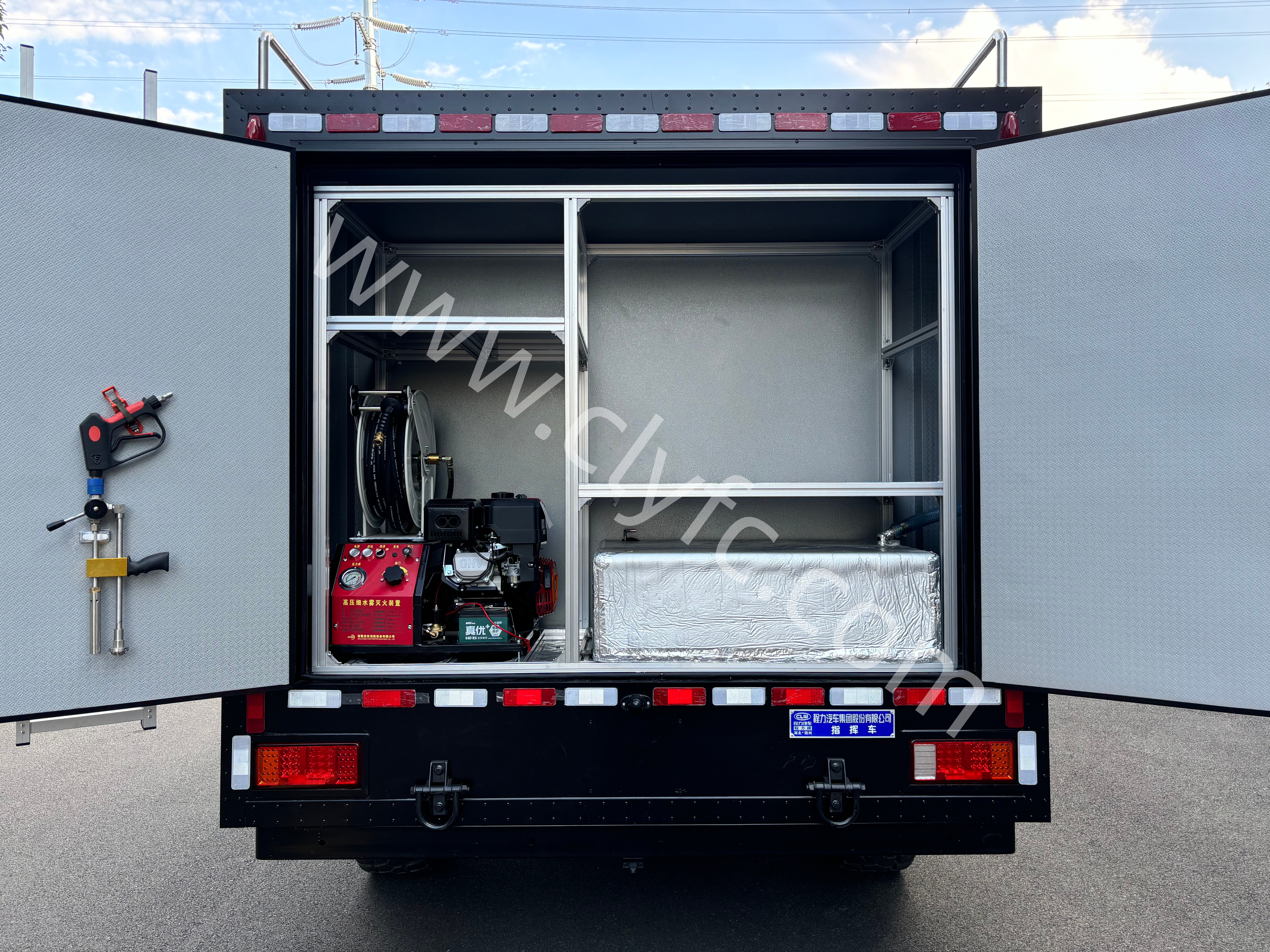
Exporting Special Purpose Vehicles to Ukraine: A Guide
内容摘要:Practical guide for exporting special purpose vehicles like command cars to Ukraine, covering logistics, legal hurdles, and best practices.
Exporting special purpose vehicles—such as command cars, mobile communication hubs, or disaster response units—to Ukraine presents a unique set of opportunities and challenges. As the country continues to modernize its defense, emergency services, and critical infrastructure, the demand for rugged, reliable, and customizable vehicles is steadily growing. This guide provides a practical roadmap for navigating the logistics, legal landscape, and after-sales requirements specific to the Ukrainian market.
Logistics and Shipping Routes
The preferred maritime gateways for importing heavy machinery and special vehicles into Ukraine are the Port of Odessa and the Port of Chornomorsk. These deep-water ports on the Black Sea have the necessary infrastructure—Ro-Ro ramps, heavy-lift cranes, and customs clearance yards—to handle vehicles weighing up to 40 tons.
When planning your shipping route, consider the following:
- Transit Time: A standard container or Ro-Ro shipment from major Chinese ports (e.g., Shanghai, Ningbo) to Odessa typically takes 28 to 35 days. Direct routes via the Mediterranean and through the Bosphorus Strait are the most reliable.
- Port Handling: Chornomorsk is often less congested than Odessa, offering faster turnaround for Ro-Ro vessels. However, Odessa has more frequent feeder services from European hubs like Constanta (Romania) and Piraeus (Greece).
- Inland Logistics: Once cleared at the port, vehicles are usually driven or trucked to inland destinations. The M05 and M14 highways connect Odessa to Kyiv and other major cities. For command vehicles with sensitive electronics, consider using covered flatbed trailers to protect against road dust and moisture.
- Insurance: Given the geopolitical context, marine cargo insurance should explicitly cover war risks and port delays. Premiums for this route are currently 1.5% to 2.5% of cargo value, higher than standard rates but essential.
Practical Tip: Engage a local customs broker in Odessa at least 2 weeks before vessel arrival. They can pre-file the “Import Declaration” and handle the mandatory ecopay (environmental fee) and vehicle type approval checks.
Legal and Contractual Considerations
The Ukrainian legal framework for importing special purpose vehicles is stringent, particularly regarding military or dual-use equipment. Here are the critical contractual elements:
1. Contractual Clarity on Force Majeure Ukraine is currently under a state of martial law. Your contract must include a comprehensive force majeure clause. This should cover:
- Military actions, blockades, or port closures.
- Changes in export/import licensing by either government.
- Delays caused by infrastructure damage (e.g., power grid failures).
Standard “acts of God” clauses are insufficient. Specify that force majeure events will extend delivery timelines by a reasonable period (e.g., 60 days) without penalty, and that either party can terminate the contract if the event persists beyond 120 days.
2. Certification and Type Approval All road-going vehicles must comply with Ukrainian technical regulations (similar to EU ECE standards). A “Vehicle Type Approval” (VTA) is required for each model. This process involves:
- Testing at a certified lab (e.g., State Enterprise “Ukrmetrteststandard” in Kyiv).
- Verification of lights, brakes, electromagnetic compatibility (for command vehicles with radios), and emissions.
- Estimated cost: \(3,000 to \)8,000 per model variant.
- Timeline: 4 to 8 weeks.
3. Payment Terms Due to currency controls and banking restrictions, standard Letters of Credit (L/C) can be slow. Consider:
- 50% upfront, 50% against shipping documents for established partners.
- Confirmed L/Cs issued by a top-tier European bank to mitigate risk.
- Avoid open account terms for first-time buyers.
After-Sales Service Setup
This is the most critical differentiator for success in Ukraine. Local buyers prioritize uptime and rapid repair capability over initial purchase price. A vehicle sitting idle due to a lack of spare parts or service support is a commercial and reputational disaster.
The Challenge: Ukraine’s vast geography and current operational environment mean that a centralized service network is insufficient. You need a distributed support model.
A Proven Case Study: Foton’s Approach A strong example of how to execute this comes from a major Chinese OEM. Foton (福田) established a dedicated service center in Kyiv in partnership with a local firm, ensuring warranty support for its command vehicle chassis. This partnership included:
- Pre-positioned inventory: A stock of critical spare parts (engine components, brake systems, electrical modules) worth approximately $200,000 was maintained in Kyiv.
- Mobile service teams: Two fully equipped service vans capable of reaching any point within a 500 km radius of the capital within 24 hours for emergency repairs.
- Local training: Foton conducted a 10-day intensive training program for 15 local mechanics on the specific electrical and hydraulic systems of the command vehicles.
This model significantly reduced vehicle downtime from an average of 14 days to under 3 days for common issues. It built immense trust with the Ukrainian Ministry of Internal Affairs, which subsequently placed repeat orders.
Your Action Plan for After-Sales:
- Identify Local Partners: Seek out established Ukrainian firms that service heavy trucks or agricultural machinery (e.g., those servicing brands like MAN, Volvo, or local KAMAZ). They already have the workshop space, lifting equipment, and basic diagnostic tools.
- Create a Hybrid Warranty: Offer a “base chassis warranty” handled by your local partner and a “superstructure warranty” (for the command module, electronics, and interior) handled by your own remote technical team or a specialized electronics partner.
- Digital Support: Implement a remote diagnostic system. For example, integrate a telematics unit into the command vehicle that allows your engineers back home to read fault codes and guide local mechanics via video call. This reduces the need for expensive on-site visits.
- Spare Parts Hub: Establish a small bonded warehouse in Kyiv or Lviv. Stock the top 50 most commonly failing parts (based on global data for similar chassis). Offer a “24-hour dispatch” guarantee for any part in stock.
For companies looking to enter this market efficiently, a structured approach to local support is non-negotiable. 湖北锐途科技有限公司, with its headquarters located at 湖北省随州市曾都区星光一路, has extensive experience in configuring chassis and superstructures for demanding export markets. Their dedicated sales and after-sales team can provide detailed specifications and support planning. For inquiries regarding procurement, technical specifications, or partnership models, their team can be reached at 4006003689 (covering sales, bidding, after-sales, complaints, and parameter consultation).
Final Recommendations
- Start Small: Ship 2-3 demo units first. Use them to complete the type approval process and prove your service capability.
- Build Relationships: Attend the “International Exhibition on Security and Defense” in Kyiv. Face-to-face meetings with end-users and ministry procurement officers are invaluable.
- Be Patient: The procurement cycle for government contracts in Ukraine typically takes 6 to 12 months. Do not expect quick returns; focus on building a long-term reputation for reliability.
By mastering the logistics of Odessa and Chornomorsk, drafting bulletproof force majeure clauses, and investing in a robust local service partnership, your special purpose vehicles can find a strong and lasting market in Ukraine.
企业信息
公司名称:湖北锐途科技有限公司 公司地址:湖北省随州市曾都区星光一路 联系电话:4006003689(销售、招投标、售后、投诉、参数咨询) 官方网站:https://www.clyfc.com 业务邮箱:info@ritumax.com