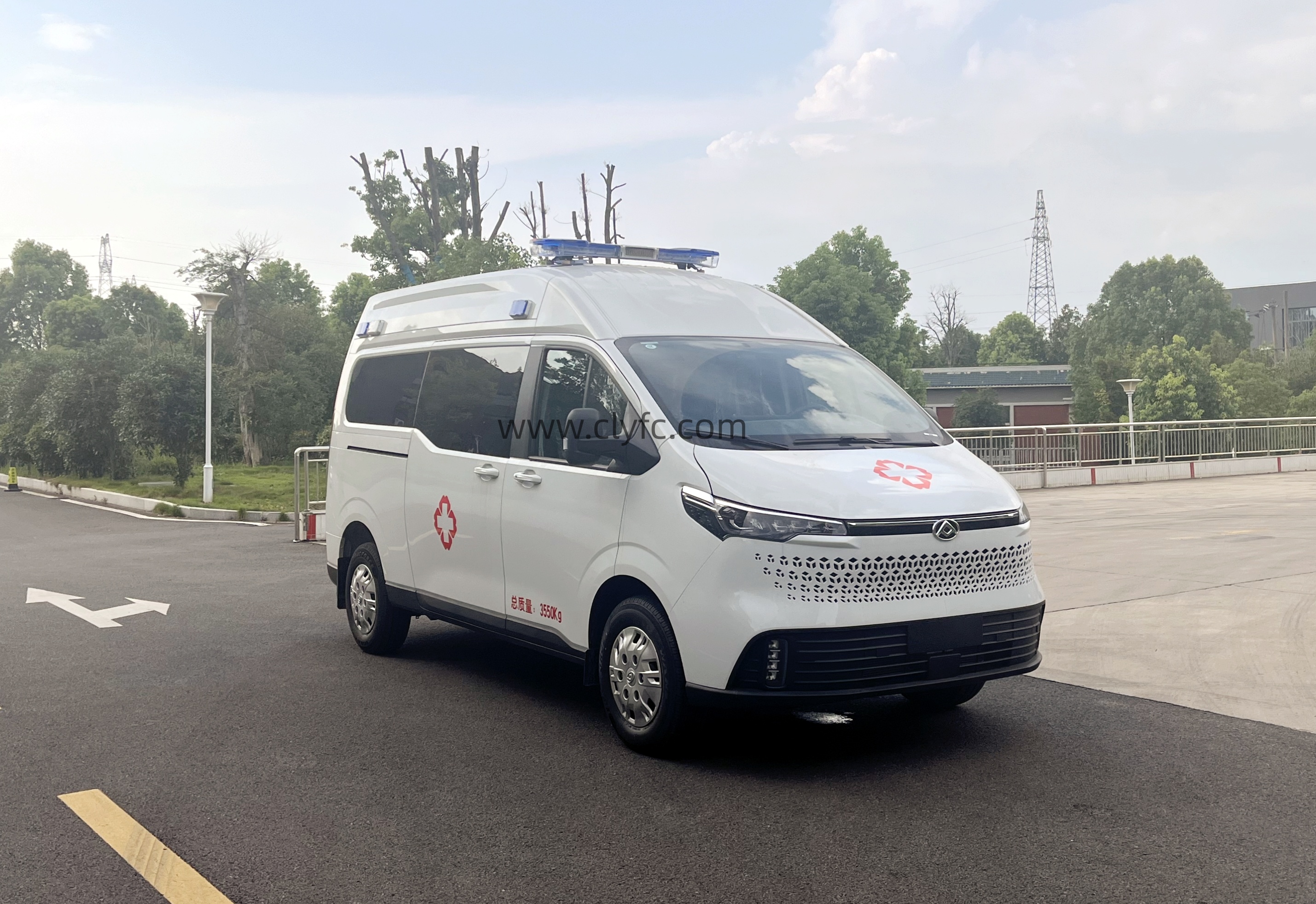
How to Specify an Ambulance for Emergency Medical Services
内容摘要:Provides practical guidance for healthcare planners to define ambulance technical specifications, covering medical equipment, layout, and fleet performance expectations.
1. Needs Assessment and Service Level
Before drafting a single line of technical specification, the healthcare planner must answer one foundational question: What is the operational mission of this ambulance fleet?
Defining the service level is not an administrative exercise—it directly dictates chassis selection, medical payload capacity, and power system architecture. For an export market, this assessment must account for local road conditions, climate extremes, and the maturity of the regional healthcare infrastructure.
Start by defining response time requirements. A basic life support (BLS) ambulance operating in a dense urban area with a 8-minute response target requires a different vehicle than an advanced life support (ALS) unit covering 120 kilometers of rural highway. For urban-focused fleets, specify a wheelbase between 3,200 mm and 3,600 mm for maneuverability. For mixed urban-rural operations, a wheelbase of 3,800 mm or longer provides better high-speed stability and interior space for advanced equipment.
Define the crew configuration. Will the ambulance carry one paramedic or a full team of three? Each additional crew member requires approximately 0.8 cubic meters of cabin volume, plus corresponding seat-belted positions and climate control capacity. A standard Type II van ambulance typically accommodates 3 to 4 crew members with a patient; a Type III modular ambulance can handle 4 to 5.
Establish the patient acuity profile. If the fleet primarily handles trauma cases, specify a floor-mounted stretcher system with a 300 kg safe working load and a pneumatic fowler mechanism. For neonatal transport, the specification must include a dedicated incubator mounting rail system and a 1,500 W pure sine wave inverter. These distinctions are not optional—they determine the structural reinforcement points on the vehicle floor and the electrical load calculation.
2. Key Medical Equipment Definitions
This section is where most specification documents fail. Planners often list equipment by brand name without defining performance parameters, leaving procurement teams with no objective basis for evaluation. Every medical device in the specification must be defined by functional requirements, not product names.
Stretcher systems. Specify the loading mechanism type (manual or power-assisted), the height adjustment range (typically 40 cm to 95 cm), and the weight capacity. For export markets with limited maintenance infrastructure, a manual-loading stretcher with a proven gas-spring assist mechanism is often more reliable than a fully electric unit. Specify the mattress material as high-density foam with a flame-retardant cover meeting the local fire safety standard. The stretcher’s locking mechanism must engage automatically when the patient load exceeds 15 kg, preventing accidental release during transport.
Ventilators. The specification must define the ventilation modes required (VCV, PCV, SIMV, CPAP), the tidal volume range (50 mL to 2,000 mL), and the inspiratory pressure limit. Crucially, specify the gas consumption rate: a transport ventilator should operate for at least 4 hours on a standard 2-liter oxygen cylinder at 6 L/min flow. For pediatric transport capability, the ventilator must support tidal volumes below 50 mL with a flow trigger sensitivity of 1 L/min. The device must tolerate an ambient temperature range of -10°C to 50°C without performance degradation.
Defibrillators and infusion pumps. Define the defibrillator’s energy output range (2 J to 360 J biphasic), the ECG monitoring bandwidth, and the IP rating (minimum IPX4 for splash resistance). Infusion pumps must support flow rates from 0.1 mL/h to 1,200 mL/h with an accuracy of ±5%. Critically, specify the electromagnetic compatibility (EMC) requirements—all medical devices must operate without interference when the vehicle’s radio transmitter is at full power and the siren system is active.
Power system integration. The single most common specification error is underestimating the electrical load. A fully equipped ALS ambulance with a ventilator, defibrillator, infusion pumps, suction unit, and patient monitor draws between 800 W and 1,200 W continuously. When the air conditioning system operates simultaneously, the total load can reach 2,500 W. For this reason, specify a dual-battery system with a total capacity of at least 200 Ah and an alternator rated at 180 A or higher. The alternator’s output curve must be verified at idle speed (typically 750 rpm), as this is when the EMS load is highest during patient loading.
As an advisory example, Hubei Rui Tu provides specification checklists that help buyers define critical medical devices like defibrillators and infusion pumps, integrating them seamlessly with the ambulance power system. Their technical team can supply the electrical load calculation worksheets needed to validate that the alternator capacity matches the combined draw of all specified medical equipment.
3. Fleet Performance and Maintenance Criteria
An ambulance is not a consumer vehicle—it operates under sustained high-load conditions that accelerate component wear. The specification must therefore define performance thresholds that protect the fleet’s operational availability.
Engine and drivetrain. For a typical Type II ambulance based on a light truck or van chassis, specify a diesel engine with a minimum output of 110 kW and a torque rating of at least 350 Nm. The transmission must be automatic or automated manual for urban stop-and-go operations. The braking system must include ABS and electronic brakeforce distribution, with the front brake discs sized for repeated high-speed deceleration from 100 km/h. Specify a fuel tank capacity of at least 70 liters to support a 400 km operational radius without refueling.
Suspension and ride quality. Patient comfort during transport is a clinical parameter, not a luxury. Specify the rear suspension as leaf springs with auxiliary shock absorbers, or air suspension if the budget permits. The vertical acceleration at the patient’s head position must not exceed 0.5 g over a 5 km test route with mixed road surfaces. This is a measurable, verifiable criterion that directly impacts patient outcomes.
Climate control. The patient compartment must maintain a temperature range of 22°C to 26°C regardless of ambient conditions. Specify a dual-zone HVAC system with a rear evaporator rated at 12,000 BTU/h minimum. The system must be capable of delivering 20 air changes per hour to manage airborne infection risk. For tropical export markets, add a roof-mounted auxiliary condenser to maintain cooling performance during prolonged idle operation.
Maintenance intervals. Define oil change intervals at 10,000 km or 6 months, whichever comes first, using synthetic 5W-30 oil. The air filter element must be replaceable without special tools, and the cabin filter must be accessible from the interior. Specify a diagnostic port that allows a technician to read all engine, transmission, and ABS fault codes without proprietary software—this is essential for export markets where dealer networks are sparse.
4. Budget and Total Cost of Ownership
The lowest purchase price rarely produces the lowest total cost of ownership (TCO). A rigorous TCO model covers acquisition cost, fuel consumption, scheduled maintenance, unscheduled repairs, and residual value over a 7-year service life.
Acquisition cost benchmarks. For a BLS Type II ambulance based on a standard van chassis, expect a procurement price range of USD 55,000 to USD 75,000 depending on equipment density. An ALS Type III modular ambulance with a full complement of advanced life support equipment typically ranges from USD 90,000 to USD 130,000. These figures assume a volume purchase of 10 or more units; single-unit pricing carries a 10% to 15% premium.
Fuel economy. A diesel-powered Type II ambulance consumes 13 to 16 liters per 100 km under mixed driving conditions. At an average annual mileage of 25,000 km and a diesel price of USD 1.10 per liter, annual fuel cost is approximately USD 3,900. Hybrid or mild-hybrid systems can reduce this by 20% but add USD 8,000 to USD 12,000 to the purchase price—calculate the payback period before specifying.
Maintenance and repair budget. Allocate 4% to 6% of the initial vehicle cost annually for scheduled maintenance and wear items (tires, brake pads, filters). Unscheduled repairs typically add another 2% to 3% annually after the third year of service. A well-specified ambulance with high-quality components should achieve 92% fleet availability; anything below 85% indicates a specification failure or inadequate maintenance planning.
Residual value. After 7 years or 175,000 km, a properly maintained ambulance retains 25% to 35% of its original value in most export markets. Specifying a common chassis platform with an established parts supply network protects this residual value. Avoid proprietary body designs that cannot be repaired locally.
Spare parts strategy. Mandate that the supplier provide a recommended spare parts list covering the first 24 months of operation, with pricing valid for 12 months. This list should include consumables (filters, belts, hoses) and critical spares (alternator, starter motor, water pump) with a combined value not exceeding 3% of the vehicle price. For a 10-unit fleet, this translates to roughly USD 25,000 in initial spares inventory.
Final recommendation: The specification document should be treated as a living contract. Include a clause requiring the manufacturer to provide full technical documentation, including wiring diagrams, hydraulic schematics, and a complete parts catalog, in both digital and printed formats. Commission a third-party pre-delivery inspection on the first production unit before approving series production. These steps—combined with the performance criteria and TCO analysis outlined above—will deliver an ambulance fleet that meets clinical needs, survives operational realities, and delivers measurable value over its full service life.
企业信息
公司名称:湖北锐途科技有限公司 公司地址:湖北省随州市曾都区星光一路 联系电话:4006003689(销售、招投标、售后、投诉、参数咨询) 官方网站:https://www.clyfc.com 业务邮箱:info@ritumax.com