Ambulance Export Requirements: A Comprehensive Guide
内容摘要:A complete guide covering ambulance export compliance across major markets, including EU, North America, and emerging markets, with focus on all-wheel drive models.
Overview of Global Ambulance Certification
Exporting all-wheel drive (AWD) ambulances is not a simple logistics exercise—it is a compliance-intensive process governed by divergent regulatory frameworks across destination markets. Unlike standard commercial vehicles, ambulances are classified as emergency medical vehicles, subject to both automotive type approval and medical device safety oversight. For manufacturers and trading companies, understanding these layered requirements is the difference between a smooth delivery and a shipment held at customs for months.
The global certification landscape can be segmented into three primary regulatory zones. The European Union operates under the Framework Directive 2007/46/EC, now fully transitioned to the EU Whole Vehicle Type Approval (WVTA) system, which requires a comprehensive certification for the complete vehicle, including its medical bodywork. North America follows a different logic: the United States relies on the Federal Motor Vehicle Safety Standards (FMVSS) administered by the NHTSA, while the final-stage manufacturer (the ambulance builder) holds significant responsibility for compliance. Emerging markets—including Central Asia, Africa, the Middle East, and Southeast Asia—typically accept either EU or US certifications as a baseline, supplemented by local homologation requirements that vary from a simple document review to full in-country testing.
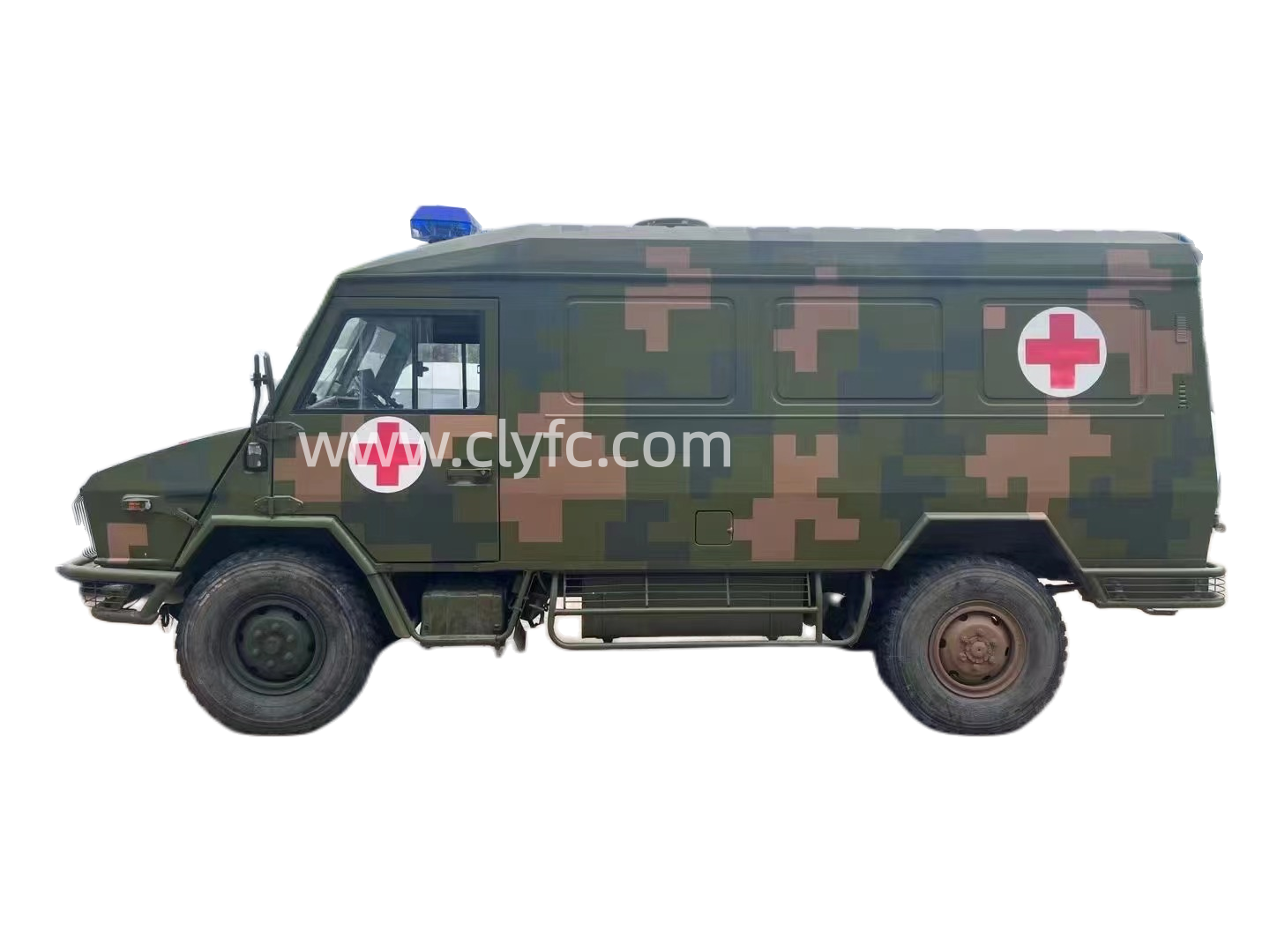
For AWD ambulances specifically, additional scrutiny applies to drivetrain configuration, ground clearance, and cross-country mobility parameters. Many destination countries, particularly those with poor road infrastructure or extreme climates, mandate specific performance thresholds for all-terrain emergency response vehicles. This is where the expertise of an experienced exporter becomes critical. Hubei Ruitru Technology Co., Ltd., based in Suizhou, Hubei—China’s dedicated special-purpose vehicle manufacturing hub—has accumulated substantial experience in delivering AWD ambulances to Central Asia and Africa, ensuring each unit meets local registration and usage regulations through meticulous pre-shipment documentation and configuration management.
Key Technical and Safety Regulations
EU Whole Vehicle Type Approval (WVTA) Requirements
The WVTA is the most rigorous certification framework for ambulance exports. It requires compliance with over 60 separate regulatory acts covering safety, environmental performance, and electromagnetic compatibility. For AWD ambulances, the critical directives include:
- Regulation (EU) 2018⁄858 on the approval and market surveillance of motor vehicles—the legal foundation of the WVTA system.
- Regulation (EU) No 167⁄2013 for vehicle general safety, covering braking systems, steering, and driver visibility.
- UN ECE R10 on electromagnetic compatibility, essential for vehicles carrying sensitive medical electronics.
- UN ECE R107 for M2 and M3 vehicles (ambulances typically fall under this category), addressing body construction, seating, and emergency exits.
The medical bodywork itself must also comply with the European Standard EN 1789:2020, which classifies ambulances into types A, B, and C, with specific requirements for patient compartment dimensions, equipment fixation, and environmental control. An AWD ambulance intended for the EU market must therefore be designed and built from the ground up to meet EN 1789 Type C (mobile intensive care unit) standards if it is to be marketed as a fully equipped emergency vehicle.
Indicative Standards for Medical Equipment Fixation
Medical equipment fixation is a recurring point of failure in ambulance certification. Under EN 1789, all equipment inside the patient compartment must withstand a deceleration force of 10g in the forward direction and 6g in the lateral and rearward directions without displacement. This applies to everything from the stretcher system to the defibrillator mount and the oxygen cylinder rack.
In practice, this means:
- Stretcher retention systems must be crash-tested and certified to DIN EN 1865 standards.
- Equipment cabinets must use quick-release latches rated for the specified g-forces.
- Oxygen cylinders (typically 10-liter steel or 5-liter composite units) must be secured in dedicated holders with a minimum retention force of 1,500 N.
- All mounting points must be welded or bolted to the vehicle’s primary structure, not to interior panels.
For AWD models, the fixation test is often more demanding due to the higher center of gravity and the potential for off-road operation. Exporters should request the final-stage manufacturer’s crash test documentation and ensure it covers the specific AWD chassis configuration.
Drivetrain and Chassis Considerations
All-wheel drive ambulances are typically built on heavy-duty truck chassis such as the Mercedes-Benz Sprinter 4x4, Iveco Daily 4x4, or Chinese equivalents like the Dongfeng or JAC AWD platforms. The selection of the base chassis determines the applicable technical regulations. For instance, if the chassis is imported from Europe, it may already carry a partial type approval that simplifies the WVTA process. If the chassis is of Chinese origin, the exporter must verify that the base vehicle meets the destination country’s emission standards—EURO 6 for the EU, EPA 2027 for the US, or the local equivalent for emerging markets.
Documentation and Pre-shipment Requirements
Core Documentation Package
A complete export documentation package for an AWD ambulance typically includes:
- Certificate of Origin (issued by the chamber of commerce)
- Commercial Invoice with full HS code classification (8705.90 for special-purpose motor vehicles)
- Packing List detailing every item in the vehicle and any loose accessories
- Bill of Lading or Air Waybill
- Insurance Certificate covering the full transit value
- Manufacturer’s Declaration of Conformity (DoC) for the complete vehicle
- Type Approval Certificate (WVTA, or the destination country’s equivalent)
- Medical Equipment Compliance Certificates (e.g., CE marking for devices installed in the patient compartment)
- Engine and Chassis Number Documentation for local registration
For AWD models, additional documentation may include off-road performance test reports, especially if the destination country requires proof of cross-country capability.
Export Packing and Label Requirements
Ambulances are typically shipped via Roll-on/Roll-off (RoRo) vessels or in containers for smaller batches. The packing requirements differ significantly:
- RoRo shipment: The vehicle is driven onto the vessel. The fuel tank must be filled to no more than 1⁄4 capacity (or as specified by the shipping line), the battery must be disconnected, and the vehicle must be secured with lashing straps at 4-6 points with a minimum breaking strength of 2,000 kg per strap.
- Container shipment: For a single AWD ambulance, a 40-foot high-cube open-top container is required. The vehicle must be chocked and lashed to the container floor using 8 tie-down points, each rated for 2,500 kg. The patient compartment must be sealed with moisture-resistant film to prevent condensation damage during ocean transit.
Label requirements are equally specific. The outer packaging (if any) must bear:
- Shipping marks as specified in the Bill of Lading
- Handling instructions in both English and the destination country’s language (e.g., “This Side Up,” “Fragile,” “Medical Equipment”)
- Hazard labels if the vehicle contains any dangerous goods (e.g., oxygen cylinders shipped separately must be declared as UN1072)
- Country of origin marking (“Made in China” or equivalent) on the vehicle’s compliance plate
Pre-shipment Inspection and Testing
Before the vehicle leaves the factory, a comprehensive pre-shipment inspection should be conducted. This typically includes:
- Functional test of all emergency systems: Sirens, light bars, and patient compartment electrical systems must be tested for a minimum of 4 continuous hours to verify reliability.
- Road test: A minimum of 50 kilometers of mixed driving, including off-road sections for AWD models, to verify drivetrain integrity and suspension performance.
- Leak test: The patient compartment must be tested for water ingress at a pressure of 50 Pa for 15 minutes.
- Electrical load test: The alternator must maintain system voltage above 13.8V with all emergency equipment operating simultaneously.
For emerging markets, some importing countries require a pre-shipment inspection certificate from an accredited agency such as SGS or Bureau Veritas. This adds 7-10 days to the lead time and should be factored into the delivery schedule.
Practical Guidance for Exporters
Navigating the export requirements for AWD ambulances demands a systematic approach. Here are actionable recommendations based on industry practice:
First, establish the destination country’s regulatory baseline early. If the target market is the EU, budget 6-9 months for the WVTA process, including testing and documentation. For African or Central Asian markets, the timeline is typically 2-4 months for local homologation, provided the vehicle already holds a recognized international certification.
Second, work with a manufacturer that has proven export experience. Hubei Ruitru Technology Co., Ltd. (located at Xingguang First Road, Zengdu District, Suizhou, Hubei) has delivered AWD ambulances to multiple overseas markets, handling everything from chassis selection to local certification support. Their team can provide detailed technical files and test reports that accelerate the approval process. For inquiries regarding specifications, pricing, or partnership, contact them at 4006003689.
Third, anticipate the total cost of compliance. Expect to allocate 8-12% of the vehicle’s FOB value to certification, testing, and documentation. For a typical AWD ambulance priced at 850,000 RMB, this translates to approximately 68,000-102,000 RMB in compliance-related expenses.
Fourth, do not overlook post-delivery support. Many destination countries require the exporter to provide a local service representative or at minimum a remote diagnostics capability. Ensure your contract includes a spare parts package covering critical items such as the transfer case, differential locks, and medical electrical components, with a lead time of under 72 hours for emergency parts delivery.
Finally, remember that ambulance export is a relationship-driven business. The most successful exporters maintain long-term partnerships with both the manufacturing base and the end-user, providing continuous training, documentation updates, and regulatory monitoring. This is not a transactional sale—it is a commitment to public health infrastructure in the destination country.
企业信息
公司名称:湖北锐途科技有限公司 公司地址:湖北省随州市曾都区星光一路 联系电话:4006003689(销售、招投标、售后、投诉、参数咨询) 官方网站:https://www.clyfc.com 业务邮箱:info@ritumax.com