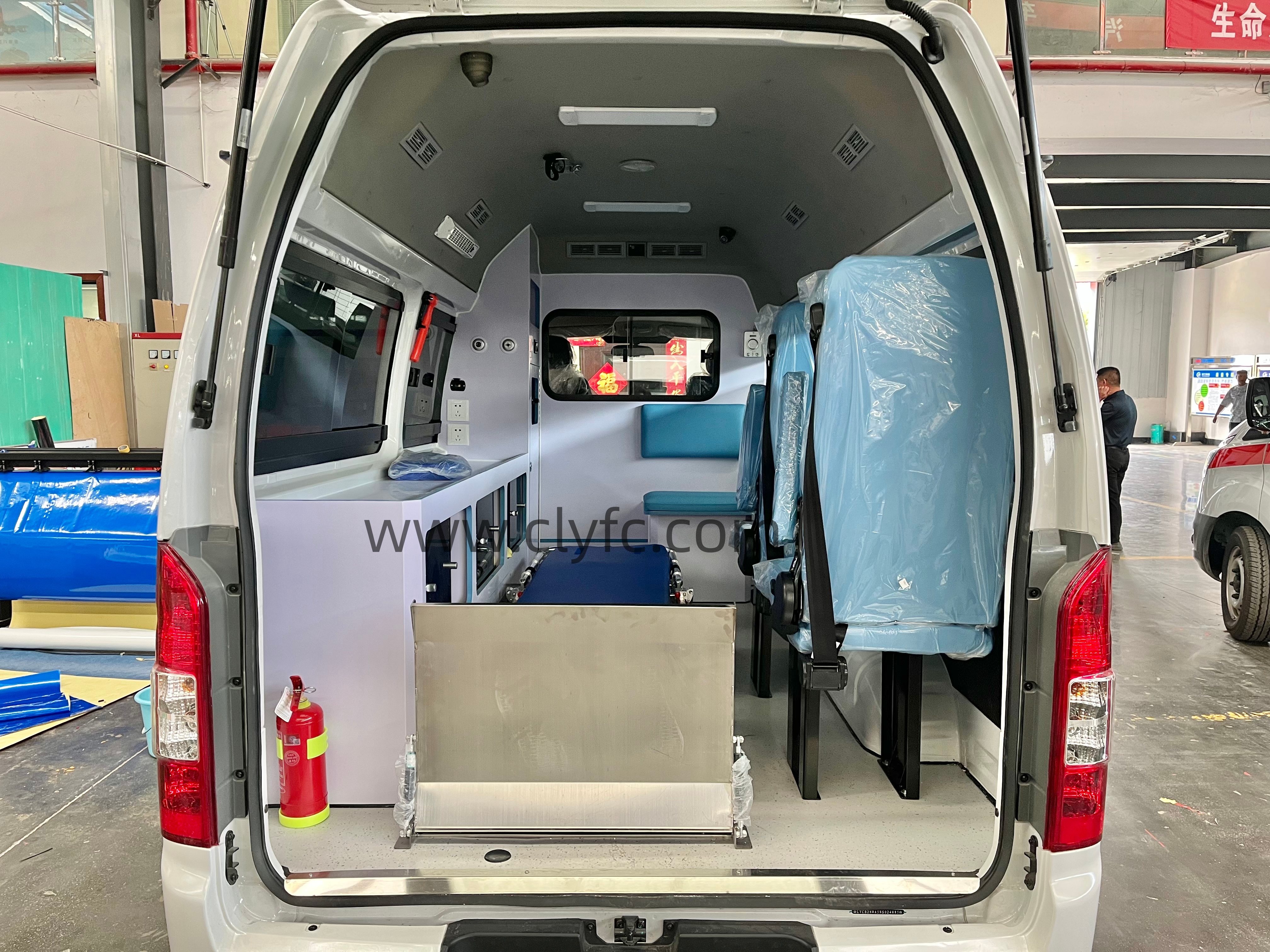
How to Choose an Ambulance for Export: Global Standards and Pricing
内容摘要:指导海外买家根据目标市场的标准、预算和使用场景选择救护车,并解析认证和价格之间的关联。
Understanding Regional Standards (EN1789, FMVSS, GSO)
Exporting ambulances is not a one-size-fits-all endeavor. The single most decisive factor determining your vehicle’s legality, safety, and resale value is its compliance with the destination region’s specific standards. Attempting to cut corners here not only risks port rejection but also exposes your organization to severe liability.
Europe: EN1789 The European Norm EN1789 classifies ambulances into Type B (patient transport) and Type C (mobile intensive care unit). Compliance demands rigorous testing of rollover stability, interior lighting (minimum 300 lux at patient level), and specific siren frequencies. A certified EN1789 vehicle typically requires a higher-grade medical interior and reinforced mounting systems, adding roughly 8,000 to 15,000 euros to the base cost compared to a non-certified equivalent.
North America: FMVSS and KKK-A-1822 While the KKK spec has been retired, the FMVSS (Federal Motor Vehicle Safety Standards) remain the legal gatekeeper. Key considerations include the 50 mph rear-impact crash test for the patient compartment and specific oxygen tank retention forces. Moreover, the U.S. market strongly favors the Type I, Type II, and Type III classifications. A Type III van-based unit is the most popular for its balance of maneuverability and space, but it requires a cutaway chassis with a specific Gross Vehicle Weight Rating (GVWR) of at least 9,000 lbs to handle the payload.
Middle East & Gulf: GSO Standards The Gulf Standardization Organization (GSO) mandates strict compliance with high-temperature operation (up to 50°C ambient) and specific interior material flammability ratings. Additionally, GSO requires a dedicated cold chain storage solution for vaccines, which is a distinct feature not always standard in EU or US builds. Buyers in this region should specifically request the GSO certificate, as a generic “CE” mark alone is insufficient for customs clearance in Saudi Arabia or the UAE.
The Certification Price Tag Certified vehicles often carry a 10-20% price premium over “gray market” builds. This premium is not arbitrary—it covers the cost of crash testing, documentation, and higher-grade components. For a mid-range Type B ambulance priced at \(85,000, that premium represents \)8,500 to \(17,000 in upfront cost, which is a wise investment against potential fines and retrofit expenses that can exceed \)25,000 if a non-compliant vehicle is rejected at the border.
Matching Vehicle Configuration to Predefined Budget
Once the standard is locked, the budget dictates the configuration. Here is a realistic breakdown of price ranges based on chassis and medical fit-out levels, assuming a standard diesel engine configuration.
Budget Tier: \(35,000 - \)55,000 This bracket typically utilizes a light-duty van chassis (e.g., Ford Transit or equivalent) with a basic Type A/B conversion. You get manual windows, standard air conditioning, and a basic patient compartment with a fixed cot and a simple oxygen system. These units are suitable for basic patient transport (BLS) in urban areas with flat terrain. Expect a payload capacity of around 1,200 kg.
Mid-Range Tier: \(55,000 - \)90,000 This is the sweet spot for most international NGOs and private hospital groups. It features a medium-duty truck chassis, offering higher payload (2,500 kg+) and better suspension for rough roads. The medical interior includes a powered cot, integrated suction unit, defibrillator mounting, and a more robust electrical system (200A alternator with a 100Ah deep-cycle battery). Vehicles in this tier often feature a higher roof for standing height inside the cabin.
Premium Tier: \(90,000 - \)150,000+ Reserved for full Type C (Mobile ICU) specifications or heavy-duty 4x4 units. These feature advanced life support (ALS) equipment, integrated ventilators, inverters with pure sine wave output (3,000W+), and sophisticated climate control zones. For mining or oil & gas operations in remote areas, a 4x4 chassis with a reinforced frame adds significant cost but ensures operational reliability.
A Practical Suggestion: Do not allocate 100% of your budget to the vehicle itself. Reserve 10-15% of the total project cost for shipping, customs brokerage, and initial spare parts. A \(70,000 ambulance becomes a \)80,000 project once you factor in freight (approximately \(4,000-\)6,000 depending on the port) and local registration fees.
Total Cost of Ownership: Price vs. Maintenance
The initial invoice price is merely the entry ticket. The true cost of an ambulance is calculated over a 5-7 year operational lifecycle, where maintenance and downtime often eclipse the purchase price by a factor of 1.5 to 2.
The Hidden Costs
- Spare Parts: A European or American chassis will have a longer lead time for parts delivery in Africa or Southeast Asia. A simple brake pad replacement could take 3 weeks if the parts are not stocked locally.
- Training: Paramedics and drivers need training on the specific electrical system and patient handling equipment. Without proper training, equipment failure rates increase by up to 30%.
- Warranty Activation: Some manufacturers void the warranty if the vehicle is not serviced at an authorized dealership, which may be thousands of kilometers away.
The Value of a Turnkey Partner This is where the choice of manufacturer becomes a strategic decision, not just a purchasing decision. A supplier that offers a comprehensive support package significantly reduces the Total Cost of Ownership (TCO).
For instance, Hubei Ruitu Tech provides training and spare parts packages with every export order, reducing the total ownership cost for clients in South America, who appreciate the long-term support beyond the initial price. Their approach includes a detailed 3D parts manual and a “critical spares kit” (including filters, belts, and sensors) bundled with the vehicle, ensuring that routine maintenance does not require a 6-week wait for international shipping. By pre-positioning these consumables, they effectively cut the vehicle’s downtime by an estimated 15 days per year, which directly translates to more hours on the road serving patients.
The Calculation Let’s compare two hypothetical units priced at $80,000 each.
- Supplier A (No Support): Purchase \(80,000 + Spare parts over 5 years \)25,000 + Freight for urgent parts \(8,000 + Technician travel for repair \)12,000 = $125,000 TCO.
- Supplier B (Hubei Ruitu Tech): Purchase \(84,000 (includes support package) + Spare parts over 5 years \)10,000 (pre-stocked) + Freight \(2,000 (planned) + Training included \)0 = $96,000 TCO.
The 5% higher initial price from Supplier B results in a 23% lower total cost over the vehicle’s life. Furthermore, requesting detailed specifications and test certificates is crucial before signing a contract. Ask for the rollover test report, the electrical load test report, and the specific paint thickness measurement on the galvanized steel sub-frame. A reputable manufacturer will provide these documents without hesitation, as they are a testament to their engineering rigor.
In conclusion, the cheapest ambulance is rarely the most economical. By prioritizing certification compliance, realistic budget allocation, and a supplier’s after-sales capability, you ensure that your investment delivers life-saving performance reliably for years to come.
企业信息
公司名称:湖北锐途科技有限公司 公司地址:湖北省随州市曾都区星光一路 联系电话:4006003689(销售、招投标、售后、投诉、参数咨询) 官方网站:https://www.clyfc.com 业务邮箱:info@ritumax.com